-
ECSP Weekly Watch | May 27 – 31
›
A window into what we are reading at the Wilson Center’s Environmental Change and Security Program
Panama’s First Climate-Related Relocation
The Guna Indigenous people of Gardi Sugdub—an island in Panama’s San Blas Archipelago—are moving to new mainland homes in Carti Port’s Isber Yala neighborhood. This move is part of a larger relocation effort supported by the country’s government since 2010 to address the impacts of climate change on its indigenous peoples.
-
ECSP Weekly Watch | May 20 – 24
›
A window into what we are reading at the Wilson Center’s Environmental Change and Security Program
Southern Africa’s Drought Offers a Window into the Region’s Climate Future
Southern Africa has been hit by one of its worst droughts in decades, and this calamity highlights the vulnerability of smallholder farmers who rely on rainfed agriculture. For the first time, farmers like Esnart Chogani, who works on a farm just outside Zambia’s capital, Lusaka, were unable to bring in a harvest. The region is normally a major exporter of maize, yet it now has begun importing the grain to meet demand.
-
Building a Response to Environmental Violence
›Human-produced pollution is the single leading cause of mortality today, yet it is not widely considered a form of violence. On July 28, 2022, the United Nations General Assembly (UNGA) voted—with 161 in favor and eight abstentions—that living in a clean, healthy, and sustainable environment is a human right. Building on a similar declaration by the United Nations Human Rights Council in October 2021, the UNGA has now reinforced the notion that the growing assaults on human health through environmental hazards are transgressions against the basic rights and freedoms of people. Efforts to create a human right to a healthy planet, and even a planetary right to health that would signifying potential rights of nature, are growing both in real activity and demand.
-
The Arc | Dr. Renata Giannini on Women Environmental Defenders in the Amazon and Climate Mitigation
›In today’s episode of The Arc, ECSP’s Angus Soderberg and Claire Doyle interview Wilson Center Fellow Dr. Renata Giannini about her work with women environmental defenders in the Amazon and their role at COP30 in Brazil. Select quotes from the interview are featured below. -
ECSP Weekly Watch: April 15 – 19
›UNFPA’s State of World Population 2024 Report Highlights SRHR Inequalities (UNFPA)
Over the last 30 years, the world has made immense progress in improving sexual and reproductive health and rights (SRHR) for women and girls around the world. Since 1994, when governments agreed that SRHR was a cornerstone of international development at the Cairo International Conference on Population, rates of unintended pregnancies have fallen 20%, 162 countries have adopted anti-domestic violence laws, and maternal deaths have decreased by 34%.
-
Indigenous Partnerships Can Bring Progress in LAC Energy Projects
›Este ensayo se actualizó con una traducción al español, disponible después de la versión en inglés, a continuación.
Latin American and Caribbean (LAC) countries have committed to transitioning to a net zero economy by 2050. Will they be able to do so without leaving anyone behind? It is unlikely, if business models don’t change.
An annual investment of $700 billion will be needed to curb emissions from the energy sector and its end uses, as well as from agriculture, forestry and other land use. In the clean energy sector alone, investment must increase nearly fivefold from its 2022 level.
-
Heat, Oil, and Dust: The State of Iran’s Lakes and Its Climate Future
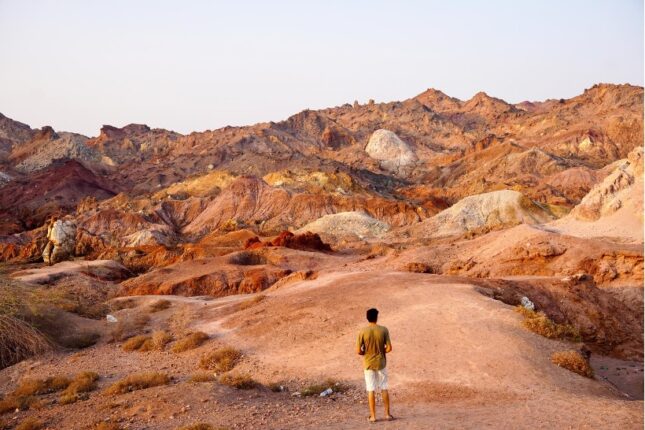
›Iran’s southeastern province of Khuzestan—which borders Iraq—was already a dry and dangerous place. It was the site of the fiercest battles in the Iraq-Iran war which followed the Iranian Revolution in 1979, and to this day, the region still has many unexploded landmines.
Yet this legacy of violence is not the only issue facing its residents. As climate impacts mount in Khuzestan, the future looks bleak for both the region’s ecosystems and the people already living on this borderline.
-
ECSP Weekly Watch: February 19 – 23
›A window into what we are reading at the Wilson Center’s Environmental Change and Security ProgramProgress—and Room for Improvement—in UNEP’s Annual Report (United Nations Environment Programme)
How effective is the United Nations Environment Programme (UNEP)’s work on the fight against climate change? Its Annual Report analyzed the work it has done over the past year to do so. The UNEP supports key areas in which progress has been made, including waste reduction through the Global Framework on Chemicals and global instrument on plastic pollution, biodiversity protection efforts through various frameworks, and loss and damage mobilization through COP28.
Showing posts from category livelihoods.

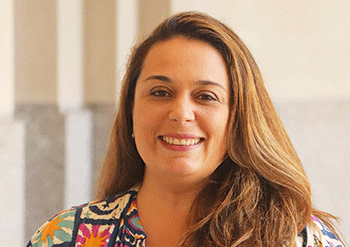 In today’s episode of The Arc, ECSP’s Angus Soderberg and Claire Doyle interview Wilson Center Fellow Dr. Renata Giannini about her work with women environmental defenders in the Amazon and their role at COP30 in Brazil. Select quotes from the interview are featured below.