

-
Challenges Found in ‘The Places We Live’
›May 18, 2010 // By Julien KatchinoffThe work of photographer Jonas Bendicksen provided the inspiration for a research paper competition organized by the Woodrow Wilson Center’s Comparative Urban Studies Project, the Cities Alliance, the International Housing Coalition, USAID, and the World Bank. At “The Places We Live: Slums and Urban Poverty in the Developing World,” four of the winning papers (out of 200 entries) were critiqued by urbanization policy experts. The authors focused on critical issues facing the world’s rapidly urbanizing centers, including service delivery, the challenge of political cleavages, redevelopment mechanisms, sanitation, and citizen participation in urban development.
The competition was established to “tap into the academic community and encourage … a younger generation of academics…to think about the challenges of rapid urbanization and the needs of slum dwellers and what we can do about it,” said USAID’s Jessica Tulodo. “It is the central issue that we are going to be grappling with for the coming decades and beyond. How do we not just address the challenges, but harness the opportunities of urban growth and how do we ensure that the larger population of urban poor can benefit and participate?”
“This is an effort to rekindle a stronger debate between the academic community and policymakers. I think that’s desperately absent, particularly in this field,” said Christopher Williams, the U.S. Representative of UN-HABITAT.
All Politics Are Local: Urban Services in Zambia
In her case study of the shanty compounds on the periphery of Lusaka, Zambia, Danielle Resnick investigates how the ruling government — through “development initiatives” — suppresses political opposition and controls weaker economic and political factions. The difficult relationship between local service delivery and inter-party politics is endemic in many African countries, where local municipalities are often run by opposition parties.
Christopher Williams, in his review, praised Resnick’s work for capturing the intricacies and complexity of rapid urbanization in Zambia and beyond, noting that it offered a “scathing” critique of direct budget assistance by foreign donors.
“Land Sharing”: A New Approach for Slums in Southeast Asia
Paul Rabe’s “Land Sharing in Phnom Penh and Bangkok: Lessons From Four Decades of Innovative Slum Redevelopment Projects in Two Southeast Asian ‘Boom Towns'” examines the emerging issue of land conflict in redeveloping urban areas and innovative solutions such as land sharing. Sometimes called a “win-win-win,” land sharing through multi-use agreements based on maximized utility can help to mediate the needs of slum dwellers, private developers, and municipal governments.
Rabe found that land sharing has several limitations, including programmatic delays, muted benefits for stakeholders, and limited deployments. “In retrospect,” he said, “the institutional setting [for land sharing] is not mature enough to accommodate a fairly complex redevelopment procedure.”
If donors and civil society groups are willing to brave a complex and highly politicized environment, land sharing may be an innovative option for those looking to quell redevelopment conflict. Robin Rajack of the World Bank said it was critical for the future sustainability of growing urbanization, as improving the ability of the urban poor to navigate difficult land tenure changes may foster urban economic growth.
Maintaining Sanitation, Building Community in India
In “Desired Outcomes, Unexpected Processes: Two Stories of Sanitation Maintenance in Erode Tenements, India,” Sai Balakrishnan asks why, “within the same municipality, are residents of some tenements more willing to contribute towards septic tank maintenance than others?” Her analysis of two communities in the state of Tamil Nadu in Southern India finds that asset ownership, embedded and accessible politicians, and political patronage did not improve maintenance of sanitation infrastructure. Instead, the critical factors were the spatial proximity of infrastructure, bundling of water and sanitation services, and “street-level bureaucrats.”
Reviewer Bob Buckley of the Rockefeller Foundation asked if future research could incorporate empirical data on the costs of sanitation problems for communities, “beyond the visuals,” which could provide a deeper understanding of the difficulty of delivering services in urban slums.
Gaming Community Participation in Argentina
Josh Lerner’s “What Games Can Teach Us about Community Participation: Participatory Urban Development in Rosario’s Villas” reveals the results of his six months of fieldwork in the slums of Rosario, Argentina. Although urban redevelopment can produce conflict–especially when combined with vast inequities in economic and political power–Lerner found that taking a game theory approach to difficult land-use decisions helped to “enhance the quality of community participation, by making it more attractive, active, and effective, and making decisions fairer and more transparent.”
William Corbett of Cities Alliance warned that if developing countries cannot effectively deal with the chaotic informality of land tenure and urban development, “gangs with guns will do it for you”– particularly when urban change and resource or land scarcity provokes competition for limited resources.
Photo Credits: “Christopher Williams, Danielle Resnick; Moynahan Boardroom” courtesy of David Hawxhurst.
-
Philippines’ Bohol Province: Elin Torell Reports on Integrating Population, Health, and Environment
›For 10 years, I have been working on marine conservation in Tanzania with the University of Rhode Island’s Coastal Resources Center. As part of that effort, I’ve helped forge links between HIV/AIDS prevention in vulnerable fishing communities and marine conservation. However, family planning and reproductive health (FP/RH) were relatively new to me. But a recent study tour of an integrated Population, Health, and Environment (PHE) program in the Philippines helped me understand that combining family planning services and marine conservation can help reduce overfishing and improve food security.
Together with developing country representatives from seven African and Asian countries, I spent two weeks in February visiting three PHE learning sites and a marine protected area in Bohol province in the central Philippines, as part of a South-to-South study tour sponsored by the USAID-funded BALANCED Project, for which I work. The tour focused on the activities of the 10-year-old Integrated Population and Coastal Resource Management Initiative (IPOPCORM) project, which is run by PATH Foundation Philippines, Inc. (PFPI).
IPOPCORM has garnered a wealth of lessons learned and best practices to share with PHE newbies like me. Its integrated programs train people to be community-based distributers (CBDs) of contraceptives and PHE peer educators, as well as work with local and regional government officials to build support for family planning as a means to improve food security.
I was most impressed with the ways in which PFPI identifies and cultivates dynamic and motivated local leaders–men, women, and especially youth–to reach out to the members of their community who are highly dependent on marine resources for their survival. My Tanzanian colleagues and I would like to foster the volunteer spirit and “can do” attitudes we experienced through our work in East Africa. (Similar PHE peer educators are successfully working in Ethiopia’s Bale Mountains, as reported by Cassie Gardener in a previous edition of the “Beat on the Ground.”
My favorite part of the tour was a trip to the Verde Island Passage to see PFPI’s efforts in this fragile hotspot. The insights my Tanzanian colleagues and I gained from talking to the field practitioners in the Verde Islands helped us refine our ideas for translating some of the PHE techniques used in the Philippines to the Tanzanian cultural context, including an action plan for strengthening our existing PHE efforts with CBDs and peer educators.
Thanks to the study tour, I now have a better understanding of how to address population pressures in the context of conservation. Overall, my Tanzanian colleagues and I were inspired by the successes we saw firsthand and hope to emulate them to some degree in our own projects.
Elin Torell is a research associate at the Coastal Resources Center at the University of Rhode Island. She is the manager of CRC’s Tanzania Program and coordinates monitoring, evaluation, and learning within the BALANCED project. -
City Living: World Health Day 2010 Focuses on Urban Health
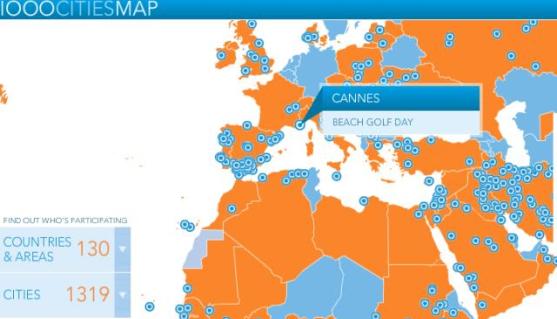
›April 7, 2010 // By Julien KatchinoffCelebrating World Health Day, the World Health Organization, with its partners around the globe, today launched an initiative for healthly lives in urban settings, through the theme “1000 Cities, 1000 Lives.” “We are at a critical turning point in history where we can make a difference,” said Dr Ala Alwan, assistant director-general for noncommunicable diseases and mental health.
Since the first World Health Day 60 years ago, the world has seen a dramatic rural exodus. Today, more people live in urban areas than anywhere else. Providing healthy livelihoods for the urban poor is a challenge, as poverty-stricken urban centers face a number of health obstacles, from high child mortality rates, environmental pollution, and widespread disease, to a lack of access to basic water, sanitation, and health care.
“In general, urban populations are better off than their rural counterparts,” said WHO Director-General Margaret Chan. “They tend to have greater access to social and health services and their life expectancy is longer. But cities can also concentrate threats to health such as inadequate sanitation and refuse collection, pollution, road traffic accidents, outbreaks of infectious diseases and also unhealthy lifestyles.”
The 1000 Cities campaign hopes to encourage all cities to promote healthy activities during the week following World Health Day (4/7-4/11). Through a new website, the WHO is collecting profiles and pictures in an easy-to-navigate map. Notable activities include HIV/AIDS-awareness flashmobs, skateboarding and cycling competitions, car-free days, outdoor sports events, and dance performances, in cities as diverse as Mandalgobi, Mongolia; Bangalore, India; and Luanda, Angola.
The Wilson Center’s Environmental Change and Security Program and its Comparative Urban Studies Program have collaborated on urbanization events and publications that examine the strong and critical connections between healthy urban populations and environmental sustainability.
With proper attention paid to delivering population, health, and environmental services in our urban centers, it may be possible to leverage the benefits of higher urban densities—such as lower aid dispersion costs, communication access, infrastructure services, and fertile environments for ideas and productivity—to ensure urban sustainability for the future. -
A Tough Nut to Crack: Agricultural Remediation Efforts in Afghanistan
›April 5, 2010 // By Julien Katchinoff“It was pretty much a normal day in Afghanistan on Monday.
Though only earning a glancing mention in The New York Times, it is heartening to see a response to the environmental and economic loss of Afghanistan’s once abundant wild pistachio forests. As a result of wide-spread environmental mismanagement and war, the past 30 years have seen a dramatic decline in the wild pistachio woodlands native to Northwestern Afghanistan.
“A couple of civilian casualties caused by insurgents. More investigations into corrupt former ministers. The opening of six new projects in Herat Province by the Italians and the Spaniards, which are the NATO countries in the lead in western Afghanistan. All right, not six, projects, but two or three, and the Spanish announced a pistachio tree-growing program to replace poppies. Pistachios, poppies… maybe pine nuts will be next.”
— At War: An Airborne Afghan Folk Tale, Alissa J. Rubin, New York Times, April 1, 2010
In a 2009 survey of Afghanistan’s environmental challenges, UNEP found that, while in 1970 “the Badghis and Takhar provinces of northern Afghanistan were covered with productive pistachio forests and earned substantial revenue from the sale of nuts,” few remain as the forests have since succumbed to mismanagement, war, and illegal logging.
In this video by the Post-Conflict and Disaster Management Branch of UNEP, scenes of dusty and denuded hillsides clearly show that rural Afghan farmers in search of sustainable livelihoods have few options remaining.
The project mentioned in the New York Times is a recent foray into remediation efforts by a Spanish Provincial Reconstruction Team (PRT) that targets communities previously involved in the production of illegal drugs. In conjunction with the Spanish Agency of Coordination and Development (AECID), the Spanish PRT is working in over 13 sites in Baghdis province–a region once covered in pistachio trees–to help farmers transition to legal crops and restore the traditional pistachio forests to their former prominence. AECID joins the Afghan Conservation Corps (ACC), USAID, NATO and additional partners in promoting remediation projects to reverse deforestation.
Unfortunately, these programs face daunting obstacles, as pistachio and other traditional Afghan cash crops –such as raisins, figs, almonds and other nuts– require substantial re-investments of time, money, and infrastructure development. Furthermore, convincing desperate rural farmers to transition to nearly untested alternative crops is difficult when they are currently counting the days to the spring opium harvest.
Recently, eradication efforts targeting small-scale farms have abated, and increased attention is being paid to facilitating shifts toward new products through free seeds, loans, technical assistance, and irrigation investments. If successful, these projects will grant rural Afghan communities the ability to sustainably and legally provide for their families, providing long-term employment and returns for a region lacking in both money and hope for the future.
Video Credit: UNEP Video, “UNEP observes massive deforestation in Afghanistan” . -
A Forecast of Push and Pull: Climate Change and Global Migration
›March 10, 2010 // By Julien Katchinoff“As we …talk about the interconnections between climate change and migration we need to look at the interconnections in a way that understands what’s positive about the processes of migration and what’s problematic,” said Susan Martin, Herzberg Professor of International Migration at Georgetown University, during a recent event on climate and migration at the Center for American Progress.
Susan Martin joined Cynthia Brady, senior conflict advisor for the Office of Conflict Management and Mitigation at USAID and David Waskow, director of the Climate Change Program at Oxfam America, to identify the catalysts for future population flows, offer pragmatic policy solutions, and discuss work to be done on the ground.
While reminding the audience that climate-induced migration will tend to follow already existing patterns, Susan Martin broadly outlined four major intersections between migration and climate change impacts:
“Slow” Migration Pressures:- Drought or desertification resulting in a loss or depreciation of livelihoods.
Result: Push working family members to migrate to domestic or international urban centers. - Rising sea levels damaging fishing and agriculture opportunities.
Result: Migration to inland regions to reduce future risk.
“Rapid” Migration Pressures:- Intensification of natural disasters and damage to infrastructure.
Result: The coping costs increase to the point where they push large numbers of people to leave their homes. Most individuals migrate internally. Of the four intersections, this is currently the most common. - Threats to the availability of food, water, and other natural resources.
Result: Low or high intensity conflict, leading to migrations. The short timeframes and potentially large numbers of migrants involved make this driver the most problematic. Differing degrees of internal political stability are factors that can interfere for better or worse.
Yet these relationships are not without controversy. “Environmentalists have tended to see the issue of migration as a way of getting attention to mitigation and have often talked about migration in very alarmist terms,” Martin said. “Migration experts, on the other hand, have been very skeptical about the interconnection.” Instead, they have argued that other push and pull factors outside of climate are much more significant to the migration calculation.
Operating from the perspective that migration itself is an adaptation failure, David Waskow outlined several strategies that Oxfam deploys to help communities copewith uncertain futures:
- Building climate resilience and developing adaptation strategies: Proactive approaches are essential, as agencies and communities can address future threats with disaster planning and creating early-warning systems.
- Managing risk: The establishment of micro-insurance projects can cushion vulnerable populations against unexpected economic shocks.
- Resettling communities: The movement of rural populations to urban areas could result in tensions over land use and strains on urban governance and carrying capacities. As a result, this approach is left as a last recourse.
Brady, though in agreement with Waskow concerning climate change’s threat to livelihoods and its role as a catalyst for conflict, suggested that there may be positive opportunities for managing climate risks. “The environment can and does provide an essential and effective platform for dialogue, communication, and confidence-building around shared interests,” Brady said. “It may be that certain conflicts actually lend themselves to the use of climate-related collaboration as a mechanism to resolve conflict or reduce tension between parties,” she said.
Climate-related projects at the community-level, from adaptive early-warning systems to mitigating carbon storage schemes, hold the possibility to bring groups together in cooperative projects, build confidence, and defuse existing tensions. Transparent and participatory management of new investments may also increase trust in local and national governments with whom trust was previously lacking. While forestalling crises in the future, adaptation projects also hold the potential to unlock opportunities for peacebuilding and conflict resolution today.
Photo Credits: Photo 1 courtesy Oxfam America. Photo 2 courtesy Center for American Progress. - Drought or desertification resulting in a loss or depreciation of livelihoods.
-
VIDEO: David Jensen on UNEP and Natural Resource Management After Conflict
›November 5, 2009 // By Sajid Anwar“We don’t do the gloom-and-doom scenarios anymore,” says David Jensen of the UN Environment Programme’s Post-Conflict and Disaster Management Branch, in a video interview with ECSP Director Geoff Dabelko. “We focus on the opportunities provided by resource management. We focus much more on how they can support economic recovery, how they support livelihoods, how environment can be a platform for cooperation.”
When conducting its post-conflict environmental assessments, UNEP looks for “entry points using specific hotspots or specific sites that people can really understand and see the linkage between environment and conflict, or between their livelihoods and natural resources,” says Jensen. “We always try to be in the field and demonstrate the value of better resource management” for post-conflict recovery. -
Trees: The Natural Answer to Climate Change, Food Insecurity, and Global Poverty
›September 30, 2009 // By Brian KleinSome advocates of geoengineering have touted fake, plastic “trees” as a promising technology for absorbing carbon. But other experts are promoting a solution that also filters water, encourages rainfall, prevents erosion and desertification, offers economic opportunities, and provides a vital source of food for a growing global population: real trees. -
Wind Farms’ Dirty Laundry Aired in Mexico and the United States
›September 18, 2009 // By Kayly OberMany see wind as a great source of green energy, but some local communities around the world are seeing red. Specific cases in the United States and Mexico—two countries that are now investing heavily in wind energy—highlight the potential for community opposition to wind farms in the rural areas where they are being built.
Mexico was recently dubbed the “Saudi Arabia of alternative energy” by USA Today due to the government and foreign investors’ massive wind energy initiatives. The Isthmus of Tehuantepec, a narrow point between two mountain ranges where wind from the Gulf of Mexico is funneled out to the Pacific Ocean, is known as the one of the windiest places on earth.
Mexican President (and former energy minister) Felipe Calderon has called for the isthmus to produce 2,500 megawatts of electricity from wind power within three years. The project is intended to decrease Mexico’s dependency on its falling oil supplies and stimulate the economy in Oaxaca, one of the poorest states in Mexico.
However, the local community has greeted the initiative with unexpectedly fierce opposition. Residents are angry that the electricity will likely be sold to distant cement plants and big-box stores like Wal-Mart.
In addition, foreign companies have offered local farmers little compensation—about $46 per acre each year—for the land. Residents say they need more, especially since wind farms threaten their traditional livelihoods. Construction stirred up huge amounts of dust and blocked irrigation lines, forcing many farmers to cut crops and herds by more than half.
A group of farmers recently sued three Spanish companies, claiming that the investors aimed to trick poorly educated farmers, many of whom did not speak Spanish, with misleading contracts. Demonstrators in La Venta have disrupted the construction of the Eurus wind farm six times. And territorial disputes have reignited old feuds along racial and political lines in San Mateo del Mar.
Wind farms in the United States are also generating opposition, although of a milder variety. In Flint Hills, Kansas, 100 wind turbines now tower over 20 miles of roads. While most environmentalists cheer such a move, the positive energy prospects on the plains may also bring some negative consequences, such as fragmenting the already fragile prairie ecosystem.
The issue is even more contentious in Cape Cod, where developers are set to construct 170 wind turbines off the coast. Opponents argue that the Cape Wind project will obstruct ocean views, decrease tourism, disrupt traditional fishing trawlers, and block a major bird migration route. In 2008, when the Interior Department issued a favorable report on the project, the late Sen. Edward Kennedy famously announced that its decision “virtually assured years of continued public conflict and contentious litigation.” Local opposition groups, such as the Alliance to Protect Nantucket Sound, have said they are prepared to go to court if the project proceeds.
With the renewable energy footprint of the U.S. set to reach nearly 80,000 square miles of land by 2030, tensions over land-use issues look likely to rise.
These cautionary tales should not deter us from pursuing wind as a viable alternative energy source. Certainly, given the imperative to act against catastrophic climate change, wind should be part of the mix. However, planners and policymakers must consider the likely impacts on the local community; work with affected communities during site selection and construction; and share the benefits of the new projects in order to avoid environmental degradation and social unrest.
Photo: A wind farm in Mexico. Courtesy Flickr user Cedric’s Pics.
Showing posts from category livelihoods.



 Some advocates of


