

Showing posts from category livelihoods.
-
Going Gaga Over Grain: Pakistan and the International Farms Race
›September 17, 2009 // By Wilson Center Staff Written by Michael Kugelman and originally published in Dawn.
Last May, while Pakistan’s military was waging its offensive in Swat, Islamabad officials were simultaneously launching another offensive in the Gulf: a charm offensive to secure investment in Pakistani farmland.
Appearing at “farmland road shows” across the region, the investment ministry representatives depicted Pakistan’s soil as the perfect solution to the Gulf nations’ food insecurity.
Such efforts have paid off for Islamabad (and according to media reports, more shows have been staged in recent days). Pakistan’s farmland is an increasingly popular target for wealthy, food-importing nations who, because of the volatility of world food markets, are taking food security matters into their own hands. These states (and also private investors) aim to buy or lease farmland overseas, grow their own crops and export them back home.
Given their lack of transparency, the details surrounding these investments are sketchy and the facts elusive. In Pakistan, uncertainty reigns over the exact amount of land made available to investors, the quantum of land sold or leased so far, and who is in fact doing the investing.
Still, even without these details, there is strong evidence to suggest that the race for Pakistan’s farmland — if not halted prematurely by farmers’ opposition or investor change-of-hearts — could trigger droves of land deals, acute resource shortages and even political strife.
Islamabad has established an extraordinarily welcoming investment environment that financiers will find hard to resist. The government’s Corporate Agriculture Farming (CAF) policy — spelled out on the Board of Investment’s website — effectively legalizes foreign land acquisitions. It permits state land to be purchased outright or leased for 50 years, and allows investors to determine the size of their acquisitions (with no upper ceiling). These features apply to a broad range of agriculture from crops, fruits and vegetables to forestry and livestock farming.
Land investors flock to countries with strong legal protections. Cambodia’s government has reportedly established a national land concession authorizing public land to be allocated to foreigners — and the country is now experiencing what the BBC describes as an “epidemic of land-grabbing.” Conversely, in India, foreign companies are banned from owning farmland — and considerably fewer investors have come calling.
Pakistan, like Cambodia, provides the legal cover farmland investors look for. However, the CAF goes beyond legal protections. It also offers generous financial incentives such as 100 per cent foreign equity; exemptions on land transfer duties; and customs-duty-free, sales-tax-free agricultural machinery imports.
Legal protection and financial incentives — what more could a foreign land investor in Pakistan want? Security, of course, and Islamabad purports to have this covered as well, through the formation of a 100,000-strong security unit. Pakistan’s government is so serious about concluding land deals that it has offered to deploy a force almost a fifth the size of the army to protect investors’ new holdings.
A rash of foreign land acquisitions in Pakistan would deepen the country’s resource crisis. Pakistan already suffers widespread water shortages, and could be water-scarce by 2020. However, supplies could dry up much sooner if enormous quantities of water are siphoned off to support large-scale, water-intensive agricultural production schemes.
To understand the scale of Pakistan’s water shortages, take a look at Aquastat, the FAO’s water statistics database. Of all the nations most often associated with relinquishing farmland, only one — Kenya — has less water availability per capita than Pakistan’s 1400 cubic meters. In fact, of the nearly 200 countries listed in the database, only 35 have less water than Pakistan — many of them the parched countries of the Gulf that are seeking the water-laden farmland they lack at home.
Indeed, quests for overseas farmland are water hunts as much as they are land hunts. Yet investors are seemingly so seduced by Islamabad’s legal and financial inducements that they disregard the fact that Pakistan’s water supply can barely sustain its own farming, much less that of immense foreign agribusiness projects.
Pakistan’s water and energy shortages could also limit the possible benefits accruing from the deals, including better technology, more employment and higher crop yields. With limited energy to operate upgraded farm machinery, and limited water to irrigate cropland, farming job prospects could suffer and talk of increased yields could become irrelevant.
Land deals could mean not just compromised small-holder livelihoods but also widespread displacement. Not surprisingly, critics argue that big land acquisitions could spark violent responses and mass political unrest. Such predictions may be premature — other than in Madagascar, opposition has been relatively localized — but they are not far-fetched in Pakistan.Here’s why. According to the World Food Program, 77 million Pakistanis are already food-insecure, and many of them live in the country’s most volatile areas. Foreign land holdings could cause a flare-up of this food vulnerability powder keg at the worst possible time. During the height of last year’s global food crisis, Pakistan imposed export bans to keep domestic food prices down.
According to a report by the International Institute for Sustainable Development, the UAE — which hopes to grow rice and wheat in Pakistan — then requested blanket exemptions from these bans.
Islamabad eventually relaxed export restrictions on Basmati rice. So a politically explosive scenario — such as the UAE trucking rice out of a drought-stricken or war-ravaged Pakistan and exporting it back to the Gulf while hungry locals look on — is not at all unrealistic. Throw that investment-protecting security force into the mix, and things could get really ugly.
Furthermore, there are long-standing rifts between Pakistan’s rural poor and its wealthy, landholding elite. Scores of huge land acquisitions — particularly if they displace poor laborers — would exacerbate these class-based cleavages.
Ominously, the Taliban’s actions in Swat reveal a new ability to exploit class divisions by pitting landless farmers against their landlords. Militants may well use farmland acquisitions as a pretext for fomenting a fresh class revolt in Punjab, the fertile, populous province coveted by the Taliban and reportedly ground zero for the farms race in Pakistan. Such a thought is enough to make one wonder if those farmland road shows are really worth the effort.
Michael Kugelman is program associate with the Asia Program at the Woodrow Wilson International Center for Scholars.
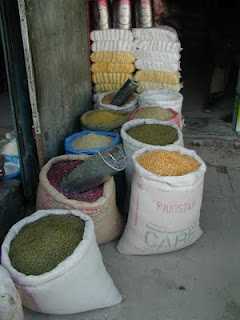
Bottom photo: CARE food aid in Pakistan. Courtesy flickr user Feinstein International Center.
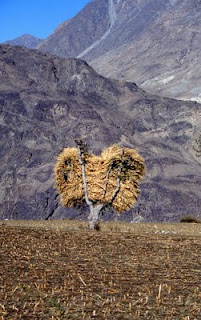
Top photo: Gilgit, Pakistan. Courtesy flickr user michaelnewport. -
VIDEO: Jon Barnett on Remembering REDD Realities
›June 26, 2009 // By Wilson Center StaffIn the run-up to December’s Conference of the Parties in Copenhagen, the idea of REDD, Reduced Emissions from Deforestation and Degradation, is gaining greater currency as a way to bring forests into climate mitigation efforts. Australian geographer Jon Barnett of the University of Melbourne finds the principle of compensating states or communities for reducing deforestation sound. Yet he cautions that the devil is in the details when it comes to implementation. Barnett stresses that deforestation’s diverse causes is an initial challenge in designing effective responses. And to whom should payments be made? Should they go to national governments that may or may not share those resources with communities affected by the restrictions on forest use?
In this interview conducted at the Woodrow Wilson Center, Barnett addresses these questions and highlights a number of areas where translating REDD from principle to practice remains challenging at best and counter-productive at worst: governance and corruption; social justice; monitoring and verification; and potential carbon leakage between participating and non-participating states. -
Climate and Migration: Threat or Opportunity?
›June 26, 2009 // By Lauren Herzer Risi“The breakdown of ecosystem-dependent livelihoods is likely to remain the premier driver of long-term migration during the next two to three decades,” says In Search of Shelter: Mapping the Effects of Climate Change on Human Migration and Displacement, a report launched at the recent international climate negotiations in Bonn.
According to the report, climate change will threaten livelihoods (and could consequently drive migration) through its impact on agriculture, glacial melt, sea-level rise, and the severity and frequency of natural disasters. While the report recognizes that migration is a complex issue involving a “combination of environmental, economic, social and/or political factors,” it stresses the impact of environmental change on “livelihoods which are dependent on ecosystem services, such as agriculture, herding, and fishing.”
Key to the report’s findings is the disproportionate effect that climate change will continue to have on developing countries, which are ill-equipped to adapt to climate change, and where many people’s livelihoods depend directly on ecosystem services. The report calls for the reduction of carbon emissions to mitigate climate change; the promotion of technologies that will enable adaptation; and the active participation of women and other marginalized groups in adaptation planning.
In a recent invitation-only meeting hosted by the Wilson Center’s Environmental Change and Security Program, Jon Barnett of the University of Melbourne suggested that migration that is partially due to climate might be an opportunity, as “you could use migration to facilitate adaptation.” In Search of Shelter also recognizes this potential opportunity, and suggests that development strategies be formulated accordingly. Better infrastructure, health care, and education in likely receiving cities—many of which are in the developing world and are already overwhelmed by burgeoning slum populations—would significantly reduce the pressure of migration on both migrants and receiving populations.
In Search of Shelter is a unique contribution to the field, examining climate change’s impact on migration in a careful, evidence-based manner. Yet it strikes a common chord with general reports on development by stressing the important role that access to health care, education, and infrastructure play in supporting healthy, secure populations. It may be up for debate how large of a role climate change will play in prompting migration, but it is clear that we need to integrate this issue into broader development, health, and governance strategies.
Image: Cover of In search of shelter: mapping the effects of climate change on human migration and displacement. © 2008 by CARE International. Used by permission. -
VIDEO: Jon Barnett on Climate Change, Small Island States, and Migration
›June 23, 2009 // By Wilson Center StaffNo one is currently emigrating from Pacific small island states principally due to climate change, according to Australian geographer Jon Barnett of the University of Melbourne. In this short interview conducted at the Woodrow Wilson Center, Barnett situates climate change’s potential future impacts within the broader social, political, and economic challenges for residents of small island states, reminding us that there is great physical and political diversity among these islands.
Stressing the mix of pushes and pulls that motivate people to move, Barnett suggests we examine existing patterns of migration to better understand how they will develop in the future. He emphasizes that climate change is most likely to push islanders to move due to declining food production and drinking water availability, rather than sea-level rise—despite the iconic image of lapping waves submerging low-lying countries. These sober reminders on the complexity of climate-migration links are worth keeping in mind when evaluating the plethora of new reports on the topic. -
VIDEO: Leona D’Agnes on Population, Health, and Environment
›April 15, 2009 // By Wilson Center StaffIntegrated population-health-environment (PHE) programs “are very cost-effective ways” to develop “community capacity—to strengthen their know-how, and bring…in some additional appropriate technologies” to promote livelihoods, says Leona D’Agnes in this short expert analysis from the Environmental Change and Security Program.
“It doesn’t require a lot of money, but it does require capacity building and being able to motivate communities and help them to understand that it is not just the government that’s responsible for their development. Their own food security and environmental security rests with their abilities to manage their assets, their natural resources, to plan their families, and make sure their children finish school.”
In this expert analysis, D’Agnes, currently a consultant to CDM International on PHE and forestry in Nepal, discusses the linkages between population, health, and environment involved in her work as a technical adviser for PATH Foundation Philippines and its IPOPCORM project.
To learn more about population, health, and environment issues, please visit our PHE page. -
Reading Radar– A Weekly Roundup
›April 10, 2009 // By Wilson Center StaffUncharted Waters: The U.S. Navy and Navigating Climate Change, a working paper by the Center for a New American Security, examines climate change’s implications for the U.S. Navy.
Defense Secretary Robert Gates recently chose Admiral James Stavridis, the former head of U.S. Southern Command known for his “smart power”/“sustainable security” approach, to lead U.S. European Command.
An Economist article highlights some of the linkages between water and political instability, energy, food, demography, and climate change.
The Governance of Nature and the Nature of Governance: Policy That Works for Biodiversity and Livelihoods, a report by the International Institute for Environment and Development, explores the success of local-level conservation. It features case studies from India, Tanzania, and Peru.
Sheila Herrling of the Center for Global Development argues that the USAID Administrator should become a permanent member of the National Security Council.
The Nation wonders whether nations go to war over water; Nature (subscription required) and Slate say “no.” ECSP has weighed in on this issue in the past.
Lisa Friedman of ClimateWire reports on Bangladesh’s attempts to prepare for the impacts of climate change. -
From Assessment to Intervention: Redefining UNEP’s Role in Conflict Resolution
›April 9, 2009 // By Will Rogers“Can we get beyond the point where environment and conflict always has to be a story of tragedy with no happy ending?” asked Achim Steiner at the March 24, 2009, launch of From Conflict to Peacebuilding: The Role of Natural Resources and the Environment, a new report from the UN Environment Programme (UNEP).
“I think we actually can provide a critical set of building blocks that would allow us to be not just lamenters on the sidelines,” but active problem-solvers, said Steiner, UNEP’s executive director. UNEP would like to put “green advisers, so to speak, with blue helmets” to examine peacebuilding “from an environmental, natural resource restoration point of view” and “minimize the potential for conflicts to escalate again,” said Steiner, who recently met with Alain Le Roy, UN undersecretary-general for peacekeeping operations, to discuss plans for embedding environmental advisers with UN peacekeeping troops.
Steiner was joined by Daniel Reifsnyder, deputy assistant secretary for environment at the U.S. State Department, and Andrew Morton, manager of UNEP’s Disasters and Conflicts Programme, to discuss the report’s findings.
Natural Resources and the Conflict Continuum
According to From Conflict to Peacebuilding:- Forty percent of intrastate conflicts within the past 60 years have been strongly linked to natural resources.
- Such conflicts are twice as likely to relapse within the first five years of peace.
- Less than a quarter of peace agreements for these conflicts address natural-resource issues.
Environmental factors can contribute to conflict and subvert peace in three main ways:
- The inequitable distribution of resource wealth, competition for scarce or valuable resources, and environmental degradation can contribute to the outbreak of conflict.
- Natural resources can used as “a financing vehicle for conflict—sustaining conflict well beyond the point where conflict has its origin, to actually having become part of an at-war economy, a conflict economy,” Steiner said.
- Unresolved environmental issues can subvert peace negotiations, especially when warring parties have a stake in lucrative resources. If we do not understand “how environment and natural resources can undermine very volatile peace agreements,” Steiner warned, we can “find ourselves back where we started off from.”
Lessons Learned and the Way Forward
Natural-resource conflicts have direct impacts—like deforestation and desertification—and indirect impacts—like the disruption of livelihoods—that are devastating to communities, Morton said. They also weaken a government’s capacity to manage its industry and infrastructure, like waste management and water purification, creating new environmental problems—and thus possible future conflict.
But the environment also offers opportunities, Morton emphasized. In Rwanda, for instance, “we have gorilla tourism going on within a few kilometers of what, essentially, was a war zone.”
UNEP recommends that peacekeepers:- Assess the natural-resource and environmental issues underlying conflicts.
- Monitor and address natural-resource use in conflict areas.
- Incorporate resource-sharing agreements into peace deals.
- When cooperation is not possible, use punitive measures to end resource exploitation.
U.S.-UNEP Cooperation on Environment, PeacebuildingAccording to Reifsnyder, the U.S. government frequently supports UNEP initiatives, such as the $1.8 million in U.S. funding for a UNEP reforestation and energy-efficiency program in an internally displaced persons camp in Darfur. This project grew out of the post-conflict environmental assessment that UNEP recently conducted in Sudan.
Reifsnyder praised UNEP’s focus: “UNEP is uniquely positioned to play a real catalytic role within the UN system, bringing together various parts of the UN system to try to focus on the importance of natural resources and the importance of the environment in peacebuilding initiatives,” he said.
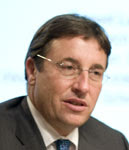
Photos: From top to bottom, Achim Steiner, Andrew Morton, and Daniel Reifsnyder. Courtesy of Dave Hawxhurst and the Woodrow Wilson Center. -
VIDEO: Steven Sinding on ‘Making the Case for U.S. International Family Planning Assistance’
›April 8, 2009 // By Wilson Center Staff“If countries cash in on this window of opportunity” opened by falling birth rates, “it makes a big difference in their chance for development,” says Steven Sinding in this short expert analysis from the Environmental Change and Security Program. “While it is not a sufficient condition for economic growth, decreasing fertility is certainly a necessary condition for doing so.”
Sinding, a senior scholar at the Guttmacher Institute, discusses the recent report Making the Case for U.S. International Family Planning Assistance, which he co-authored, and argues that family-planning programs are central to addressing today’s social, economic, and environmental challenges.
To learn more, please see the complete video, as well as transcripts, PowerPoints, and a summary, from the March 17, 2009, Wilson Center launch of the report.
 Written by Michael Kugelman and originally published in
  Here’s why. According to the World Food Program,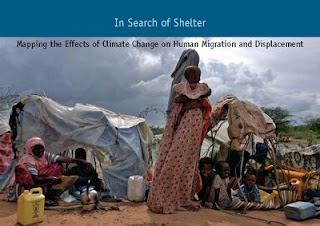
 “Can we get beyond the point where environment and conflict always has to be a story of tragedy with no happy ending?” asked Achim Steiner at the March 24, 2009,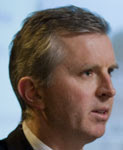
 According to Reifsnyder, the U.S. government frequently supports UNEP initiatives, such as the $1.8 million in U.S. funding for a UNEP reforestation and energy-efficiency program in an internally displaced persons camp in Darfur. This project grew out of the

