-
The Climate and Ocean Risk Vulnerability Index: Measuring Coastal City Resilience to Inform Action
›Guest Contributor // January 26, 2021 // By Jack Stuart, Sally Yozell, Miko Maekawa & Nagisa Yoshioka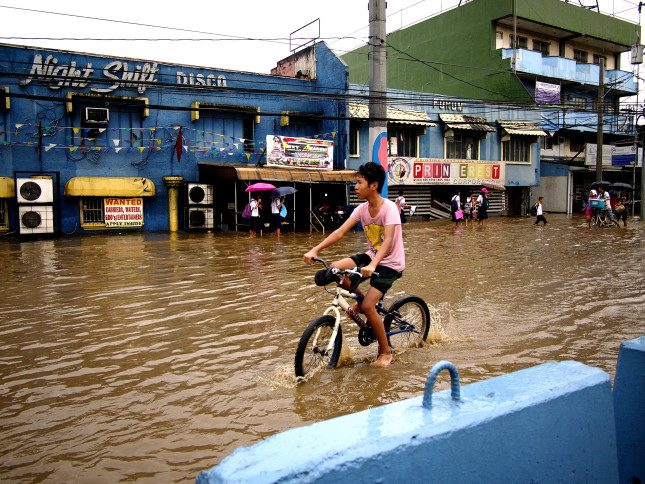
As the climate crisis continues to worsen, climate finance remains a fraction of what is needed. The Climate Policy Initiative estimates that $579 billion was spent on average on climate finance in 2017/18. This includes domestic and international investment from both the public and private sectors towards climate mitigation and adaptation actions. Of this amount, only $30 billion—five percent—was allocated for climate adaptation. This amount stands in stark contrast to $180 billion, which the Global Commission on Adaptation estimates is needed every year to build resilience to current and future climate impacts. This catastrophic funding gap is intensifying climate security threats and elevating the vulnerability of people across the world, particularly in coastal urban centers.
-
How We Misunderstand the Magnitude of Climate Risks – and Why That Contributes to Controversy
›
For years, analysts have disputed the extent of climate change’s role in conflict. But the nature of climate risks can stifle those looking to define them.
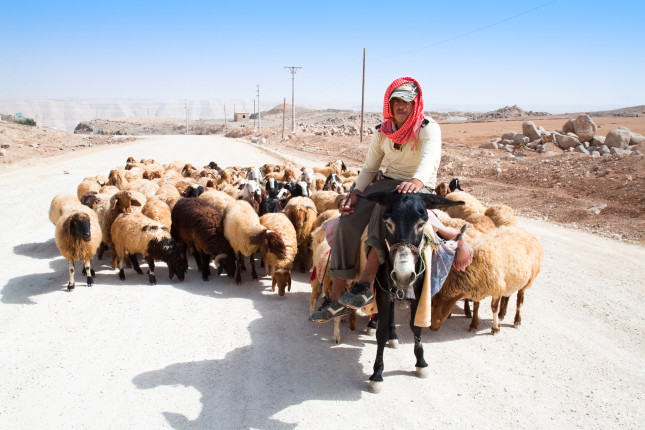
The Syrian civil war has raged for almost a decade now, and in the climate security community it can feel as if we’ve spent at least that long arguing about its causes. For every claim about the impact of extreme drought in the lead up to 2011, there’s been blowback, with some scholars arguing that the climate angle has been exaggerated at the expense of other causes of the conflict. And for every argument about rural-to-urban migration, there have been suggestions that its impact in precipitating protests has been overstated. Amid some overly forceful media assertion about the significance of climate change—and valid fears that invoking the environment might be seen as absolving guilty parties, despite efforts to highlight the regime’s ultimate culpability—climate security analysts have struggled to fully pinpoint climate’s precise contribution to the conflict. Cue uncertainty, controversy, and sometimes fierce academic polemics.
-
Why Secondary Cities Deserve More Attention
›Mention London, Rome, or New York, and people immediately conjure up Big Ben, the Colosseum, the Statue of Liberty. Beijing, Cairo, Mumbai? Check. They’ve heard of them. Megacities, the ones with lots of history, lots of people, and an oversized impact on the economy and culture, tend to be well-known.
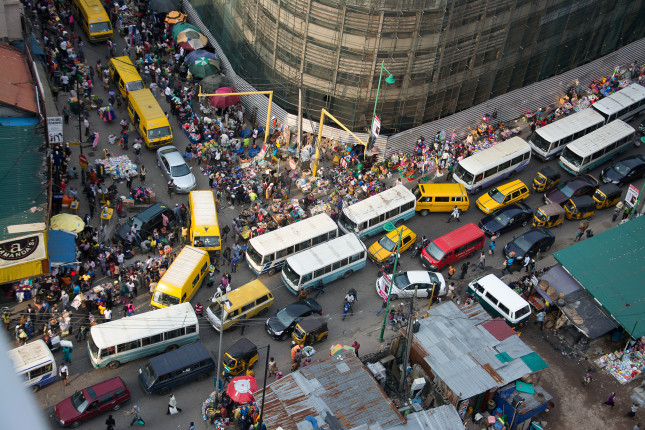
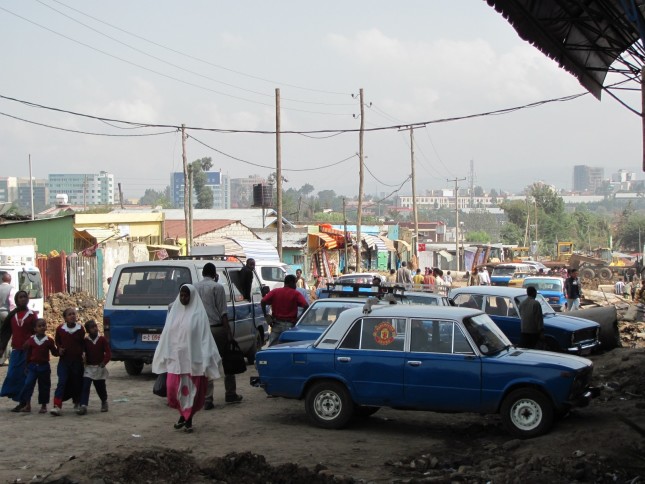
Fewer people may know much about Addis Ababa, Dhaka, Lagos, or São Paulo — yet many would recognize the names. But who knows or has been to Darkhan, Mongolia or Santa Fe, Argentina or Boké-Kamsar in Guinea?
-
With War Over the GERD Unlikely, Institutionalizing Nile River Diplomacy Would Be a Wise Next Step
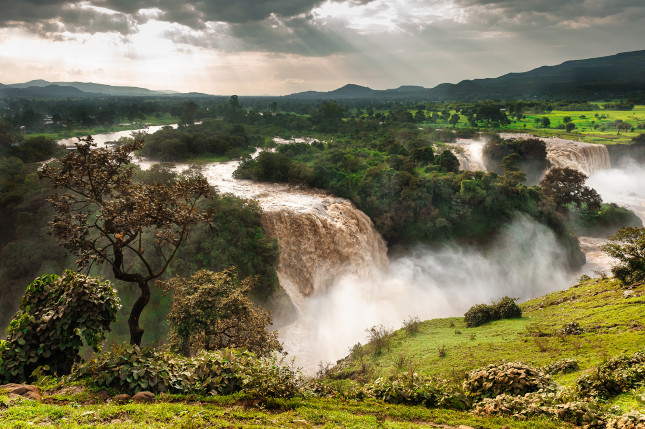
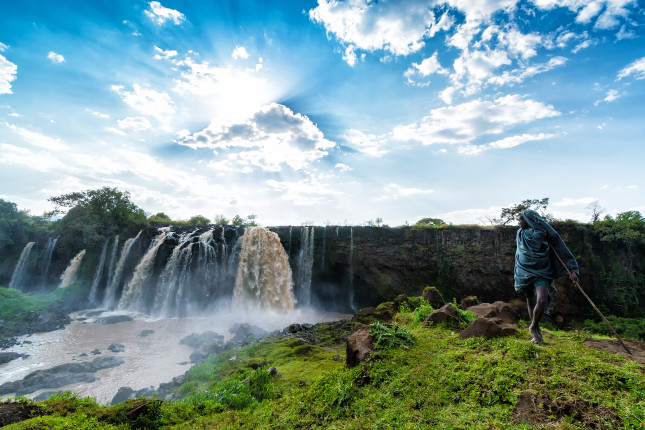
›The Grand Ethiopian Renaissance Dam (GERD) poses numerous challenges for the Nile river basin, but it also presents an opportunity for regional collaboration and shared prosperity, said Aaron Salzberg, Director of the Water Institute at the University of North Carolina and Wilson Center Global Fellow, at a recent event hosted by the University of North Carolina’s Center for Middle East and Islamic Studies.
-
Introducing “Navigating the Poles”
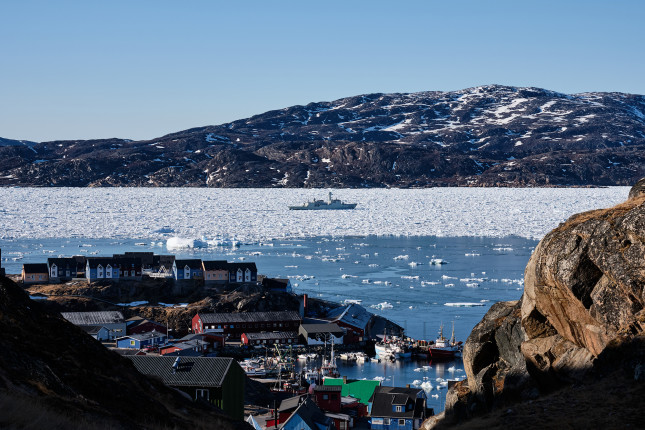
›The polar regions of Antarctica and the Arctic have long captured the world’s imagination as seas and continents covered in unending ice. But the reality of the two regions is quickly shifting, with cascading consequences for the globe.
-
In COVID’s Wake: How to Revive Urban Mass Transit
›Covid-19 // Guest Contributor // September 1, 2020 // By Gretchen De Silva, Chris Upchurch & Gad PerryThe COVID-19 pandemic could lead to the death of mass transit. Few victims of COVID-19 were infected aboard mass transit, according to recent research. Yet ridership on urban mass transport has fallen sharply during the pandemic. In some places, such as Wuhan, China, the government shut mass transport down. In other places, the public stayed away. For example, New York City’s Metro-North commuter line reported a 95 percent COVID-19-related decrease in riders. Bus systems, which often disproportionally serve poorer riders who cannot work from home, have seen marked but less extreme drops in ridership.
-
Tensions Surrounding the Grand Ethiopian Renaissance Dam: A Wilson Center NOW Interview with Aaron Salzberg
›Dams can be a double-edged sword, said Aaron Salzberg, a Wilson Center Global Fellow, Director of the Water Institute at the University of North Carolina, and former Special Coordinator for Water Resources for the U.S. Department of State. He spoke in a recent episode of Wilson NOW about the Grand Ethiopian Renaissance Dam, which will become Africa’s largest hydroelectric dam, once it’s fully operational.
-
Better Governance Needed to Overcome Africa’s Resource Curse
›“Africa, as you all know, is one of the most resource-rich regions of the world,” said Cyril Obi, Program Director of the African Peacebuilding Network at the Social Science Research Council. “But many observers have noted that in spite of all this natural wealth, Africa seems to have quite a substantial proportion of its population living under poverty.” He spoke at a recent Wilson Center Africa Program event that examined the relationship between natural resources, sustainable development, and peace in Africa. How do you explain a continent rich with natural resources where so many people live in poverty, he asked.
Showing posts from category Infrastructure.