• woodrow wilson center
  • ecsp

New Security Beat

Subscribe:
  • rss
  • mail-to
  • Who We Are
  • Topics
    • Population
    • Environment
    • Security
    • Health
    • Development
  • Columns
    • China Environment Forum
    • Choke Point
    • Dot-Mom
    • Friday Podcasts
    • Navigating the Poles
    • Reading Radar
  • Multimedia
    • Water Stories (Podcast Series)
    • Backdraft (Podcast Series)
    • Tracking the Energy Titans (Interactive)
  • Films
    • Water, Conflict, and Peacebuilding (Animated Short)
    • Paving the Way (Ethiopia)
    • Broken Landscape (India)
    • Scaling the Mountain (Nepal)
    • Healthy People, Healthy Environment (Tanzania)
  • Publications
  • Events
  • Contact Us

NewSecurityBeat

The blog of the Wilson Center's Environmental Change and Security Program
Showing posts from category Infrastructure.
  • The Dark Side of the Sun: Avoiding Conflict Over Solar Energy’s Land and Water Demands

    ›
    October 2, 2018  //  By Olivia Smith

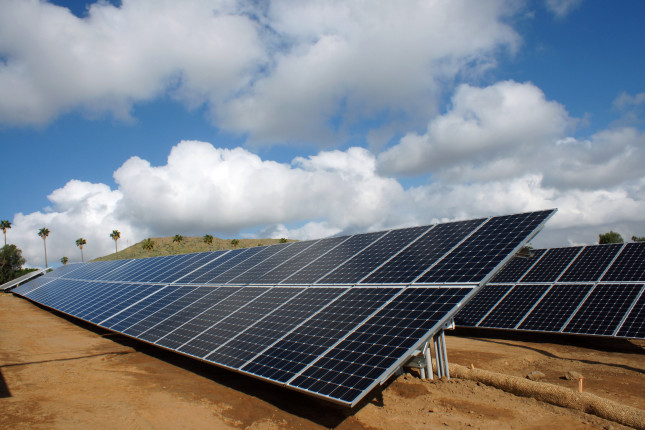
    The 73-megawatt Lopburi solar power plant in central Thailand is the largest solar photovoltaic project in the world.  It will be central to Thailand's efforts to generate  energy from renewable sources.

    Solar farms—just like regular farms—cover large swaths of land, requiring between 3.5 to 16.5 acres per MW of generating capacity. The largest solar plant in the world, the 648 MW Kamuthi facility in Tamil Nadu, India, covers ten square kilometers. But it will be dwarfed by the 3,450 MW facility under construction on China’s Tibetan Plateau, which will span 298 square kilometers when completed. Building these large plants requires fundamentally changing how the land they sit on is used, which—without careful planning—could have negative impacts on the environment and local communities that could potentially lead to conflict. The backlash could not only derail solar projects, but could also fuel resistance to future renewable energy development.

    MORE
  • Cape Town’s Harrowing Journey to the Brink of Water Catastrophe

    ›
    Guest Contributor  //  September 14, 2018  //  By Brett Walton
    2018-04-South-Africa-Cape-Town-BWalton-IMG_4939-Edit-2500

    The original version of this post by Brett Walton appeared on Circle of Blue. Travel funding for this story came from the Pulitzer Center on Crisis Reporting.
     

     This is what a water panic looks like in a major global city.

    People hoard water. They queue for hours, well into the night, to fill jugs at natural springs. Like mad Christmas shoppers, they clear supermarkets of bottled water. They descend on stockers before they can fill the shelves.

    MORE
  • The Crushing Environmental Impact of China’s Cement Industry

    ›
    China Environment Forum  //  September 13, 2018  //  By Kimberly Yang
    poyang_oli_2013358

    China—the world’s fastest-growing economy with the largest population—leads the world in cement production, the critical ingredient that has built China’s mammoth cities, sprawling roads, and other infrastructure. China pours 60 percent of the world’s cement; the country’s production in 2011-2013 surpassed U.S. production for the entire 20th century. While it paved the way for Chinese growth, it came at a dangerous cost: 1.6 million Chinese citizens die each year from respiratory illnesses linked to small particulate matter emissions, of which 27 percent come from cement production.

    MORE
  • Big Dams, Big Damage: The Growing Risk of Failure

    ›
    August 21, 2018  //  By Olivia Smith
    Kariba-Dam

    Last month, a partially completed dam in Laos’ Attapeu province collapsed, washing away people and villages in its path. Hundreds of people are still missing and more than six thousand are homeless. And after last summer’s hurricanes, U.S. citizens in Houston and Puerto Rico escaped death but were forced to evacuate when dams were flooded. Dam failure can be catastrophic for people, property, and power—and the risks are rising, due to lack of investment in maintenance, growing vulnerability to climate change, and the demonstrated potential of cyberattacks.

    MORE
  • Coastal Resilience on Capitol Hill: Protecting the United States’ Infrastructure, Economy, and Security

    ›
    On the Beat  //  July 24, 2018  //  By Rebecca Lorenzen
    RI-National-Guard

    Every dollar invested in preparing for natural disasters could save seven dollars, said Alice Hill, Research Fellow at the Hoover Institution, at a recent briefing on Capitol Hill. Catastrophic events like Superstorm Sandy present significant financial risks to U.S. businesses, the federal treasury, and the global economy. These complex emergencies have taught us that “everything is connected: our transportation system failed, our health sector failed,” said Hill, in the wake of these storms.

    MORE
  • China’s Waste Import Ban: Dumpster Fire or Opportunity for Change?

    ›
    China Environment Forum  //  July 19, 2018  //  By Guo Chen
    Empty Chinese plastic bottles ready to be recycled

    In early January of this year, China’s “National Sword” policy banned imports of non-industrial plastic waste. The ban forces exporting countries to find new dumping grounds for their waste, which is estimated to total nearly 111 million metric tons by 2030. China’s decision has exposed deep structural flaws and interdependencies in the global waste management system. Western countries that have long depended on China to take their garbage are now struggling to deal with mounds of plastic trash, while China lacks the low-priced labor needed to effectively sort and process waste.

    MORE
  • As Afghanistan’s Water Crisis Escalates, More Effective Water Governance Could Bolster Regional Stability

    ›
    Guest Contributor  //  July 11, 2018  //  By Elizabeth B. Hessami

     “Kabul be zar basha be barf ne!” This ancient proverb—“May Kabul be without gold rather than snow”—refers to snowmelt from the Hindu Kush Mountains, a primary source of Afghanistan’s water supply. To recover from years of armed conflict, Afghanistan needs a stable water supply, but its sources are increasingly stressed by severe droughts. The Norwegian Refugee Council estimates that today, 2 out of 3 provinces are impacted by drought, putting two million people at risk of hunger. Improving the country’s water governance—the social, legal, and administrative systems that guide how water is distributed and used—may help it avoid both internal and regional conflicts by stabilizing its economy and its citizens’ livelihoods.

    MORE
  • Building Coastal Resilience to Protect U.S. National Security

    ›
    June 28, 2018  //  By Wilson Center Staff
    Atoll

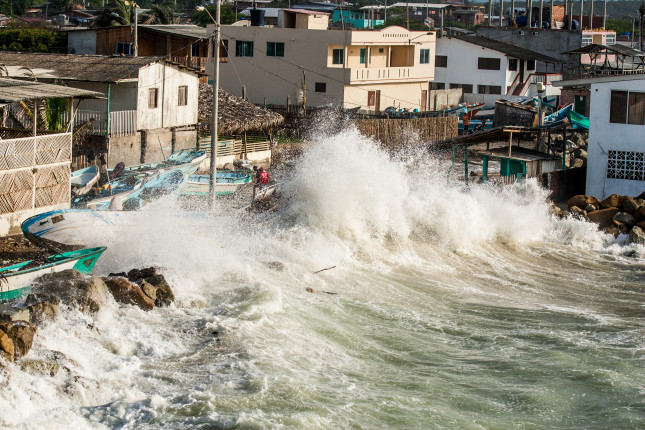
    As the Atlantic hurricane season kicks off this month, some coastal communities in the United States and small-island nations in the Caribbean are still recovering from last year’s record-breaking damage. At the same time, the heavy rains pounding the East Coast this week are part of a long-term trend towards more severe heavy rainfall events that have led to deadly floods and threaten critical U.S. military bases. Even on sunny days, cities such as Norfolk and Manila contend with high tide or “nuisance” flooding—a phenomenon that has increased as much as nine-fold since the 1960s, according to NOAA.

    MORE
Newer Posts   Older Posts
View full site

Join the Conversation

  • RSS
  • subscribe
  • facebook
  • G+
  • twitter
  • iTunes
  • podomatic
  • youtube
Tweets by NewSecurityBeat

Trending Stories

  • unfccclogo1
  • Pop at COP: Population and Family Planning at the UN Climate Negotiations

Featured Media

Backdraft Podcast

play Backdraft
Podcasts

More »

What You're Saying

  • Volunteers,At,The,Lagos,Food,Bank,Initiative,Outreach,To,Ikotun, Pan-African Response to COVID-19: New Forms of Environmental Peacebuilding Emerge
    Rashida Salifu: Great piece 👍🏾 Africa as a continent has suffered this unfortunate pandemic.But it has also...
  • A desert road near Kuqa An Unholy Trinity: Xinjiang’s Unhealthy Relationship With Coal, Water, and the Quest for Development
    Ismail: It is more historically accurate to refer to Xinjiang as East Turkistan.
  • shutterstock_1779654803 Leverage COVID-19 Data Collection Networks for Environmental Peacebuilding
    Carsten Pran: Thanks for reading! It will be interesting to see how society adapts to droves of new information in...

What We’re Reading

  • Rising rates of food instability in Latin America threaten women and Venezuelan migrants
  • Treetop sensors help Indonesia eavesdrop on forests to cut logging
  • 'Seat at the table': Women's land rights seen as key to climate fight
  • A Surprise in Africa: Air Pollution Falls as Economies Rise
  • Himalayan glacier disaster highlights climate change risks
More »
  • woodrow
  • ecsp
  • RSS Feed
  • YouTube
  • Twitter
  • Facebook
  • Home
  • Who We Are
  • Publications
  • Events
  • Wilson Center
  • Contact Us
  • Print Friendly Page

© Copyright 2007-2021. Environmental Change and Security Program.

Woodrow Wilson International Center for Scholars. All rights reserved.

Developed by Vico Rock Media

Environmental Change and Security Program

Woodrow Wilson International Center for Scholars

Ronald Reagan Building and International Trade Center

  • One Woodrow Wilson Plaza
  • 1300 Pennsylvania Ave., NW
  • Washington, DC 20004-3027

T 202-691-4000