-
The First Political Order: How Sex Shapes Governance and National Security Worldwide (Book Launch)
›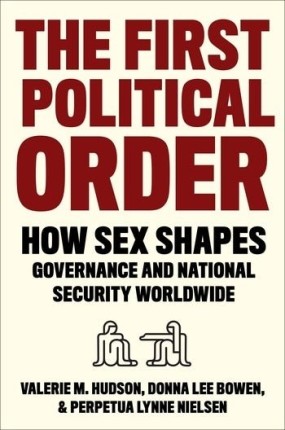
“What you do to your women you do to your nation state. And so, if you decide to curse your women, we argue that you will curse your nation state as well,” said Valerie Hudson, University Distinguished Professor and Holder of the George H.W. Bush Chair at the Bush School of Government and Public Service at Texas A&M University, at the launch of The First Political Order. Co-authored by Hudson, Donna Lee Bowen, Professor Emerita at Brigham Young University, and P. Lynne Nielson, Professor of statistics at Brigham Young University, The First Political Order is the culmination of 2 decades of research on the linkages between the status of women and the status of nation-state security.
-
Vanessa Nakate on Giving Weight to the Voices of Those Most Affected by Climate Change
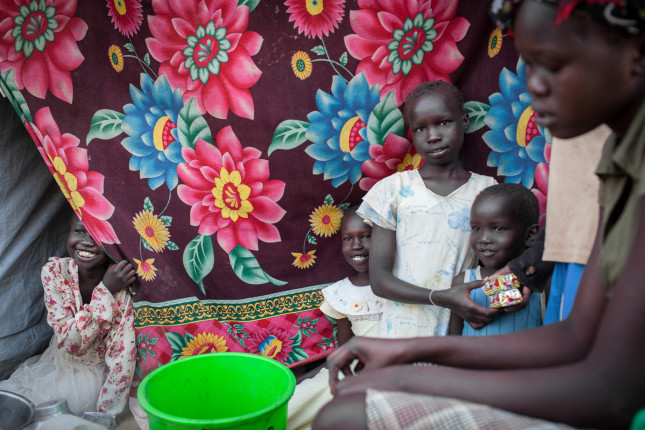
› “We need to give more weight to the voices of people who are most affected by climate change,” says Vanessa Nakate, a prominent Ugandan climate activist, in this week’s Friday Podcast. At the local, regional, and global levels, Nakate’s work sheds light on the imperative for policymakers to value the lived experiences of oft-overlooked groups such as women, youths, and citizens of developing nations. “When I talk about climate justice, it is not something that I want for the future—it is something that I want right now, because our present is catastrophic,” she says.
 -
Reproductive Justice in the United States Prison System
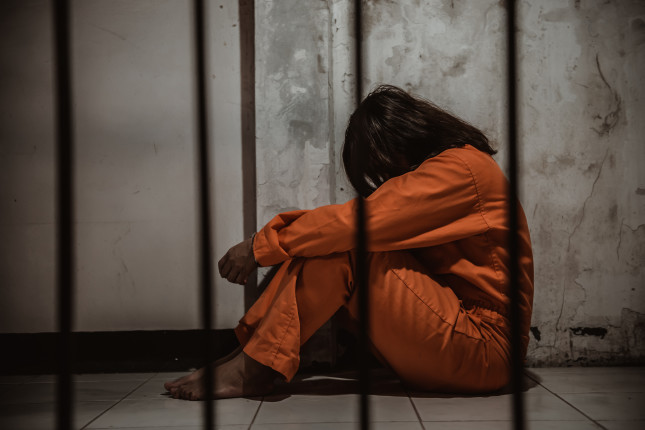
›The United States imprisons the most women in the world. Across the United States, approximately 200,000 women are incarcerated—nearly an 800 percent increase since 1980. Women of color are disproportionately affected by the criminal justice system. In 2017, twice as many Black women and 1.3 times as many Hispanic women were incarcerated compared to white women. An often overlooked aspect of the increasing rates of women’s incarceration is the impact on the sexual and reproductive health needs of these women. “Despite being the fastest growing incarcerated population, women and girls are correctional afterthoughts,” writes Kimberly Haven, an activist and formerly incarcerated woman who had to undergo a hysterectomy—a surgical procedure to remove the uterus (and, with it, childbearing possibilities)—after being denied proper menstrual products while incarcerated.
-
Women Transforming Peace: Evaluating Progress 20 Years After Resolution 1325
›“Despite national action plans and legislation in 84 countries, women remain undervalued in peacebuilding, and we know today [women are] seriously underrepresented in peace processes,” said Kathleen Kuehnast, Director of Gender Policy and Strategy at the United States Institute of Peace (USIP), at a recent event with USIP and the U.S. Civil Society Working Group on Women, Peace and Security (U.S. CSWG).
-
21st Century Diplomacy: Foreign Policy is Climate Policy (Report & Project Launch)
›Climate change will upend the 21st century world order. It will redefine how we live and work, and change the systems of production, trade, economics, and finance. Even now, in the midst of a global pandemic, it is clear that climate change will be the defining issue of this century. In fact, COVID-19 has only underscored the inadequacy of our responses to global crises and heightened the urgency of this call to action. 21st century diplomacy will have to raise climate ambition, shape the transformative systems change needed, and promote and facilitate new modes of multilateral collaboration.
-
Structural Racism and its Impact on Black Maternal Health
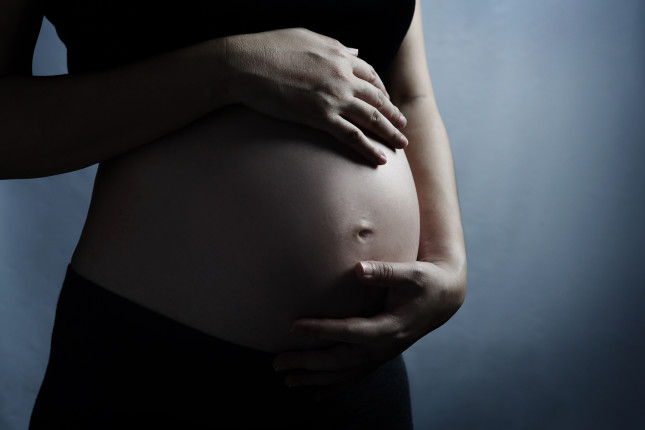
›“The past months have been profoundly difficult for our nation, and for Black communities in particular,” said Representative Lauren Underwood (D-IL-14) at a recent March of Dimes event on the impact of structural racism on maternal health. COVID-19 has highlighted health outcome inequity caused by race and racism. Though Black people constitute 13 percent of the U.S. population, the CDC estimates they represent over 30 percent of COVID-19 cases.
-
Accessing Justice: Femicide and the Rule of Law in Latin America
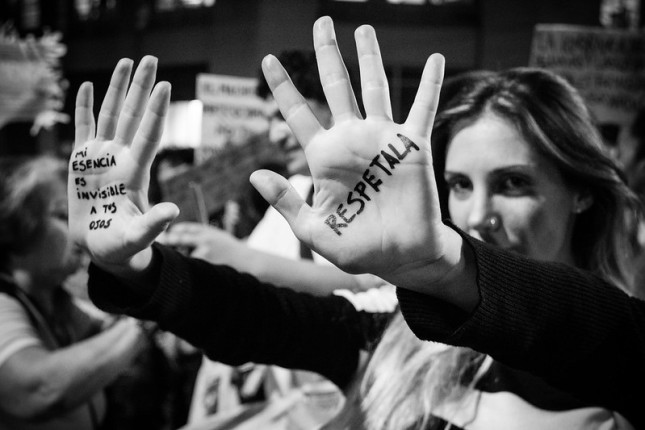
›Dot-Mom // From the Wilson Center // July 17, 2020 // By Annelise Gilbert, Beatriz García Nice, Olivia Soledad & Anya Prusa“The pandemic is just making visible a reality that has been going on for decades,” said Claudia Calvin, Founder of Mujeres Construyendo (Women Building) and a member of Nosotras Tenemos Otros Datos (We Have Other Data). She spoke at a recent Wilson Center event on femicide and the rule of law in Latin America. The panelists discussed the longstanding roots of this issue and new barriers to protecting women and preventing violence during the pandemic in the launch event for a project examining gender-based violence in Latin America, co-hosted by the Brazil Institute, Latin America Program, Mexico Institute, and Maternal Health Initiative. “Violence against women and femicides are not new,” Calvin said. But what is new is the fact that the media and civil society are bringing this topic to our attention, she said.
-
Divesting Won’t be Enough to Achieve Climate Justice
›A quiet disruption to the established financial order is underway: Around the world, institutions are pulling their investments out of fossil fuels. Climate activists campaigning for divestment suggest that such economic rearrangements might keep oil, gas, and coal in the ground, curbing carbon emissions. In parallel, some high-profile advocates call for reinvestment in renewable energy. But can the financial sector really drive the structural changes needed to address climate change—and, more fundamentally, climate justice?
Showing posts from category human rights.
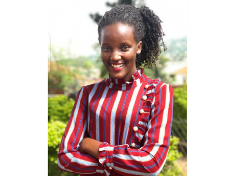 “We need to give more weight to the voices of people who are most affected by climate change,” says Vanessa Nakate, a prominent Ugandan climate activist, in this week’s Friday Podcast. At the local, regional, and global levels, Nakate’s work sheds light on the imperative for policymakers to value the lived experiences of oft-overlooked groups such as women, youths, and citizens of developing nations. “