-
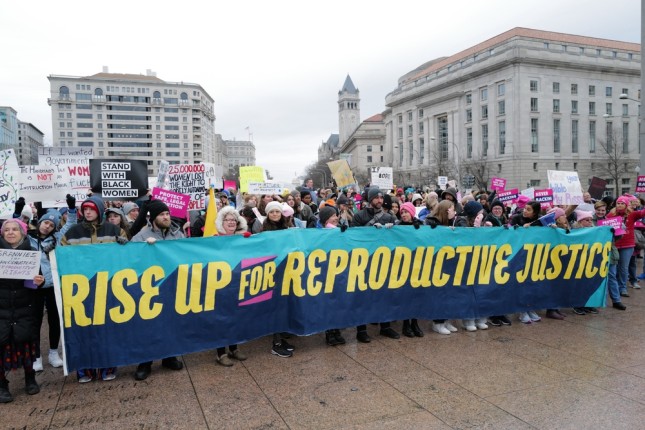
Healthy Women, Healthy Economies: Translating Evidence to Impact
›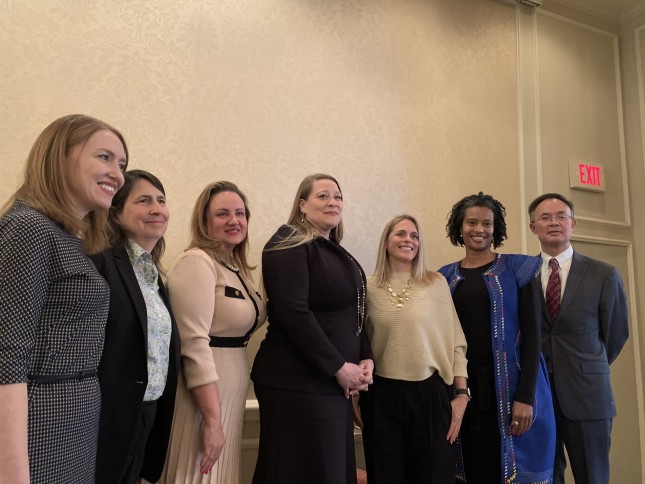
“Women’s economic participation promotes economic growth and security. It’s good for the women involved. It’s good for the girls who dream of following in their footsteps,” said Ambassador Mark Green, President and CEO of the Wilson Center at a recent Women’s History Month private event in Washington, DC hosted by the Wilson Center and EMD Serono, the healthcare business of Merck KGaA, Darmstadt, Germany.
-
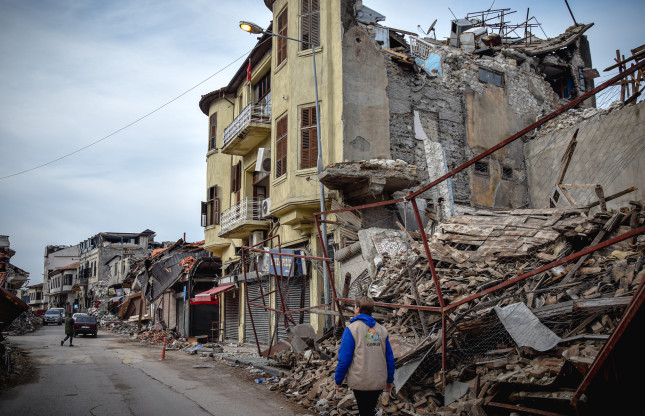
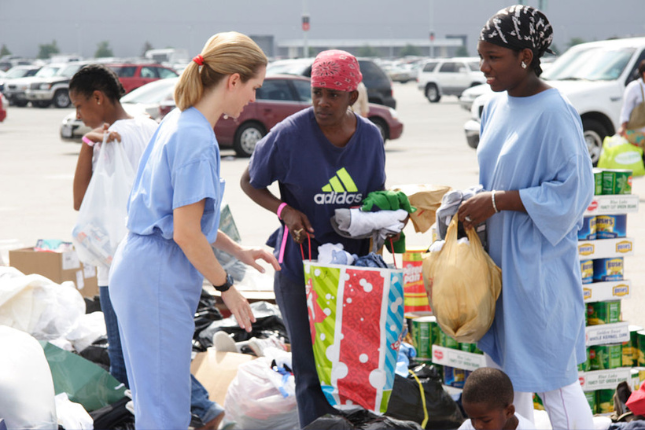
Shaken to The Core: The Plight of Syrian Refugees After February’s Earthquake
›
Madiha vaguely remembers her family fleeing war-torn Syria. But even a decade later, she still bursts into tears describing their midnight escape across the border to Turkey. She and her family were forced to flee after losing family members in a civil war in which they had no stake.
Little did Madiha—who is now 11 years old—and her family know they would experience another monumental trauma a decade later. This time, it was a 7.8 magnitude earthquake that rocked large swaths of southern Turkey on early February 6, 2023.
The roof they built with their own hands collapsed over their heads, killing several of Madiha’s nieces and siblings. “A large piece of brick fell on my mother’s leg, but she luckily survived,” she said tearfully.
-
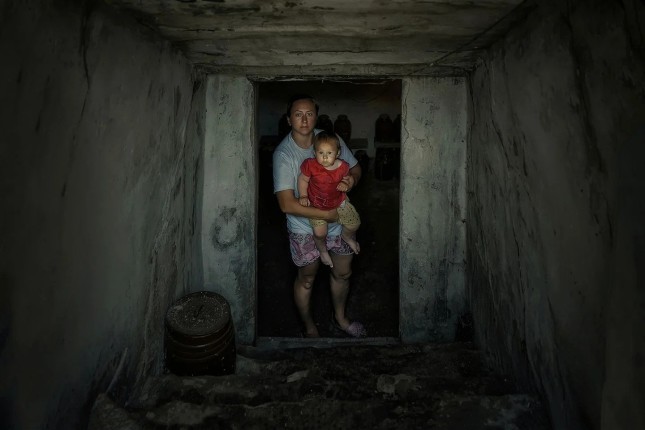
Women and Art at a Time of War: Acknowledging Ukrainian Women
›“War is central to history. History has been written (and painted) by men. This exhibition provides a platform for women narrators of history and also examines gendered perspectives of war,” said art curator Monika Fabijanska, referring to the exhibit “Women at War” she recently put together, which was on display at the Stanford in Washington Art Gallery from January through March 2023.
-
Connecting the Dots: Gender Equality and Sexual and Reproductive Health and Rights
›In today’s episode of New Security Broadcast, Sarah Barnes, Project Director for the Wilson Center’s Maternal Health Initiative met with Bridget Kelly, Director of Research for Sexual and Reproductive Health and Rights at Population Institute to discuss the launch of Population Institute’s new report: Connecting the Dots, Sexual and Reproductive Health and Rights as Prerequisites for Global Gender Equality and Empowerment. On the episode Kelly, lead author of the Connecting the Dots report, shares findings from the report on the importance of the Sexual and Reproductive Health and Rights (SRHR) agenda, how SRHR leads to gender equality, the power of and need for increased U.S. investment, and policy recommendations to fully realize the SRHR agenda and improve gender equality and empowerment.
-
Sexual and Reproductive Justice: A Vehicle in Progress
›The pace of change towards advancing sexual and reproductive health and rights is piecemeal and far too slow, said Dr. Natalia Kanem, Executive Director of the United Nations Population Fund (UNFPA), at a recent panel hosted by The Columbia University Global Health Justice & Governance Program (GHJG), in partnership with UNFPA, Columbia World Projects, and the Ford Foundation. The event launched the November 2022 report, Sexual and reproductive justice as the vehicle to deliver the Nairobi Summit commitments, published by the High-Level Commission on the Nairobi Summit on ICPD25 Follow-up.
-
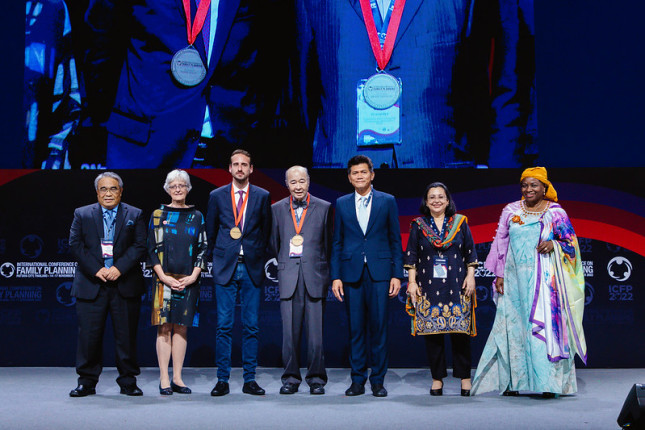
Planning, Pleasure, and Progress: How ICFP 2022 Advanced the Family Planning Dialogue
›The sixth International Conference on Family Planning (ICFP) held in Pattaya, Thailand in November 2022 offered an important reason for celebration: tens of millions more people are using a modern method of family planning now than were doing so when the first ICFP was held in London ten years ago. How has this happened? One key reason is that governments, corporations, non-governmental organizations, and donors globally are taking steps to advance reproductive freedom through providing voluntary family planning.
-
Old Dangers, New Modes: Climate Change and Human Trafficking
›For thousands of years, natural factors like rainfall and temperature helped determine the fate of economies and societies. For thousands of years, humans also engaged in human trafficking and kept one another as enslaved people. But as human prosperity increased exponentially beginning in the 19th century, it may have seemed that such concerns were relics of the past.
-
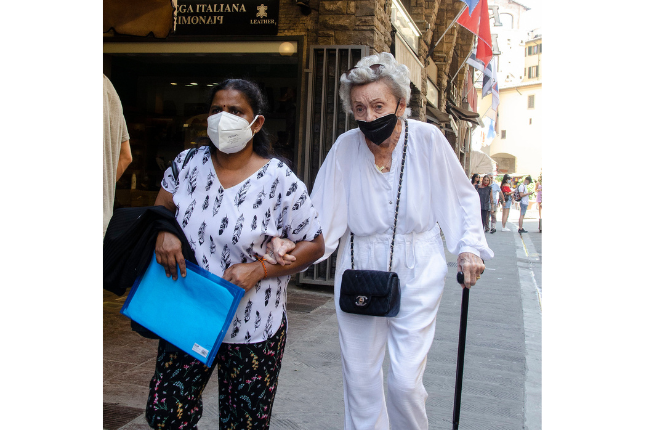
New Global Health & Gender Policy Brief: Migrant Care Workers and Their Families
›Migrant care work is a key component of the ongoing global care crisis. The global care economy is critical to overall economic growth, and also affects gender, racial, and class and caste equity and empowerment. Caregiving is also the fastest-growing economic sector in the world—projected to add 150 million jobs by 2030. Global societal changes, like low birth rates, demographic aging, and an increase in female labor force participation, are basic drivers of the continued growth of this sector. But because in many cultures care work is considered “instinctive” for women—a type of work not requiring skill—it has remained virtually invisible, unpaid or underpaid and unregulated. It is also often stigmatized, especially when relegated to already marginalized and underrepresented populations.
Showing posts from category human rights.