-
Indonesia: Pioneering Community Outreach Creates Success Story
›January 31, 2012 // By Elizabeth Leahy MadsenThis is the third post in a series profiling the process of building political commitment in countries whose governments have made strong investments in family planning. Previous posts have profiled Rwanda and Iran.
While the two other countries profiled in this series, Rwanda and Iran, have only reinvigorated their family planning programs within the past 20 years, Indonesia’s story begins in the 1960s. In this respect, the world’s fourth most populous country is classified among the pioneers of family planning in the developing world and has been described as a “world leader” and “one of the developing world’s best.” An extensive community outreach program combined with a centralized government that made family planning a priority were key to Indonesia’s success story.
Jakarta Pilot and Religious Support Motivates National Scale-up
For a decade and a half after the struggle for independence from the Dutch ended in 1949, the government of President Sukarno ruled out any government support for family planning. According to a Demographic and Health Survey (DHS) report, the rate of contraceptive use among married women at the time was essentially zero. Fertility rose slightly during this period, from an average of 5.5 in the early 1950s to 5.6 children per woman a decade later. However, in 1965, Sukarno was overthrown, and the next year, a military general named Suharto assumed power in an uprising that left as many as half a million people dead.
Suharto’s regime would last until 1998. Though he operated with a “heavy hand” amidst personal corruption, Suharto also aggressively pursued economic development and brought about a policy shift towards promoting family planning. Despite initial reservations – Suharto believed that the people would oppose family planning on religious grounds – various domestic and international advisers convinced him otherwise.
General Ali Sadikin, the governor of Jakarta – a city of three million even then – was particularly influential in convincing Suharto. According to Australian demographer Terence H. Hull, who has written extensively about population issues in Indonesia, Sadikin was “quickly learning demographic lessons in his attempts to renovate a city with poor housing, schooling, transport, and basic services,” and he began to regularly speak out about the challenges that rapid population growth posed to his goals of urban development.
Sadikin decided to support the Indonesian Planned Parenthood Association, which had a network of clinics offering family planning, but lacked the funding to meet more than a small amount of demand. With the public support of Sadikin, a Jakarta-wide pilot program was operational in 1967.
Hull reports that a second integral event in the early years was a 1967 meeting between government officials and Muslim, Protestant, Catholic, and Hindu leaders representing four of the country’s major religions. Following the meeting, a pamphlet called “Views of Religions on Family Planning” was published, representing “a tipping point when national consensus around the morality of birth control was turning from strongly negative to strongly positive.”
A Strong Coordinating Board Reaches out to Communities
By late 1968, efforts were in place to scale up the family planning program in Jakarta to the national level. The National Family Planning Coordinating Board (BKKBN in Indonesian) was created and quickly became entrenched throughout the country thanks to generous funding, including from international donors.
The BKKBN’s emphasis on the community level, which ensured that family planning services and awareness-generating activities were reaching people around the country through multiple channels, was a key factor in the program’s achievements. The organizations involved in promoting family planning messages at the community level included youth, women’s and religious groups, employers, and schools, with high-level support reiterated regularly by the president. Hull described the BKKBN’s efforts as “a true collaboration because the program emphasized institutions not normally associated with family planning, but did so in a way that was both socially acceptable and socially invigorating.”
In the program’s first two decades, the contraceptive prevalence rate for modern methods rose from almost nonexistent to 44 percent, and fertility subsequently fell from 5.5 to 3.3 children per woman. These changes are widely attributed to robust government sponsorship from the highest levels, together with effective grassroots implementation that fostered support from nearly all sectors of society.
In subsequent years, Indonesia experienced rapid economic and social development. Per capita income increased more than 20 times over between 1966 and 1996, with initial growth largely due to oil revenues. Other development indicators also improved dramatically. The literacy rate is now over 90 percent, nearly all girls attend school, and half of women are members of the labor force. However, Hull cautions against proclaiming the family planning program the primary causal factor in these successes. Family planning and other development programs would not have been as effective, he says, without changes in the political structure, which steadily became more centralized and stable in its oversight of a very heterogeneous society.
A Recent Plateau
As Indonesia continued to develop and its political system evolved, the family planning program has faced some challenges in the past 15 years. Suharto resigned in the face of widespread opposition in 1998, after more than 30 years in power. While this brought positive movement towards democracy, the ensuring political uncertainty shifted the government’s energies away from reproductive health and other aspects of social development.
In the early 2000s, the family planning program was decentralized to district and municipal levels, in line with political reforms aimed at diminishing the role of central hierarchy nationwide. District leaders were charged with planning, budgeting, and implementing family planning and other primary health services. In accordance, BKKBN modified its strategies to become even more community-oriented. Still, observers judge the family planning program to have “weakened” following decentralization.
With strong logistics, popular support, and donor assistance, contraceptive use continued rising during the years of political transition. By 2002-2003, 57 percent of married women were using a modern contraceptive method and the fertility rate had reached 2.6 children per woman. However, these indicators remained unchanged in the next national survey, conducted in 2007. Fertility in Indonesia is at the median for Southeast Asia – higher than Thailand and Vietnam and lower than Cambodia and the Philippines.
The Program Moves Forward
As democracy became more secure in the early 2000s, the country’s next generation of leaders kept sight of demographic issues. In 2005, President Susilo Bambang Yudhoyono stated, “High population growth without rapid economic growth will result in poverty and setbacks … Large numbers of children and high populations will only bring advantages if they are skilled.” BKKBN and the Ministry of Health worked with USAID, public health researchers, NGOs and others to develop national family planning standards for quality of care, which were devised and implemented in the early 2000s.
Judging the program’s achievements to have been substantial and its momentum sustainable, USAID graduated Indonesia from population assistance in 2006, after 35 years. Though gaps remain, women’s fertility preferences are largely being met.
Today, 80 percent of all births are intended, and unmet need for family planning – the share of married women who wish to delay or prevent pregnancy but are not using contraception – stands at nine percent, two percentage points below the average for Southeast Asia and all developing countries. Meanwhile, Indonesia’s demographic profile looks much different than it might have. At the time of graduation, USAID reported that without its long-standing and well administered family planning program, Indonesia’s 2006 population would have been larger by 80 million people, or 35 percent.
Elizabeth Leahy Madsen is a consultant on political demography for the Wilson Center’s Environmental Change and Security Program and senior technical advisor at Futures Group.
Sources: Demographic and Health Surveys; Hull (2007); Management Sciences for Health; New York Times; UN Population Division; USAID.
Photo Credit: “Jakarta,” courtesy of flickr user frostnova. -
‘New Security Beat’ Is Five Years Old
›January 26, 2012 // By Wilson Center Staff
ECSP’s Sean Peoples, Meaghan Parker, and Schuyler Null accepted the Population Institute’s Global Media Award for Best Online Commentary at a January 12 ceremony in New York City. Five years ago, in January 2007, we launched New Security Beat. Since then we’ve established a strong editorial focus on a key but neglected niche: where population, environment, and security meet.
-
Move Beyond “Water Wars” to Fulfill Water’s Peacebuilding Potential, Says NCSE Panel
›January 26, 2012 // By Schuyler NullOne of the best talks of last week’s NCSE Environment and Security Conference was thewater security plenary on Friday. Moderator Aaron Salzberg, who is the special coordinator for water resources at the Department of State, led with a provocative question: how many in attendance think there will be war over water in the future?
-
Delivering Solutions: Advancing Dialogue to Improve Maternal Health
›“Throughout the 2009-2011 Advancing Dialogue on Maternal Health lecture series, we always heard the same good news: we know how to save the lives of women and girls. But more political will is needed,” said Calyn Ostrowksi, program associate for the Wilson Center’s Global Health Initiative on December 15 for the launch of the series’ culminating report, Delivering Solutions: Advancing Dialogue To Improve Maternal Health.
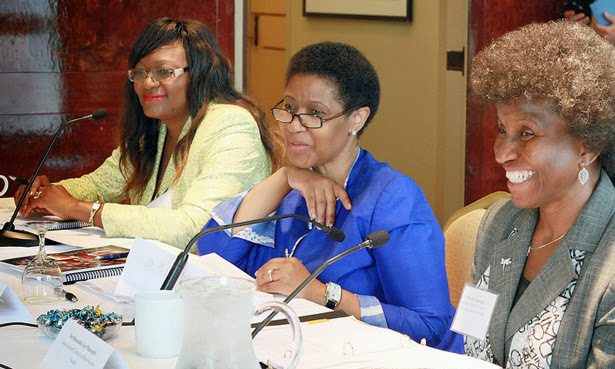
Joining Ostrowski were co-author Margaret Greene, director of GreeneWorks; Luc de Bernis, senior advisor on maternal health at the UN Population Fund; Tim Thomas, interim director for the Maternal Health Task Force; and Chaacha Mwita, director of communications at the African Population and Health Research Center.
One of the few forums dedicated to maternal health, the series brought together senior-level policymakers, academic researchers, members of the media, and NGO workers from the United States and abroad. The series consisted of 21 separate events, with hundreds of experts sharing their experiences and thousands of participants and stakeholders providing their expertise. The final report captures, analyzes, and synthesizes the strategies and recommendations that emerged from the series.
Promoting Social Change
Unlike other health issues, said Green during her presentation on the findings of Delivering Solutions, the field of maternal health requires a holistic and multi-faceted approach; that is, an approach that looks not only at health systems, but also at underlying social factors. The report divides maternal health into three broad categories: social, economic, and cultural factors; health systems factors; and research/data demands.
Looking first at the social, cultural, and economic issues, Greene highlighted the need to improve nutrition and educational opportunities for young women in developing countries. Policymakers must be convinced that investing in women is not just good for women but good for families and children, she said. The participation of male partners and other male family members is also needed to increase access to maternal health services, such as family planning, and promote gender equality. The report pointed to a number of recommendations to promote male engagement:- Target interventions that educate men about danger signs and pregnancy complications.
- Address pressures that many young married men feel to prove their fertility.
- Inform men about sexual rights and how they relate to the health and wellbeing of their partners.
Health systems and medical resources play an equally pivotal role in reducing maternal mortality as social factors. The report highlights several key areas for strengthening the health system including the expansion of healthcare workers, health finance schemes, technology, and commodity distribution.
One key recommendation is to integrate reproductive health and maternal health supply chains. Four key medicines, oxytocin misoprostol, magnesium sulfate, and manual vacuum aspirators, target the three leading causes of maternal mortality (post-partum hemorrhage, obstructed labor, and unsafe abortion). Efforts to improve the distribution of these commodities should be more widely dispersed in developing countries and supported by community-based interventions. Women in urban slums, for example, face unique challenges that are not being adequately addressed.
Additionally, new technologies should be more creatively and effectively used, in particular the use of mobile phones in rural communities.
Many of the policy recommendations offered by the report, as Greene pointed out, are low-cost and highly effective. Yet three significant challenges remain for the field in general:- Six countries – Afghanistan, Democratic Republic of Congo, Ethiopia, India, Nigeria, and Pakistan – account for over half of the maternal deaths worldwide. The unique problems of each of these countries must be addressed and solved.
- Integration of maternal health with existing health services along with an over-reliance on community health workers can overburden weak infrastructure.
- Unnecessary cesarean births are on the rise as more women deliver in private sector facilities. These births cost 2 to 18 times as much as vaginal births and create unnecessary risks for mothers.
Chaacha Mwita of the African Population and Health Research Center (APHRC), located in Nairobi has seen firsthand the result of an overburdened and inadequate maternal health system in both his personal and professional life. Mwita endorsed the findings of the series report, emphasizing in particular the focus on transportation systems, male involvement, stakeholder dialogue, and education.
Mwita said that collaboration at all levels is the key to improving maternal health. Policymakers must communicate with researchers, who, in turn, must communicate with doctors, nurses, and hospital administrators in the field. The collaborative in-country dialogue series between the Wilson Center and APHRC, he believes, was a highly useful and easily replicable way of encouraging dialogue among relevant stakeholders in the field.
The Big Picture
”Our hope is that we’ve been able to seed discussions,” said Tim Thomas of the Maternal Health Task Force, one of the co-sponsors of the maternal health series. “We hope those seeds will take root and flourish.” Luc de Bernis, senior maternal health advisor of UNFPA, echoed Thomas’ sentiments, emphasizing the need for continued dialogue.
While maternal health has drawn increased international attention, creating political agreement among policymakers is a complex and often difficult process. There has been marked, though uneven, progress in improving maternal health across the globe, but more must be done. The Delivering Solutions report provides a state of the field assessment as well recommendations for existing, easy-to-implement solutions.
Event Resources: -
John Donnelly, Global Post
A Call for Young People to “Get Angry” About Global Warming
›January 18, 2012 // By Wilson Center StaffThe original version of this article, by John Donnelly, appeared on Global Post.
The elder called on the younger generation to speak up.
At a session on climate change and family planning Thursday, Mary Robinson, the former president of Ireland, said that she keeps hoping that more young people will demand action on global warming.
“Maybe there’s a need to link the more thoughtful aspects of the Occupy movement with this, to get some of that more radical thinking,” she said. “As younger people increasingly understand the issues, I would say, ‘get angry’ so that we feel the need to do something more urgent. Let us know this is your future and for goodness sake it is absolutely urgent.”
She spoke at a session called “The Road to Rio: Climate Change, Population and Sustainability,” part of the Aspen Institute’s “7 Billion: Conversations that Matter” roundtable series (watch above). The discussion, organized by Aspen Global Health and Development, focused on strategies leading up to the Rio+20 United Nations Conference on Sustainable Development Summit in June – as well as what should be happening beyond Rio.
Continue reading on Global Post.
Video Credit: The Aspen Institute. -
Iran: A Seemingly Unlikely Setting for World’s Fastest Demographic Transition
›January 11, 2012 // By Elizabeth Leahy MadsenThis is the second post in a series profiling the process of building political commitment in countries whose governments have made strong investments in family planning. Read the first post, on Rwanda’s recent rapid demographic changes, here.
To date, only 11 countries outside of the developed world, China, and a handful of small island states have reached the end of the demographic transition, with fertility rates declining from more than four children per woman to replacement level or lower.* Of these, only two countries have completed the transition in 15 years or less – and both might surprise you. One is Cuba, whose government dispensed family planning services to its relatively small population in the 1970s through accessible primary health care facilities and legalized safe abortion eight years before the United States did. The other: Iran.
Following the 1979 revolution, Iran’s new theocracy adopted a socially conservative, pro-natalist outlook. Half of the population lived in rural areas, which typically constrains access to health services. In addition, abortion was illegal in most circumstances. According to the UN, Iranian women had an average of 6.5 children each in the early 1980s and the population was growing nearly four percent annually, a rate high enough for it to double in 19 years.
But, by the early 2000s, Iran’s fertility rate had dropped below two children per woman. The swift changes can be attributed to the efforts of government officials concerned about meeting the employment needs of a growing population, supported by public health experts who wanted to rebuild the eroded family planning program.
A Dramatic Policy Shift
The turning point came after the end of Iran’s eight-year war with Iraq in 1988. With military demands high – several hundred thousand people were killed during the war – population growth was viewed positively. But as the war ended, policy directives did an about-face.
Although public health officials had framed the need for reinvigorated family planning programs in health-related terms for years, the motivation for government officials to change policy appears to have been economic. The national budget agency informed the prime minister that after nearly a decade of conflict, the country lacked adequate funding to both rebuild and to meet the needs of its people. The prime minister responded quickly, directing that demographic factors be integrated into the new development plan and stating that “Iranians’ standard of living was being eroded by the growth of the country’s population.”
“Pragmatism Has Prevailed Over Pure Ideology”
After convincing their superiors, Iranian government officials who supported family planning faced the added challenge of garnering the backing of the influential religious establishment. Shortly after the revolution, Ayatollah Khomeini officially sanctioned the use of contraception, though his perspective was not universal among clerics. Once the prime minister decided to introduce a national family planning program, officials sought support from additional religious authorities. Opposition was minimal after two key institutions offered endorsements. The High Judicial Council determined that there was “no Islamic barrier to family planning” in late 1988, and the Expediency Council approved the government’s plans soon after.
By late 1989, a new family planning program had been officially introduced. The program’s aims were to lengthen spacing between births; limit pregnancies in the early and late reproductive years; and lower fertility by educating the population and ensuring access to free and diverse contraceptive methods. By the mid-1990s, the government had fully integrated family planning into the existing primary health system.
Iran thus followed the example of other majority-Muslim countries where religion was not an impediment to family planning, including Egypt, Indonesia, Jordan, and Oman. Just as in countries where highly Catholic populations have low fertility rates (Italy, Poland, Spain, and many others), religious guidance has been interpreted in varying ways in different settings and is not necessarily a central factor in individual fertility decisions. As Akbar Aghajanian and Amir H. Merhyar write in a summary of Iran’s family planning program, “Pragmatism has prevailed over pure ideology when necessary.”
The Contributions of Women’s Education and a Strong Health System
A new policy orientation was the critical first step, but successful implementation was necessary for Iran’s demographic trajectory to change in response. Fortunately, the government had some advantages in rolling out its new program, namely a strong existing health system, a history of past efforts to promote family planning, and an educated female population among whom demand for contraception was high.
Rural development became a priority of the government after the revolution and resulted in improved access to an array of services. In rural areas, community health workers receive two years of training to provide family planning services along with other preventative care and treatment. Services are also available at rural health “houses,” urban clinics, and higher-level centers around the country.
The status of women has also played a major role. A research exercise conducted by IIASA estimated that improvements in educational attainment among women were responsible for about one-third of Iran’s fertility decline between 1980 and 2005. Women’s literacy was already rising during the period of the revolution and reached 74 percent by 1996, while attitudes toward female employment became more supportive. By the late 1990s, new classes of university students included more women than men. The response to the 1989 program indicated that women clearly had an unmet demand for family planning. Use of modern contraception jumped from 31 percent in 1989 to 51 percent just five years later, then rose more slowly over the subsequent decade.
A Dividend Squandered?
The rapid changes in Iran’s age structure, thanks to declining fertility, have opened a window of opportunity for the country to boost economic growth through lower dependency ratios – a phenomenon called the demographic dividend. However, the dividend is not an automatic bonus, and Iran’s capacity to capitalize on its demographic change is questionable.
The unemployment rate among young people today is over 20 percent, indicating that the economy is not generating sufficient jobs, which is a prerequisite to improving productivity. This inopportune climate may even contribute to a further decline in the fertility rate: Some observers have suggested that the country’s economic troubles and rising costs of living have motivated young people to delay marriage and have smaller families. “Unemployment and high costs of living, coupled with social and political restrictions, have made [life] increasingly difficult for young Iranians,” Farzaneh Roudi of the Population Reference Bureau (PRB) explained in a blog post last year.
Given Iran’s challenges in producing adequate jobs and other economic benefits for its population, President Mahmoud Ahmadinejad’s recent unusual pronouncements on population issues are especially puzzling. Last year, Ahmadinejad introduced a pro-natalist policy offering direct payments to each child born, continuing until they reach adulthood, and later suggested that girls should marry at age 16 or 17.
But despite a high level of international media attention, most observers expect the policy to have little impact. Widespread adoption of family planning has become entrenched in society: 60 percent of Iranian women now use a modern contraceptive method. As PRB’s Roudi wrote in response to Ahmadinejad’s proposal, “Iranian women and men have gotten used to exercising their reproductive rights and would expect to be able to continue to do so.”
*The 11 countries that have achieved replacement fertility or lower outside of developed regions, China, and small island states are Brazil, Chile, Costa Rica, Cuba, Iran, Lebanon, Myanmar, Thailand, Tunisia, and the United Arab Emirates.
Elizabeth Leahy Madsen is a consultant on political demography for the Wilson Center’s Environmental Change and Security Program and senior technical advisor at Futures Group.
Look for related analysis on the political implications of Iran’s changing age structure by Richard Cincotta on New Security Beat soon.
Sources: Abbasi-Shavazi, Lutz, Hosseini-Chavoshi and Samir (2008), Abbasi-Shavazi (2002), Aghajanian and Merhyar (1999), Christian Science Monitor, GlobalSecurity.org, The New York Times, Noble and Potts (1996), Population Reference Bureau, Roudi-Fahimi (2002), UN Population Division, World Bank.
Image Credit: “بیست و پنجم خرداد ۸,” courtesy of flickr user Recovering Sick Soul (Nima Fatemi); charts arranged by Sean Peoples and Elizabeth Leahy Madsen. -
Engaging Faith-Based Organizations on Maternal Health
›“Faith-inspired organizations have many different opportunities [than non-faith-based NGOs]. The point that is often reiterated is that religions are sustainable. They will be there before the NGOs get there and will be there long after,” said Katherine Marshall, executive director of the World Faiths Development Dialogue at the Wilson Center on November 16. Marshall noted in her opening remarks that maternal health should be an easy issue for all groups, regardless of religious tradition, to stand behind. Yet, in reality, maternal health is a topic that “very swiftly takes you into complex issues, like reproductive health, abortion, and family planning,” she said.
As part of the Advancing Dialogue on Maternal Health series, the Woodrow Wilson International Center for Scholars’ Global Health Initiative collaborated with the World Faiths Development Dialogue and Christian Connections for International Health to convene a small technical meeting on November 15 with 30 maternal health and religious experts to discuss case studies involving faith-based organizations in Bangladesh, Nigeria, Pakistan, and Yemen. The country case studies served as a springboard for group discussion and offered a number of recommendations for increasing the capacity of faith-based organizations (FBOs) working on maternal health issues.
Engaging Religious Leaders in Pakistan
“When working with religious leaders to improve maternal health there are some do’s and don’ts,” said Nabeela Ali, chief of party with the Pakistan Initiative for Mothers and Newborns (PAIMAN). Ali described a PAIMAN project that worked with 800 ulamas (religious leaders) to increase awareness about pregnancy and promote positive behavior change among men.
One of the “do’s” highlighted by Ali was the need to build arguments for maternal health based on the Quran and to tailor terminology according to the ulamas preferences. The ulamas who worked with PAIMAN did not want to utilize the word “training,” so instead they called their education programming “consultative meetings.” More than 200,000 men and women were reached during the sermons and the strategy was been picked up by the government as one of the best practices written into in the Karachi Declaration, signed by the secretaries of health and population in 2009.
Despite the successes of the program, Ali warned against having unrealistic expectations for religious leaders interfacing with maternal health. She stressed the importance for having a long-term “program” approach to the issue, as opposed to a short-term “project” framework.
Behavior Change in Yemen
“Religion is a main factor in decisions Yemeni people make about most issues in their lives and religious leaders can play a major role in behavior change,” said Jamila AlSharie a community mobilizer for Pathfinder International.
Eighty-two percent of Yemeni women say the husband decides if they should receive family planning and 22 percent say they do not take contraception because they belief it is against their religion and fertility is the will of God, said AlSharie. Therefore, the adoption of healthy behavior change requires the involvement of key opinion leaders and the alignment of messages set in religious values. Trainings with religious leaders included family planning from an Islamic perspective, risks associated with early pregnancy, nutrition, education, and healthcare as a human right.
Male Participation a Key Strategy
“As a faith-based organization we believe it is a God-given right to safe health care and delivery so we mobilize communities to support pregnant women to address their needs, educate families about referrals and existing services in the community,” said Elidon Bardhi, country director for the Bangladesh arm of the Adventist Development and Relief Agency (ADRA).
Through female-run community organizations, ADRA educates men and women about the danger signs of labor and when to seek care. For example, many men in Bangladesh hold the belief that women should eat less during pregnancy to ensure a smaller baby is born, thereby making delivery easier, said Bardhi. ADRA addressed such misconceptions through a human rights-based approach and emphasized male participation as a key strategy, ensuring there were seven male participants for every one female.
A Culturally Nuanced Approach in Nigeria
The Nigerian Urban Reproductive Health Initiative (NURHI) is a public-private partnership that identifies and creates strategies for integrating family planning with maternal health. According to Kabir Abduallahi, team leader of NURHI, “family planning” is not as acceptable a term as “safe birth spacing” in Nigeria, so the project highlighted how family planning can help space births and save lives.
Religion and culture play an important role in the behavior of any community. The introduction of a controversial healthcare intervention (such as family planning) in a religiously conservative community requires careful assessment of the environment and careful planning for its introduction, said Abduallahi. Baseline surveys and formative research data helped NURHI understand the social context and refine intervention strategies.
Ten Ways to Increase the Capacity of FBOs
Faith-based organizations’ close links to communities provide them with an opportunity to promote behavior change and address other cultural factors contributing to maternal mortality rates such as early marriage and family planning.
Working in collaboration with FBOs and other stakeholders is critical to promoting demand for maternal and reproductive health services; however, there is limited knowledge about faith-based maternal healthcare and FBOs are often left off the global health agenda. In conclusion, Marshall noted 10 areas the group identified as areas to focus on:- Move projects to programs: Projects are often donor driven and limited in scope and duration. Donors and policymakers should move from project-oriented activities to local, regional, and national-level advocacy programs to build sustainable change.
- Coordinate, coordinate, coordinate: Significant resources are wasted due to a lack of coordination between FBOs and development agencies. A country-level coordinating mechanism should be developed to streamline efforts not only between agencies but also across faiths.
- Context, context, context: A thorough understanding of the local culture and social norms is imperative to successful program implementation.
- Terminology is important: In Pakistan, religious leaders redefined sensitization meetings around family planning and maternal and child health as “consultative meetings” not “trainings.” In Nigeria, the culture prefers “child birth spacing” over “family planning.” In Yemen, it’s “safe age of marriage” instead of “early childhood marriage.”
- Most religious leaders are open and with adequate information can produce behavior and value changes. Utilizing the Quran, Hadith, and Bible can support arguments and emphasize the issue of health and gender equity.
- Relationship building: Winning the trust of religious leaders can be difficult and time-consuming but is necessary for opening doors to patriarchal societies.
- Rights-based approach: A human rights-based approach can be a very powerful agent of change for addressing negative social structures such as violence against women, but it can also create controversy. In Bangladesh, ADRA utilized the approach to educate men about nutrition, dowry and child marriage, and education of women.
- Networks: There is a significant need to create forums that bring together the various FBO and global development communities in order to share knowledge and enhance advocacy messages. Networks are needed to streamline resources and inventory existing research, projects, and faith-based models that work.
- Monitoring and evaluation systems: There is a striking lack of data about the impact and outcomes of FBOs. Increasing the monitoring and evaluation skills of FBO workers can improve evaluation systems and meet the demand for new data.
- There needs to be greater political will for engaging the faith-inspired community.
Event ResourcesPhoto Credit: David Hawxhurst/Wilson Center. -
IRP Editors Cover Rwanda’s Population, Health, and Environment Challenges
›The original version of this article appeared on the International Reporting Project website.
The International Reporting Project (IRP) and 12 senior editors and producers from across the United States traveled to Rwanda this year to learn about issues affecting Rwanda and other countries in Africa and to help them improve their news organizations’ international coverage. Some of the editors focused on Rwanda’s extensive population, health, and environmental challenges:
Nicholas Aster, founder and publisher of San Francisco’s Triple Pundit, covered sustainable development in Kigali, coffee’s empowerment potential, and eco-tourism sites like Volcanoes National Park. Aster also became interested in Rwanda’s efforts to avert disaster by corralling Lake Kivu’s CO2 reserves into a power supply. At the close of his trip, Aster reflected on Rwanda’s sustainability goals in a photo essay.
Tom Paulson, host and reporter for KPLU’s Humanosphere, discovered the positive side of aid and development in Rwanda, including girls’ education initiatives and coffee farming improvements. Moreoever, Paulson documented the Gatekeepers’ trip to Volcanoes National Park, including a visit from a mountain gorilla who became a little too friendly. Paulson has also posted several questions the Gatekeepers asked President Paul Kagame when they met with him, including his policies on restricting free speech, curbing population growth, and preventing another genocide. At the close of the trip, Paulson composed a photo slideshow that shows a growing, vibrant Rwanda, and he also outlined 10 reasons why the complex and sometimes contradictory country can’t be described in a sound-bite.
Sue Horton, op-ed and Sunday Opinion editor of the Los Angeles Times, began chronicling her trip with a survey of Rwanda’s history on genocide, governance, and gorillas. On the road to meet Rwanda’s famed gorillas, Horton noted Rwanda’s strengths and challenges: its ambitious vision for the future encourages a growth in infrastructure and the country has showed impressive gains in healthcare provision and access, but Kigali is relocating residents who don’t fit the image.
The deputy managing editor of Global Post, Andrew Meldrum, also found a note of optimism in witnessing how far Rwanda has come since the genocide, particularly after hearing the testimonies of the genocide’s youngest victims: children born of sexual violence during the genocide. And his Global Post colleague Jon Rosen delves into the country’s population growth and the government’s approach to family planning.
In addition to the Gatekeeper Editor Trips, the IRP offers individual Fellowships to U.S. reporters to travel overseas on five-week reporting trips. In 2009, IRP Fellow Perry Beeman discovered a Rwanda similar to that which the Gatekeepers encountered: a country that has made much progress, but still has many challenges ahead. Beeman, who also was a public policy scholar at the Woodrow Wilson Center, created a multimedia series, “Renewal in Rwanda”, for The Des Moines Register; his reporting garnered him an Overseas Press Club citation for Best Reporting in 2010.
Rwandans, Beeman found, are dedicated to conservation. President Kagame is committed to the environment and is driven to develop clean, sustainable power and to convert from subsistence agriculture to a stronger, more diversified economy. But everyone has a hand in this effort, including schoolchildren who report on conservation in song, dance, and dramatic arts. Beeman also examined efforts to preserve the Gishwati Forest, including gorilla and chimpanzee preservation efforts from villagers to businessmen to researchers. Beeman emphasized the importance of immersing oneself in an environment in order to report on it, and he did so by, among other things, tracking wild chimpanzees in the forest.
For more information about IRP’s Fellowships and Gatekeeper Editor trips, visit their website at InternationalReportingProject.org.
Photo Credit: “The Broadsheet in Kyovu, Kigali,” courtesy of flickr user noodlepie (Graham Holliday).
Showing posts from category global health.