• woodrow wilson center
  • ecsp

New Security Beat

Subscribe:
  • rss
  • mail-to
  • Who We Are
  • Topics
    • Population
    • Environment
    • Security
    • Health
    • Development
  • Columns
    • China Environment Forum
    • Choke Point
    • Dot-Mom
    • Friday Podcasts
    • Navigating the Poles
    • Reading Radar
  • Multimedia
    • Water Stories (Podcast Series)
    • Backdraft (Podcast Series)
    • Tracking the Energy Titans (Interactive)
  • Films
    • Water, Conflict, and Peacebuilding (Animated Short)
    • Paving the Way (Ethiopia)
    • Broken Landscape (India)
    • Scaling the Mountain (Nepal)
    • Healthy People, Healthy Environment (Tanzania)
  • Publications
  • Events
  • Contact Us

NewSecurityBeat

The blog of the Wilson Center's Environmental Change and Security Program
Showing posts from category global health.
  • IPPF and Partners Connect Reproductive Rights With the Environment and Development

    ›
    From the Wilson Center  //  June 28, 2012  //  By Carolyn Lamere
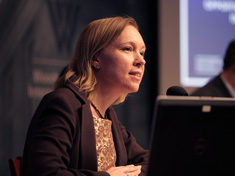
    A new framework for sexual and reproductive health is needed, argued panelists in a recent event at the Wilson Center, and the Rio+20 conference on sustainable development would have been the place to start. An international consensus around women’s human rights was developed at the International Conference on Population and Development in Cairo in 1994, but Carmen Barroso, director of the International Planned Parenthood Federation’s Western Hemisphere Region, said there has been slow implementation, little funding, and furthermore the world has changed significantly since then.

    Barroso was joined by Latanya Mapp Frett, vice president of Planned Parenthood Global, as well as two representatives of Planned Parenthood partner organizations, Marco Cerezo of FUNDAECO and Ben Haggai of Carolina for Kibera.

    New challenges to the reproduce rights landscape include the rapid spread of HIV/AIDS and decreased funding for international programs. But new opportunities include rapid dissemination provided by the internet and globalization and a subsequent mobilization of youth. “Young people are the largest cohort in history,” Barroso said in an interview with ECSP, both in absolute numbers and in percent of the population. “We have a historical opportunity [to incorporate] them in these decision-making processes.” Additionally, gender and health issues are incresaingly seen by many as linked with the environment and development.


    Intersection of Health and the Environment

    Marco Cerezo’s FUNDAECO (Foundation for Ecodevelopment and Conservation) is an example of Planned Parenthood’s partnership with other organizations. Based, in rural Guatemala, they shifted from primarily focusing on conservation and sustainable development to incorporating women’s health after finding a vicious cycle of poverty, high fertility, and environmental degradation in the places they worked.

    Women’s health was so dire it was holding development back, Cerezo said. “Sustainable community development will not be possible without the education, empowerment, and support to rural women,” they write in their mission statement.

    FUNDAECO now acts as a model for the intersection between reproductive health and the environment. Cerezo reported that once women are healthy and empowered through clinics established by FUNDAECO, they become more active in all aspects of the community, including ecological preservation.

    Building Healthy Communities

    Ben Haggai, who works in Nairobi’s biggest slum, Kibera, further reiterated the need for integrated programs. Carolina for Kibera has a number of programs to improve the quality of life for residents, he said, and has a particular focus on youth with sports associations and education programs.

    Youth are the best reproductive health educators, Haggai said, as they are able to talk frankly with their peers. The NGO trains peer youth educators to reach out to community members about reproductive health and other issues like substance abuse. Since the young people work as volunteers, Haggai said, they are motivated only by a desire to improve their communities.

    A Natural Intersection

    Latanya Mapp Frett agreed that sexual and reproductive health aligns quite naturally with issues of sustainability. “We try to work in the countries overseas in Latin America and Africa where we focus particularly on non-traditional health sectors,” she said in an interview with ECSP following the panel. “One of those sectors is the environment.”


    While emphasizing that contraceptive use is a cost-effective way to ensure sustainable development, Mapp Frett cautioned against framing sexual and reproductive health only in the context of reducing fertility. While this may have been common in the past, she noted, it’s important to ensure that women have the right to make childbearing choices for themselves.

    Mapp Frett also urged policymakers in the United States to look to developing countries for intersections between development, the environment, and reproductive health. She said that Planned Parenthood’s partner organizations, including FUNDAECO and Carolina for Kibera, have found these connections and successfully partnered with already existing networks like churches to more effectively reach the community.

    Translating Into Effective Action

    Each member of the panel spoke about the challenge of articulating the need for sexual and reproductive health programs to people outside the field. Barroso mentioned research conducted by Brian O’Neill which found that meeting the current unmet need for contraception would slow population growth enough to reduce emissions by 17 percent.

    Cerezo emphasized the importance of consensus among the staff of a given organization, saying it is difficult to make a case to agronomists and farmers if a culture clash exists within the institution. Haggai agreed, adding that focusing on reproductive issues is an important measure of prevention which helps protect both the environment and the health of women in a community.

    For Mapp Frett, women’s reproductive and sexual health is indivisible from other aspects of development. “As you talk about sustainable development, you talk about ensuring that women are empowered to make sure that our earth is sustainable,” she said.

    Assessing Rio+20

    The panel took place before the UN Conference on Sustainable Development got underway in Rio. Participants had high hopes for a renewed focus on gender and reproductive rights at the conference. Unfortunately, language on reproductive rights was first weakened and then omitted entirely from the final outcome document (see the account written by ECSP’s Sandeep Bathala at Rio for more on the conference).

    While pressure from the Vatican and the G-77 kept reproductive health out of the outcome document, it was not entirely forgotten at the conference. A number of side events highlighted the importance of reproductive rights, especially in the context of the environment and development.

    Hillary Clinton also re-affirmed U.S. commitment to access to contraception and reproductive health care. “Women must be empowered to make decisions about whether and when to have children,” she said at the conference on Friday. “And the United States will continue to work to ensure that those rights are respected in international agreements.”

    Clinton shared the urgency expressed by the panelists at the Wilson Center. “There is just too much at stake, too much still to be done,” she said. “We simply cannot afford to fail.”

    Event Resources:
    • Photo Gallery
    Sources: FUNDAECO, UN Conference on Sustainable Development, U.S. Department of State.

    Photo Credit: Sean Peoples/Wilson Center.
    MORE
  • The Economist

    Afghanistan’s Demography: A Bit Less Exceptional

    ›
    On the Beat  //  June 28, 2012  //  By Wilson Center Staff
    The original version of this article appeared in The Economist, and is based on ECSP Report 14, Issue 1.

    This is a story from Afghanistan which is not about fighting, bombs, or the Taliban. It even contains a modicum of good news. It is about demography.

    Afghanistan has long been seen as a demographic outlier. In 2005-10, according to the United Nations Population Division, its fertility rate was 6.6 – the second-highest in the world after Niger (the fertility rate is the number of children a woman can expect to have during her lifetime). The contrast with the rest of South Asia is extreme: fertility ranged from four (in Pakistan) to below three (in Bangladesh, India, and Sri Lanka). Afghanistan’s sky-high fertility seems consistent with a view of the country as trapped in an exceptional and dysfunctional mode of development, marked by war, religious extremism, tribal honor codes, and the subjugation of women.

    But this fertility rate was always a bit of a guess. The last census was taken in 1979, the year of the Soviet invasion. A whole generation has grown up since then, amid pervasive violence and uncertainty. It has been extremely hard to know how fertility has been changing.

    Hence the significance of the Afghanistan Mortality Survey. Based on interviews with 48,000 women and girls aged 12 to 49, it is the nearest thing the country has had to a national census for 30 years (there were smaller surveys in 2003 and 2007-08, but their coverage was not national).

    Continue reading on The Economist.

    Read more about the Afghanistan Mortality Survey here on the blog with Elizabeth Leahy Madsen’s original posts here and here.

    Photo Credit: “Celebrating International Women’s Day in Afghanistan,” courtesy of the U.K. Department for International Development.
    MORE
  • Population Projections: Breaking Down the Assumptions

    ›
    From the Wilson Center  //  June 25, 2012  //  By Carolyn Lamere
    “The seventh billion [person] was added in 12 years, and that could be the story for the eighth billion – and that gets people who think that growth has stopped,” said Carl Haub, senior demographer at the Population Reference Bureau. Haub was joined by Hania Zlotnik, former director of the UN Population Division, and Rachel Nugent of the University of Washington’s Department of Global Health on June 5 to speak about the assumptions behind the UN population projections. While each of the panelists noted the utility of projections, they also cautioned against seeing them as inevitable. [Video Below]

    Meeting the Projections

    As a former top official in the UN’s Population Division, Zlotnik spoke about how much is riding on the projections. “The experts tell me that to feed nine billion people, living better than the standards of living that we have today, one needs to increase agricultural production or all the production of food by about 70 percent and that is a challenge, but it might be feasible. But if the numbers go higher…I think it’s impossible,” she said.

    The medium variant projection by the UN that gets the world to that nine billion figure is not a given – it builds in expected action on and improvement of many demographic indicators. Zlotnik pointed to the global unmet need for family planning, for example, which “is especially high in the high fertility countries,” and suggested that the current rate of increase in contraceptive use is insufficient.

    She calculated the number of years it would take many of these countries to meet their unmet need at their current rate of uptake and found “the number of years for a lot of these poorer countries that have high fertility would be very long – 40 years, some of them, 80 years, 100 years – because the increased contraceptive prevalence has been so small.” At that rate, population growth in these countries will far surpass the UN medium variant.

    The perception that population growth is no longer an issue contributes to the problem, Zlotnik said. People see that only 18 percent of the world population lives in countries with high population growth and assume “there’s no longer a population problem.” But she emphasized the power of exponential growth, arguing that even a small proportion growing at a rapid rate can have a large impact.


    Questioning Assumptions

    Haub pointed out several instances where assumptions in the methodology behind the projections create uncertainty.

    For example, there is a lack of data in many low-income countries. “A date, let’s say 2000, 2005 – it’s the past, but it may be a projection. It may be based on a census in 1990,” he said. If it’s wrong, that error may not be corrected until another census, but it will still be relied on for country-level projections.

    He also noted that certain assumptions about desired family size sometimes do not bear out on the ground. One of the key methods to slowing population growth is to provide women and couples with the means to choose how many children they wish to bear. But in many fast-growing countries, women wish to have large numbers of children. In Niger, for example, women say their ideal family size is over nine children. Such women are less likely to use contraception, no matter how accessible it is, as they value larger families.

    “It has been – I guess conventional is a good word – to assume that birth rates are going to come down the way they did in the rich countries,” Haub noted. But there has been a “stall” for many developing countries, which he suggests is caused by fast initial uptake from urban women followed by much slower uptake by rural women. These dynamics, however, are relatively new and therefore are not always well incorporated into current projections.

    The Economic Impact of Population Changes

    While Haub and Zlotnik looked at the assumptions made before the projections are made and the importance and means to reach these projections, Nugent focused on the economic implications of lower fertility and the demographic transition.

    She suggested that increased control over fertility can positively impact a country’s economy. Women are given the opportunity to “invest their time in acquiring skills and investing time in the labor market and that affects their earnings…[and] their ability to control resources and make decisions within the household” as they spend less time caring for children, she said.

    The labor market changes as well, as fewer children are born into a given generation. This can reduce “demand on economic resources [and] demand on environmental resources,” and the increased investment in human capital allowed by smaller family sizes can lead to a healthier population.

    Nugent concluded by pointing out key areas of intervention most likely to decrease both fertility and mortality and allow countries to reap the positive economic benefits of fertility decline. She suggested a focus on “complementary investments in education and health,” especially with regard to “poor and marginalized populations,” which can in fact impact the country as a whole. Finally, she recommended focusing on proven “evidence-based programs [and] service-delivery programs.”

    Educating Policymakers

    Each of the panelists cautioned against relying on population projections without taking action to make them come true.

    “Maybe the best thing to do if you’re giving a presentation is to show the UN’s constant fertility variant first and scare people half to death and then say, ‘but if 117,000 things go right, [the medium variant projection] is what will happen,” said Haub, addressing the common tendency to view the UN projections as destiny.

    Similarly, Nugent warned against viewing the demographic transition as inevitable. “There’s a certain sense…that [the demographic dividend] is kind of an automatic thing that happens, and that really has to be addressed,” she said, adding that “it’d be quite interesting to show some scenarios of what would need to be done…in order to get some benefits from that dividend.” (See also Elizabeth Leahy Madsen’s recent article on achieving the dividend.)

    Zlotnik reiterated that the UN does not in fact know what the future will bring. “It’s not that we know what the world is going to do, but we hope that [the projections] will get the message out – if this doesn’t happen, you’re in trouble.”

    Event Resources
    • Hania Zlotnik’s Presentation
    • Carl Haub’s Presentation
    • Rachel Nugent’s Presentation
    • Photos
    • Video
    Photo Credit: Sean Peoples/Wilson Center.
    MORE
  • Pop at Rio+20: Reproductive Rights Missing From Outcome Document – Assessing the Disappointment

    ›
    June 22, 2012  //  By Sandeep Bathala

    As heads of state get ready to sign on to the outcome document here in Rio, all eyes are on next steps – especially for the reproductive health and integrated development communities, which have seen their hopes of mainstreaming their issues with the sustainable development agenda dashed.

    The final outcome document can be found here. USA Today reports that opposition from a group of countries in the 11th hour stripped the text of critical reproductive rights language:

    An initial draft of this conference’s outcome document stated, “We are committed to ensure the equal access of women and girls to education, basic services, economic opportunities, and health care services, including addressing women’s sexual and reproductive health and their reproductive rights.”

    In the final draft, the stronger wording “We are committed to ensure the equal access” was switched to the weaker “We are committed to promote the equal access.” The reference to reproductive rights was deleted altogether, after opposition from the G-77, a negotiating bloc of developing countries at the United Nations, and the Holy See.
    Absent entirely is any explicit connection between reproductive rights, population dynamics, and sustainable development.

    But others, as we have heard repeatedly throughout the conference, insist that gender issues and reproductive rights have a strong and vital connection to sustainable development. Yesterday, USAID, the Aspen Institute, and the Center for Environment and Population held a discussion in the U.S. tent on this very issue, titled “Making Population Matter: The Demographic Dividend and Sustainable Development.”

    As Vicky Markham of the Center for Environment and Population reports on RH Reality Check, the side-event aimed to demonstrate the effects of population dynamics, both positive and negative:
    We have the largest youth demographic ever in the history of the world, and most developing nations have a “youth bulge.” This can be seen as a challenge, or opportunity, particularly if the focus is on providing development programs for child survival, family planning, reproductive health, and education. The importance of women’s empowerment was also central. But it’s not a given; it’s an opportunity only if we pay attention to these issues to increase the benefits of the “demographic dividend.”
    The demographic dividend, as described by USAID Deputy Administrator and panelist Donald Steinberg in blog post earlier this week, “is an opportunity that arises when a country transitions from high to low rates of fertility and child and infant mortality.” But it’s not just about ensuring access to family planning and reproductive health; youth-focused economic and education policies are also needed: “Maximizing the dividend requires social and economic policies that reinforce inclusion, equity, and opportunity across the entire population,” he writes. USAID is making a point of creating youth-focused policies for this reason, he said in Rio.

    Carmen Barroso, regional director of the International Planned Parenthood Federation’s Western Hemisphere Region, pointed out that Latin American countries could not take advantage of the demographic dividend before recent societal changes occurred, including decreased fertility, increased urbanization (which leads to smaller families), and greater schooling and employment of women.

    Seventy percent of world population growth is likely to be generated by Africa this century, said Eliya Msiyaphazi Zulu, executive director of the African Institute for Development Policy – and it is the only continent projected to continue to grow in the next century, he said. He called for redefining growth as more than GDP as that measure does not consider environmental degradation and its costs: “We must have other means to measure development.”

    As heads of state and negotiators consider their positions at this conference – which many were hoping would make a much stronger statement – they might do well to ponder today’s comments from Secretary of State Hillary Clinton:
    While I am very pleased that this year’s outcome document endorses sexual and reproductive health and universal access to family planning, to reach our goals in sustainable development we also have to ensure women’s reproductive rights. Women must be empowered to make decisions about whether and when to have children. And the United States will continue to work to ensure that those rights are respected in international agreements.

    Now none of this is an abstract discussion. There is just too much at stake, too much still to be done. And many of you visited the U.S. Center here in Rio and saw practical solutions related to some of the work I’ve discussed and other goals we hold in common. We believe solutions require action by all of us. Governments, yes; let’s do our part. Let’s do more than our part.
    Sources: RH Reality Check, UN, U.S. Department of State, USA Today, USAID.

    Photo Credit: YouthPolicy.org.
    MORE
  • Pop at Rio+20: Getting Women’s Rights on the Agenda

    ›
    June 19, 2012  //  By Sandeep Bathala
    Here we are on my second day of side events at Rio+20 and the Aspen Institute, International Planned Parenthood Federation, and the United Nations Foundation convened a high-level moderated dialogue this morning to raise the profile of human development, gender, and reproductive health at the main conference.

    Rio+20 is an unprecedented opportunity to draw attention to sustainable development and the role women’s rights and voices play in it. The Aspen/IPPF/UN Foundation event was timely as some negotiators are questioning the link between women and sustainable development in the 11th hour instead of reaffirming the commitments made 20 years ago at international conferences in Rio, Cairo, and Beijing.

    High-level leaders, including Gro Harlem Brundtland (Former Prime Minister of Norway), Musimbi Kanyoro (President and Chief Executive Office of the Global Fund for Women), Tewodros Melesse (Director General of the International Planned Parenthood Federation), Mary Robinson (Former President of Ireland and President of the Mary Robinson Foundation – Climate Justice), and Tim Wirth (President of the United Nations Foundation), spoke to the role of women’s empowerment and family planning in the global discussion of sustainable development.

    Some highlights from the meeting:

    Brundtland noted that the next increment of economic growth could come fully from women’s empowerment. Family planning is a cross-cutting and cost-effective way to ensure this possibility.

    Kanyoro further emphasized that for development organizations, women, more than any other partner, have the potential to enable sustainable growth.

    Melesse discussed the role of addressing the special needs of young women. “If they are not met, we will have failed at sustainable development,” he said.

    Robinson argued that family planning must be mainstreamed in international conferences, like Rio+20 and the annual UN climate COPs, as a human rights issue. Women’s issues cannot be add-ons in outcome documents – they have to be front and center. “We know what works,” she said, referring to effective reproductive health efforts and their ability to advance human rights and sustainable development

    Wirth spoke passionately about the basic rules of diplomacy: do no harm and no backsliding. He remarked that hard earned gains from previous UN documents, although limited, must not be lost. They must be considered as statements from governments around the world and as resounding affirmation of the rights of women, he said.

    For more, see Vicky Markham’s thoughts on the meeting at RH Reality Check too.

    Stay tuned to see whether official negotiations in Rio – which start tomorrow – will heed these calls.

    Photo Credit: “Etiopía,” courtesy of flickr user subcomandanta.
    MORE
  • Sex and Sustainability on the Road to Rio+20

    ›
    On the Beat  //  June 15, 2012  //  By Sandeep Bathala
    When it comes to the public conversation about sustainable development, we can’t tell the story with only half the world’s population. Women’s voices are key – and women must have a seat at the table. Earlier this week I was honored to join Musimbi Kanyoro of the Global Fund for Women and Carmen Barroso of International Planned Parenthood Federation to brief bloggers and reporters about the linkages between sex and sustainability. The three of us are heading down to the landmark Rio+20 conference to track the inclusion of reproductive health and rights in the sustainable development agenda.

    Some highlights from our call:
    • Musimbi noted that though the linkages between the environment – particularly climate change – and reproductive health issues can be contentious, we must remember that we are talking about real people with real needs – not abstract ideas.
    • Carmen argued that women’s health and rights should be included in the upcoming Sustainable Development Goals, because health is intrinsic to sustainability, and reproductive rights are intrinsic to health.
    • Musimbi remarked that climate change, urbanization, energy, and food security are all connected to population, our planet, and reproductive health. She highlighted the need for an open discussion about these linkages, especially for the 200 million women who want access to family planning.
    • I pointed out that development projects that address population, health, and environmental issues are making a difference in remote communities around the world.
    Musimbi and Carmen will be speaking at a number of high-profile events and making the case for women’s empowerment. I’ll be blogging and tweeting from the conference, keeping our readers up to date with the growing buzz around the linkages between women’s health and a sustainable future.

    Follow me to Rio+20 here on the blog and the New Security Beat Twitter feed.

    Image Credit: Adapted from UNSCD 2012 official logo.
    MORE
  • Africa on the Move: The Role of Political Will and Commitment in Improving Access to Family Planning

    ›
    From the Wilson Center  //  June 15, 2012  //  By Wilson Center Staff
    Excerpted below is the adapted abstract, by lead authors Eliya Msiyaphazi Zulu and Violet Murunga. The full report is available for download from the Wilson Center’s Africa Program.

    Despite commitments to the program of action for the 1994 International Conference on Population and Development and Millennium Development Goal 5 (focused on maternal and reproductive health), little progress has been made in improving access to family planning and slowing rapid population growth in Africa. Lack of political will has been highlighted among the key factors behind the lackluster performance in addressing these sensitive development issues. However, the situation is changing with some African governments embracing family planning as a key tool for improving child and maternal health, slowing population growth, preserving the environment, and enhancing broader efforts to alleviate poverty.

    This study examines factors that have propelled the change in attitudes of some political leaders to champion family planning, assesses how such political will has manifested in different contexts, and explores how political will affects the policy and program environment. Mixed policy analysis methods were employed, including desk review of policy and program documents and stakeholder interviews conducted in Ethiopia, Malawi, and Rwanda – three countries that have made phenomenal progress in increasing contraceptive use in the recent past.

    Lessons from this study will help galvanize efforts to improve access to reproductive health services in countries where little progress is being made. The results provide useful insights on the dawn of a new Africa where strategic political leadership is playing an increasingly valuable role in overcoming the continent’s longstanding development shackles. The study shows that political will is mainly changing due to increased availability of evidence showing that high population growth undermines efforts to alleviate poverty and hunger as well as investments in the quality human capital that least development countries desperately need in order to transform their economies.

    The high sensitivity about childbearing and suspicions regarding the intentions of western development partners in promoting family planning in order to slow population growth are dissipating as more Africans are opting to have fewer children and demanding family planning. This study points to the need for global development partners to be much more cognizant of the drivers of Africa’s emerging success and focus their development assistance on enhancing, nurturing, and highlighting local leadership traits, capacities, and systems that are producing positive results, as well as support governments that have embraced family planning to ensure that no woman has an unwanted pregnancy due to lack of family planning.

    Download the full report from the Wilson Center.
    MORE
  • PHE and Community-Based Adaptation to Climate Change: Stronger Together

    ›
    Beat on the Ground  //  June 13, 2012  //  By Kathleen Mogelgaard

    Over the past several years, community-based adaptation has emerged alongside national and regional climate change initiatives as a strategic, localized approach to building resilience and adaptive capacity in areas vulnerable to climate change.

    MORE
Newer Posts   Older Posts
View full site

Join the Conversation

  • RSS
  • subscribe
  • facebook
  • G+
  • twitter
  • iTunes
  • podomatic
  • youtube
Tweets by NewSecurityBeat

Trending Stories

  • unfccclogo1
  • Pop at COP: Population and Family Planning at the UN Climate Negotiations

Featured Media

Backdraft Podcast

play Backdraft
Podcasts

More »

What You're Saying

  • Volunteers,At,The,Lagos,Food,Bank,Initiative,Outreach,To,Ikotun, Pan-African Response to COVID-19: New Forms of Environmental Peacebuilding Emerge
    Rashida Salifu: Great piece 👍🏾 Africa as a continent has suffered this unfortunate pandemic.But it has also...
  • A desert road near Kuqa An Unholy Trinity: Xinjiang’s Unhealthy Relationship With Coal, Water, and the Quest for Development
    Ismail: It is more historically accurate to refer to Xinjiang as East Turkistan.
  • shutterstock_1779654803 Leverage COVID-19 Data Collection Networks for Environmental Peacebuilding
    Carsten Pran: Thanks for reading! It will be interesting to see how society adapts to droves of new information in...

What We’re Reading

  • Rising rates of food instability in Latin America threaten women and Venezuelan migrants
  • Treetop sensors help Indonesia eavesdrop on forests to cut logging
  • 'Seat at the table': Women's land rights seen as key to climate fight
  • A Surprise in Africa: Air Pollution Falls as Economies Rise
  • Himalayan glacier disaster highlights climate change risks
More »
  • woodrow
  • ecsp
  • RSS Feed
  • YouTube
  • Twitter
  • Facebook
  • Home
  • Who We Are
  • Publications
  • Events
  • Wilson Center
  • Contact Us
  • Print Friendly Page

© Copyright 2007-2021. Environmental Change and Security Program.

Woodrow Wilson International Center for Scholars. All rights reserved.

Developed by Vico Rock Media

Environmental Change and Security Program

Woodrow Wilson International Center for Scholars

Ronald Reagan Building and International Trade Center

  • One Woodrow Wilson Plaza
  • 1300 Pennsylvania Ave., NW
  • Washington, DC 20004-3027

T 202-691-4000