Showing posts from category global health.
-
Digging Deeper: Water, Women, and Conflict
›
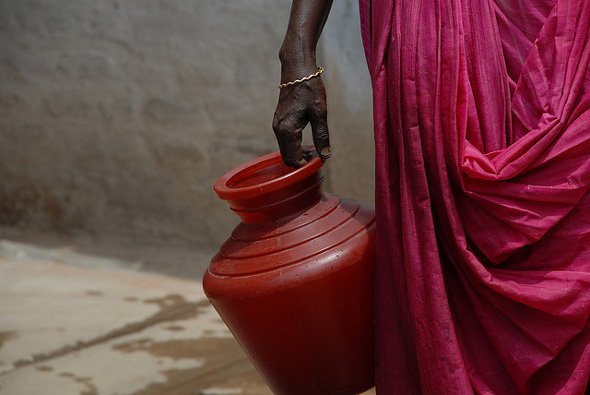
It’s not just “carrying water from a water point, but it’s discharging responsibilities that a woman has for using and managing water which may make her vulnerable to violence and bring her into risky areas,” said Dennis Warner, senior technical advisor for water and sanitation at Catholic Relief Services (CRS), at the Wilson Center on August 29. [Video Below]
-
Carl Haub, Yale Environment 360
What If Experts Are Wrong On World Population Growth?
›September 22, 2011 // By Wilson Center StaffThe original version of this article, by Carl Haub, appeared on Yale Environment 360.
In a mere half-century, the number of people on the planet has soared from 3 billion to 7 billion, placing us squarely in the midst of the most rapid expansion of world population in our 50,000-year history – and placing ever-growing pressure on the Earth and its resources.
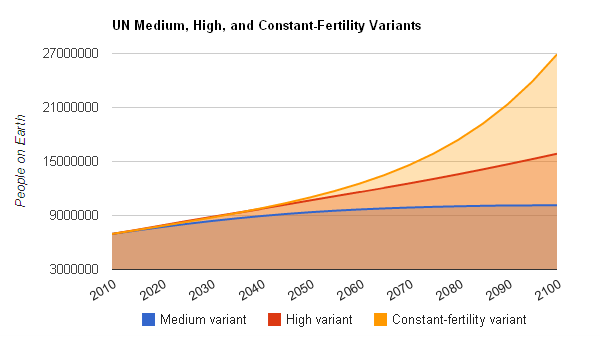
But that is the past. What of the future? Leading demographers, including those at the United Nations and the U.S. Census Bureau, are projecting that world population will peak at 9.5 billion to 10 billion later this century and then gradually decline as poorer countries develop. But what if those projections are too optimistic? What if population continues to soar, as it has in recent decades, and the world becomes home to 12 billion or even 16 billion people by 2100, as a high-end UN estimate has projected? Such an outcome would clearly have enormous social and environmental implications, including placing enormous stress on the world’s food and water resources, spurring further loss of wild lands and biodiversity, and hastening the degradation of the natural systems that support life on Earth.
It is customary in the popular media and in many journal articles to cite a projected population figure as if it were a given, a figure so certain that it could virtually be used for long-range planning purposes. But we must carefully examine the assumptions behind such projections. And forecasts that population is going to level off or decline this century have been based on the assumption that the developing world will necessarily follow the path of the industrialized world. That is far from a sure bet.
Continue reading on Yale Environment 360.
Image Credit: Data from UN Population Division, chart arranged by Schuyler Null. -
Jan Eliasson, Huffington Post
What Somalia Teaches Us: Sanitation, Health, and Conflict
›September 15, 2011 // By Wilson Center StaffThe original version of this article, by Jan Eliasson, appeared on Huffington Post.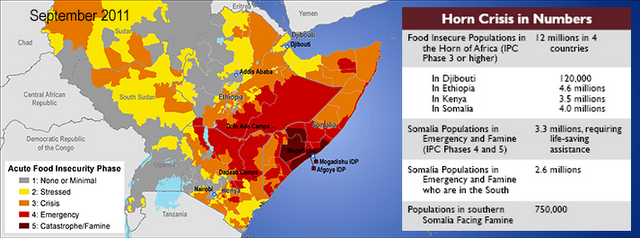
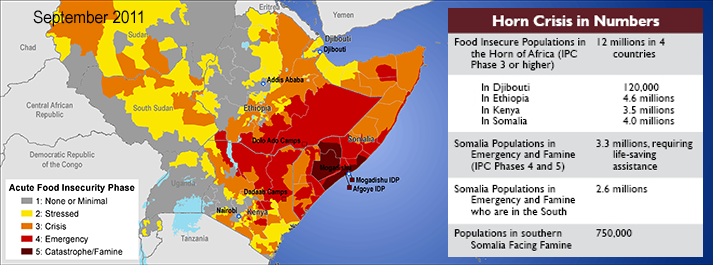
The confirmation of cholera deaths in Somalia offers a chilling reminder of what happens when there is no safe water and inadequate sanitation. The refugee crisis in Somalia is fueled by the worst drought in the horn of Africa in over 60 years.
This humanitarian disaster is a glaring example of the international community’s failure to uphold basic needs and rights of some of our planet’s most vulnerable people. As we struggle to respond to this humanitarian catastrophe, we must remember that Somalis are in need of more than access to food, but also safe water, sanitation, shelter, and healthcare.
For many of Somalia’s poorest citizens, who have walked for days and miles, drinking contaminated water, and staying in crowded camps, deadly diseases including cholera may be a tragic but predictable end result. Up to 100,000 people have crowded into Mogadishu, seeking shelter, food, and water. More arrive each day in Mogadishu and in overflowing camps in neighboring Kenya.
Experts estimate that more than 29,000 children under the age of five have already died from the combination of drought, famine, and illness. Diarrhea is on the rise in overcrowded shelters where there is a shortage of safe water and large numbers of weak and malnourished children. These conditions provide a breeding ground for infectious diseases, including measles, cholera and pneumonia. On August 18th, Tarik Jasarevic, a spokesperson for the World Health Organization, said, “We don’t see the end of it.”
Continue reading on Huffington Post.
Sources: AP, The New York Times, UN.
Image Credit: “The Horn of Africa food security crisis in numbers,” courtesy of the Famine Early Warning Systems Network (FEWS NET) and USAID. -
Rich Thorsten on Water Sanitation, Population, and Urbanization in the Developing World
›“For the first time in human history, more than one half of the world’s population now lives in urban areas, and some of the largest and fastest growing population centers in the world – countries like India, China, parts of sub-Saharan Africa – are in areas where water resources are becoming more and more scarce,” said Water.org’s Rich Thorsten in a recent interview with ECSP.
Thorsten serves as director of international programs for Water.org, which partners with local communities, governments, and NGOs across Central America, South Asia, and Africa to bring improved water sanitation to at-need rural and urban populations. He emphasized that ensuring access to clean water has a number of positive spillover effects, ranging from improved prospects for economic development to greater social stability, since access to non-polluted water supplies removes one potential source of tension within and between communities.
Community Health
The greatest benefit of improved sanitation services, however, comes in the form of enhanced public health outcomes. “I would definitely say there is a strong correlation” between the two, Thorsten asserted. “Water and sanitation-related diseases are related to the deaths of at least 3.5 million people every year in the developing world – not to mention millions of hours and dollars that are lost to treating health problems and coping with health problems as a result of poor [water] access and hygiene practices.”
Thorsten said that community participation has been a key aspect of ensuring the sustainability of Water.org’s projects. To pave the way for continued gains in economic development and public health, he said they work alongside water users, engineers, and government officials in target communities to make those parties stakeholders in the infrastructure development process. Fostering a sense of community ownership of sanitation projects helps reduce the likelihood that infrastructure will fall into disrepair or disuse after the initial programming intervention has been conducted.
Given that improving water-sanitation access for the world’s poor is a key element of the UN Millennium Development Goals, Thorsten said he is pleased the subject seems to be attracting more attention within the policymaking and development communities. Despite the positive momentum, however, he acknowledged the fight to ensure clean-water access for the developing world will remain an uphill battle.
“When one considers that….about 2.6 billion people lack access to basic sanitation, that there’s more people in the world that have access to a cell phone than a pit latrine or a toilet, it’s still a very daunting task that will require a lot more investment, commitment, and attention in order to improve the situation for billions of people,” Thorsten said.
Sources: UN.
The “Pop Audio” series is also available as podcasts on iTunes. -
Watch: Don Lauro on How Integrated Development Deepens Community Involvement
›September 7, 2011 // By Schuyler NullPopulation, health, and environment (PHE) projects address an impressive range of issues – natural resource management, family planning, maternal and child health, water, sanitation, nutrition, and strengthening health systems – but perhaps their most important advantage is the level of community involvement elicited, said long-time PHE expert Don Lauro in an interview with ECSP.
“There’s a depth to these programs,” Lauro said. Tools like rural participatory appraisal allow communities to map out their problems and then come up with solutions on their own. “If you get deep enough, it becomes they who own the project, and I think that that’s your ultimate goal,” he explained. “You have a much greater prospect for sustainability of that effort, no matter what happens to the funding.”
Lauro recently visited the USAID-funded BALANCED Project in Tanzania as part of a wider look at integrated development projects. He emphasized that what exactly this integrated approach is called – be it PHE, HELP, or HELPS – is insignificant; what matters is that these disparate elements are combined. -
Michael Kugelman, Huffington Post
Pakistan’s Biggest Threats May Not Be What You Think They Are
›August 30, 2011 // By Wilson Center StaffThe original version of this article, by Michael Kugelman, appeared on the Huffington Post.
The most troubling news to emerge from Pakistan in recent days has little to do with militancy or other headline-grabbing scourges that afflict the country. Rather, it relates to a new Oxfam report’s finding that more than a third of the country’s population – about 60 million people – is undernourished.
Pakistan may well be convulsed by extremist violence; according to Pakistani estimates, it has killed or injured 30,000 in recent years. Yet contrary to what U.S. media coverage may suggest, this is not the greatest threat to the Pakistani people.
Numerous candidates contend for this dubious honor. One, underscored by Oxfam, is hunger. Even before last year’s devastating floods, which destroyed more than 2 million hectares of arable land, the World Food Program estimated that 77 million Pakistanis were going hungry. Another is water insecurity, one of Pakistan’s biggest killers. With a third of Pakistanis lacking access to clean water, no wonder waterborne illness claims the lives of 1.2 million Pakistanis per year – and 630 children every day. Lack of education also tops the list. More than 40 million of Pakistan’s 70 million school-age children (those between the ages of 5 to 19) are not in school. And then there is Pakistan’s energy crisis. Due to power shortfalls, some Pakistanis suffer outages for as long as 20 hours per day – crippling industry and bringing misery to millions of households. All of this is compounded by state corruption, which constrains access to these precious resources and services.
Continue reading on Huffington Post.
Sources: Business Recorder, Oxfam International, PBS, World Food Program.
Michael Kugelman is a program associate with the Wilson Center’s Asia Program.
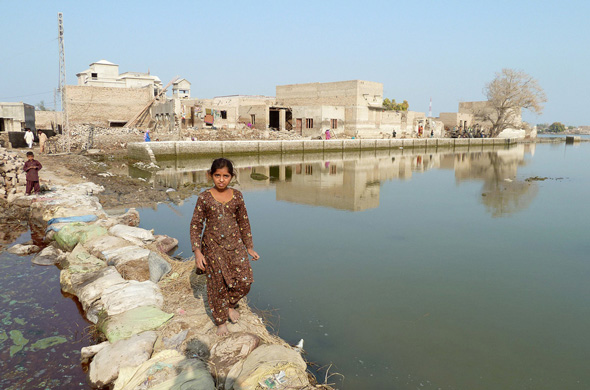
Photo Credit: “People returning home as soon as the water recedes enough,” courtesy of flickr user DFID – UK Department for International Development. -
What’s in a Name? Watch Don Lauro on PHE, HELP, and HELPS
›Population, health, and environment (PHE) expert Don Lauro has worked on integrated projects for decades as a scholar, an implementer, a donor, and an evaluator. He recently visited the USAID-funded BALANCED Project in Tanzania as part of a wider look at this integrated approach. In an interview with ECSP, Lauro said the effort “made me think more broadly…about this area that we call population, health, and environment and what’s really in a name like that.”
“We commonly say PHE, and we all know what we’re talking about,” Lauro said of the population and development community, “but when you look deeply into these projects – or even not so deeply – you see that there’s other things going on as well.”
For example, Lauro pointed to the focus on livelihoods that many PHE programs have: “In the project I saw in Tanzania, there were many microcredit groups on the ground – mostly women – taking small loans for developing little enterprises that they had, like baking bread, raising bees, buying a cow…little enterprises to make their lives a little bit better.”
“Some people don’t use the term ‘PHE’…maybe it’s a ‘HELP’ project; that is health, environment, livelihoods, and population,” Lauro said. “Other people would say it’s maybe something even longer, ‘HELPS’ – health environment, livelihoods, population, and sustainability (or ‘security’ – Ed.).” When he was at the Wilson Center, Gib Clarke coined the “HELP” term in ECSP’s FOCUS Issue 20, arguing that livelihoods is such a critical component that it ought to be more formally recognized.
But, said Lauro, “on the ground they don’t use these terms – they say things like, ‘this is a healthy community program’ or ‘this is a green community program.’”
“I think it’s very important for us to realize what happens on the ground is lot different, and maybe more real, than how we talk about it.” -
The Role of Faith-Based Organizations in Maternal and Newborn Health Care
›Government and nongovernmental organizations have consistently played a key role in addressing maternal mortality. While these initiatives are well documented, the role of faith-based organizations (FBOs) in maternal and newborn health is less well understood.
In November, the Wilson Center’s Advancing Policy Dialogue to Improve Maternal Health series will bring diverse institutions together such as the Pakistan Initiative for Mothers and Newborns (PAIMAN) and Pathfinder International to discuss country experiences and evaluate opportunities for overcoming challenges.
According to the World Health Organization, FBOs own up to 70 percent of the health infrastructure in sub-Saharan African countries and often work in remote regions where government and NGO services are limited. FBO’s are critical to improving maternal health as they fill gaps in the health system – particularly in low-resource settings – and approaching culturally sensitive barriers that often prevent mothers from seeking health care.
The level of trust communities place on their religious leaders explains one of the main reasons why FBOs are attaining success. A study conducted by Pew Charitable Trust found that a vast majority of people in sub-Saharan Africa identify themselves as adherents of Christianity or Islam, and approximately 75 percent trust their religious leaders.
As partnerships with FBO’s increase, it is imperative that organizations share their lessons learned and identify capacity and knowledge gaps in order to improve effectiveness.
Pakistan Initiative for Mothers and Newborns
The Pakistan Initiative for Mothers and Newborns (PAIMAN), which started out as a six-year project funded by USAID and led by JSI Research and Training Institute, is a strong example of a program incorporating faith to improve maternal mortality rates. The project aims to ensure that women have access to skilled birth attendants during and immediately after giving birth. Additionally, the project focused on increasing the quality of care both in the public and health sectors. PAIMAN was able to achieve substantial success by utilizing various communication interventions such as mass media, community media, and advocacy efforts. One of the most successful initiatives PAIMAN organized was reaching out to 1,000 religious scholars, known as ulamas, to deliver frequent messages on maternal and newborn health care. Since its initiation, this project has “saved more than 30,000 newborn lives resulting in a 23 percent decrease in neonatal mortality,” according to their numbers.
Pathfinder International
Pathfinder International is another great example of an organization that has understood the value of FBOs and worked in collaboration with them to achieve results for maternal health. Pathfinder has worked in numerous countries including Nigeria, Ghana, Ethiopia, Egypt, Uganda, Kenya, and Bangladesh to educate religious leaders and communities on communication strategies for improving maternal health behaviors.
In Ethiopia, Pathfinder organized over 250 religious leaders representing the Orthodox Christian, Catholic, Protestant, Seventh Day Adventist, Mekaneyesus Christian, and Muslim faiths to educate them about maternal mortality. At the conclusion of the seminar, the religious leaders agreed to condemn a host of harmful traditional practices, including female genital cutting, marriage by abduction, early marriage, rape, and unsafe abortion and agreed that they are not required by the Bible or Korean. Religious leaders in Egypt also came to similar conclusions after participating in these types of seminars.
“By helping religious leaders see the links between reproductive health and families’ well-being, Pathfinder enables them to become committed advocates for positive reform,” wrote Mary K. Burke, technical communications associate at Pathfinder International in the 2006 report, Advancing Reproductive Health and Family Planning through Religious Leaders.
Challenges: Equipping and Encouraging
Despite the prevalence of success stories among FBOs to improve maternal mortality, challenges do exist. For instance, although religious leaders are highly respected by their communities, their teachings become useless, as pointed out by a USAID-sponsored Extending Service Delivery Project report, unless they are also properly trained and equipped with the latest service delivery systems and scientific information.
The report also describes the importance of cooperation and support from the government and decision-making representatives. If the private, public, and government sectors are fragmented and no formal recognition exists to acknowledge the work of religious leaders for improving maternal mortality, then success may be significantly hampered.
To learn more about the role of faith-based organizations in women’s health, be sure to check out the Global Health Initiative event on FBOs coming in November, with representatives from PAIMAN, Pathfinder International, and others.
Sources: Extending Service Delivery Project, JSI Research and Training Institute, Pathfinder International, Pew Charitable Trust, USAID, World Health Organization.
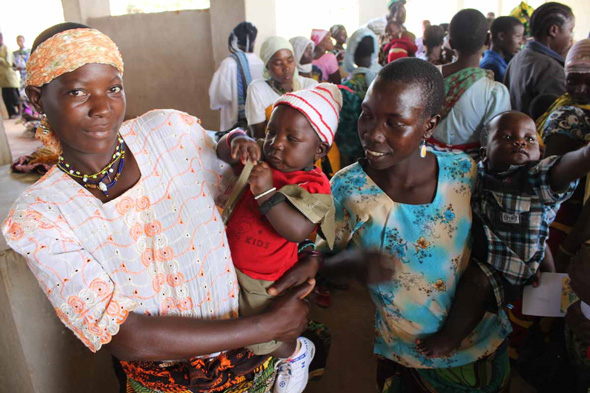
Photo Credit: “Woolly hats needed,” courtesy of flickr user Church Mission Society (CMS).