Showing posts from category global health.
-
Rwanda: Dramatic Uptake in Contraceptive Use Spurs Unprecedented Fertility Decline
›November 8, 2011 // By Elizabeth Leahy Madsen
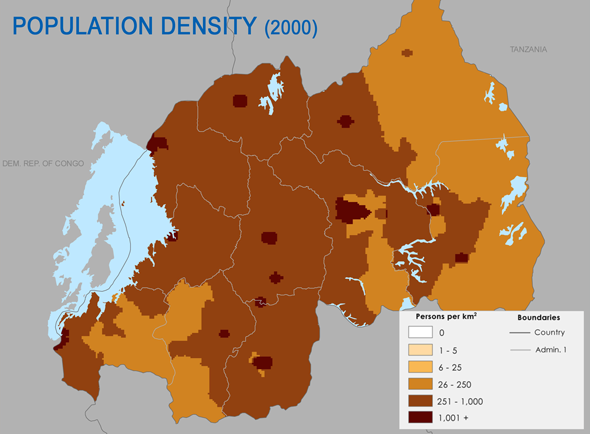
With over 400 people per square kilometer, the highest rate on the African mainland, population density is perhaps the most widely-discussed factor of Rwanda’s demography. Some scholars, notably Jared Diamond, have argued that it played a primary role in sparking the 1994 genocide through competition for land (although others present a more complex theory based in policies and governance).
-
Watch: Ann Blanc on Finding Unique Partnerships to Address Maternal Health Needs
›In the last five years, maternal health has begun to take a front seat within the larger global health agenda, but when it comes to a neutral space for broader focusing and prioritizing efforts there is still a void. In 2008 the Gates Foundation created the Maternal Health Task Force (MHTF) in an effort to fill that void. In this interview with ECSP, former MHTF Director Ann Blanc discusses how collaboration with the Wilson Center and the United Nations Population Fund has created an ideal space for addressing the technical, programmatic, and policy sides of neglected maternal health issues.
“Part of our mandate,” Blanc noted, “is to bring in the perspective of what we call ‘allied fields.’” The Wilson Center’s Advancing Policy Dialogue to Improve Maternal Health series focuses on engaging with neglected and emerging topics and experts, finding connections and encouraging partnerships with other fields, such as those working in water, sanitation, or HIV/AIDS services.
For instance, a two-day conference last year with private meetings and public dialogues focused on the neglected issue of transportation for women seeking maternal health services. The conference brought together non-traditional actors, including transportation engineers and mobile technology experts, to identify common barriers mothers commonly face like lack of infrastructure, poor security, or limited access to emergency communications.
“We’re constantly trying to push those barriers and look for interconnections between different development sectors and maternal health,” Blanc concluded. -
Improving Maternal Health: A Conversation With Kenyan Field Workers and Policymakers
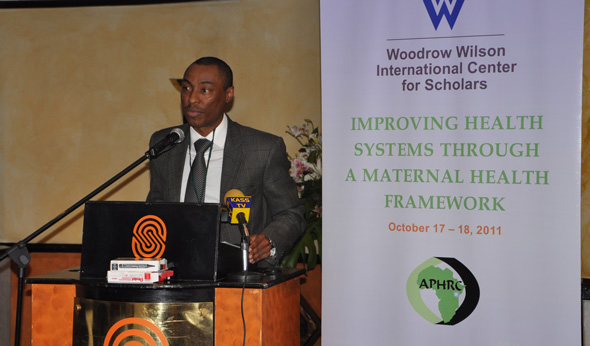
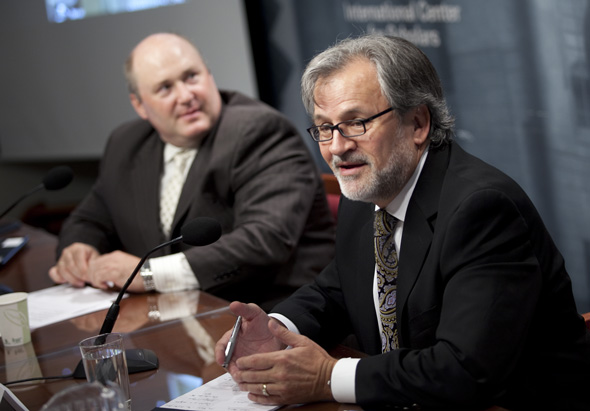
›“The traditional strategies for improving the health system include the horizontal approach, which prioritizes non-communicable diseases, and the vertical approach which prioritizes communicable diseases such as HIV/AIDS,” said John Townsend, vice president of reproductive health programs at Population Council, during a webcast discussion – the second in a series – between the Woodrow Wilson Center in Washington, DC, and maternal health experts in Nairobi, Kenya. [Video Below]
Recently, a third strategy, called the “diagonal approach,” was developed to more clearly define health system priorities and guide general system-wide improvements. Participants in both locations discussed this new approach and other structural improvements that can be made to better integrate maternal health indicators into developing country health systems on October 17.
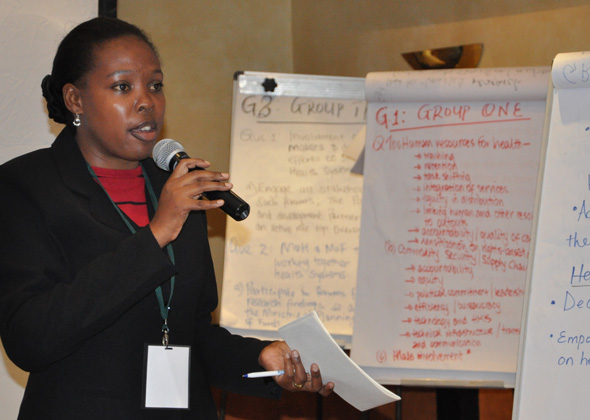
The meeting was part of the 2011 Advancing Dialogue on Maternal Health series, with the Wilson Center’s Global Health Initiative and the African Population and Health Research Center. Participants in Nairobi were assigned to three topical groups and asked to identify challenges and opportunities related to their themes.
The Role of Policymakers and Funders“We must engage [policymakers and donors] in forums like this one to share findings and share lessons learned,” said participant Sylvia Bushuru of Kenya as she reported back from the policymakers and funders working group. The group focused on steps required to hold politicians accountable to commitments made to maternal health, such as the Abuja Declaration, which requires the Ministry of Finance to dedicate 15 percent of the budget to health. Currently, only 5.5 percent of the Kenya budget is dedicated to the health sector.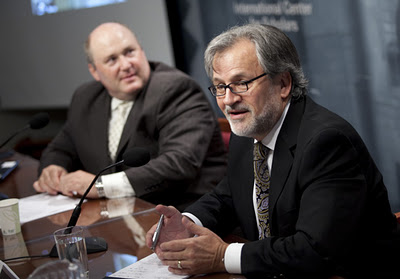
Identifying strategic partners will help in reaching ambitious goals, the group agreed; however, they noted that it’s important to ensure that these partnerships and policies extend to an operational level. Besides the overall budget pledge, important steps like ensuring 24-hour emergency health facilities in rural areas and implementing a results-based financing plan based on maternal health indicators have yet to be completed.
A Definition of Priorities through a Diagonal Approach
James Wariero, a regional health advisor with the MDG Centre for East and South Africa, served as the representative for the group discussing the “diagonal approach,” which focused on how maternal health indicators can best set priorities to improve the overall health system. They identified antenatal care visits as a priority because they also serve as an entry point to other health services, including HIV/AIDS treatment.Discussing gender, he said that “male involvement in maternal health will have benefits for child health and other issues…it is an area with little headway here in Kenya and other similar countries in Africa.” Additionally, Wariero discussed how the diagonal approach could be used to link maternal health indicators with other sectors such as technology and information systems.
The group said that improving the health system should start at the district level to ensure the most vulnerable populations at the community level have proper access. However, they said that ideally district-level programming should be evaluated and funded through results-based financing and structured on clear maternal health indicators.
Knowledge Gaps and Research Needed
“We initially began our discussion surrounding the [World Health Organization’s] six health system blocks,” reported Dr. Kristine Kisaka, a program officer with Deutsche Stiftung Weltbevoelkerung and representative from the “knowledge gaps and research needed” group. This group identified access to mobile phones for maternal health data collection as a major resource gap. Instead of calling for additional research they said they would prefer better implementation of existing, evidence-based programming.
Utilizing the World Health Organization’s health system framework, the group identified existing knowledge gaps to improve maternal health in Kenya and six recommendations:- Strengthen community strategies through a national synchronization of information
- Harmonize planning and implementation of the provisioning of supplies and commodities at the community level
- Address inequalities in the distribution and delivery of health services, ensuring distribution to urban and rural centers, including slums
- Centralize health financing in order to reach both national and community levels
- Empower households in financing, including both women and men, so they plan and save for maternal health
- Address the imbalance in supply and demand of healthcare workers
Linkages: Key To Improving Maternal Health Systems
“It’s really about linkages,” said John Townsend, giving closing remarks after the presentations from Nairobi. Maternal health indicators can be a catalyst for change, due to their strong cross-cutting links to other development systems, such as transportation, the economy, and education. “I think the call to action that the Kenyan working groups made is quite valuable,” he said, but the question is, “How do we get intelligent decision alternatives in front of our leaders to figure out what are the best investments given the critical resources?”
“The private sector [presents] an opportunity,” said Townsend. “I think we need to be more explicit about how we want to engage with them and what we would like to see from them.” He pointed out that the national maternal health strategy in Kenya is explicit and promising, but there needs to be stronger links between the national strategy and the operational aspects of actually implementing it.
Event Resources:- Photo gallery
- Presentation: “Improving Health Systems Through a Maternal Health Framework,” African Population and Health Research Center
- Video
Photo Credit: #1 and #3, courtesy of Jonathan Odhong, African Population and Health Research Center; #2 courtesy of David Hawxhurst/Wilson Center. -
STATcompiler: Visualizing Population and Health Trends
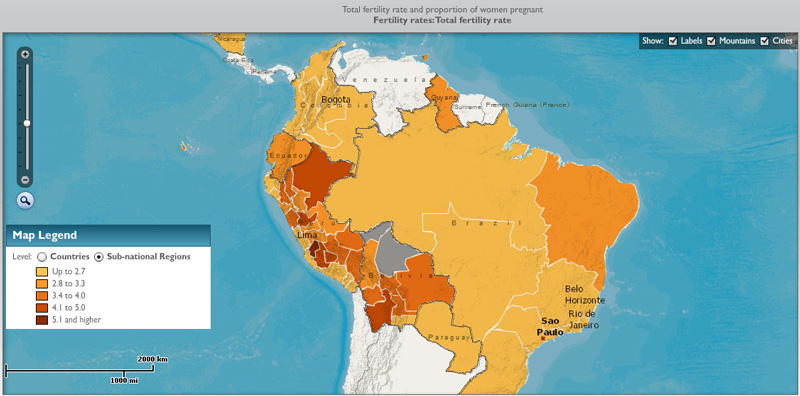
›World population is growing – earlier this week, the global community symbolically marked the arrival of the seven billionth person. But the unprecedented growth in global population over the last few decades has not affected everyone equally – in 1950, 68 percent of the world’s population lived in developing regions; today that number is 82 percent. MEASURE’s latest version of their STATcompiler tool helps visually highlight areas simultaneously experiencing the most demographic change and poor health indicators.
The revised STATcompiler – released in September – provides new ways for users to visualize data by generating custom data tables, line graphs, column charts, maps, and scatter plots based on demographic and health indicators for more than 70 countries. Users can select countries or regions of interest, and relevant indicators, including for family planning, fertility, infant mortality, and nutrition. Tables can be further customized to view indicators over time, across countries, and by background characteristics, such as rural or urban residence, household wealth, or education. In some cases, sub-national data is available. User-created tables and images are then exportable so that they may be easily used in papers or presentations.
Since STATcompiler is still in active development, certain functions are still being added. HIV data has not yet been integrated into the program, nor has the express viewer function, with customizable, ready-made tables for quick access. Additionally, updated information is not available for all countries, in all categories – for instance, the most recent data available for Mexico comes from a 1987 survey. If preferred, the legacy version remains available to users in the meantime.
MEASURE DHS – the Monitoring and Evaluation to Assess and Use Results Demographic and Health Surveys project – provides technical assistance for data collection on health and population trends in developing countries. Their demographic and health surveys, funded by USAID, provide data for a wide range of monitoring and impact evaluation indicators at the household level in the areas of population, health, and nutrition. They have become a staple data source for researchers, and the addition of better analysis functions and dissemination tools, via STATcompiler, will hopefully help advance understanding of demographic and health trends.
Image Credit: Map from STATcompiler, arranged by Schuyler Null. -
New Report Launched: ‘The World’s Water’, Volume Seven
›“The water problem is real and it is bad,” said MacArthur “Genius” Fellow and founder of the Pacific Institute Peter Gleick at the October 18 launch of the seventh volume the institute’s biennial report on freshwater resources. “It’s not bad everywhere, and it’s not bad in the same way from place to place, but we are not doing what we need to do to address all of the different challenges around water.”
“The World’s Biggest Problem”
Worldwide, more than a billion people lack access to safe drinking water, while two and a half billion lack access to adequate sanitation services. “This is the world’s biggest water problem,” said Gleick, “the failure to meet basic human needs for water – it’s inexcusable.”
Gleick predicts that the world will fail to meet the Millennium Development Goals for water and sanitation by 2015, and noted that measures of illness for water-related diseases are rising, rather than falling.The World’s Water series provides an integrated way of thinking about water by exploring major concepts, important data trends, and case studies that point to policies and strategies for sustainable use of water. Volume seven includes chapters on climate change and transboundary waters, corporate water management, water quality challenges, Australia’s drought, and Chinese and U.S. water policy. The new volume also includes a set of side briefs on the Great Lakes water agreement, the energy required to produce bottled water, and water in the movies, as well as 19 new and updated data tables. An updated water conflict chronology looks at conflicts over access to water, attacks on water, and water used as a weapon during conflict.Peter Gleick on climate change and the water cycle.
Despite the added data, Gleick said that vast gaps remain in our knowledge and understanding about water. We lack accurate information on how much water the world has, where it is, how much humans use, and how much ecosystems need, he said. “So right off the bat, we are at a disadvantage.”
Focus on Efficiency, Infrastructure to Better Manage Water
One of the major concepts that has connected various volumes of The World’s Water is the concept of a “soft path for water” – a strategy for moving towards a more sustainable future for water through several key focus points: improved efficiency, decentralized infrastructure, and broadly rethinking water usage and supply.
Other cross-cutting themes include climate and water, peak water, environmental security, and the human right to water (formally recognized in a 2010 UN General Assembly resolution). “I would argue that all of these combined offer to some degree a different way of thinking about water, an integrated way of thinking about water,” Gleick said.
The China Issue
The role of China has been one of the most significant changes over the course of the series, said Gleick. The growth in the Chinese economy has led to a massive growth in demand for water (see the Wilson Center/Circle of Blue project, Choke Point: China), as well as massive contamination problems. The newest volume addresses these issues as well as China’s dam policies – internally, with neighboring countries, and around the world.
Gleick pointed out that China is one of the only nations (maybe the only) that still has a massive dam construction policy, and their installed capacity is already much larger than the United States, Brazil, or Canada. In addition, Chinese companies and financial interests are involved in at least 220 major dam projects in 50 countries around world. These projects have become increasingly controversial, for both environmental and political reasons, he said.
“My lens is typically a water lens,” Gleick said, but “none of us can think about the problems we really care about, unless we think about a more integrated approach.” Gleick emphasized the need for new thinking about sustainable, scalable, and socially responsible solutions. “We have to do more than we are doing, in every aspect of water,” he concluded.
Event Resources
Photo Credit: “Water,” courtesy of flickr user cheesy42. -
Seven Ways Seven Billion People Affect the Planet
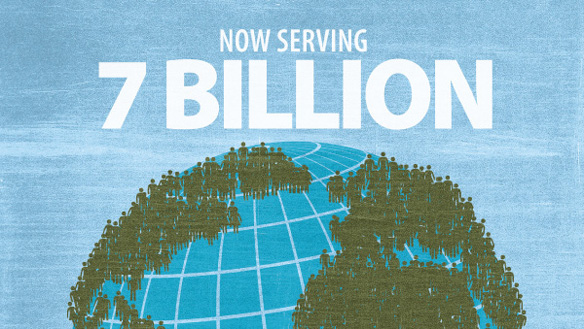
›October 31, 2011 // By Geoffrey D. DabelkoSeven billion people now live on earth, only a dozen years after global population hit six billion. But the seven billion milestone is not about sheer numbers: Demographic trends will significantly impact the planet’s resources and peoples’ security.
Growing populations stress dwindling natural resource supplies while high levels of consumption in both developed countries and emerging economies drive up carbon emissions and deplete the planet’s resources. And neglected “youth bulges” could bolster extremism in fragile states like Somalia and destabilize nascent democracies like Egypt.
Here are seven ways seven billion people affect the planet, according to recent research:
Security: Nearly 90 percent of countries with very young and youthful populations had undemocratic governments at the end of the 20th century. Eighty percent of all new civil conflicts between 1970 and 2007 occurred in countries where at least 60 percent of the population is under age 30, says demographer Elizabeth Leahy Madsen. According to research by demographer Richard Cincotta, these countries may achieve democracy, but are less likely to sustain it.- Richard Cincotta: Tunisia Predicted: Demography and the Probability of Liberal Democracy in the Greater Middle East
- Elizabeth Leahy Madsen: Demographic Security 101
Water: By 2025, 1.8 billion people will be living in countries with water scarcity, and fully two-thirds will be living in conditions of water stress. People are using groundwater faster than it can be naturally replenished, putting us in danger of “peak water,” says MacArthur “Genius” Fellow Peter Gleick. “We cannot talk about water without also understanding the enormously important role of population dynamics and population growth.”- Peter Gleick: Population Dynamics Key to Sustainable Water Solutions
Forests: The growing demand for energy has helped devastate tropical forests, as more than two billion people depend on wood for cooking and heating, particularly in developing countries. Projects in Indonesia, Nepal, and Uganda are fighting deforestation by providing alternative energy and incomes along with health and family planning services.- Indonesia: Health in Harmony
- Nepal: Forests for the Future
- Uganda: Sharing the Forest
Future Growth: By 2050, the UN says global population could range anywhere from 8 billion to 11 billion – and where it ends up depends in large part on the status of women in developing countries. “Even if fertility rates remain constant at current levels (which is unlikely), developing regions would grow from 5.7 billion in 2010 to 9.7 billion in 2050, but the total population of developed countries would remain essentially unchanged,” writes Madsen.- Elizabeth Leahy Madsen: How Did We Arrive at 7 Billion – and Where Do We Go From Here? [Part One] [Part Two]
There are no quick solutions to these seven problems. But meeting the unmet need for contraception of more than 200 million women is an effective and inexpensive way to start.
Sources: Population Action International, UN, World Health Organization.
Image Credit: Used with permission courtesy of Scott Woods, The University of Western Ontario. -
Day of 7 Billion Puts Future Generations in Spotlight
›This month, our small planet’s population will hit seven billion. Reproductive health and environmental groups worldwide are raising awareness about the exact day – the “Day of Seven Billion” – when we’re estimated to hit that number next week, calling for sustainability and women’s empowerment. But the future trajectory of the world’s population projections – and all that they entail for human and environmental wellbeing – depends on decisions we make now.
Let’s start with the more than 215 million women worldwide – including many in our home countries, the United States and Kenya – who do not want to get pregnant but are not using modern contraception. Our world looks very different in 2050 if these women’s needs are met.
Research from the Futures Group shows that meeting women’s needs results in a significantly slowed population trajectory, with world population topping out at eight billion in 2050. According to recently revised UN estimates, without this intervention population could rise to 10 or even 12 billion by century’s end. Meeting this need is also a smart investment: Our research estimates that access to modern contraception for all who want it would cost $3.7 billion per year. Others have estimated the savings in health care costs of providing contraception to all who want it at $5.1 billion per year. Family planning is cost-effective; it has been estimated that a dollar spent on family planning can save between $15 and $20 in education, health, housing, and other socio-economic support costs, making the achievement of the Millennium Development Goals cheaper for developing countries.
The health and environmental benefits are also enormous: a one-third reduction in maternal mortality; a one-fifth reduction in child mortality; a major reduction in the greenhouse gas emissions. Recent research shows that carbon emissions slow when we slow our population trajectory in an effect similar to increasing the world’s use of wind power forty-fold. In Nigeria it was recently estimated that providing universal access to family planning would result in a reduction of carbon emissions equivalent to eight years from current sources.
These investments also provide more than big numbers: By enabling couples and women to choose when and how many children they’ll have, women can continue their educations longer, participate more in the workforce, and contribute to household decisions that benefit the family.
Giving women what they want and need to plan their pregnancies is one of the most obvious, yet most overlooked solutions to many of the most pressing problems we face, from maternal and child mortality to climate change. International family planning funding has stagnated for over 10 years and the results have been predictable: In Kenya, and in many countries, unmet need – with all its human costs – has increased.
Today, the largest generation of young people ever is coming of age. The aspirations and health of the millennial generation – as well as all those in the future – are on the line.
Pamela Onduso, MPH, is a Kenyan reproductive health advocate and program adviser with Pathfinder International’s Kenya office based in Nairobi. Dr. Scott Moreland is a senior researcher at the Futures Group, and leads demographic work in countries around the world.
Sources: African Institute for Development Policy, Futures Group, Guttmacher Institute, Health Policy Initiative, PNAS, Population Services International, UN Population Division, World Health Organization.
Photo Credit: Adapted from “Tea picker and son,” courtesy of flickr user ROSS HONG KONG. -
Laurie Mazur, The Aspen Leaf
The Planet at 7 Billion: Lessons from Somalia
›October 28, 2011 // By Wilson Center StaffThe original version of this article, by Laurie Mazur, appeared on the Aspen Institute’s Aspen Leaf blog.
Listless, emaciated children wait for water to arrive by donkey. Their mothers rest nearby, too exhausted to speak. Tiny graves are chiseled out of bone-dry earth to hold the famine’s youngest victims. That is what Mary Robinson, then-president of Ireland, found when she visited Somalia 19 years ago. Images of suffering haunted her for years: “I never got Somalia out of my system,” she said.
Now, the Horn of Africa is again in the grip of famine. When Robinson returned to Somalia earlier this year, “Everything was even worse” than in 1992. At the National Press Club on Monday, October 17, Robinson issued an eloquent plea to address the crisis in Somalia, which has already claimed 40,000 lives. “How can we allow that to happen in the 21st century?” she asked. “It’s a black mark for all of us.” The event was part of a series of discussions organized by the Institute’s Aspen Global Health and Development program, titled “7 Billion: Conversations that Matter.”
Women, Reproductive Health, and Fertility.
It is not enough to respond to the current crisis, Robinson said. To prevent a recurrence, we must also address long-term health and development challenges. That means bolstering governance and security. And, perhaps most important, it means unleashing the power of women. Women are critical to the future of Somalia, said fellow speaker Walid Abdelkarim, principal officer and team leader for Somalia at the UN Department of Peacekeeping Operations. “The most important element is the ability of the household to grow,” he said, “and that’s about the woman who nourishes and runs the household.”
Continue reading on The Aspen Leaf.
Video Credit: Aspen Institute.