-
Women in Agriculture: Closing the Gender Gap for Development and World Hunger
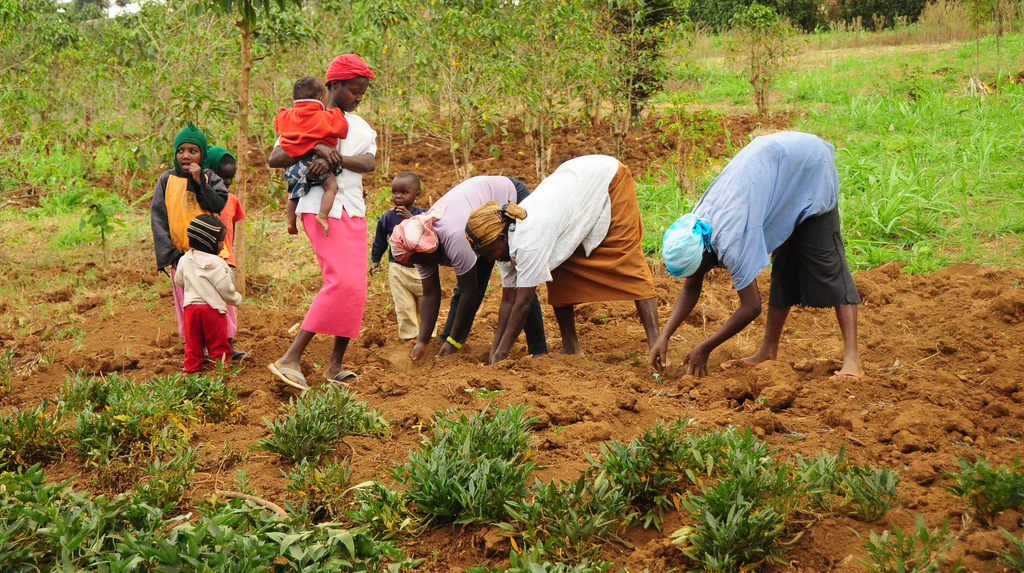
›June 22, 2011 // By Kellie FurrProviding women with equal access to productive resources and opportunities may be the key to bolstering the struggling global agricultural sector and feeding communities living in extreme hunger, according to the UN Food and Agriculture Organization’s (FAO) latest State of Food and Agriculture report, which this year is sub-titled, “Women in Agriculture: Closing the Gender Gap for Development.”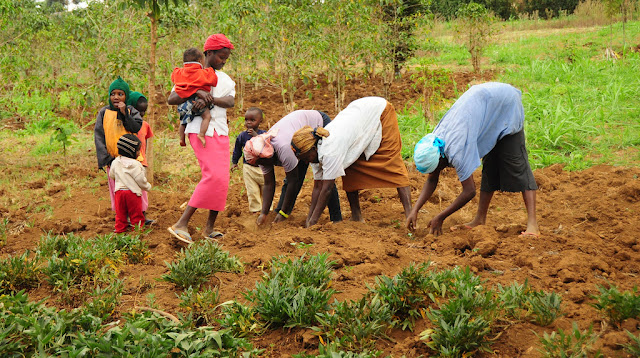
“Women are farmers, workers, and entrepreneurs, but almost everywhere they face more severe constraints than men in accessing productive resources, markets, and services,” write the authors. “This ‘gender gap’ hinders their productivity and reduces their contributions to the agriculture sector and to the achievement of broader economic and social development goals.”
Barriers to Productivity
Globally, women comprise 43 percent of the agricultural labor force, ranging from 20 percent in Latin America to 50 percent in southeastern and eastern Asia and sub-Saharan Africa, according to the report. But despite their significant global presence, female farmers face gender-specific constraints that hinder access to productive resources, financial support, information, and services required to be viable and competitive. “The yield gap between men and women averages around 20 to 30 percent, and most research finds that the gap is due to differences in resource use,” write the authors.
Generally, women are more likely than men to hold lower-wage, part-time, or seasonal positions and tend to get paid less even when they are more qualified. Furthermore, domestic and occupational lines are blurred for women, who are often not compensated for work that is closely related to domestic food preparation. Most significantly for agricultural productivity, women across the developing world often lack access to quality land, sometimes being barred from land ownership. This ban precludes female farmers from exercising managerial discretion over farming activities, such as entering contract farming agreements. Women also generally own less livestock and contract for less labor – two crucial assets for marketable agricultural production in many developing countries. Moreover, because of insufficient land and resources, women farmers are also more vulnerable to climate shocks.
Resource barriers for female farmers extend to education, finance, and technology as well. The authors observe that “female household heads in rural areas are disadvantaged with respect to human capital accumulation in most developing countries, regardless of region or level of economic development,” which represents a historical bias against females in education. Despite notable success observed in finance projects involving female farmers, gender bias exists in the financial system, which prevents women from bearing initial financial risk in order to increase long-term productivity gains. Sources of gender bias in the financial sector include legal barriers, cultural norms, lack of collateral, and institutional discrimination by public and private lenders. Due to the aforementioned lack of credit, labor, and education, women farmers are deficient in all aspects of technology, such as the acquisition of new equipment, information about new seed varietals and animal breeds, pest control measures, and management techniques.
Global Implications
Closing the gender gap could have profound implications for easing world hunger. According to the FAO, approximately 925 million people are currently undernourished, most of whom live in developing countries. If women were given all the inputs and support as men, agricultural output could increase by 2.5 to 4 percent in developing countries, potentially reducing the world’s hungry by 100 to 150 million people. “This report clearly confirms that the Millennium Development Goals on gender equality (MDG 3) and poverty and food security (MDG 1) are mutually reinforcing,” FAO Director-General Jacques Diouf argues in his introductory remarks.
Increasing the economic viability of women farmers may also translate into better infant and child health indicators – when women control additional income, they tend to allocate more of their earnings toward the health and well-being of their children. Closing the agricultural gap is “a proven strategy for enhancing the food security, nutrition, education, and health of children,” Diouf asserted. “Better fed, healthier children learn better and become more productive citizens. The benefits would span generations and pay large dividends in the future.”
Finally, the FAO notes that in addition to reducing child mortality rates, increasing female education and economic prosperity helps lower fertility rates, which over time increases human capital and can help drive a demographic transition towards lower dependency rates and higher per capita growth.
Closing the Gender Gap
“The conclusions are clear,” write the authors:1) Gender equality is good for agriculture, food security, and society; and
Though they note that “no simple ‘blueprint’ exists for achieving gender equality in agriculture,” the authors do recommend some basic principles to the development community, including working towards eliminating discrimination against women under the law, strengthening rural institutions and making them gender-aware, freeing women for more rewarding and productive activities, building the human capital of women and girls, bundling interventions, improving the collection and analysis of sex-disaggregated data, and making gender-aware agricultural policy decisions.
2) Governments, civil society, the private sector and individuals, working together, can support gender equality in agriculture and rural areas
Recognizing that “women will be a pivotal force behind achieving a food secure world,” the U.S. Agency for International Development (USAID) has actually launched initiatives aimed directly at closing the gender gap. The Feed the Future initiative, announced last spring, includes a heavy focus on gender equity and integration with small-scale farming initiatives. For example, the Office of Women in Development is supporting a three-year project in Liberia, “Integrated Agriculture for Women’s Empowerment,” that aims to train and support 1,500 small farmers in Lofa county, two-thirds of whom are women. And in Rwanda, USAID helped the Ministry of Agriculture and Animal Resources – headed by Dr. Agnes Kalibata – develop a national investment plan, which has been successful in bringing in donor support.
However, the FAO report does not offer specific feedback on programs like Feed the Future, which is arguably a crucial component of a truly comprehensive assessment on the current state of agriculture. Though they write that the State of Food Agriculture series is intended to simply be “science-based assessments of important issues,” the infancy of these food security efforts and the immediacy of the problems examined (see recent food price instability) creates an excellent opportunity for critical input. “Women in Agriculture” offers perhaps the most comprehensive report on the gender gap and development to date, but more specific critiques on the current efforts of USAID and others might make more of an impact in a field where the issues at play have been fairly clearly enumerated many times before.
Sources: Food and Agriculture Organization, The Hunger Project, International Fund for Agricultural Development, Population Action International, USAID.
Photo Credit: Adapted from “Ngurumo Village-Ntakira (Kenya),” courtesy of flickr user CGIAR Climate. -
The Future of Women in the MENA Region: A Tunisian and Egyptian Perspective
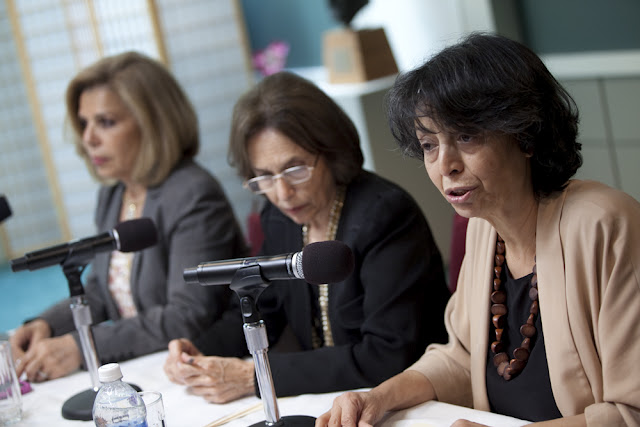
›Lilia Labidi, minister of women’s affairs for the Republic of Tunisia and former Wilson Center fellow, joined Moushira Khattab, former minister of family and population for Egypt, on June 2 at the Wilson Center to discuss the role and expectations of women in the Egyptian and Tunisian revolutions, as well as issues to consider as these two countries move forward. Haleh Esfandiari, director of the Middle East Program at the Wilson Center, moderated the event.
Labidi focused on the participation of women in the protests in Tunisia and their aftermath. She emphasized that these developments give hope, as they attest to the mixed nature of the demonstrations in which women were not sidelined but marched amongst men. (Editor’s note: The gender balance of the protests was a feature demographer Richard Cincotta also observed in his post about Tunisia’s age structure.) She pointed to the way that Tunisian women have entered the public space and played vital roles in spreading images and information about the protests around the world. Labidi said that although the future of women in Tunisia remains uncertain, it is unlikely that they will cease to be active and retreat to the private sphere. She commented on the new parity resolution calling for an equal number of male and female candidates for each party in Tunisia’s July elections and the opportunities afforded by an increase in political pluralism and media outlets.
Labidi also elaborated on her efforts as Tunisia’s minister of women’s affairs, discussing the ministry’s results and future goals. She stressed the importance of aiding women living in poverty, changing the cultural role of women, and boosting confidence in the government’s ability to address women’s needs. In particular, Labidi spoke of the work to expand the ministry’s regional offices to become more accessible to rural and non-elite sectors of Tunisian society. She hoped that recent events will encourage recognition of women as regional political actors and that the United States will expand intellectual and political ties with Tunisia.
Khattab pointed out the numerous similarities between the role of women in Tunisia and in Egypt, saying that women’s participation in public demonstrations and disseminating information to the media “has set the stage for a paradigm shift in the rights of citizens.” She noted that there are many advances yet to be made for women, youth, and other groups but that the protests have begun a change towards “a democratic, rights-based Egypt.”
Although she sees women’s involvement as a part of continuing progress in women’s rights, Khattab made note of the various obstacles to freedom that women in Egypt still face. She expressed concern that the politics of revenge against the previous regime might sideline women in politics, who already have less representation in the government than they did under Mubarak and have been excluded from the committee drawing up a new Egyptian constitution. She noted the need to change social perceptions that “women already enjoy all their rights.” She also discussed how the new media freedom gives fundamentalist groups a platform to propagate narrow interpretations of faith that call for the repeal of some of the existing women’s rights laws. She posed the question of what interpretations of the faith would allow for a greater harmonization with domestic laws based on the ideals of human rights.
Laura Rostad is an intern with the Middle East Program at the Woodrow Wilson Center.
Photo Credit: David Hawxhurst/Wilson Center. -
Yemen Beyond the Headlines: Women’s Health and Well-Being, Foundations of a Fragile State
›Part one of the “Yemen Beyond the Headlines: Population, Health, Natural Resources, and Institutions” event, held at the Wilson Center on May 18.
“Ultimately, whether Yemen is able to achieve its goals for social and economic development, will to a large extent depend on its future population growth and size,” said Gary Cook, senior health advisor at the U.S. Agency for International Development, in his opening address on Yemen’s population and development challenges at the Woodrow Wilson Center. [Video Below]
Cook was joined on the opening panel of the all-day conference, “Yemen Behind the Headlines: Population, Health, Natural Resources, and Institutions,” by Dalia Al-Eryani, former project officer for Pathfinder International’s Safe Age of Marriage Project, and T.S. Sunil, professor of sociology at the University of Texas San Antonio, to discuss issues related to population, reproductive health, and child marriage. Drawing speakers and participants form the Middle East, Europe, and the United States, the conference was part of the Wilson Center’s HELPS Project, a multi-year effort to deepen understanding of links among health, environment, livelihoods, population and security.
Yemen’s Population and Development Challenges
Since 1950, the population of Yemen has increased from 4.3 million to 24 million, with an annual population growth rate above three percent, Cook said. High fertility drives Yemen’s rapid population growth, with an average total fertility rate (TFR) of 5.5 births per woman. Rates are even higher in rural areas and among women with limited or no education, he said.
Future population growth will have tremendous impacts on the country’s economy, education, health, and natural resources, said Cook, and “there is a very large gap between the high fertility assumption and the low fertility assumption.”
An additional 1.5 million new people will be added to the labor force and 29 percent less income per person will drop by 29 percent by 2035 if current fertility rates persist, said Cook. Though Yemen has a national population policy that outlines TFR targets of 3.3 in 2025 and 2.1 by 2035, the latest UN Population Division projections suggest these expectations are optimistic. Education and health demands and expenditures will increase greatly, while per capita arable land and water will decrease, exacerbating ongoing land and water scarcity in Yemen.
“We do not have enough local and external resources to address the needs of a rapidly expanding population,” said Cook. “Helping couples who want to limit and space their births will also help the nation,” he added.
Law, Culture, and Child Marriage
“Enforced by law and culture alike,” early marriage in Yemen is common, said Al-Eryani, with over 50 percent of Yemeni women married before they are 17 years old, and 14 percent before they turn 14. Opponents of child marriage argue that children are neither emotionally nor physically ready for marriage and that the practice increases health risks and lowers educational opportunities for girls.
Currently, Yemen has no minimum age for marriage law, and recent attempts to pass such a law have failed, said Al-Eryani. “The practice never really has been questioned.”
“There is a belief that child marriage is a good thing – both for the girl and for the family,” she said. Early marriages are a way to build family honor and tribal ties, and many poor families see opportunity for financial gain in the form of a dowry. “These families see no socially acceptable alternatives for the girl…and all of this is supported by the belief that Islam condones child marriage,” she said.
Through awareness sessions, health fairs, and school plays, the community-based Safe Age of Marriage Project has helped to change social norms around child marriage in two districts in Yemen.
After participating in the program, community members were significantly more likely to believe that delaying marriage gives girls more educational opportunities, empowers them to make decisions, and promotes healthy pregnancy and children, Al-Eryani said. Child marriage was banned in one of the communities, and the marriages of 53 girls and 26 boys were canceled as the result of the project. In the future, she hopes involving more religious and local leaders could further increase the program’s impact.
Youth and “The Reproductive Health Transition”
“When we talk about fertility transition, we only talk about the number of children born,” said Sunil. “A reproductive health transition takes into account not just total fertility rate, but a number of different dimensions.”
Women should have the freedom to decide if, when, and how often to reproduce, said Sunil, through access to safe, effective, affordable, and acceptable family planning methods. They also should have access to quality maternal health care throughout pregnancy and birth, he said.
“It’s a popular belief that Islamic societies with poor and limited resources are not compatible with a reproductive health transition,” said Sunil. “But the onset of a reproductive health transition is underway in Yemen.”
While the transition in Yemen is progressing more slowly than in other countries in the region, many positive trends can be seen among the country’s youth, said Sunil. Trends indicate a drop in fertility rates, especially among younger women; marriage of girls under 15 years old has declined; and contraceptive use among young women age 15 to 24 has increased significantly.
Government and international donor agencies “must capture the growing momentum among the younger cohort” and meet demands for better education, postponement of marriage, and healthcare services, said Sunil. Continued focus on adolescent reproductive health will be the key to achieving the reproductive health transition, he concluded. “From an economic and human perspective, the growing young population in Yemen is potentially a tremendous asset.”
See parts two and three of “Yemen Beyond the Headlines: Population, Health, Natural Resources, and Institutions” for more from this Wilson Center event.
Sources: Population Reference Bureau, UNICEF, U.S. Agency for International Development.
Image Credit: “Young girl with her mom – Sanaa,” courtesy of flickr user fveronsei1. -
USAID Egypt’s Health and Population Legacy Review
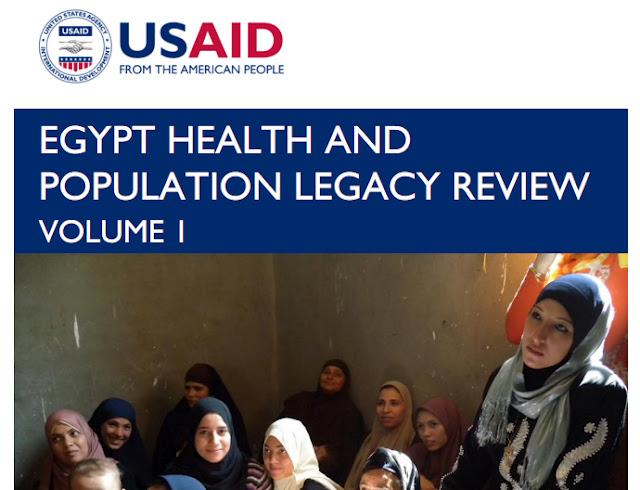
›On May 23 the Middle East Program, ECSP, and the Global Health Initiative of the Woodrow Wilson Center, along with the Global Health Technical Assistance Project, hosted a panel of speakers discussing the past 30 years of the U.S. Agency for International Development’s health and population initiatives in Egypt, as outlined in the new Egypt Health and Population Legacy Review. Geoffrey Dabelko, director of ECSP and coordinator of the Global Health Initiative at the Wilson Center, moderated the event. [Video Below]
Peter McPherson, former administrator of USAID during the Reagan administration, and George Laudato, the administrator’s special assistant for the Middle East, presented on the historical context behind USAID in Egypt and the results of their efforts. McPherson pointed to three lessons that can be drawn from the recent report:- “Big payoffs” require long-term efforts; and
- Economic support for a country can have a dramatic impact; but
- The host country’s commitments and investments are still important.
Motaz Zahran, political counselor for the Embassy of Egypt, noted that USAID efforts were “just one sector of a fruitful partnership” between the United States and Egypt that he hoped would continue. He said the success story outlined by the report was reflective of improvements in coordination and addressing specific goals.
Other panelists outlined the successes of USAID in Egypt as related to their own areas of expertise. Leslie B. Curtin, co-author of the review and an expert in demographics and health outcomes, noted the dramatic improvements in a range of health sectors, in particular the rise in contraceptive prevalence and immunization rates and decrease in both maternal and infant mortality rates.
Nahed Matta, MD, senior maternal and newborn health officer at USAID, focused on improvements to the quality of maternal health, which she said were made possibly through better technology and increased fact-gathering to identify the key factors regarding maternal health trends. Sameh El-Saharty, MD, senior health policy specialist at the World Bank and Health Legacy Review Committee member, credited the increased number of health professionals in Egypt, better information gathering on health systems, and restructured models of health insurance, as successful strategies.
Concluding the session, Amie Batson, deputy assistant administrator for Global Health at USAID, discussed the lessons that other development initiatives can draw from the legacy of USAID efforts in Egypt. She highlighted the importance of country ownership, in which the developing country engages with other institutions and religious and political leaders at both national and local levels, and of policies that fund routine monitoring and evaluation. She also outlined the possibilities of innovation and south-to-south sharing on the local and international scale, referencing inroads made by two recent initiatives: the “MAMA” mobile device program, launched by Secretary Clinton in May 2011 to assist with disseminating maternal health information, and the Saving Lives at Birth initiative, launched by USAID in partnership with several other organizations in March 2011.
Laura Rostad is an intern for the Middle East Program at the Woodrow Wilson Center.
Image Credit: Adapted from cover of the Egypt Health and Population Legacy Review, courtesy of USAID; cover photo courtesy of Leslie Curtin. -
The Walk to Water in Conflict-Affected Areas
›May 18, 2011 // By Wilson Center StaffConstituting a majority of the world’s poor and at the same time bearing responsibility for half the world’s food production and most family health and nutrition needs, women and girls regularly bear the burden of procuring water for multiple household and agricultural uses. When water is not readily accessible, they become a highly vulnerable group. Where access to water is limited, the walk to water is too often accompanied by the threat of attack and violence.
-
Accessing Maternal Health Care Services in Urban Slums: What Do We Know?
›“Addressing the needs of urban areas is critical for achievement of maternal health goals,” said John Townsend, vice president of the Reproductive Health Program at the Population Council. “Just because there is a greater density of health services does not mean that there is greater access.”
Townsend moderated a discussion on the challenges to improving access to quality maternal health care in urban slums as part of the 2011 Maternal Health Dialogue Series with speakers Anthony Kolb, urban health advisor at USAID; Catherine Kyobutungi, director of health systems and challenges at the African Population Health Research Center; and Luc de Bernis, senior advisor on maternal health at the United Nations Population Fund (UNFPA). [Video Below]
Mapping Urban Poverty
“Poverty is becoming more of an urban phenomenon every day,” said Kolb. With over 75 percent of the poor in Central Asia and almost half of the poor in Africa and Asia residing in cities and towns by 2020, “urban populations are very important to improving maternal health,” he added.
Collecting accurate data in informal settings such as slums can be very challenging, and there is often a “systematic undercounting of the urban poor,” said Kolb. Data often fails to capture wealth inequality in urban settings, and there is often a lack of attention to the significant variability of conditions between slums.
Kolb also warned about the risk of generalization: “Slums and poverty are not the same.” In practice, there is not a standardized definition of what constitutes a slum across countries, he said. “It is important to look at different countries and cities individually and understand how inequality is different between them.” Slum mapping can help to scope out challenges, allocate resources appropriately, and identify vulnerability patterns that can inform intervention design and approach, he said.
Maternal Health in Nairobi Slums
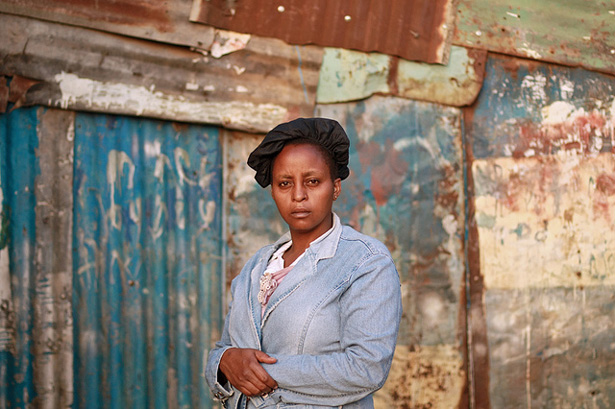
Addressing the maternal health needs of the nearly 60 percent of urban residents who live in slums or slum-like conditions will be a critical step to improving maternal health indicators of a rapidly urbanizing Kenya, said Kyobtungi.
Only 7.5 percent of women in Kenyan slums had their first antenatal care visit during their first trimester of pregnancy and only 54 percent had more than three antenatal care visits in all – rates significantly lower than those among urban women in non-slum settings.
“In some respects, [the urban poor] are doing better than rural communities, but in other ways they are behind,” said Kyobtungi. But, she said, there are many unique opportunities to improve maternal health in slums: “With these very high densities, you do have advantages; with very small investments, you can reach many more people”
Output-based voucher schemes – in which women pay a small fee for a voucher that entitles them to free, high-quality antenatal care, delivery services, and family planning – have been implemented to help poor, urban women access otherwise expensive services. But poor attitudes towards health care workers, transportation barriers, and high rates of crime still prevent some women from taking advantage of these vouchers, said Kyobtungi.
The majority of maternal health services in slums are provided by the private facilities, though size and quality vary widely. “There is a very high use of skilled attendants at delivery, but the definition of skilled is questionable,” said Kyobtungi
“Without supporting the private sector,” Kyobutungi said, “we cannot address the maternal health challenges within these informal settlements.” Combined with an improved supervision and regulation system, providing private maternal health facilities with training, equipment, and infrastructure could help to improve the quality of services in urban slums, she concluded.
Reducing Health Inequalities
“While we have evidence that health services, on average, may be better in urban areas than in rural areas, this often masks wide disparity within the population,” said de Bernis. “Reducing health inequities between and within countries is a matter of social justice.”
When it comes to family planning, total fertility rates are lower in cities, but “the unmet need…is still extremely important in urban areas,” explained de Bernis. Many poor women in cities, especially those who live in marginalized slum populations, do not have access to quality reproductive health services – a critical element to reducing maternal morbidity and mortality rates.
Economic growth alone, while important to help improve the health status of the poor in urban settings, will not solve these problems, said de Bernis. To reduce health disparities within countries, de Bernis advocated for “appropriate social policies to ensure reasonable fairness in the way benefits are distributed,” including incorporating health in urban planning and development, strengthening the role of primary health care in cities, and putting health equity higher on the agenda of local and national governments.
Event Resources:Source: African Population Research Center, United Nations Population Fund.
Photo Credit: “Work Bound,” courtesy of flickr user Meanest Indian (Meena Kadri). -
Watch: Elizabeth Leahy Madsen Explains the Demography-Civil Conflict Interface in Less Than Two Minutes
›April 12, 2011 // By Schuyler Null“We know that historically, as well as in the present, countries that have very young age structures – those that have youthful and rapidly growing populations – have been the most vulnerable to outbreaks in civil conflict,” said Elizabeth Leahy Madsen, senior research associate at Population Action International, in an interview with ECSP. “It’s not a simple cause and effect relationship, but we think that demographic trends and pressures can exacerbate underlying conditions.”
-
Working With the Private Sector to Improve Maternal, Newborn, and Child Health
Innovations From Development to Delivery
›“Challenging and dynamic partnerships [with the private sector] are difficult to pull together, but when you look at sustainability, impact, and effectiveness, they can also be great levers of change,” said Kari Stoever, senior advisor for global advocacy at the Global Alliance for Improved Nutrition (GAIN) at the Wilson Center on March 22. [Video Below]
Stoever was joined by panelists Laura McLaughlin, environmental engineer at Cascade Designs, Inc., Hugh Chang, director of special initiatives at the NGO PATH, and Laura Birx, senior food security and nutrition specialist at the U.S. Agency for International Development (USAID) for a discussion of the private sector’s role in developing innovative health technologies to increase access to safe water, prevent infectious diseases, and improve maternal health nutrition.
Collaborating to Provide Safe Water
“NGOs have different strengths and different perspectives from the private sector, and we’ve found an area where we can really complement each other,” said McLaughlin. Cascade Designs, Inc., collaborated with PATH to create a smart electrochlorinator, which produces a chlorine solution to purify water using just salt water and a simple battery, because “we wanted to make a bigger difference than we could do with philanthropy alone,” said McLaughlin.
“Products need to be designed specifically for the end user, particularly for women and children, who are often times left out of the design process,” said McLaughlin. Cascade’s smart electrochlorinator was designed with this in mind. One charged battery can treat up to 40,000 liters of water, 200 liters at a time. The device is easy to use, requires simple resources, is significantly more affordable than existing solutions, and lends itself to an entrepreneurial business model that can deliver safe water to small community households. The current prototype is being field-tested in 10 countries globally, with the aim of providing safe water in resource-poor communities while generating income for local entrepreneurs.
The PATH-Cascade partnership was successful in part because it combined “private-sector expertise in efficiency, cost-effectiveness, and meeting market demands” with knowledge about the health needs in developing countries, said McLaughlin. By “pushing each other to a common end goal, this partnership really multiplied our strengths.”
Engaging the Private Sector
“One of the reasons we work closely with the private sector…is because we recognize an efficiency of resource usage that comes with building bridges between the public sector and the private sector,” said Chang of PATH’s work with Cascade and others. Engaging the private sector to advance health technologies can complement PATH’s goals, like encouraging healthy behaviors and strengthening health systems, he said. “But, we are not averse to profits,” he added, stressing that partnerships with NGOs can be mutually beneficial. “We understand for this to be sustainable, these companies need to make a profit.”
PATH is working with the private sector to develop injection and vaccine technologies that “produce a product that not only benefits the recipient of the vaccine but also produces a revenue stream,” said Chang. The SoloShot, for example, is a low-cost, disposable syringe that locks after a single injection, preventing needle reuse and contamination that can increase the risk of HIV, hepatitis B, and other infections. To address the challenge of maintaining the proper refrigeration of vaccines in low-resource settings, private sector collaboration has helped to develop the vaccine vial monitor (a sticker that changes color when a vaccine has been exposed to too much heat) and to create more stable vaccine formulas that are less vulnerable to extreme temperatures. “By combining innovation with on-the-ground presence,” concluded Chang, “private sector engagement can be a powerful tool for global health.”
A “Win-Win Partnership”
“There is a tremendous role for the private sector to play in the intersection of agriculture and health as they relate to nutrition,” said Birx. Engaging the private sector can be a “win-win partnership,” she said. The Obama Administration’s hunger initiative, Feed the Future, for example, uses the resources, expertise, and innovation of the private sector to encourage sustainable, market-driven approaches to reducing poverty and food insecurity, said Birx.
USAID sees innovation as a “research-to-use continuum,” said Birx. “When we look at innovation, it’s not just about the development of a specific product, but about the entire system that goes around that product,” she added. New technologies must not only respond to a major development challenge in poor and rural communities but need to be affordable, culturally appropriate, gender sensitive, easy to use, and durable.
But solutions don’t have to be complicated. “Often times it’s about a really simple technology that can improve accessibility,” said Birx. The nevirapine pouch, for example, a simple foil packet that allows health care workers to give women single doses of nevirapine syrup, can reduce the risk of mother-to-child transmission of HIV by more than half.
“There’s a lot of excitement, but we need to do some serious work to capitalize on [it],” said Birx. Moving forward, health, development, and private-sector organizations must work together to create innovative financing mechanisms, build institutions in developing countries, and encourage enabling policy environments.
Sources: PATH.
Photo Credit: “Mission to Ouanda Djallé,” courtesy of flickr user hdptcar.
Showing posts from category gender.