• woodrow wilson center
  • ecsp

New Security Beat

Subscribe:
  • rss
  • mail-to
  • Who We Are
  • Topics
    • Population
    • Environment
    • Security
    • Health
    • Development
  • Columns
    • China Environment Forum
    • Choke Point
    • Dot-Mom
    • Friday Podcasts
    • Navigating the Poles
    • Reading Radar
  • Multimedia
    • Water Stories (Podcast Series)
    • Backdraft (Podcast Series)
    • Tracking the Energy Titans (Interactive)
  • Films
    • Water, Conflict, and Peacebuilding (Animated Short)
    • Paving the Way (Ethiopia)
    • Broken Landscape (India)
    • Scaling the Mountain (Nepal)
    • Healthy People, Healthy Environment (Tanzania)
  • Publications
  • Events
  • Contact Us

NewSecurityBeat

The blog of the Wilson Center's Environmental Change and Security Program
Showing posts from category gender.
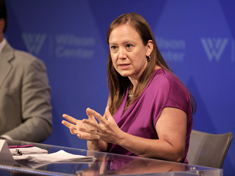
  • Valerie Hudson and Chad Emmett: Women’s Well-Being Is the Best Predictor of State Stability

    ›
    May 22, 2012  //  By Kate Diamond

    “The best predictor of a state’s stability and security is the level of violence against women in society,” said Texas A&M University’s Valerie Hudson in this interview with ECSP. That link is “based on rigorous empirical analysis,” she said. “There’s something to it. It’s not just political correctness.”

    MORE
  • Improving Food Security Through Land Rights and Access to Family Planning

    ›
    Reading Radar  //  May 22, 2012  //  By Kate Diamond
    “In a future world affected by climate change, population growth is one lever that can be addressed to ameliorate the impacts of climate change, particularly in the area of food security,” write Scott Moreland and Ellen Smith in “Modeling Climate Change, Food Security, and Population,” a recent study for MEASURE Evaluation and USAID. Moreland and Smith combine demographic changes, food needs, and economic capacity into a single aggregate model to assess how family planning and climate change might affect food security from now until 2050. Using Ethiopia as an example, the model finds that if access to family planning services were increased to meet existing needs, the subsequent decrease in demand for food would reduce child malnutrition and effectively counteract a projected 25 percent shortfall in caloric availability from climate change’s impact on agriculture. Programs designed to increase access to family planning should therefore be incorporated into national adaptation and food security strategies, they conclude. “Family planning, especially in countries with high unmet need, provides a potential solution not only for women’s reproductive health, but also for adapting to the effects of climate change.”

    The Food and Agriculture Organization’s Committee on World Food Security recently endorsed a set of voluntary guidelines for land tenure governance in the context of food security that aims to strike a balance between encouraging productive investment and ensuring equitable and sustainable development. Population growth, climate change, and environmental degradation are putting pressure on the legal and cultural systems that govern land rights, resulting in “inadequate and insecure tenure rights” which can “increase vulnerability, hunger and poverty, and can lead to conflict and environmental degradation when competing users fight for control of these resources.” The guidelines, drawn from consultations with hundreds of people from both the private and public spheres and representing more than 130 countries, emphasize the need to safeguard access to land, fisheries, and forests – as well as the resources they provide – in a way that respects customary tenure systems, which are not always reflected in official tenure policies or records. They also emphasize strengthening the ownership rights of women and other traditionally marginalized groups in order to enhance food security and minimize the risk of instability and conflict in the future.
    MORE
  • “Afghanistan, Against the Odds: A Demographic Surprise” Launches ECSP Report 14

    ›
    From the Wilson Center  //  May 18, 2012  //  By Wilson Center Staff

    A few months ago, Elizabeth Leahy Madsen broke down Afghanistan’s first-ever nationally representative survey of demographic and health issues in a two-part series here on the blog. Now, we’ve published her analysis in a rich new policy brief format. It is the first issue of Environmental Change and Security Program Report 14, the latest volume of ECSP’s flagship publication.

    In “Afghanistan, Against the Odds,” Madsen examines the surprising results of this fall’s demographic survey and how the country’s statistics compare to neighboring Pakistan.

    “Just as Afghanistan and Pakistan’s political circumstances have become more entwined,” writes Madsen, “their demographic paths are more closely parallel than we might have expected. For Afghanistan, given its myriad socioeconomic, political, cultural, and geographic challenges, this is good news. But for Pakistan, where efforts to meet family planning needs have fallen short of capacity, it is not.”

    The publication of this brief marks the re-launch of ECSP Report as an online-only volume, with individual issues scheduled to be released throughout the year. Forthcoming ECSP Report 14 briefs will address the demographic roots of the Arab Spring; the links between population dynamics and environmental resources like water, biodiversity, and food; and the potential impact of climate change mitigation efforts on conflict.

    Published since 1996 in hard copy and online, the new ECSP Report will now be available on the Wilson Center website, New Security Beat, and Issuu. You can read the previous 13 volumes of the ECSP Report on the Wilson Center website.

    Download ECSP Report 14: “Afghanistan, Against the Odds” from the Wilson Center.
    MORE
  • Sex and World Peace: How the Treatment of Women Affects Development and Security

    ›
    From the Wilson Center  //  May 17, 2012  //  By Kate Diamond

    “What we have discovered is that the very best predictor of how insecure and unstable a nation is not its level of democracy, it’s not its level of wealth, it’s not what ‘Huntington civilization’ it belongs to, but is in fact best predicted by the level of violence against women in the society,” said Valerie Hudson, co-author of Sex and World Peace, at an April 26 book launch at the Wilson Center. [Video Below]

    MORE
  • Nigeria Beyond the Headlines: Demography and Health [Part One]

    ›
    From the Wilson Center  //  May 14, 2012  //  By Stuart Kent & Kate Diamond

    “Nigeria is a country of marginalized people. Every group you talk to, from the Ijaws to the Hausas, will tell you they are marginalized,” said Peter Lewis, director of the African Studies Program at the Johns Hopkins University School of Advanced International Studies. Lewis spoke at an April 25 conference on Nigeria, co-hosted by ECSP and the Wilson Center’s Africa Program, assessing the country’s opportunities for development given its demographic, governance, natural resource, health, and security challenges. [Video Below]

    MORE
  • Roger-Mark De Souza, Climate and Development Knowledge Network

    Population-Climate Dynamics: From Planet Under Pressure to Rio

    ›
    May 11, 2012  //  By Wilson Center Staff
    The original version of this article, by Roger-Mark De Souza, appeared on the Climate and Development Knowledge Network (CDKN).

    In late May, I presented research on population and climate dynamics in hotspots at the Planet Under Pressure conference in London, in a session organized by the Climate and Development Knowledge Network. As we prepare for the Rio+20 Earth Summit in June, I reflect on the roles of population dynamics and climate-compatible development for ensuring a future where we can increase the resilience of the most vulnerable to the impacts of climate change.

    1. Improving our well-being and the future we can have is within our reach: We can take action to improve well-being through specific actions that can produce short term results. This is a key message encapsulated in the concept of climate-compatible development, reflected in many presentations and discussions that I heard at Planet Under Pressure. Even though others were not calling it “climate-compatible development,” the essence and the meaning behind the research was the same – small concrete discrete steps are possible, and taking action on population dynamics is one of them.
    2. Population is on the agenda: Population issues – growth, density, distribution, aging, gender – were a constant at Planet Under Pressure – and in more ways than just looking at population as a driver. It is clear that there is interest, and a need, to address population as a key component of climate-compatible development.
    3. But those concerns and issues must be location specific, and must be contextualized for the policy and programmatic environment: Population issues must be framed in the appropriate context – and must move beyond academic exploration. I attended one session where a paper presented an academic supposition of whether we should invest in consumption versus fertility reduction to produce short-term returns for climate, but the analysis was completely devoid of any political, policy, or programmatic truth-testing. We must factor in those considerations when making recommendations, if ultimately we are really looking to make the difference that we can.
    Continue reading on CDKN.

    Photo Credit: “Urbanization in Asia,” courtesy of United Nations Photo.
    MORE
  • Learning From Success: Ministers of Health Discuss Accelerating Progress in Maternal Survival

    ›
    Dot-Mom  //  From the Wilson Center  //  May 9, 2012  //  By Calyn Ostrowski
    “The gains we have made [in reducing maternal mortality rates] are remarkable; however, gains are fragile and donor resources are declining. Substantial investments must be maintained to safeguard these hard-wins,” said Afghan Minister of Health Suraya Dail at the Wilson Center on April 23. [Video Below]

    As part of the Wilson Center’s Global Health Initiative, the Advancing Dialogue to Improve Maternal Health series partnered with the U.S. Agency for International Development to co-host Minister Dail, along with Honorable Dr. Mam Bunheng, Minister of Health, Cambodia; Honorable Dr. Bautista Rojas Gómez, Minister of Health, Dominican Republic; and Dr. Fidele Ngabo, Director of Maternal and Child Health, Ministry of Health, Rwanda.

    These ministers spoke about the lessons learned in countries where there has been tremendous progress under challenging circumstances.

    In the Dominican Republic, Bautista Rojas Gomez said the first challenge was to address the “Dominican paradox,” where maternal mortality rates were high despite the fact that 97 percent of women received prenatal care and delivered in hospitals. The government created a zero tolerance policy that included a comprehensive surveillance system, mandatory maternal death audits, and community oversight of services, which assured better quality services.


    Similar political commitment improved indicators in Cambodia, where maternal mortality rates dropped from 472 to 206 per year from 2005 to 2010. “It takes a village…and the prime minister has inspired the country to act,” said Mam Bunheng. Through increased access to contraception the number of children per woman went from seven to three and commitment to family planning, education, technology, infrastructure, and community have been the key drivers of success.

    “In Rwanda, the big challenge we are having is education,” said Fidele Ngabo. “Many of the maternal health indicators depend on education.” When women and girls are educated they are twice as likely to utilize modern contraception. The efforts of Rwanda’s government have been instrumental in facilitating positive change, he said, particularly the efforts of First Lady Jeannette Kagame, who he called a “champion” for women and girl’s health.

    As witnessed throughout the Advancing Dialogue to Improve Maternal Health series – and reiterated by the ministers of health – the interventions to improve maternal mortality rates exist, what’s left is to generate the needed political willpower.

    Event Resources
    • Mam Bunheng Presentation
    • Suraya Dalil Presentation
    • Fidele Ngabo Presentation
    • Bautista Rojas Presentation
    • Video
    Photo Credit: David Hawxhurst/Wilson Center.
    MORE
  • Carl Haub, Behind the Numbers

    Bangladesh 2011 Demographic and Health Survey Shows Continued Fertility Decline, Improved Health Indicators

    ›
    May 7, 2012  //  By Wilson Center Staff
    The original version of this article, by Carl Haub, appeared on the Population Reference Bureau’s Behind the Numbers blog.

    The Bangladesh 2011 Demographic and Health Survey is the ninth demographic survey taken in the country since 1975. Except for a few very small countries and city-states, Bangladesh is the world’s most densely populated country with about 1,100 people per sq. kilometer. The country’s area is about the same as the U.S. state of Arkansas and a bit more than Greece but is home to over 150 million people.

    The preliminary 2011 report has just been released and it shows that fertility has continued its decline to a low level. The total fertility rate (TFR) for the three-year period before the survey was 2.3 – 2.0 in urban areas and 2.5 in rural areas. The survey interviewed 17,842 ever-married women ages 12 to 49 and 3,997 ever-married men ages 15 to 54 from July to December 2011. Rural women accounted for two-thirds of those interviewed. From 1975 to 1994, the TFR in Bangladesh was in continuous decline. But the next three surveys showed a tendency for TFR decline to “stall” at a medium level (see graph). Desired family size has greatly decreased. In the survey, 76.2 percent of women with two living children said that they did not wish to have any more children, an additional 5.3 percent had been sterilized, and 1.3 percent said they were incapable of conceiving.

    In the survey, 61.2 percent of currently married women said that they were using some form of family planning, a level comparable to developed countries. The use of modern methods was quite high at 52.1 percent. Unlike neighboring India, where female sterilization predominates, the contraceptive pill is the most widely used modern method at 27.2 percent, followed by injectables (11.2 percent), and the male condom (5.5 percent). Contraceptive use has risen steadily in surveys, up from 7.7 percent in 1975. Family planning use has risen despite the fact that fewer women report a visit from a family planning worker, either government or private. Overall, only 15.5 percent reported contact with a home visitor, which has been an important part of the country’s family planning program. The report notes that this may be due to workers deciding to provide services from community clinics for three days a week.

    Continue reading on Behind the Numbers.

    Sources: MEASURE DHS.

    Imaged Credit: Carl Haub/Behind the Numbers.
    MORE
Newer Posts   Older Posts
View full site

Join the Conversation

  • RSS
  • subscribe
  • facebook
  • G+
  • twitter
  • iTunes
  • podomatic
  • youtube
Tweets by NewSecurityBeat

Trending Stories

  • unfccclogo1
  • Pop at COP: Population and Family Planning at the UN Climate Negotiations

Featured Media

Backdraft Podcast

play Backdraft
Podcasts

More »

What You're Saying

  • Volunteers,At,The,Lagos,Food,Bank,Initiative,Outreach,To,Ikotun, Pan-African Response to COVID-19: New Forms of Environmental Peacebuilding Emerge
    Rashida Salifu: Great piece 👍🏾 Africa as a continent has suffered this unfortunate pandemic.But it has also...
  • A desert road near Kuqa An Unholy Trinity: Xinjiang’s Unhealthy Relationship With Coal, Water, and the Quest for Development
    Ismail: It is more historically accurate to refer to Xinjiang as East Turkistan.
  • shutterstock_1779654803 Leverage COVID-19 Data Collection Networks for Environmental Peacebuilding
    Carsten Pran: Thanks for reading! It will be interesting to see how society adapts to droves of new information in...

What We’re Reading

  • Rising rates of food instability in Latin America threaten women and Venezuelan migrants
  • Treetop sensors help Indonesia eavesdrop on forests to cut logging
  • 'Seat at the table': Women's land rights seen as key to climate fight
  • A Surprise in Africa: Air Pollution Falls as Economies Rise
  • Himalayan glacier disaster highlights climate change risks
More »
  • woodrow
  • ecsp
  • RSS Feed
  • YouTube
  • Twitter
  • Facebook
  • Home
  • Who We Are
  • Publications
  • Events
  • Wilson Center
  • Contact Us
  • Print Friendly Page

© Copyright 2007-2021. Environmental Change and Security Program.

Woodrow Wilson International Center for Scholars. All rights reserved.

Developed by Vico Rock Media

Environmental Change and Security Program

Woodrow Wilson International Center for Scholars

Ronald Reagan Building and International Trade Center

  • One Woodrow Wilson Plaza
  • 1300 Pennsylvania Ave., NW
  • Washington, DC 20004-3027

T 202-691-4000