• woodrow wilson center
  • ecsp

New Security Beat

Subscribe:
  • rss
  • mail-to
  • Who We Are
  • Topics
    • Population
    • Environment
    • Security
    • Health
    • Development
  • Columns
    • China Environment Forum
    • Choke Point
    • Dot-Mom
    • Friday Podcasts
    • Navigating the Poles
    • Reading Radar
  • Multimedia
    • Water Stories (Podcast Series)
    • Backdraft (Podcast Series)
    • Tracking the Energy Titans (Interactive)
  • Films
    • Water, Conflict, and Peacebuilding (Animated Short)
    • Paving the Way (Ethiopia)
    • Broken Landscape (India)
    • Scaling the Mountain (Nepal)
    • Healthy People, Healthy Environment (Tanzania)
  • Publications
  • Events
  • Contact Us

NewSecurityBeat

The blog of the Wilson Center's Environmental Change and Security Program
Showing posts from category gender.
  • Setting Development Goals for Population Dynamics and Reproductive Rights

    ›
    From the Wilson Center  //  January 30, 2013  //  By Carolyn Lamere

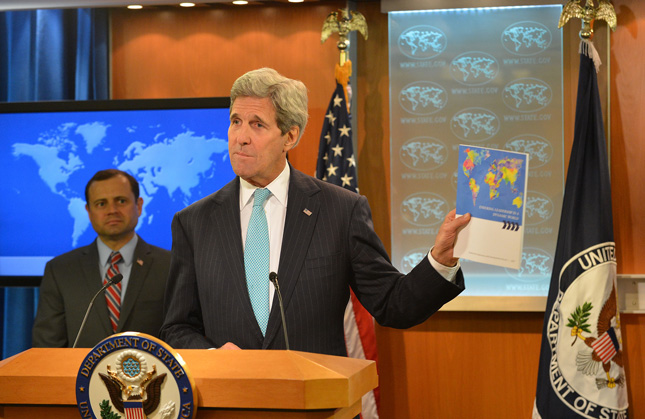
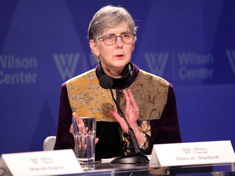
    “I’d like to start by stating emphatically that since addressing global inequality and inequity are our overall principles in revising the MDGs [Millennium Development Goals], we must focus on health inequities to have a meaningful and lasting impact on human development,” said Beth Schlachter of the State Department’s Bureau of Population, Refugees, and Migration, speaking at the Wilson Center on January 9. “And for the most vulnerable – women and girls – that means we must focus on sexual and reproductive health and reproductive rights.” [Video Below]

    MORE
  • A Kingdom’s Future: Saudi Arabia Through the Eyes of Its Twentysomethings

    ›
    From the Wilson Center  //  January 25, 2013  //  By Schuyler Null

    In a new book from the Wilson Center, Caryle Murphy asks how, while its neighbors face revolutions, Saudi Arabia has been able to “weather the storm of Arab youth discontent seemingly unscathed.”

    To find out, Murphy went to the source, interviewing 83 young Saudis between the ages of 19 and 29 in the spring of 2012. She found that “they are by no means a revolutionary lot, preferring gradual, step-by-step change. They want change, but not at the cost of safety and security. Most favor more tolerance for diversity, including in the realm of religion.”

    MORE
  • Rachel Yavinsky, Behind the Numbers

    Energy-Saving Stoves and Family Planning Benefit Women and Families in Rural Uganda

    ›
    January 23, 2013  //  By Wilson Center Staff

    The original version of this article, by Rachel Yavinsky, appeared on the Population Reference Bureau’s Behind the Numbers blog.

    After 45 minutes on Lake Victoria in a wooden fishing boat, my PRB colleague and I arrived on Busi Island, one of the Ugandan sites of the HOPE-LVB (Health of People and the Environment – Lake Victoria Basin) project. PRB, who partners on this project, came to Busi Island to see HOPE-LVB in action.

    MORE
  • Delivering Solutions to Improve Maternal Health and Increase Access to Family Planning (Policy Brief)

    ›
    Dot-Mom  //  From the Wilson Center  //  January 18, 2013  //  By Sandeep Bathala

    The Wilson Center Policy Briefs are a series of short analyses of critical global issues facing the next administration that will run until inauguration day.

    According to the World Health Organization (WHO), approximately 800 women die daily from preventable causes related to pregnancy and childbirth. Almost all of these deaths occur in developing countries, with higher rates for women living in rural areas and among poorer communities.

    MORE
  • Should Maternal Health Goals Be Combined With WASH?

    ›
    Dot-Mom  //  January 17, 2013  //  By Lauren Herzer Risi

    Does access to quality water and sanitation have an effect on maternal health outcomes? That was a surprising topic of discussion on day one of the second-ever Global Maternal Health Conference hosted this week in Arusha, Tanzania.

    Surprising because, to be honest, I did not think there would be strong disagreements over the relationship between water and sanitation (WASH) and maternal health. In my work with the Comparative Urban Studies Project, the two seem to be clearly linked.

    MORE
  • Seven Ways Seven Billion People Affect the Environment and Security (Policy Brief)

    ›
    From the Wilson Center  //  January 17, 2013  //  By Geoffrey D. Dabelko & Meaghan Parker

    The Wilson Center Policy Briefs are a series of short analyses of critical global issues facing the next administration that will run until inauguration day.

    Seven billion people now live on Earth, only a dozen years after the global population hit six billion. But this milestone is not about sheer numbers. Demographic trends will significantly affect the planet’s resources and people’s security.

    MORE
  • Measuring Sustainable Development in Ethiopia’s Guraghe Zone

    ›
    Guest Contributor  //  January 11, 2013  //  By Alexon Ayele

    This miniseries focuses on the monitoring and evaluation of PHE projects in Ethiopia.

    Despite progress over the years, Ethiopia’s Guraghe zone, located in the Southern Nations, Nationalities, and People’s Region, faces many development challenges. As senior monitoring and evaluation officer in the Guraghe People’s Self-help Development Organization (GPSDO), I have been working in this region for more than five years trying to reduce poverty and improve socio-economic development. The organization as a whole has been here for more than 50.

    MORE
  • Elisabeth Rosenthal, The New York Times

    As Biofuel Demand Grows, So Do Guatemala’s Hunger Pangs

    ›
    January 8, 2013  //  By Wilson Center Staff

    The original version of this article, by Elisabeth Rosenthal, appeared in The New York Times.

    In the tiny tortillerias of this city, people complain ceaselessly about the high price of corn. Just three years ago, one quetzal – about 15 cents – bought eight tortillas; today it buys only four. And eggs have tripled in price because chickens eat corn feed.

    MORE
Newer Posts   Older Posts
View full site

Join the Conversation

  • RSS
  • subscribe
  • facebook
  • G+
  • twitter
  • iTunes
  • podomatic
  • youtube
Tweets by NewSecurityBeat

Trending Stories

  • unfccclogo1
  • Pop at COP: Population and Family Planning at the UN Climate Negotiations

Featured Media

Backdraft Podcast

play Backdraft
Podcasts

More »

What You're Saying

  • Volunteers,At,The,Lagos,Food,Bank,Initiative,Outreach,To,Ikotun, Pan-African Response to COVID-19: New Forms of Environmental Peacebuilding Emerge
    Rashida Salifu: Great piece 👍🏾 Africa as a continent has suffered this unfortunate pandemic.But it has also...
  • A desert road near Kuqa An Unholy Trinity: Xinjiang’s Unhealthy Relationship With Coal, Water, and the Quest for Development
    Ismail: It is more historically accurate to refer to Xinjiang as East Turkistan.
  • shutterstock_1779654803 Leverage COVID-19 Data Collection Networks for Environmental Peacebuilding
    Carsten Pran: Thanks for reading! It will be interesting to see how society adapts to droves of new information in...

What We’re Reading

  • Rising rates of food instability in Latin America threaten women and Venezuelan migrants
  • Treetop sensors help Indonesia eavesdrop on forests to cut logging
  • 'Seat at the table': Women's land rights seen as key to climate fight
  • A Surprise in Africa: Air Pollution Falls as Economies Rise
  • Himalayan glacier disaster highlights climate change risks
More »
  • woodrow
  • ecsp
  • RSS Feed
  • YouTube
  • Twitter
  • Facebook
  • Home
  • Who We Are
  • Publications
  • Events
  • Wilson Center
  • Contact Us
  • Print Friendly Page

© Copyright 2007-2021. Environmental Change and Security Program.

Woodrow Wilson International Center for Scholars. All rights reserved.

Developed by Vico Rock Media

Environmental Change and Security Program

Woodrow Wilson International Center for Scholars

Ronald Reagan Building and International Trade Center

  • One Woodrow Wilson Plaza
  • 1300 Pennsylvania Ave., NW
  • Washington, DC 20004-3027

T 202-691-4000