-
Roger-Mark De Souza: Focus on Urban Dynamics, Water Scarcity in Latin America and the Caribbean
› For the past four decades, urbanization in Latin American and Caribbean countries has been on the rise. Today it’s one of the most urbanized regions of the world with 79 percent of the population living in towns and cities. By 2050, 9 out of 10 residents are expected to live in cities. This density and movement of people is critical to understanding the region’s water and climate change issues, says ECSP’s Roger Mark De Souza in this week’s podcast.
 -
Running Faster to Stand Still: New UN Population Projections Point to Challenges Ahead for SDGs
›July 29, 2015 // By Schuyler Null
In most parts of the world, population growth is stagnant, even declining slightly, part of a decades-long and nearly universal shift towards smaller, healthier families. But the places where growth is still rapid continue to defy expectations about when they will “catch up.”
-
How Successful Were the Millennium Development Goals? A Final Report
›July 28, 2015 // By Josh FengEarlier this month, the United Nations released a final report on the Millennium Development Goals (MDGs), the framework that has guided global development efforts for the last 15 years. The document examines each of the eight MDGs and finds that “despite many successes, the poorest and most vulnerable people are being left behind.” As one of the first global poverty reduction movements nears its end, the report calls for better data collection practices to create a post-2015 development agenda that can overcome the MDG’s shortcomings.
-
Lauri Romanzi on Rethinking Maternal Morbidity Care in a Historical Context
›In May 1855, Dr. James Marion Sims opened the first obstetric fistula hospital in New York City. Just 40 years later, it closed, reflecting a sharp decline in maternal morbidity rates in the United States and other Western countries. The Waldorf Astoria Hotel now stands on the site of the former hospital. “We know that we have eradicated obstetric fistula in high income countries; it happened at the turn of the 20th century,” says Dr. Lauri Romanzi, project director of Fistula Care Plus, in this week’s podcast. -
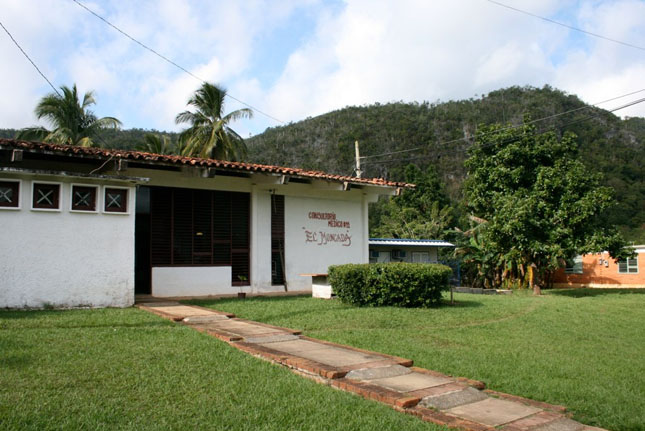
Keeping Up With Cuba: Mother-to-Child HIV Transmission in the Caribbean
›Fear of mother-to-child transmission of HIV and other infectious diseases has been used as an excuse to deny women health care around the world. Some women living with HIV have even been sterilized without their knowledge. But with proper treatment, the chances of transmission to an unborn child are very low in many cases. The World Health Organization (WHO), in fact, just declared Cuba the first country to eliminate mother-to-child transmission of HIV and syphilis.
-
As African Cities Grow, Rural-Urban Divides Widen Too
›In 2007, the world crossed a threshold: for the first time in human history, the majority of people lived in urban areas. Today, Africa and Asia are the only remaining continents where the rural population outnumbers urban, but they are urbanizing at unprecedented rates. This rapid growth is a double-edged sword. While urbanization spurs economic opportunity and often increases access to infrastructure, it is also widening disparities in health and development, according to a new data sheet by the Population Reference Bureau.
-
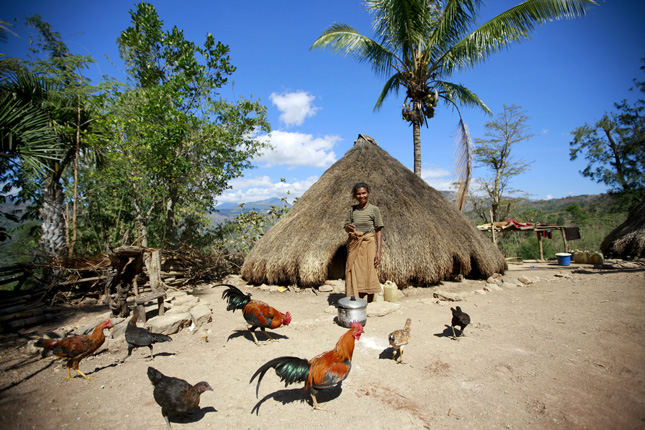
“People Need Nature to Thrive”: Recovering From Conflict Through Conservation in Timor-Leste
›In my tiny, half-an-island country of Timor-Leste, cemeteries smell of jasmine and come to life on All Saints’ Day. Families have picnics and kids roam wild over the tombstones. Here, stepping on somebody else’s family tombstones is not seen as an offense but as the norm; after all, since there isn’t enough land to hold so many graves, not stepping on one is impossible unless you have mastered levitation.
-
Bixby Report Explains Cross-Cutting Effect of Family Planning on Food Security, Climate Change
›July 16, 2015 // By Linnea Bennett“With current neglect of family planning, the UN’s recent projection of a 2100 world population of up to 12.3 billion is a possibility,” says a report from the University of California, San Francisco’s Bixby Center for Global Reproductive Health. Increased voluntary family planning efforts are needed, the authors contend, to meet existing demand for contraceptives, stabilize the threat of global food insecurity, and reduce carbon emissions that contribute to climate change.
Showing posts from category gender.
 For the past four decades, urbanization in Latin American and Caribbean countries has been on the rise. Today it’s one of the most urbanized regions of the world with 79 percent of the population living in towns and cities. By 2050, 9 out of 10 residents are
 In
In