

-
Saving Lives: Focusing on Outcomes to Improve Maternal and Newborn Healthcare Quality
›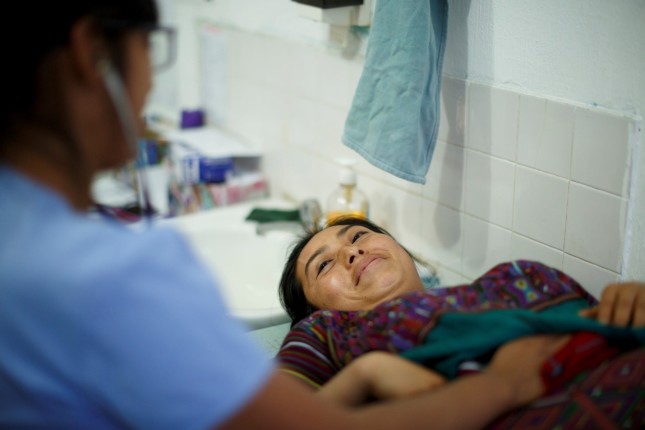
Poor quality care is now a bigger barrier to reducing mortality than insufficient access to healthcare, said Dr. Margaret Kruk, Chair of The Lancet Global Health Commission on High Quality Health Systems in the Sustainable Development Goal Era. She spoke at a recent Wilson Center event on strategies to improve and sustain high-quality reproductive, maternal, and newborn care at scale. “We estimate that 8.6 million lives are lost every year due to lack of access to high quality care, and of that 8.6 million, five million lives are lost by people who have already reached out to the health system.”
-
Ageing Populations Could Create a Care Crisis—Or Millions of Jobs
›
The silver tsunami is approaching: Many countries, not all of them rich, are facing the challenges of an ageing population thanks to growing life expectancies and shrinking birth rates.
-
Too Little Too Late: Violence Disrupts Maternal Health Care in Conflict Settings
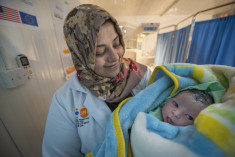
›“One of the first victims of war is the health care system itself,” said Marco Baldan, the chief war surgeon for the International Committee of the Red Cross. Violence directed at health facilities and workers is common in conflict, despite international laws protecting medical personnel, facilities, and transport vehicles during war. -
Driven to Care: Improving Transportation to Reach Maternal Health Care in Conflict Zones
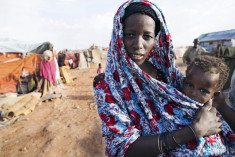
›How much time passes between a laboring woman’s decision to seek care and her arrival at a health facility? Transportation for emergency obstetric care should be swift and timely, but for many refugees in the world’s conflict zones, it is not.An analysis of refugee maternal mortality in 10 countries found that transportation problems contributed to more maternal deaths outside of refugee camps, which tend to have better access to emergency transportation services.
-
Mothers of Invention: New Podcast from Mary Robinson and Maeve Higgins
›Mary Robinson, the first female president of Ireland, and Maeve Higgins, Irish comic, have teamed up to talk climate change with pioneering women leaders from around the world. In the coming weeks, their new podcast, Mothers of Invention, will feature an African politician, an Indian scientist, a Native American activist, and many more.
-
Rush Hour: Three Commutes, Three Stories
›“The idea to make this film came from a very personal place,” said filmmaker Luciana Kaplan at a recent Wilson Center screening of her documentary Rush Hour, recalling how a woman who worked for her spent six hours a day on public transportation. “I have to make a film about this,” she said she told herself, “because this is a silent enemy that is attacking all of us in big cities.”
-
Death From Delay: Improving Maternal Health Care in Conflict Zones
›How much time passes before a woman—or her relatives—decide to seek care or emergency medical services during pregnancy? It often depends on how much they know about the services available.This information may be hard to come by in conflict-affected areas, especially among internally displaced women. According to a retrospective study of health care during the 2006 war in Lebanon, 80 percent of Lebanese pregnant women before the war sought antenatal care, while the share of displaced women seeking care was only 34.5 percent.
-
Everybody Counts: Maternal Mortality
›It’s 2018, so why are women still dying in childbirth? This episode of Everybody Counts, hosted by Jennifer D. Sciubba, a professor of political demography at Rhodes College, explores why maternal mortality is a global issue, what policy solutions can keep mothers healthy, and why valuing women is at the heart of the issue.
Showing posts from category gender.

 “One of the first victims of war is the health care system itself,”
  How much time passes between a laboring woman’s decision to seek care and her arrival at a health facility? Transportation for emergency obstetric care should be swift and timely, but for many refugees in the world’s conflict zones, it is not.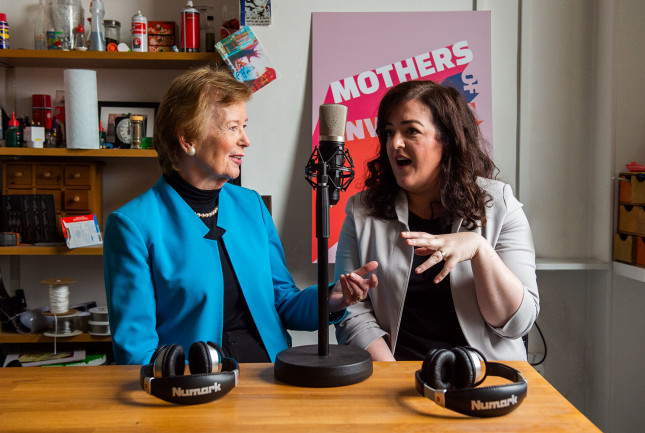

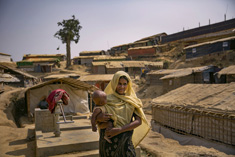 How much time passes before a woman—or her relatives—decide to seek care or emergency medical services during pregnancy? It often depends on how much they know about the services available.
 It’s 2018, so why are women still dying in childbirth? This episode of

