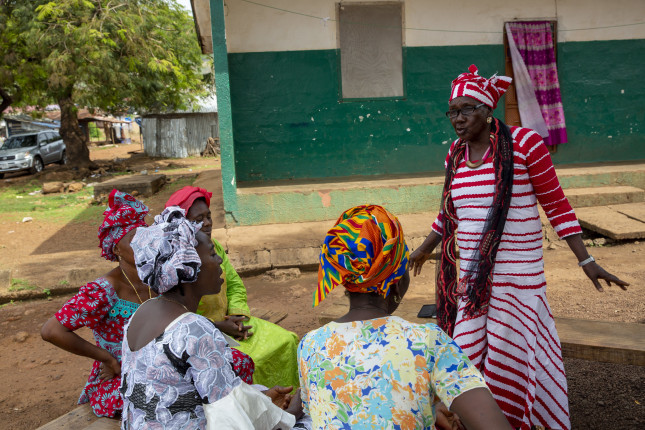
-
New Global Health & Gender Policy Brief: Migrant Care Workers and Their Families
›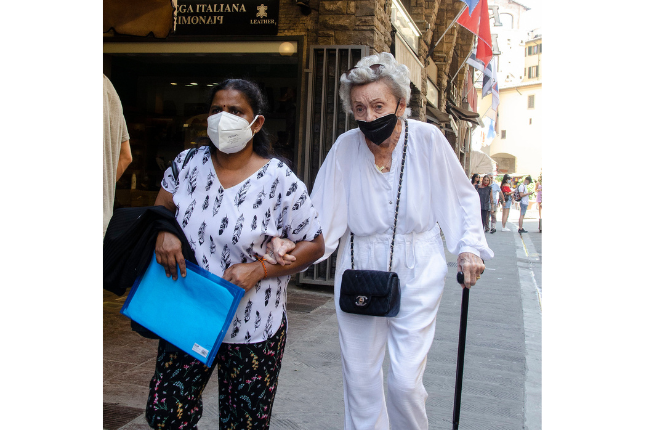
Migrant care work is a key component of the ongoing global care crisis. The global care economy is critical to overall economic growth, and also affects gender, racial, and class and caste equity and empowerment. Caregiving is also the fastest-growing economic sector in the world—projected to add 150 million jobs by 2030. Global societal changes, like low birth rates, demographic aging, and an increase in female labor force participation, are basic drivers of the continued growth of this sector. But because in many cultures care work is considered “instinctive” for women—a type of work not requiring skill—it has remained virtually invisible, unpaid or underpaid and unregulated. It is also often stigmatized, especially when relegated to already marginalized and underrepresented populations.
-
Women with Disabilities in Nigeria’s Mining Industry: Discrimination and Opportunities
›
Women and girls with disabilities worldwide are subject to multiple forms of discrimination—a fact that the 2022 International Day for Persons with Disabilities brings into sharp focus. Yet while all people with disabilities (PWD) face exclusion and widespread stigma, women face the additional burden of exclusion from full participation in economic and cultural activities. Both forms of discrimination result from the collaboration of outdated laws and prevalent societal stigmatization.
-
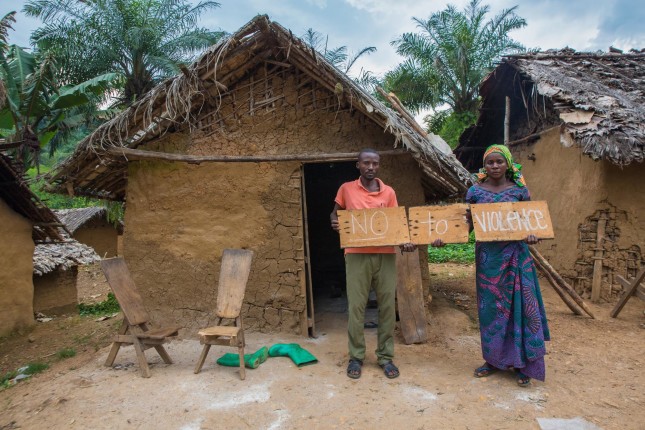
Gender-Based Violence Continues to Impede Progress Towards Gender Equality
›“COVID-19 and the backlash against women’s sexual and reproductive health and rights are further diminishing the outlook for gender equality,” states a recent report on the current progress toward gender equality across all 17 Sustainable Development Goals (SDGs) from the United Nations Entity for Gender Equality and the Empowerment of Women (UN Women) and the Department of Economic and Social Affairs. Yet the new report also zeroes in on another factor that is diminish progress on gender equality: violence. The authors observe that “violence against women remains high, global health, climate and humanitarian crises have further increased risks of violence, especially for the most vulnerable women and girls, and women feel more unsafe than they did before the pandemic.”
-
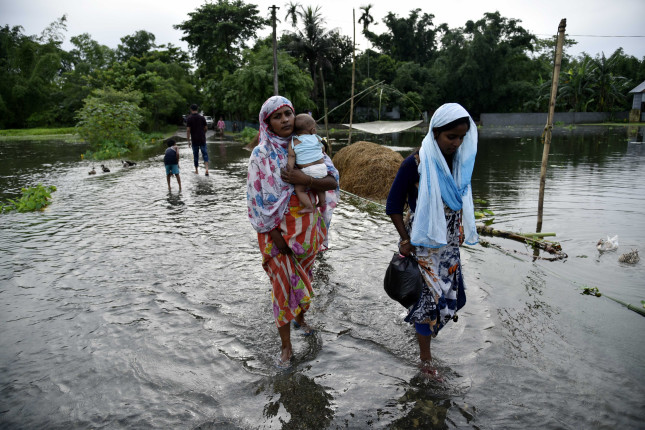
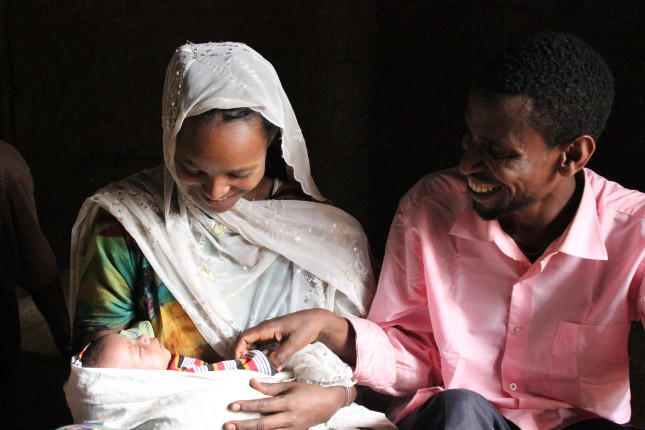
An Inextricable Link: Maternal and Newborn Health and Climate Change
›“The effects of climate change can begin in the womb,” said Sarah Barnes, the Project Director of the Maternal Health Initiative at the Wilson Center at a recent event on the impact of climate change on maternal and newborn health outcomes, hosted by the Wilson Center and UNFPA. It is a connection that “[makes] it imperative that climate change and maternal and newborn health leaders work together to tackle climate change and improve maternal and newborn health outcomes, globally.”
-
Meeting Africa’s Demographic Challenge
›Often cast into the backwaters of U.S. foreign policy, sub-Saharan Africa now looms large as the Biden Administration grapples with a wide range of global challenges. President Biden will soon host the upcoming Africa Leaders’ Summit in Washington, that acknowledges the U.S. government must do much more in Africa in order to advance U.S. interests and global prosperity.
-
The Crisis of Perinatal Mental Health Requires Collaborative Solutions
›While a great deal of focus on risks to women’s health just before and after giving birth centers on physical wellbeing, Rebecca Levine, Senior Maternal Health Advisor with the U.S. Agency for International Development (USAID), observed that we may be missing a key part of the picture.
-
Fishing for Equity and Inclusion: Women’s Socioeconomic Factors in Kenyan Fisheries
›August 29, 2022 // By Margaret GatonyeSeeing Loreta sort and dry her Omena sardines at the shores of Lake Victoria in Western Kenya, one may dismiss this small, middle-aged woman as an ordinary fishmonger struggling to earn a living. -
Turning Power on its Head: A Meaningful Shift Toward Localization
›Of COVID-19’s many lessons, one is most critical to our collective next steps:
Business as usual in global health is no longer possible.
The pandemic exposed weaknesses in health systems across the world, and particularly in the delivery of equitable, high-quality reproductive, maternal, newborn, adolescent, and child health (RMNCAH) services. It also reinforced that effectively addressing these challenges requires rapid, responsive approaches driven and owned by countries and local institutions.
Showing posts from category gender.
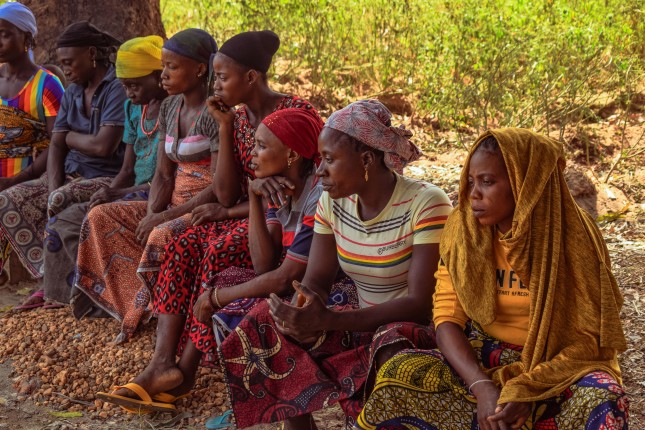
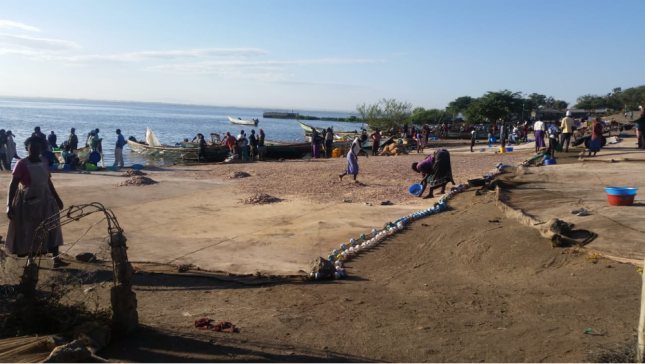 Seeing Loreta sort and dry her Omena sardines at the shores of Lake Victoria in Western Kenya, one may dismiss this small, middle-aged woman as an ordinary fishmonger struggling to earn a living.