

Showing posts from category gender.
-
USAID’s Shah Focuses on Women, Innovation, Integration
›May 20, 2010 // By Wilson Center StaffWomen in developing countries are “core to success and failure” of USAID’s plan to fight hunger and poverty, and “we will be focusing on women in everything we do,” said USAID Administrator Rajiv Shah at today’s launch of the “Feed the Future” guide.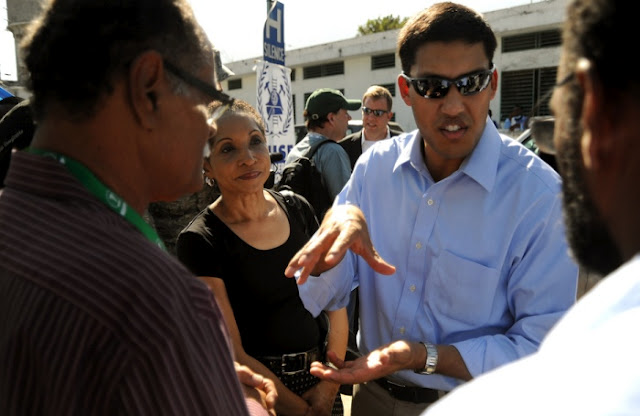
But to solve the “tough problem” of how to best serve women farmers, USAID needs to “take risks and be more entrepreneurial,” said Shah, as it implements the Global Hunger and Food Security Initiative.
“A lot of this is going to fail and that’s OK,” Shah said, calling for a “culture of experimentation” at the agency. He welcomed input from the private sector, which was represented at the launch by Des Moines-based Pioneer Hi-Bred.
In one “huge change in our assistance model,” Feed the Future will be “country-led and country-owned,” said Shah, who asked NGOs and USAID implementing partners to “align that expertise behind country priorities” and redirect money away from Washington towards “building real local capacity.” USAID will “work in partnership, not patronage,” with its 20 target countries, he said.
To insure that the administration’s agricultural development efforts are aligned to the same goals, Shah said USAID will collect baseline data from the start on three metrics: women’s incomes, child malnutrition, and agricultural production.
“Whether it is finance, land tenure, public extension, or training efforts, it does not matter whether it is an ‘agricultural development’ category of program,” said Shah. All programs will “provide targeted services to women farmers.”
While Shah briefly mentioned integrating these efforts with the administration’s Global Health Initiative, he only gave one example. Nutrition programs would be tied to health “platforms that already exist at scale” in country, such as HIV, malaria, vaccination, and breastfeeding promotion programs, he said.
Targeting Food Security: The Wilson Center’s Africa Program Takes Aim
If “food supplies in Africa cannot be assured, then Africa’s future remains dismal, no matter how efforts of conflict resolution pan out or how sustained international humanitarian assistance becomes,” says Steve McDonald, director of the Wilson Center’s Africa Program, in the current issue of the Wilson Center’s newsletter, Centerpoint. “It sounds sophomoric, but food is essential to population health and happiness—its very survival—but also to productivity and creativity.”
The May 2010 edition of Centerpoint highlights regional integration, a key focus of U.S. policy, as a mechanism for assuring greater continuity and availability of food supplies. Drawing on proceedings from the Africa Program’s “Promoting Regional Integration and Food Security in Africa” event held in March, Centerpoint accentuates key conclusions on building infrastructure and facilitating trade.
Photo Credit: “USAID Administrator Shah visits a hospital in Haiti” courtesy Flickr user USAID_Images. -
Family Planning in Fragile States
›
“Conflict-affected countries have some of the worst reproductive health indicators,” said Saundra Krause of the Women’s Refugee Commission at a recent Wilson Center event. “Pregnant women may deliver on the roadside or in makeshift shelters, no longer able to access whatever delivery plans they had. People fleeing their homes may have forgotten or left behind condoms and birth control methods.”
-
Food Security Comes to Capitol Hill, Part Two: Women’s Edition
›April 30, 2010 // By Schuyler NullThe focus on food security on Capitol Hill continued with Wednesday’s House Hunger Caucus panel, “Feeding a Community, Country and Continent: The Role of Women in Food Security.” According to panel organizers Women Thrive Worldwide, “over half the food in developing countries – and up to 80 percent in sub-Saharan Africa – is grown by women farmers, who also account for seven in ten of the world’s hungry.”
The panel illuminated some of the inequities routinely faced by female farmers that often prevent them from using the same inputs as men (tools, fertilizer, etc.), bar their access to credit, and force them onto less productive land.
“Women around the world face unique economic and social barriers in farming and food production,” said Nora O’Connell of Women Thrive Worldwide. “But they are key to increasing food security and ending hunger, and all international programs must take their needs into account.”
Panelist David Kauck of the International Center for Research on Women (ICRW) cited the State Department’s Consultation Document on the Global Hunger and Food Security Initiative: “Economic output could be increased by 15-40 percent and under-nutrition reduced by 15 million children simply by providing women with assets equal to those of men.”
According to the 2008 ICRW report, A Significant Shift: Women, Food Security, and Agriculture in a Global Marketplace:Women also are more likely than men to spend their income on the well-being of their families, including more nutritious foods, school fees for children and health care. Yet agricultural investments do not reflect these facts. Women in forestry, fishing and agriculture received just 7 percent of total aid for all sectors.
One of the most fundamental problems faced by women in developing countries is a lack of basic education leading to illiteracy and innumeracy, making it difficult for women to understand agricultural policy or the fair market values of their products. Therefore, men are much more likely to control valuable markets.
In addition, women are less likely to learn about and adopt new agricultural technologies and best practices. Lydia Sasu, director of the Development Action Association, said that when she attended agricultural school in Ghana she was one of only three women, compared to more than 40 men, in her class.
Women in developing countries rarely own the land they farm, which can make it difficult to apply for credit and extension services without collateral. According to the ICRW report:In Uganda, women account for approximately three out of four agricultural laborers and nine out of 10 food-producing laborers, yet they own only a fraction of the land. Women in Cameroon provide more than 75 percent of agricultural labor yet own just 10 percent of land. A 1990 study of credit schemes in Kenya, Malawi, Sierra Leone, Zambia and Zimbabwe found that women received less than 10 percent of the credit for smallholders and only 1 percent of total credit to agriculture. Women receive only 5 percent of extension services worldwide, and women in Africa access only 1 percent of available credit in the agricultural sector.
“The fundamental barrier to women in agriculture,” said USAID’s Kristy Cook, “is access to assets.” Cheryl Morden of the International Fund for Agricultural Development (IFAD) said we have reached the “tipping point,” where action on this issue seems inevitable on the international policy level. However, she questions how quickly that momentum can translate to change on the ground.
The State Department has made improving women’s lives an important part of both their Global Hunger and Food Security Initiative and the Global Health Initiative. ”Investing in the health of women, adolescents, and girls is not only the right thing to do; it is also the smart thing to do,” said Secretary of State Hillary Clinton in January.
Reproductive health and family planning services will be key to both initiatives. A policy brief by ICRW’s Margaret Greene argues that poor reproductive health can have negative effects on women’s educational and economic opportunities. As Secretary Clinton said, “When women and girls have the tools to stay healthy and the opportunity to contribute to their families’ well-being, they flourish and so do the people around them.”
Photo Credit: “Transplanting at rainfed lowland rice in Madagascar,” courtesy of flickr user IRRI Images. -
Climate Change and Gender
›“Women, Gender Equality and Climate Change,” a fact sheet released by the United Nations WomenWatch, is a cache of information for those interested in climate change’s differentiated impacts on the sexes. The fact sheet synthesizes data from many sources, mostly UN, into concise sections on food security, biodiversity, water, health, human rights, energy, natural disasters, migration, and adaptation–including financing projects and the development of new technology. While brief, each section is well-sourced and offers a list of links to relevant UN publications and websites.The Heinrich Böll Foundation-Southern Africa commissioned eight case studies examining the relationship between climate and gender in four southern African countries: South Africa, Botswana, Mozambique, and Namibia. Examining poor areas deemed to be significantly exposed to the impacts of climate change, researchers found that women in each study “seemed to cope better with the impacts of changing circumstances than the men” and were “repositories of knowledge about crops and climate, the environment, natural resources, food preservation techniques,” writes Belynda Petrie, CEO of OneWorld Sustainable Investments and author of a regional summary report. The studies offered a number of recommendations, including creating national gender indicators, developing gender-sensitive aid programs, and improving access to water. -
On the Air With Arab Demographics
›A recent radio interview on the “Demographics of the Arab World” should be a must listen for those in the World Bank, where discussions of the Arab youth bulge are largely off the table.
The interview with Magda Abu-Fadil of the American University of Beirut and Bernard Haykel of Princeton University suggests that scholars of the Arab world are not so timid, as also evidenced by UNDP’s 2009 Arab Human Development Report.
However, during the interview with Abu-Fadil and Haykel, Worldfocus’ Martin Savidge falls victim to two significant misconceptions that are worth mentioning for their pervasiveness among political science and economics communities:- Savidge believes that countries tend to risk political violence when their percentage of young adults is above 35 percent. This is close, but not quite correct. It’s the proportion of young adults in the adult population – i.e., the working-age population, as opposed to the population in general – that indicates a risk of fractious politics. Children (those below the age of 14) should not be counted in this indicator, yet in much of the literature they mistakenly are.
- Savidge believes that large numbers of youth are an economic “good deal.” Here, Abu-Fadil and Haykel set him straight, noting that a bulge among the young adult population produces a demographic bonus only when fertility has significantly declined; the childhood cohorts are small and the subject of increased investment; and the youth moving into adulthood are educated.
Big changes could occur along the edges of the Arab world in the coming decade. Fertility decline, more recently, has made its way to the Gulf Cooperation Council (GCC) states, although they still need a champion for women’s rights. Turkey had Ataturk, Iran had Reza Shah, and Tunisia had Habib Bourguiba. It’s no accident that these countries were the first to experience fertility decline and age structural changes—their leaders laid the groundwork decades ago.
Can a leader, however, with that amount of political guts and conviction emerge from the Saudi royal family? I’m doubtful.
Richard Cincotta is demographer-in-residence at the H.L. Stimson Center in Washington, DC.
Photo: Yemeni children courtesy Flickr user kebnekaise. -
The Feed for Fresh News on Population
›March 25, 2010 // By Wilson Center StaffUSAID’s Gloria Steele offers written testimony on the FY2011 Global Health and Child Survival (GH CS) budget request before the House Appropriations Subcommittee on State, Foreign Operations
Andrew Revkin gives a shout-out to family planning and notes the lack of population discussion at Copenhagen in his blog post, “From Wishful Thinking to Real-World Action on Climate“
Video of Secretary of State Hilary Clinton addressing the Commission on the Status of Women in which she discusses the Global Health Initiative, maternal mortality, family planning, and “gendercide“
Family planning-environmental connections headline PATH‘s March edition of Outlook
Youth bulges and social conflict are noted in Nicholas Kristoff’s recent article on child marriages in Yemen
Follow Geoff Dabelko on Twitter for more population, health, environment, and security updates -
Family Planning and Reproductive Health
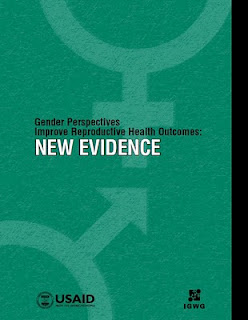
›Adding it Up: The Costs and Benefits of Investing in Family Planning and Maternal and Newborn Health, a report by the Guttmacher Institute, asserts that “sustained and increased investment in sexual and reproductive health services in developing countries” would “contribute to economic growth, societal and gender equity, and democratic governance.” The report presents cost-benefit analyses of family planning and maternal and newborn health strategies in an effort to “guide decision makers, at the global, regional and country levels, in making investments that would reap the greatest returns for individuals and societies.”The Interagency Gender Working Group recently released Gender Perspectives Improve Reproductive Health Outcomes: New Evidence, argues for the importance of taking gender into consideration when developing interventions related to unintended pregnancies, maternal health, STIs, harmful practices (e.g. early marriage, genital cutting, and gender-based violence), and youth. The report, a follow-up to 2004’s The “So What?” Report: A Look at Whether Integrating a Gender Focus into Programs Makes a Difference to Outcomes, includes 40 specific examples of programs successfully integrating gender to improve reproductive health. -
VIDEO—Pape Gaye: Improving Maternal Health Training and Services
›February 12, 2010 // By Julia Griffin“Training is probably one of the biggest interventions in terms of making human resources available,” says Pape Gaye, President and CEO of IntraHealth International, to ECSP’s Gib Clarke in this interview on improving maternal health services in developing countries. “Unfortunately, there are a lot of problems associated with training.”
Gaye says obstacles to scaling up maternal health services in rural areas include employee gender inequalities, poor coordination of supplemental training, and a tendency to only offer in-service training in urban areas. Properly emphasizing pre-service education, he underscores, could remedy some of the problems associated with service provider training.
Increasing retention of medical practitioners is also critical to improving maternal health services in developing countries, Gaye explains. In his experience, however, attempts to address perceived security and financial compensation inadequacies produced mixed results. Instead, Gaye suggests that positive recognition may be one of the best methods for retaining health care workers. “We’re seeing some very good successes in places where we have just simple ways to recognize the work… because if people feel valued in a community, then they are likely to stick it out.”


 The
The 


