Showing posts from category funding.
-
Watch: Younger Generation Will Prioritize Health, Education, Human Rights, Says Frederick Burkle
›June 7, 2011 // By Schuyler Null“Unfortunately, in the last two decades, when globalization became the mantra, it was primarily an economic mantra,” said Frederick Burkle, a senior fellow with the Harvard Humanitarian Initiative, visiting scientist at the Harvard School of Public Health, and senior public policy scholar at the Wilson Center. “The mantra was, ‘if you can improve the economy,” he said, “health, education, everything will follow.’”
“With the financial crisis, that proved not to be true,” Burkle said, and as a result, net expenditures in health and education have declined and the private sector, unfortunately, has not filled the gap.
“We really need to redefine globalization,” Burkle said. “And certainly economics will be there…but health, education, and human rights need to be just as dominant as the economics.”
Burke said he expects a gradual realignment of global priorities to come as younger generations come into decision-making roles. “They don’t have political clout right now,” he said, “but when they do…I think we’re going to see all these aspects that I mentioned – even the humanitarian profession becoming a career – accelerated.” -
USAID Egypt’s Health and Population Legacy Review
›On May 23 the Middle East Program, ECSP, and the Global Health Initiative of the Woodrow Wilson Center, along with the Global Health Technical Assistance Project, hosted a panel of speakers discussing the past 30 years of the U.S. Agency for International Development’s health and population initiatives in Egypt, as outlined in the new Egypt Health and Population Legacy Review. Geoffrey Dabelko, director of ECSP and coordinator of the Global Health Initiative at the Wilson Center, moderated the event. [Video Below]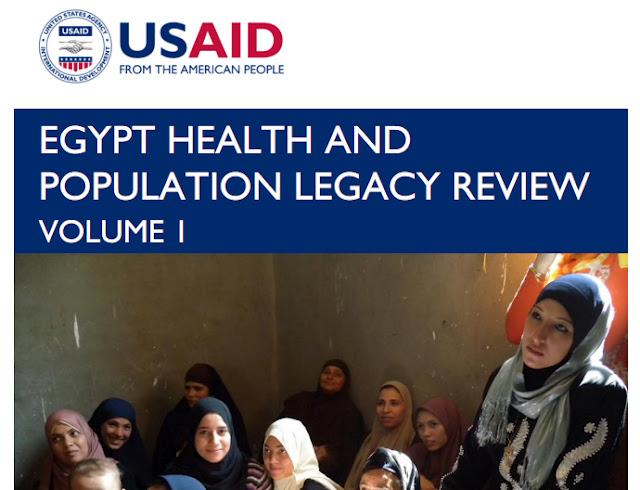
Peter McPherson, former administrator of USAID during the Reagan administration, and George Laudato, the administrator’s special assistant for the Middle East, presented on the historical context behind USAID in Egypt and the results of their efforts. McPherson pointed to three lessons that can be drawn from the recent report:- “Big payoffs” require long-term efforts; and
- Economic support for a country can have a dramatic impact; but
- The host country’s commitments and investments are still important.
Motaz Zahran, political counselor for the Embassy of Egypt, noted that USAID efforts were “just one sector of a fruitful partnership” between the United States and Egypt that he hoped would continue. He said the success story outlined by the report was reflective of improvements in coordination and addressing specific goals.
Other panelists outlined the successes of USAID in Egypt as related to their own areas of expertise. Leslie B. Curtin, co-author of the review and an expert in demographics and health outcomes, noted the dramatic improvements in a range of health sectors, in particular the rise in contraceptive prevalence and immunization rates and decrease in both maternal and infant mortality rates.
Nahed Matta, MD, senior maternal and newborn health officer at USAID, focused on improvements to the quality of maternal health, which she said were made possibly through better technology and increased fact-gathering to identify the key factors regarding maternal health trends. Sameh El-Saharty, MD, senior health policy specialist at the World Bank and Health Legacy Review Committee member, credited the increased number of health professionals in Egypt, better information gathering on health systems, and restructured models of health insurance, as successful strategies.
Concluding the session, Amie Batson, deputy assistant administrator for Global Health at USAID, discussed the lessons that other development initiatives can draw from the legacy of USAID efforts in Egypt. She highlighted the importance of country ownership, in which the developing country engages with other institutions and religious and political leaders at both national and local levels, and of policies that fund routine monitoring and evaluation. She also outlined the possibilities of innovation and south-to-south sharing on the local and international scale, referencing inroads made by two recent initiatives: the “MAMA” mobile device program, launched by Secretary Clinton in May 2011 to assist with disseminating maternal health information, and the Saving Lives at Birth initiative, launched by USAID in partnership with several other organizations in March 2011.
Laura Rostad is an intern for the Middle East Program at the Woodrow Wilson Center.
Image Credit: Adapted from cover of the Egypt Health and Population Legacy Review, courtesy of USAID; cover photo courtesy of Leslie Curtin. -
Reporting on Global Health: A Conversation With the International Reporting Project Fellows
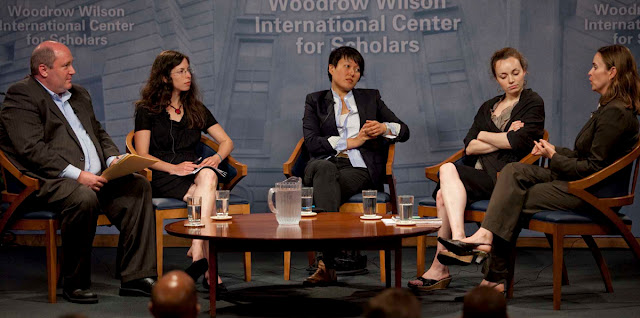
›“The story is the story, the information is the information, but you can frame it in very different ways,” said freelance journalist Annie Murphy at a roundtable discussion on the current state of global health reporting. Fresh off their five-week assignments, Murphy and three other fellows from the International Reporting Project (IRP) – Jenny Asarnow, Jill Braden Balderas, and Ann S. Kim – spoke at an event at the Woodrow Wilson Center on April 28 about their experiences researching underreported health issues in Haiti, Botswana, Mozambique, and Uganda. [Video Below]
Taking the Temperature of Global Health Reporting
Global health reporting, like many other forms of journalism, has felt the pinch from the global financial crisis, said Balderas, who edited a recent Kaiser Foundation report on the issue, “Taking the Temperature: The Future of Global Health Journalism.” Other challenges that have led to less global health coverage in mainstream media include an increased focus on “hyper-local” news; “story fatigue” from years of HIV/AIDS coverage; greater focus on epidemics and disasters; and the increasing number of advocacy groups starting their own news services.
Placing global health stories is a big challenge, agreed all four panelists. Who will want to run the story? What form – radio, documentary, print, online – will the story take? According to Murphy, some creative thinking may be needed: “It is global health, but that doesn’t mean we always have to frame it in this box of global health. It will be global health no matter what we do, so I think it’s also important for us to feed it into other events and issues that are important.”
(Re)building Maternal Healthcare in Haiti
With the worst maternal and infant mortality rates in the Western Hemisphere, Haiti needs medical providers of all kinds, said Asarnow, but especially skilled birth attendants. The devastating earthquake in 2010 destroyed Haiti’s only midwifery school, located in Port-au-Prince, killing many students and instructors. The school is still struggling to graduate a class of 15 people, she said.
In the rural town of Hinche, located in Haiti’s Central Plateau region, Asarnow frequently visited a public hospital that provided pregnant women with free obstetric care. Yet, she said, “even with free care, there [were] still a lot of barriers for women coming to the hospital to get care.” For example, the family members of expectant mothers had to provide sheets, clothing, food, and a bucket for personal needs. In addition, some women were too poor to afford transportation to and from the hospital.
Most women in Haiti, though, give birth at home with the help of traditional birth attendants, called matrones, Asarnow said. These matrones, popular in rural areas, are not formally educated in midwifery, but the government, along with non-profits such as Midwives for Haiti, have provided the matrones with training in basic health care and emergency situations.
Simply reporting on childbirth turned out to be a challenge, said Asarnow. “It’s hard to get people interested in something that just happens to most women,” she said; other more unusual health problems, such as infectious diseases, tend to garner more interest.
Finding Health Sovereignty in Mozambique
Health sovereignty, explained Murphy, is “the idea that nations have the right to make decisions about health and about how people are going to be treated” – an issue that is particularly pointed in Mozambique, where 50 percent of the national budget and 70 percent of the annual health budget is tied to international aid.
Mozambique, said Murphy, has only 1,000 doctors to serve a population of 22 million. By contrast, the country has an estimated 50,000 traditional healers. As a result, she said, most Mozambicans use traditional healing for at least part of their regular health care.
While researching traditional healers in the northern province of Tete, Murphy investigated a large Brazilian-owned coal mine that had displaced 5,000 local people when it was built. Mining is a major economic activity in Mozambique, yet mining companies are taxed a mere three percent by the government, said Murphy.
Health reporting doesn’t have to only cover traditional health issues, said Murphy. “The environment, natural resources, and how a country earns its money very much have to do with the health of the people who are living there,” she said. “How can you talk about being sovereign and providing health to your citizens if you don’t have the money to do that?”
Treating the Over-Treatment of Malaria in Uganda
“Malaria is quite over-treated” in Uganda, said Balderas. There’s the “idea that if you have a fever, you have malaria.” Consequently, the rate of misdiagnosis can reach alarming rates in some areas, she said.
Balderas said an estimated 50 percent of Ugandans get free treatment through the public sector. However, only donor-funded facilities are equipped with the rapid diagnosis test (or RDT), which takes only 20 minutes to determine the presence of malaria in a blood sample, she said. If these facilities were more widespread, misdiagnoses rates could easily be lowered.
Other challenges to the accurate diagnosis and treatment of malaria include faulty equipment, shortages of electricity and lab technicians, human error, corruption, bureaucratic entanglements, and presumptive diagnoses. For example, sometimes health workers do not know what is causing a patient’s fever, Balderas said, but they prescribe malaria treatments anyway because “they want to be able to give someone a treatment; they want to feel like they’re helping people.”
“There are certainly a ton of issues that relate to health,” Balderas said, such as poverty and corruption. Everyone she interviewed in Uganda – with the exception of government officials – identified the corruption in the country’s drug sector as a key problem.
Helping “Africa” One Small Story at a Time
Inspired by a World Health Organization study, which found “at least a 60 percent reduction in HIV infection among men who were circumcised,” Kim went to Botswana to investigate infant circumcision, a practice that is gaining popularity but is still alien. “I would meet people in the course of my day and they would ask me what I was doing there and I would talk about circumcision. They’d say, ‘Oh, I really want to get my baby circumcised. How do I do that?’” she reported.
The most powerful moment of her trip, said Kim, came when she was researching cervical cancer – the number one cancer among women in Botswana. As she waited with a woman to receive her lab results, Kim asked her if she was nervous. The woman, who was HIV-positive, said, “Yeah, I’m really worried. To me, it would be worse to get cervical cancer than to have HIV.” Even though Botswana is a middle-income country, said Kim, there are far more resources available to treat HIV than cancer.
Kim said that when presenting her work it was important for her to bring in the human element and not just the statistics: “I hope that, in whatever small way, even these small stories will help get issues in various countries on the map, especially in Africa where we tend to think of it as ‘Africa’ and not so much as different countries with different personalities and different situations.”
Sources: Malaria Journal, UNFPA, World Health Organization.
Image Credit: David Hawxhurst/Woodrow Wilson Center. -
Madagascar, Past and Future: Lessons From Population, Health, and Environment Programs
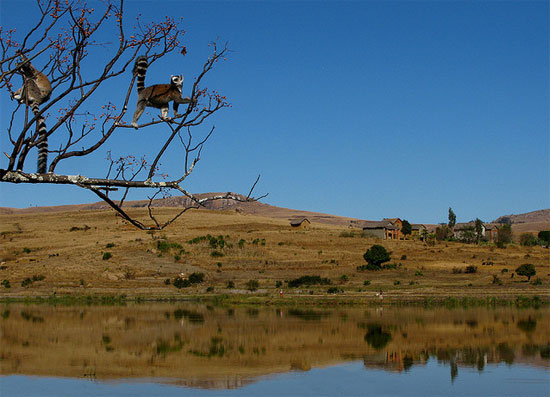
›In Madagascar, “today’s challenges are even greater than those faced 25 years ago,” said Lisa Gaylord, director of program development at the Wildlife Conservation Society. At an event at the Woodrow Wilson Center on March 28, Gaylord and her co-panelists, Matthew Erdman, the program coordinator for the Population-Health-Environment Program at Blue Ventures Conservation, and Kristen Patterson, a senior program officer at The Nature Conservancy, discussed the challenges and outcomes of past and future integrated population, health, and environment (PHE) programs in Madagascar. [Video Below]
Nature, Health, Wealth, and Power
Gaylord, who has worked in Madagascar for nearly 30 years, gave a brief history of USAID’s activities on the unique island, which she called a “mini-continent.” She used the “nature, health, wealth, and power” framework to review the organization’s environment, health, and livelihoods programs in Madagascar and their results. Governance, she said, is the centerpiece of this framework, but this piece “maybe didn’t have an adequate foundation” in Madagascar to see the programs through the political crisis.
Though its programs started at the community level, Gaylord said USAID’s objective was to scale up to larger levels. “You can’t always work on that level and have an impact,” she said, and there was “tremendous hope” in 2002 for such scaling up when Madagascar elected a new president, Marc Ravalomanana.
Unfortunately, changes in funding, a lack of economic infrastructure, and poor governance forced development programs to scale down. After President Ravalomanana was overthrown in a military coup in 2009, the situation got worse – the United States and other donors pulled most funding, and only humanitarian programs were allowed to continue.
“What worries me is that I think we have gone back” to working on a village level, Gaylord said. “We want to go up in scale, and I think that we felt that we could in Madagascar, but that’s where you have the political complexities that didn’t allow us to continue in that direction.”
Going forward, Gaylord said that it is important to maintain a field-level foundation, take the time to build good governance, and maintain a balance in the funding levels so that no one area, such as health, dominates development activities.
Living With the Sea
Based in southwestern Madagascar, the Blue Ventures program began as an ecotourism outfit, said Erdman, but has since grown to incorporate marine conservation, family planning, and alternative livelihoods. One of its major accomplishments was the establishment of the largest locally managed marine protection area in the Indian Ocean, called Velondriake, which in Malagasy means “to live with the sea.” This marine area covers 80 kilometers of coastline, incorporates 25 villages, and includes more than 10,000 people. The marine reserves for fish, turtles, and octopus, as well as a permanent mangrove reserve, protect stocks from overfishing.
One of the biggest challenges facing the region is its rapidly growing population, which threatens the residents’ health and their food security, as well as the natural resources on which they depend. More than half the population is under the age of 15 and the infant and maternal mortality rates are very high, Erdman explained. Blue Ventures, therefore, set up a family planning program called Safidy, which means “choice” in Malagasy.
“If you have good health, and family size is based on quality, families can be smaller and [there will be] less demand for natural resources, leading to a healthier environment,” said Erdman.
The region’s isolation and lack of education and health services are a challenge, said Erdman, but over the past three years, the contraceptive prevalence rate has increased dramatically, as has the number of clinic visits. The program uses a combination of clinics, peer educators, theater presentations, and sporting events, such as soccer tournaments, to spread information about health and family planning.
A Champion Community
“There is a long history of collaborative work in Madagascar,” Patterson said. Focusing on the commune (county) level, she worked in conjunction with USAID, Malagasy NGOs, and government ministries to try to scale up PHE programs in Madagascar’s Fianarantsoa province, which has a target population of 250,000 people.
“We essentially worked at two different levels,” said Patterson. At the regional level, a coordinating body for USAID and local partners called the “Eco-Regional Alliance” met monthly. The “Champion Commune” initiative, which worked at local levels, had three main goals, she explained:
Though working in such remote areas is expensive, and all non-humanitarian U.S. foreign aid has been suspended since the coup, Patterson hopes that development programs will return to Madagascar. Pointing to its vast rural areas, she stressed the importance of integrated efforts: “The very nature of multi-sectoral programs is that they have the highest benefit in the areas that are most remote. These are the areas where people are literally left out in the cold.”- Create a strong overlap with neighboring communes;
- Promote activities that benefited more than one sector (such as reforesting with vitamin-rich papaya trees); and
- Capitalize on the prior experiences of Malagasy NGOs in implementing integrated projects to help build up civil society.
Image credit: “Untitled,” courtesy of flickr user Alex Cameron.
Sources: The New York Times, Velondriake. -
Engineering Solutions to the Infrastructure and Scarcity Challenges of Population Seven Billion (and Beyond)
›March 9, 2011 // By Hannah MarquseeA recent Institution of Mechanical Engineers (IME) report, Population: One Planet, Too Many People?, argues that “sustainable engineering solutions largely exist for many of the anticipated challenges” of a world population scheduled to top seven billion this year and projected to reach upwards of nine billion by 2050. “What is needed,” write the authors, “is political and social will, innovative financing mechanisms, and the transfer of best practice through localization to achieve a successful outcome.”City lights on the French-Italian border, from the International Space Station.
Since nearly all of the population growth in the next 40 years will occur in the developing world, the report recommends nations adopt five “Engineering Development Goals” (listed below), alongside the Millennium Development Goals, to meet the needs of the world’s growing poor. The report also recommends that developed countries provide technical engineering expertise to developing countries in the model of the UK Department for International Development’s Resource Centers. This assistance will help them implement these goals and “leapfrog” the “resource-hungry, dirty phase of industrialization.”
Population Growth a Threat?
While the report issues a clear call to action for engineers and governments, it does not address the issue of population growth per se, which has caused some to argue that population growth might not be the problem after all. The Independent, for example, initially headlined their article about the report, “Population Growth Not a Threat, Say Engineers,” but changed it after publication to “Population Growth a Threat, Say Engineers.”
The IME authors clearly state that “population increase is likely to be the defining challenge of the 21st century,” and the report provides practical steps governments can take given current population trends. But its focus on “engineering solutions” highlights the ongoing debate between those who argue that technological fixes alone can solve the world’s social and environmental problems, and those who advocate for contraception as a low-cost path to a sustainable world.
“I would love there to be technological solutions to all our problems,” said Nobel Laureate Sir John Sulston at a recent ECSP event on the UK Royal Society’s forthcoming People and the Planet study, but “we’ve got to make sure that population is recognized, while not the sole problem, as a multiplier of many others. We’ve got to make sure that population really does peak out when we hope it will.”
The projections on which the report is based will be difficult to hit without dramatic reductions in fertility, mainly in sub-Saharan Africa – a goal that is nigh impossible without increased investment in access to voluntary family planning. The UN high variant projection, which calculates a much less dramatic decrease in current fertility levels, has world population reaching 11 billion by 2050.
“There is no need to delay action while waiting for the next greatest technical discovery,” write the IME authors. “If action is not taken before a crisis point is reached there will be significant human hardship. Failure to act will place billions of people around the world at risk of hunger, thirst, and conflict as capacity tries to catch up with demand.”
Engineering Development Goals
1. “Energy: Use existing sustainable energy technologies and reduce energy waste.”
Currently, “over 1.5 billion people in the world do not have access to energy,” says the IME report. In addition, global demand for energy is expected to rise by 46 percent by 2030, and the world will need to invest $46 trillion over the next 40 years to shift towards renewable energy sources. The report points out that “there are no insurmountable technical issues in sourcing enough energy for an increasingly affluent larger global population.” Instead, “the difficulties lie in the areas of regulation, financing, politics, social ethics, and international relations.”
2. “Water: Replenish groundwater sources, improve storage of excess water and increase energy efficiencies of desalination.”
Global water consumption, write the IME authors, is predicted to rise 30 percent by 2030 due to population growth and increased energy and agricultural consumption. These numbers are troubling, considering that a recent study in Nature found that more than 1.7 billion people, almost entirely from the developing world, already face chronically high water scarcity.
However, this problem is not simply one of a shortage of water, rather “a case of supply not matching demand at a certain time and place where people are living,” says the IME report. Engineering solutions must involve the capturing and storage of rain water, more cost-effective desalination techniques, and aquifer storage and recovery techniques, says the report. But more importantly, “decision-makers need to become more aware of the issues of water scarcity and work more closely with the engineering profession in finding localized solutions.”
3. “Food: Reduce food waste and resolve the politics of hunger.”
The IME report cites the World Bank’s prediction that demand for agricultural production will double by 2050, due to a combination of population growth, more people turning to meat-heavy diets, and agricultural shortages from extreme weather events. Efficiencies can go a long way towards filling this supply-demand gap, says the IME report. In developed countries an average of 25 percent of edible food is thrown away in the home after purchase, while in developing countries, as much as half of crops are lost before ever reaching market due to lack of adequate transportation and storage infrastructure.
For example, the authors point out that in India, “between 35 percent and 40 percent of fruit and vegetable production is lost each year between the farm and the consumer” – an amount greater than the entire annual consumption of the UK. Americans are also big food wasters. A USDA study found that in one year, 27 percent of all edible food was thrown away in the United States after purchase. Developed countries can significantly increase efficiency “through behavioral change that recognizes the value of food,” says the report.
4. “Urbanization: Meet the challenge of slums and defending against sea-level rises.”
Urbanization “presents one of the greatest societal challenges of the coming decades,” write the IME authors, but cities also represent a “significant opportunity…to be very efficient places to live in terms of a person’s environmental impact.”
According to the World Bank, by 2050, three quarters of the world will live in cities, and nearly all of this growth will occur in the developing world. Already, one third of the world’s urban population live in “appalling slum conditions,” says the IME report. Challenges for the urban poor are especially severe in coastal areas – home to three quarters of the world’s large cities – where they are vulnerable to flooding and extreme weather events, which according to new studies, have increased as a result of climate change.
The report calls for nations to use an “integrated, holistic approach” that brings in engineering expertise early in the planning process to create infrastructure that is individualized to a city’s unique cultural, geographical, and economic needs.
5. “Finance: Empower communities and enable implementation.”
Implementation of the above four goals will require “innovative soft loans and micro-financing, ‘zero-cost’ transition packages, and new models of personal and community ownership, such as trusts,” write the IME authors. Furthermore, communities must play a central role in decision-making in order to find appropriate and local solutions.
In all five of these goals, “barriers to deploying solutions are not technological,” says the report. Instead, they are political and social. Better international cooperation, dialogue, and sharing of expertise between and amongst engineers, decision-makers, and the public, is crucial to implementation.
Sources: Department for International Development, Guardian, The Independent, Institution of Mechanical Engineers, Nature, The New York Times, UN Habitat, United Nations, USDA, World Bank.
Image Credit: “City Lights, France-Italy Border (NASA, International Space Station Science, 04/28/10),” courtesy of flickr user NASA’s Marshall Space Flight Center. -
USAID’s Role in National Security: Development Matters and It’s Cheaper Than You Think
›February 22, 2011 // By Ramona Godbole“Development is not and cannot be a sideshow,” said U.S. Agency for International Development (USAID) head Rajiv Shah, in a speech at the Center for Global Development on January 19. This year marks the 50th anniversary of USAID, and there are some promising changes in the works for the agency as it transforms itself into a “modern development enterprise.”
Over the past year, the Obama administration launched the Quadrennial Diplomacy and Development Review (the QDDR – see our full set of reviews on this first-of-its-kind document), Feed the Future, and the Global Health Initiative. In accordance with these new strategic initiatives, USAID has launched USAID Forward to implement a series of reforms to strengthen its capacity to meet the world’s development challenges effectively and efficiently. The agency has tried to foster a “spirit of innovation, science, technology, and smarter strategic thinking to each of [its] areas of core focus: gender, education, water, and climate,” said Shah. In his speech at CGD, he announced a new, re-worked evaluation policy and outlined a number of cost-saving actions, including graduating countries that no longer need aid, promoting procurement and contracting reform, and eliminating some costly senior positions in the agency.
Value to Shareholders
Moving forward, USAID is working to further reduce inefficiencies and increase transparency, said Shah, and is “focused on delivering the highest possible value for our shareholders – the American people and the congressional leaders who represent them.” He added that “like an enterprise, we’re relentlessly focused on delivering results and learning from success and failure.”
These are exciting changes for the development community. But, if Congress significantly cuts funding, by, for example, passing a plan similar to one endorsed by 165 Republican representatives a few weeks ago, these changes might not see the light of day – the plan proposed to save $1.39 billion by eliminating agency operating expenses. Putting that in perspective, the USAID operating budget for the past fiscal year was $1.69 billion. (Strangely, while the plan all but eliminates the agency that administers them, it does little to cut actual outgoing foreign assistance monies.)
The plan, however, may reflect the views of much of the American public. A World Public Opinion poll showed that Americans believe the government spends up to 25 percent of its budget on foreign aid and want to cut back to 10 percent, while in fact, aid represents just one percent of the federal budget (compared with more than 20 percent for defense).
What the proposed plan fails to take into account is development’s role in promoting peace, security, and prosperity globally. Said Shah at CGD, “as the President and the Secretaries of State, Treasury, and Defense have all made abundantly clear, development is as critical to our economic prospects and our national security as diplomacy and defense.”
A More Efficient Investment
Shah elaborated on this idea in an interview with Foreign Policy last month: “In the military they call us a high-value, low-density partner because we are of high value to the national security mission but there aren’t enough of us and we don’t have enough capability,” he said. “This is actually a much, much, much more efficient investment than sending in our troops, not even counting the tremendous risk to American lives when we have to do that.”
Chad Briggs, a professor for the USAF Air University, pointed out the multiple benefits to the military that increased State and USAID agency in the field could provide in his review of the QDDR:Considering the existing responsibilities of the United States overseas and the potential for future risks and crises that will need to be addressed, the QDDR’s recommendations to strengthen engagement abroad can only be a positive step for U.S. interests. If the various hurdles enumerated above and elsewhere can be addressed, the QDDR’s focus on emerging risks may also ease the burden on DOD resources and force deployments, recognizing that not every engagement abroad should be resolved by the military alone.
If done right, development can provide both economic growth and democratic governance and help stabilize countries before, during, and after conflict or crisis in a cost-effective way while simultaneously addressing transnational human and environmental security issues like hunger, poverty, disease, and climate change (see Yemen for an example where the application of soft power now could reduce the chance of deploying more hard power later).
Policymakers should support USAID’s current efforts to make smarter investments, “which over time will save hundreds of millions of dollars, as opposed to trying to save a little bit now by cutting our capacity to do oversight and monitoring,” said Shah in Foreign Policy.
Sources: Center for Global Development, The Economist, Foreign Policy, USAID, U.S. Department of State, World Public Opinion.
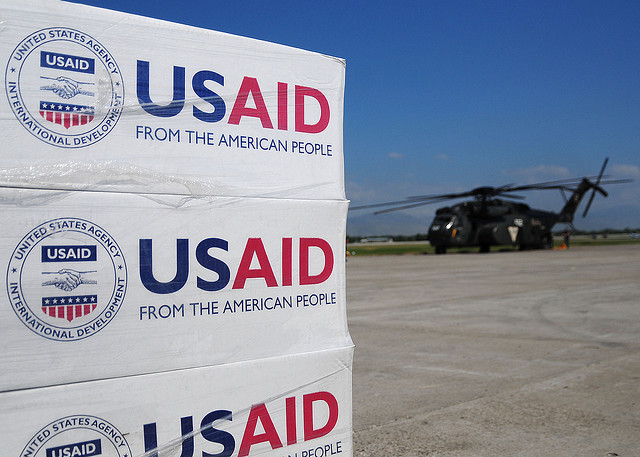
Photo Credit: “Pallets of food, water and supplies staged to be delivered,” courtesy of flickr user USAID_Images. -
Civilian Power in a Complex, Uncertain World
›Leading Through Civilian Power: The First Quadrennial Diplomacy and Development Review (QDDR) initiates an encouraging process of rethinking and restructuring that is long overdue. It explicitly links itself to the 2010 National Security Strategy and echoes the latter’s commitment to “national renewal and global leadership.” It refers briefly to the obvious companion document, the Quadrennial Defense Review, although it resists engaging with some key aspects.
-
In FOCUS: To Get HELP, Add Livelihoods to Population, Health, and Environment
›January 20, 2011 // By Wilson Center StaffProponents of integrated development have always faced significant barriers, but with a new focus on international aid from the Obama administration, the tide may be turning. To fully harness this momentum, Gib Clarke argues in a new ECSP brief that the population-health-environment (PHE) community must solidify its research base, reach out to new partners, and push for flexible funding and programming.
In “Helping Hands: A Livelihood Approach to Population, Health, and Environment Programs,” he writes that PHE programs should also add livelihoods (i.e., ways to make a living) as a critical element. He suggests such programs adopt a new moniker: “HELP” – Health, Environment, Livelihoods, and Population.
“Helping Hands” comes at a time when the integrated approach is being touted at the highest levels:“We cannot simply confront individual preventable illnesses in isolation. The world is interconnected, and that demands an integrated approach to global health,” said President Barack Obama in May 2009, echoing what population-health-environment (PHE) practitioners have long argued: Integrated lives with integrated problems require integrated solutions. Proponents of integration face significant barriers: lack of funding, programmatic silos, and policy disinterest.
While the Administration’s newest development efforts (see, e.g., Feed the Future Initiative, Global Health Initiative, and release of the QDDR) all recognize the power of integration, the degree to which these initiatives will operate across sectors remains to be seen. Drawing on interviews with leading experts, Clarke outlines the continuing challenges to implementing more integrated PHE programs and offers four recommendations for overcoming them:
“Given the strong base of existing and recent PHE programs, the PHE community is well-positioned to work with lead partners in Obama’s Global Health Initiative, climate change adaptation efforts, food security programs, and other upcoming crosscutting work,” concludes Clarke, who is currently director of planning and development at Interfaith Community Health Center in Bellingham, Washington. For example, USAID Administrator Rajiv Shah stated that the Feed the Future program would be closely integrating its objectives with the Global Health Initiative – a potential opportunity for PHE programs that offer both health benefits and food security.- The PHE community should adopt a new name that highlights the all-important livelihood component, such as “HELP Plus.”
- PHE programs need to gather data and conduct operational research to justify the claims of the PHE field.
- The PHE community needs to “agree to disagree” on the issue of scaling up integrated programs.
- PHE programs should seek funding from a diverse array of donors.
“This increased interest in integration may also be the best opportunity for finding new funding, fostering replication, and scaling up. It is a promising moment for integrated approaches, whether we call them PHE, HELP Plus, or some other acronym,” writes Clarke.
“Helping Hands: A Livelihood Approach to Population, Health, and Environment Programs” along with previous FOCUS issues are available on ECSP’s publications page.
Image Credit: From the cover of “Helping Hands: A Livelihood Approach to Population, Health, and Environment Programs,” courtesy of the Wilson Center.