-
Weakened by the Storm: Disasters and the Fighting Capacity of Armed Groups in the Philippines
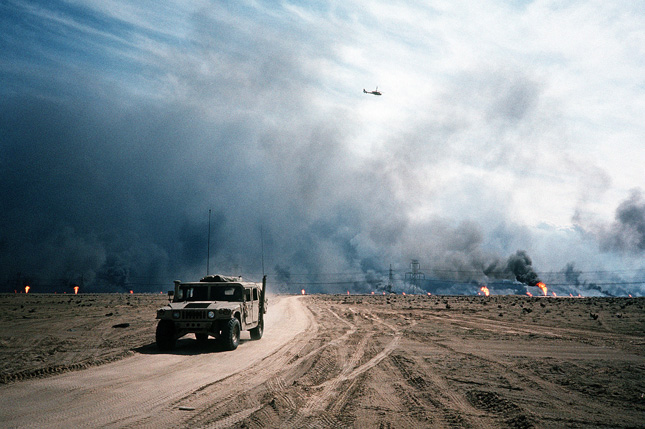
›Many studies on natural disasters and conflict have assumed that disasters make it easier for rebel groups to recruit new members by fueling grievances against the government and lowering the opportunity costs of joining an insurgency, and that this recruitment will increase conflict. But disasters may actually have the opposite effect. My study of rebel groups in the Philippines, recently published in the Journal of Peace Research, suggests that by weakening the organizational structure and supply lines of rebel groups and their ability to enlist new fighters, disasters may instead reduce the intensity of the conflict, rather than increase it.
-
Fire Warning: From India to California, Change Fuels the Flames
›October 31, 2017 // By Arundhati Ponnapa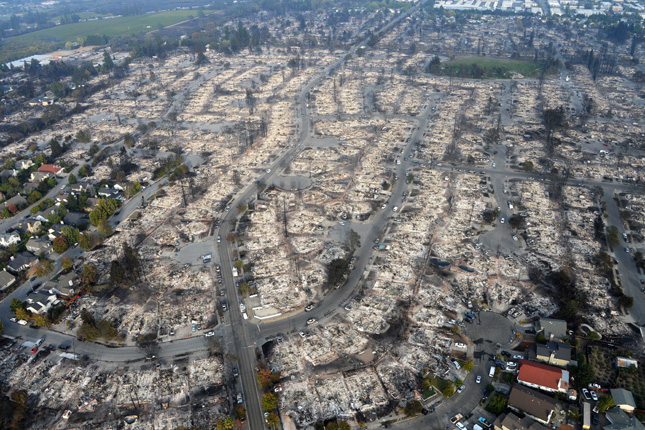
Earlier this month, more than 40 people perished and 20,000 people were ordered to evacuate as Northern California faced some of its deadliest fires in decades. Potentially fueled by climate change, these fires—only the only the latest in a string of fires to strike the state—will reshape landscapes and lives, as I know well from personal experience on the other side of the world.
-
REDD+ Progress: Forests and Solving the Climate Change Challenge
›
From 1870 to 2015, the CO2 concentration in the atmosphere increased significantly, said Professor Maria Sanz, scientific director at the Basque Center for Climate Change in a recent webinar organized by WWF Forest and Climate. Forests have been responsible for global greenhouse gas emissions through forestry and other land use activities. However, she noted that forests also absorb nearly one-third of the emissions generated from fossil fuels.
-
Observing Earth: Using Satellite Data for International Development
›“Interest in earth observation—and in particular, the value to what we do in development internationally—has never been higher,” said Jenny Frankel-Reed, adaptation team lead at the U.S. Agency for International Development (USAID). Frankel-Reed spoke at the Wilson Center’s recent panel discussion of the earth observation data program known as SERVIR, which included insights from USAID’s soon-to-be-released evaluation of the program.
-
Social Justice or Forest Conservation? Cross-Regional Comparisons Reveal a False Trade-Off
›The present understanding of the relationship between environmental conservation and social justice, two of the greatest challenges of our times, is fraught with multiple confusions, especially in the context of developing countries.
-
Risk, But Also Opportunity in Climate Fragility and Terror Link
›In a recent article for New Security Beat, Colin Walch made the case that the abandonment of some communities in Mali to deal with climate change on their own has created “fertile ground” for jihadist recruitment. In a similar argument, Katharina Nett and Lukas Rüttinger in a report for adelphi asserted last month that “large-scale environmental and climatic change contributes to creating an environment in which [non-state armed groups] can thrive and opens spaces that facilitate the pursuit of their strategies.”
-
Backdraft #6: Jesse Ribot on Why It’s So Important for Climate Interventions to Work Through Local Democracy
›In a research project spanning more than two dozen case studies on environmental governance in 13 sub-Saharan African countries, Jesse Ribot, professor at the University of Illinois, and colleagues found that while many forest management projects claimed to be working with communities, they were in fact undermining local democracy in various ways. -
A Survey of the “War on Wildlife”: How Conflict Affects Conservation
›Over the last 60 years, more than two-thirds of the world’s remaining biodiversity hotspots have experienced armed conflict. The effects have been myriad, from destruction as a result of military tactics to indirect socioeconomic and political changes, like human migration and displacement. This so-called “war on wildlife” has important implications for conservation and peacebuilding efforts, according to a recent literature review published in Frontiers in Ecology and the Environment.
Showing posts from category forests.

 In a
In a