-
Melanne Verveer and Others at Heinrich Böll Gender Equity and Sustainable Development Conference
›The Gender Equity and Sustainable Development conference, hosted last month by the Heinrich Böll Foundation, was a testament to the increasing importance of gender and sustainability within the international development community. Representatives from the U.S. government, UN, and countless international non-profits, aid organizations, and corporations demonstrated the vital need for collaboration and innovative action when working towards a more sustainable world.
The conference kicked off with an invigorating speech by the Honorable Melanne Verveer, U.S. Ambassador-at-Large for Global Women’s Issues, who called on the international community to acknowledge the “vital role that women can and must play in sustainable development.”
“Putting a spotlight on the critical role of women in stopping climate change will help to harness the immense human capacity of women worldwide,” said Verveer. By advocating for consideration of gender at every level – from grassroots organizing to policymaking – the ambassador painted a picture of a new era of sustainable development.
Step One: Recognize the Problem
A series of four panels followed the keynote address and focused on the intersections between gender inequity, the economy, trade, food and agriculture, and climate change.
There was clear consensus among all the participants that worldwide consciousness of gender inequity can lead to vast improvements in the status of women while also opening the door for new, innovative approaches to sustainable development. The 16 panel members represented numerous groups, from Oxfam America to Gender Action to the Stockholm Environment Institute, and all spoke to the importance of working for larger structural changes while simultaneously shifting more economic, social, and political power into the hands of women by any means possible.
The panelists described a world in which women represent a tremendous, untapped resource for change. Although women only own approximately one percent of titled land worldwide, they own close to 33 percent of business in the developing world and spend two-thirds of consumer dollars worldwide, which they tend to invest in sectors like health and education that benefit the larger community. Verveer said that data also shows women are more likely to pass environmental legislation and that forestry projects involving women have a higher rate of success.
Humanizing Climate Change
The big question of the conference seemed to be: in a world where women are disproportionately vulnerable to the effects of climate change, why aren’t women given more of a voice in the process of creating a more sustainable world?
Marie Brill, a senior policy analyst at Action Aid USA, pointed to the production of biofuels as a poignant example of a sustainable development plan that has had unintended negative consequences for women around the world. In the developing world, women are primarily responsible for food provisioning, yet many social and legal restrictions prevent women from owning land. If women had better access to land ownership and food insecurity would decrease, she said, and crops yields could increase by as much as 20 to 30 percent.
Foreign ownership of large tracts of land, common in the production of biofuels, makes land title even more difficult for women to acquire or maintain. The industry has also led to price spikes for staple crops like corn, said Brill, meaning poor women are sometimes unable to feed their families.
While biofuels provide an alternative fuel source, their production has been managed in a way that ignores the gender-specific implications of the process. By maintaining an awareness of gender, we can ensure that women do not become victims as we move towards a more sustainable world, Brill said.
Liane Schalatek, the associate director of the Heinrich Böll Foundation North America, suggested that a paradigm shift is needed regarding our approach to climate change.
Approaching climate change from a purely scientific and technological perspective is offensively simplistic, Schalatek said. “We need to humanize climate change and bring social equity into the discourse,” she said, emphasizing that “it is our obligation under international human rights objectives and vital to the success of sustainable development to take a rights-centered approach.”
Molly Shane was an intern for the Sierra Club’s Global Population and Environment Program.
Sources: Boston Consulting Group, Council on Foreign Relations, Food and Agriculture Organization of the United Nations, USAID, U.S. State Department, Women Deliver.
Photo Credit: “Climate Risk and Resilience: Securing the Region’s Future,” courtesy of the Asian Development Bank. -
Eric Zuehlke, Population Reference Bureau
Democratic Republic of Congo and Madagascar Connect Family Planning With Environmental Health
›February 10, 2012 // By Wilson Center StaffRemote rural communities in developing countries typically face the related challenges of extreme poverty, poor health, and environmental degradation. And population growth often exacerbates these challenges. In communities that face environmental challenges along with high fertility and high maternal and child mortality, health programs that include family planning can have great benefits for the health and well-being of women and families, with positive influences on the local environment. Meeting the reproductive health needs of women and ensuring environmental sustainability by connecting family planning with environment programs has proven to be a “win-win” strategy. Yet this connection has often been seen as controversial or irrelevant to environmental policymaking.
-
The Unconquered: In Search of the Amazon’s Last Uncontacted Tribes
›In the far west of the Brazilian Amazon reside some of the last indigenous tribes on Earth untouched by modern society. In 2002, writer and photographer Scott Wallace, on assignment for National Geographic magazine, undertook a three month journey through the Javari Valley Indigenous Land on an expedition to map and protect the territory of the flecheiros, or Arrow People, named for the poison-tipped arrows they use. Wallace turned the chronicles of his adventure into a book while in residence as a Public Policy Scholar at the Wilson Center.
On November 21, Wallace returned to the Center to present his finished book, The Unconquered: In Search of the Amazon’s Last Uncontacted Tribes.
Over the past 40 years, Brazil’s policies towards indigenous tribes have changed dramatically, said Wallace – from initially wanting to “civilize” tribes through contact, to a modern hands-off approach. He explained that globalization and demand for rubber in the twentieth century meant more contact with indigenous tribes and, ultimately, more upheaval. As a result, many tribes took up hostile attitudes towards outsiders and retreated as far into the wilderness as possible.
Today, the Brazilian Department of Isolated Indians is attempting to map out the extent of uncontacted peoples’ lands in order to better protect them from intrusion. Over the last eight years since the book was written, the official number of uncontacted tribes has increased from 17 to 26. Javari Valley alone hosts eight distinct ethnic groups, making it the largest concentration of uncontacted tribes in the world.
The leader of Wallace’s expedition, Sydney Possuelo, is an explorer who was formerly the head of the Department of Isolated Indians and once one of Brazil’s most famous sertanistas (“agents of contact”). Possuelo is now a champion of the vision that we should no longer contact tribes, said Wallace, but only “identify them and get legal protection for [their] lands and erect control posts to keep intruders out.”
Old Tensions, New Threats
Although Wallace holds up Brazil as one of the countries with the most enlightened policies for native Indians in the Americas, he said there is cause for concern as intrusions continue. As Wallace notes on his blog, isolated Indians are known to travel extensively by foot during the dry season, appearing along the riverbanks as they search for turtle eggs buried in nests along the sandy beaches of the western Amazon. Mounting pressure from logging crews, wildcat gold prospectors, and seismic teams exploring for oil and gas are flushing these isolated indigenes out of the forests.
During their trek to map the flecheiros, Wallace’s group ran into an illegal gold mining operation, and, although they managed to take the dredge to the local authorities, Wallace said he fears corruption may have stymied justice.
Rights-Based Conservation
On the positive side, Wallace pointed out that by protecting indigenous tribes, the government is also protecting tens of thousands of acres of virgin rainforest in what is a mutually beneficial intersection of conservation and human rights. “Indians are the rightful owners of the land and the most efficacious guardians of the rainforest,” he said.
While there are many obstacles threatening the survival of uncontacted tribes, Wallace said that the situation is not hopeless and that conservation through protecting indigenous-rights in Brazil is a good starting point. “When there is a commitment to do something and resources are made available,” he said, “what seems like inevitable development, like the overrunning of forests, can be stopped.”
Event ResourcesPhoto Credit: “Brazil Amazon adventure,” courtesy of jonrawlinson. -
Ambassador Melanne Verveer, U.S. Department of State
Ambassador-at-Large for Global Women’s Issues on Durban and the Role of Women in Combating Climate Change
›December 23, 2011 // By Wilson Center StaffThe original version of this article, by Ambassador Melanne Verveer, appeared on the White House Council on Environmental Quality blog.
Last week I traveled to Durban, South Africa to participate in the Conference of the Parties to the United Nations Framework Convention on Climate Change to highlight the critical and largely untapped potential of women to combat climate change. Studies have shown that it is often women who are on the frontlines of, and suffer disproportionately from, the impacts of climate change. This is certainly important. But we must remember that women are also a powerful force for finding solutions to climate change across the board, including in areas such as agriculture, sustainable forest management, and energy access.
Agriculture, which accounts for approximately 14 percent of global greenhouse gas emissions and is a sector that can be particularly sensitive to climate variability and change, is one key area where women can play a major role. A recent FAO report shows that women, in many places, are the main producers of the world’s staple crops, particularly in developing countries and regions likely to be adversely affected by climate change impacts. However, globally, only a small minority of women farmers have access to land tenure. This is a problem for many reasons – including that it limits women’s potential to combat climate change. Studies have shown that women with the right to property are significantly more capable of investing in climate-smart agricultural productivity; we have a lot of work to do to unlock women’s potential in this area.
Women also have untapped potential for increasing energy access, which directly relates to climate change. For example, nearly three billion people globally still rely on traditional cookstoves and open fires to prepare food for their families. In most instances, women are responsible for cooking – not to mention also spending many hours per week collecting fuel, which often puts women at risk of gender based violence. The resulting smoke exposure causes an estimated two million premature deaths annually, with women and young children the most affected. Cookstoves also impact the climate through emissions of greenhouse gases and short-lived particles such as black carbon. Engaging women is critical to tackling this problem. As we work to build a global market for clean cookstoves, integrating women into the cookstoves supply chain will help increase clean cookstove adoption rates while also creating new economic development opportunities. And as Secretary Clinton has noted, women create a multiplier effect in local communities because they disproportionately spend more of their earned income on food, healthcare, home improvement, and schooling.
The United States recognizes the power of women’s potential in these areas and many others, and is investing in major initiatives including Feed the Future and the Global Alliance for Clean Cookstoves, where women’s role in generating transformative change is front and center.
I went to Durban to highlight the critical role of women in combating climate change. While there, I worked with U.S. negotiators on the Durban texts and participated in public engagement events. Our efforts to build on the gender equality and women’s empowerment language in the Cancun agreements are reflected in several crucial institutional developments, including language on gender balance related to the composition of the board of the new Green Climate Fund, the Standing Committee, and the Adaptation Committee. We also worked to reflect gender considerations in the mission of the Climate Technology Center and Network. USAID Assistant Administrator Eric Postel and I solicited input during a meeting with leading non-governmental organizations working on gender and climate issues, and I hosted a high-level side event at the U.S. Center focused on unlocking women’s potential to combat climate change. The level of enthusiasm among my fellow panelists and the audience at the event was inspirational.
We made progress in Durban, but we can’t stop here. To achieve the future we all seek, we must do more. As the late Wangari Maathai, founder of the Green Belt Movement and ground-breaking advocate on women and the environment said, “We must not tire, we must not give up, we must persist.” The future of not only women, but our planet, depends on it.
Ambassador Melanne Verveer is U.S. Ambassador-at-Large for Global Women’s Issues.
Sources: Food and Agriculture Organization, Intergovernmental Panel on Climate Change, The White House.
Photo Credit: “Melanne S. Verveer,” courtesy of the U.S. Embassy, Kabul. -
Susanna Murley for The Huffington Post
Compromise Is Hard: The Problems and Promise of REDD+
›December 6, 2011 // By Wilson Center StaffThe original version of this article, by Susanna Murley, appeared on The Huffington Post.
In Durban this week delegates from around the world are examining the options to mitigate carbon emissions. What looks like the best chance for progress? REDD+ (for Reduced Emissions from Deforestation and Degradation, plus co-benefits – like conservation, sustainable management of forests, and enhancement of forest carbon stocks). REDD+ has been seen as a potentially powerful solution to solve both poverty and deforestation – in one fell swoop.
How does it work? Essentially, these programs would be funded by developed nations to help pay for community forestry projects in developing countries, if the communities can demonstrate – with verifiable data – that their efforts are saving forests that would have been destroyed or if they are planting trees that would permanently sequester carbon.
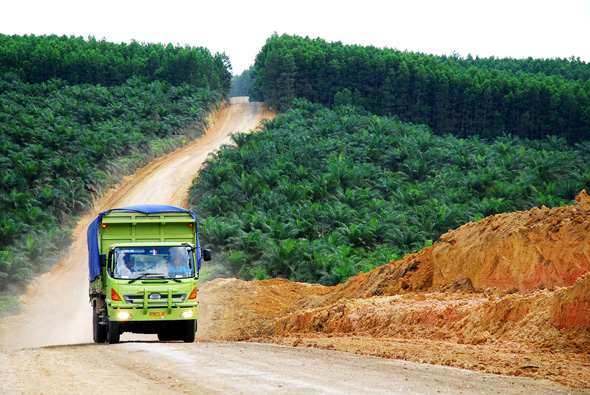
Will this work? Many other systems have tried and failed to reduce deforestation. In Indonesia, where an area of forest about the size of Nevada has been destroyed since 1990, activists have participated in demonstrations, legal actions, blockades and destruction of property to protest timber production. Many international NGOs have joined them in their campaigns against the forestry practices in Indonesia, releasing report after report on the “State of the Forest.” The World Bank and the International Monetary Fund have attempted to regulate forestry as conditions of their loans. None of it worked, and Indonesia continues to see massive amounts of illegal logging and deforestation.
Continue reading on The Huffington Post.
Sources: Center for International Forestry Research, Gellert (2010), MongaBay.com
Photo Credit: “Oil palm plantation,” courtesy of flickr user CIFOR (Ryan Woo). -
The Yasuní-ITT Initiative Is a Practical Climate Solution That Must Be Embraced at Durban
›As the world turns to Durban, South Africa, for this year’s UN climate summit, new findings are turning up the heat on the urgency to address climate change. The reality though is that we no longer have the luxury of resting our hopes solely on an internationally binding climate agreement; we must begin to look more closely at supporting immediate and tangible solutions. By complementing a global top-down effort of continued international negotiations with bottom-up approaches, we increase our chances at mitigating the most damaging effects of climate change. One of the most innovative models of such a bottom-up approach is the Yasuní-ITT Initiative being undertaken by the Government of Ecuador and supported by the UN Development Programme’s Multi-Partner Trust Fund Office (MPTF Office).
-
Healthy People, Healthy Ecosystems: Results From a Public-Private Partnership
›“A lot of people probably don’t think that an organization with a name like ‘World Wildlife Fund’ would have a program on population, health, and the environment,” said WWF’s Tom Dillon at the Wilson Center, but actually it is very natural. “Most of the people we work with are in rural areas, and they depend on their natural resources for their own livelihoods and for their own well-being. Of course, if you are in that situation, in order to be a steward of the environment, you’ve got to have the basics. You have got to have your own health.”
Dillon was joined by staff from WWF, as well as Scott Radloff, director of USAID’s Office of Population and Reproductive Health, and Conrad Person, director of corporate contributions at Johnson & Johnson, to talk about the results of a three-year partnership between USAID, WWF, and Johnson & Johnson. The joint effort, a formal Global Development Alliance, provided health and family planning services, clean water, and sanitation to communities in three of WWF’s priority conservation landscapes: The Salonga National Park in the Democratic Republic of Congo (DRC), the Lamu Archipelago in Kenya, and the Terai Arch Landscape in Nepal.
By creating an innovative public-private partnership that linked health objectives, particularly related to family planning and maternal and child health, to environmental and conservation activities, “this alliance was ahead of its time,” said Radloff.
Human Health Linked to Environmental Health
The project had four objectives, said Terri Lukas, WWF’s population, health, and environment (PHE) program manager: improve family health; reduce barriers to family planning and reproductive health services; improve community management of natural resources and habitat conservation; and document and promote successful approaches.
“Human health cannot be separated from environmental health anywhere,” Lukas said, “but most especially when we are working with very poor people who live very close to nature.”
Projects Provide Integrated Services
The Salonga National Park in the DRC is home to many endangered species, including the bonobo, one of the four great apes. Local communities are very isolated, and lack access to safe drinking water and sustainable livelihoods, as well as basic health and family planning services, according to Lukas. The PHE project was able to train 135 voluntary community health workers in family planning and maternal and child health care, including 55 women. One year after the training, health workers were distributing contraception to more than 300 new users per month, Lukas said.
The alliance has also integrated health and family planning services into conservation programs in Kenya’s Kiunga Marine National Reserve, in part, “to demonstrate to the people that we care about them as well as the environment, and also to show them the synergies that exist between the health issue and the environment issue,” said WWF Program Coordinator Bahati Mburah. The region has been suffering through a year-and-a-half-long drought, and has one of the highest population growth rates in east Africa, placing considerable pressure on natural resources.
“We talk to [the fisher folk] about health and family planning, and how they are related to the management of fisheries,” said Mburah. With improved transportation and mobile outreach services provided by the project, 97 percent of women are now able to access family planning services within two hours of their home, she said.
The third site is in the Terai region along the southern border of Nepal. In this lowland region, the alliance is attempting to safeguard and restore forest areas in order to allow wildlife to move and breed more freely, while at the same time improving the health and economic prospects of the people. By linking these goals, support for conservation efforts increased from 59 percent to 94 percent of households, with 85 percent attributing positive attitude changes to increased access to health services and safe drinking water, according to Bhaskar Bhattarai, project coordinator for WWF-Nepal.
Documenting and Promoting Successful Approaches
Cara Honzak, WWF’s senior technical advisor on population, health, and environment, said the global objective of the alliance was to document and promote successful PHE approaches. Comprehensive baseline and endline surveys provided critical evidence that integrated PHE programming increases family planning use in remote areas, improves conservation buy-in within communities, and leads to increased participation of women in community leadership and decision-making.
“We have played a key role in producing some of the evidence that has been used throughout Washington [D.C.], especially to provide information to government bodies that are making decisions about bringing more money into family planning, health, and particularly in the environmental sector,” said Honzak.
“After two decades in the field, and working in this area, I wasn’t expecting many surprises. I couldn’t have been more wrong,” Lukas said. “These three years have changed almost everything about the way I now view health development…I have long called myself a conservationist, but now I say to my international health colleagues: we are all conservationists, and if we aren’t, we should be.”
Event Resources- Bhaskar Bhattarai presentation
- Cara Honzak presentation
- Terri Lukas presentation
- Bahati Mburah presentation
- Photo gallery
- Video
-
Seven Ways Seven Billion People Affect the Planet
›October 31, 2011 // By Geoffrey D. DabelkoSeven billion people now live on earth, only a dozen years after global population hit six billion. But the seven billion milestone is not about sheer numbers: Demographic trends will significantly impact the planet’s resources and peoples’ security.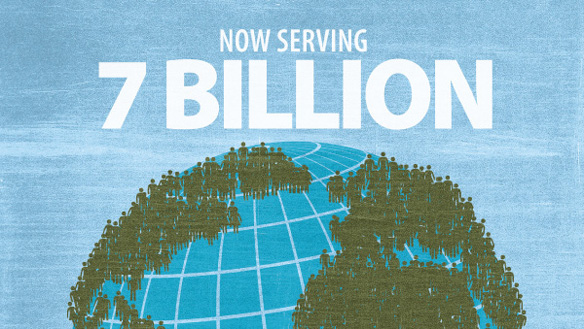
Growing populations stress dwindling natural resource supplies while high levels of consumption in both developed countries and emerging economies drive up carbon emissions and deplete the planet’s resources. And neglected “youth bulges” could bolster extremism in fragile states like Somalia and destabilize nascent democracies like Egypt.
Here are seven ways seven billion people affect the planet, according to recent research:
Security: Nearly 90 percent of countries with very young and youthful populations had undemocratic governments at the end of the 20th century. Eighty percent of all new civil conflicts between 1970 and 2007 occurred in countries where at least 60 percent of the population is under age 30, says demographer Elizabeth Leahy Madsen. According to research by demographer Richard Cincotta, these countries may achieve democracy, but are less likely to sustain it.- Richard Cincotta: Tunisia Predicted: Demography and the Probability of Liberal Democracy in the Greater Middle East
- Elizabeth Leahy Madsen: Demographic Security 101
Water: By 2025, 1.8 billion people will be living in countries with water scarcity, and fully two-thirds will be living in conditions of water stress. People are using groundwater faster than it can be naturally replenished, putting us in danger of “peak water,” says MacArthur “Genius” Fellow Peter Gleick. “We cannot talk about water without also understanding the enormously important role of population dynamics and population growth.”- Peter Gleick: Population Dynamics Key to Sustainable Water Solutions
Forests: The growing demand for energy has helped devastate tropical forests, as more than two billion people depend on wood for cooking and heating, particularly in developing countries. Projects in Indonesia, Nepal, and Uganda are fighting deforestation by providing alternative energy and incomes along with health and family planning services.- Indonesia: Health in Harmony
- Nepal: Forests for the Future
- Uganda: Sharing the Forest
Future Growth: By 2050, the UN says global population could range anywhere from 8 billion to 11 billion – and where it ends up depends in large part on the status of women in developing countries. “Even if fertility rates remain constant at current levels (which is unlikely), developing regions would grow from 5.7 billion in 2010 to 9.7 billion in 2050, but the total population of developed countries would remain essentially unchanged,” writes Madsen.- Elizabeth Leahy Madsen: How Did We Arrive at 7 Billion – and Where Do We Go From Here? [Part One] [Part Two]
There are no quick solutions to these seven problems. But meeting the unmet need for contraception of more than 200 million women is an effective and inexpensive way to start.
Sources: Population Action International, UN, World Health Organization.
Image Credit: Used with permission courtesy of Scott Woods, The University of Western Ontario.
Showing posts from category forests.