-
Backdraft: Flipping the Frame on Conflict and Climate Change
›Fire needs oxygen to burn. When a fire starts inside a building, the floors, ceilings, walls, doors, and windows can constrict the flow of air. Breaking in to fight the fire thus carries the risk of opening a new airway. If that happens, a smoldering fire can expand explosively, bursting into roaring flames as it sucks air in through the new passageway. This sudden inrush of air to fuel a burst of fire has a name: backdraft.
-
Margarita Mora, Human Nature
Peruvian Farmers Change Attitudes Toward Forest Protection
›The original version of this article, by Margarita Mora, appeared on Conservation International’s Human Nature blog.
I first visited Peru’s Alto Mayo Protected Forest in 2008. At the time, deforestation rates there were among the highest in the country. CI-Peru wanted to find a way to help communities and Peru’s National Service of Natural Protected Areas (SERNANP) keep their trees standing.
-
Harmony in the Forest: Improving Lives and the Environment in Southeast Asia
›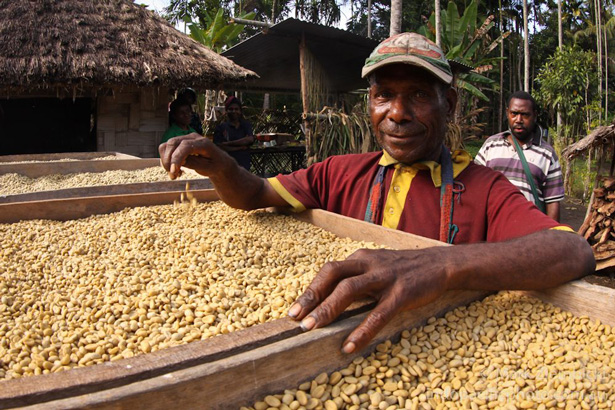
How can NGOs and civil society promote environmental protection and improve people’s health and livelihoods in remote tropical forests? Two NGOs with innovative programs in Indonesia and Papua New Guinea spoke at the Wilson Center on May 30 about their efforts to simultaneously tackle these issues and highlight their intricate relationship.
-
Dale Lewis on Combating Poaching in Zambia’s Luangwa Valley Through Integrated Development
›June 28, 2013 // By Jacob Glass“We did something very special for the community and the resources these farmers live with. We sat down with local leaders and promised to stop spending so much time caring about the elephants, and instead create a company that will try to address community needs,” said Dale Lewis in an interview at the Wilson Center. “The deal was they had to put down their snares and guns.”
-
The Farmer’s Dilemma: Climate Change, Food Security, and Human Mobility
›
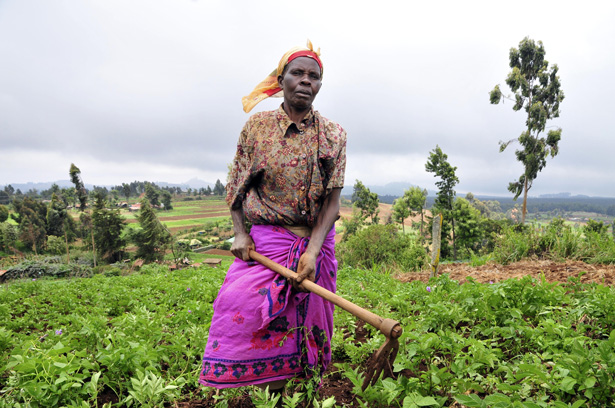
“Most of the world’s poor are farmers; they share the same profession and the same challenges,” said One Acre Fund’s Stephanie Hanson at a recent Wilson Center event on small-scale farming, climate change, food security, and migration. They are tasked with growing enough food to support their families with only tenuous access to land and natural resources, the most basic of tools, and increasingly unpredictable weather patterns to deal with. [Video Below]
-
What’s Worth Saving? Maoists, Forests, and Development in India’s Western Ghats
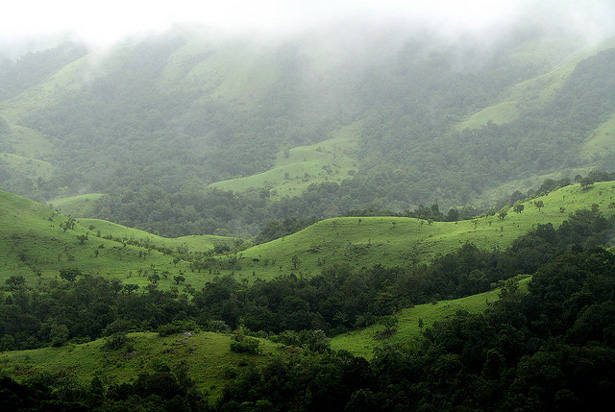
›Arrayed along India’s southwest coast is a 1,600-kilometer-long mountain chain with forests older than the Himalayas: the Western Ghats. The mountains are one of the top biodiversity hotspots in the world, and UNESCO recently recognized the region as a World Heritage site. They’re also one of the tensest of India’s emerging battlegrounds between development and conservation and a potential recruiting ground for its Maoist insurgency, called the country’s “greatest threat to internal security.”
-
‘At the Desert’s Edge’ Gives a Glimpse of China’s Massive Desertification Challenge
›In may not be surprising that China, home to so many other superlatives, also faces desertification on a grand scale. According to China’s State Forestry Administration, over 27 percent of the country now suffers from desertification – more than 1,000,000 square miles, or about one-third of the continental United States – impacting the lives of more than 400 million people.
-
Lisa Dabek on How Papua New Guinea’s Tree Kangaroo Conservation Project Does More Than Conserve
›“All through Papua New Guinea, in every province, there is logging and mining, but we are the first conservation area,” says Lisa Dabek in this week’s podcast.
Dabek is the director of the Tree Kangaroo Conservation Project (TKCP), an effort of the Seattle Woodland Park Zoo that works to protect tree kangaroos while empowering communities in Papua New Guinea’s YUS Conservation Area to manage their natural resources, health care, and food security.
Showing posts from category forests.