-
Crowded Out: New Evidence Points to Population Growth as Key Driver of Biodiversity Loss
›November 12, 2013 // By Kathleen Mogelgaard
In 2009, economist Jeffrey Sachs, alongside more than 20 eminent scholars from different fields, highlighted the importance of biodiversity for human well-being in a policy commentary published in Science. They noted the Millennium Development Goals (MDGs) included a target to achieve, by 2010, a significant reduction in the rate of species loss, and they also noted that it was one of the MDG targets that was most off-track. “Our lack of progress toward the 2010 target,” they said, “could undermine achievement of the MDGs and poverty reduction in the long term.” The 2010 target was missed, and today species are moving toward extinction at an ever faster pace. Last week’s announcement confirming the extinction of Africa’s western black rhino is the latest sad example of this trend.
-
Removing Boundaries: Sean Peoples on Documenting Integrated Development in Tanzania
›“We knew that we had a lot of reports, we knew that we had a lot of policy papers, but what we wanted to tell was a good story,” said ECSP’s Sean Peoples speaking recently at Duke University about the short documentary, Healthy People, Healthy Environment: Integrated Development in Tanzania.
-
Gladys Kalema-Zikusoka on Gorilla Conservation and Community Health in Uganda and DRC
›
Dr. Gladys Kalema-Zikusoka never expected to be so deeply involved in family planning when she started Conservation Through Public Health (CTPH) 10 years ago. CTPH began with a simple mission: to help preserve endangered mountain gorillas in Virunga National Park in the Democratic Republic of the Congo, and Bwindi Impenetrable National Park in Uganda. But, as Kalema-Zikusoka explains in this week’s podcast, they quickly found that to help the gorillas, they had to help the people living around them.
-
Africa’s Demography, Environment, Security Challenges Entwined, Says Roger-Mark De Souza at Africa Center for Strategic Studies
›Sub-Saharan Africa is not only the fastest growing region of the world demographically but is also one of the most vulnerable to climate changes, according to many measures, and already facing natural resource scarcity in many areas. These factors combine with existing development challenges to create security threats that African governments and the United States should be concerned with, says ECSP Director Roger-Mark De Souza in a presentation for the Africa Center for Strategic Studies’ introductory course on demography and the environment at the National Defense University.
-
China’s Environmental Crisis Through the Lens: Interview With Photojournalist Sean Gallagher
›China is one of the world’s 12 “mega-biodiversity” countries, but its incredible natural landscapes, from Sichuan’s sparkling, turquoise-colored lakes to Guilin’s dramatic karst topography, are bearing the cost of rapid economic development, writes British environmental photojournalist and videographer Sean Gallagher in a new multimedia e-book.
-
Southeast Asia’s Haze Problem a Harbinger of Challenges to Come
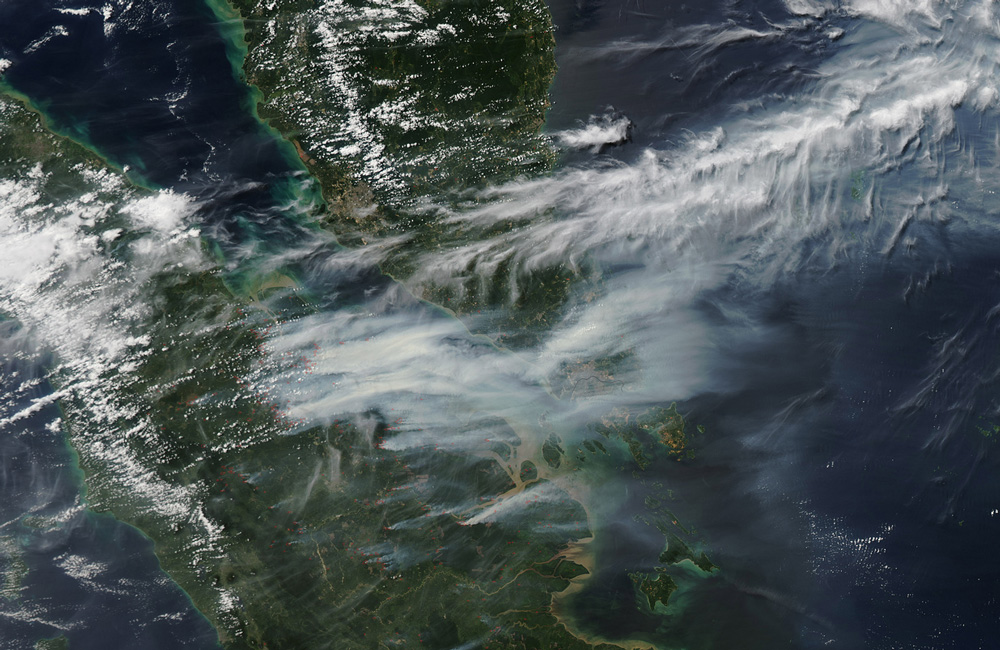
›The original version of this article first appeared on The Globalist.
Haze may be the new weapon of mass destruction. Not in the narrow sense of an incoming ballistic missile, of course, but for millions in Southeast Asia, this summer’s sooty haze poses a threat more dire than a nuclear-tipped missile.
-
Development vs. Conservation: Global Trends in the Battle Over Oil in Ecuador’s Yasuní Rainforest
›Ecuador, the OPEC member with the smallest amount of proven oil reserves, has gained outsized attention in the debate over the future of oil extraction in recent days and may well play a decisive role in the outcome of the global tension between economic development and environmental conservation.
-
Geoff Dabelko on Avoiding Conflict From Climate Adaptation
›
Although major global action remains stymied in many respects, policymakers around the world are increasingly at least recognizing the need to increase resilience to the effects of climate change. But are the consequences from hastily implemented initiatives being adequately considered? Perhaps not.
Showing posts from category forests.