• woodrow wilson center
  • ecsp

New Security Beat

Subscribe:
  • rss
  • mail-to
  • Who We Are
  • Topics
    • Population
    • Environment
    • Security
    • Health
    • Development
  • Columns
    • China Environment Forum
    • Choke Point
    • Dot-Mom
    • Friday Podcasts
    • Navigating the Poles
    • Reading Radar
  • Multimedia
    • Water Stories (Podcast Series)
    • Backdraft (Podcast Series)
    • Tracking the Energy Titans (Interactive)
  • Films
    • Water, Conflict, and Peacebuilding (Animated Short)
    • Paving the Way (Ethiopia)
    • Broken Landscape (India)
    • Scaling the Mountain (Nepal)
    • Healthy People, Healthy Environment (Tanzania)
  • Publications
  • Events
  • Contact Us

NewSecurityBeat

The blog of the Wilson Center's Environmental Change and Security Program
Showing posts from category food security.
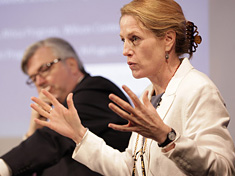
  • Kathleen Mogelgaard, Aspen Institute

    Hungry, Hot, and Crowded: The Importance of Multi-Dimensional Strategies for Resilience

    ›
    May 6, 2014  //  By Wilson Center Staff

    The original version of this article, by Kathleen Mogelgaard, appeared on the Aspen Idea Blog.

    In a world faced with rising temperatures, increasingly severe droughts and floods, and a rapidly growing population, how can people adapt to this new way of life – and even thrive? Leading experts discussed this question in-depth during an Aspen Institute Global Health and Development Program event titled, “Building Resiliency: The Importance of Food Security and Population.” The panel took place as part of the Civil Society Policy Forum at the 2014 IMF/World Bank Spring Meetings in Washington, DC.

    MORE
  • State of Population-Climate Change Research

    ›
    Reading Radar  //  May 1, 2014  //  By Paris Achenbach

    pop_env_journalWhat is the future of population and climate change research, and how can this research impact international policy? In a special issue of Population and Environment, environmental and social scientists look at these questions. “One of the most exciting developments in the climate change research community at present is the development of a new generation of climate scenarios,” write Adrian C. Hayes and Susana B. Adamo in the introduction. These can help facilitate more interdisciplinary research.

    MORE
  • Lisa Palmer, Slate

    Famine Is a Feminist Issue

    ›
    April 17, 2014  //  By Wilson Center Staff
    famine_feminism

    The original version of this article, by Lisa Palmer, appeared on Slate.

    In 2013 the United Nations Population Division revised its population projections to show that population could grow even faster than previously anticipated, especially in Africa. Planning ahead for feeding a hot, hungry, teeming planet is both a numbers game and social venture. Calories, climate change, and acres of land are some of the factors on one side of the equation. The 7 billion people in the world, projected to grow to 9.6 billion by 2050, are on the other.

    MORE
  • Forests on Film: New Stories From Nepal and the Congo Basin

    ›
    From the Wilson Center  //  April 14, 2014  //  By Donald Borenstein

    Given growing awareness about environmental change and how it affects human life, it is perhaps not surprising there is also a growing audience for environmental filmmaking. At the 2014 Environmental Film Festival in the Nation’s Capital on March 25, the Wilson Center premiered ECSP’s latest documentary, Scaling the Mountain: Protecting Forests for Families in Nepal. Together with Heart of Iron, a recent film on mining in the Congo Basin, the event took viewers into some of the world’s most remote forests to see how their inhabitants are adapting to rapid changes in the natural resources on which they depend.

    MORE
  • Double Dividends: Population Dynamics and Climate Adaptation

    ›
    From the Wilson Center  //  April 10, 2014  //  By Paris Achenbach
    port-au-prince

    If current projections hold, Africa’s population will more than double in 40 years, putting more people at risk of food, water, health, and economic insecurity as the climate changes, as well as negating progress made in reducing carbon emissions per person. But what if it didn’t? [Video Below]

    MORE
  • High Food Prices an Unlikely Cause for the Start of the Arab Spring

    ›
    April 7, 2014  //  By Richard Cincotta
    Tunisian_flag

    Just months after popular uprisings toppled Tunisia and Egypt’s authoritarian regimes, a trio of complex-system researchers published a brief article linking these demonstrations with high levels of the UN Food and Agriculture Organization’s international Food Price Index. Marco Lagi, Karla Bertrand, and Yaneer Bar-Yam’s model, which predicts outbreaks of deadly social conflict when the index tops 210, has since become a popular explanation wielded by many for bouts of popular unrest, including the Arab Spring and overthrow of Ukraine’s government. But were food prices really an underlying “hidden” cause for the start of a wave of instability that is still being felt today?

    MORE
  • New Film Explains Blue Ventures’ Integrated Approach to Development and Conservation in Madagascar

    ›
    Eye On  //  April 1, 2014  //  By Kate Diamond

    Blue Ventures has become a leader in the population, health, and environment (PHE) community through its work with the remote, semi-nomadic Vezo people living along Madagascar’s southwestern coast. In a new short documentary, The Freedom to Choose: Empowering Communities to Live With the Sea, Blue Ventures describes how their approach has helped the Vezo respond to the combined challenges of resource scarcity, poor reproductive health, and unsustainable livelihoods.

    MORE
  • Measurement Matters: Understanding Water Scarcity in an Increasingly Complex World

    ›
    March 21, 2014  //  By Kathleen Mogelgaard
    WWD_measurement

    It was a scorching hot April afternoon in Keur Moussa, a small farming community about 60 kilometers outside Dakar, Senegal. The landscape was mostly barren and very dry, and a fine red dust settled into our clothes as we walked with community leaders to learn about their efforts to cope with a changing environment. In this part of the world, adapting to climate change is figuring out how to manage water: how to survive for long periods without it, and what to do when too much comes at unexpected times.

    MORE
Newer Posts   Older Posts
View full site

Join the Conversation

  • RSS
  • subscribe
  • facebook
  • G+
  • twitter
  • iTunes
  • podomatic
  • youtube
Tweets by NewSecurityBeat

Trending Stories

  • unfccclogo1
  • Pop at COP: Population and Family Planning at the UN Climate Negotiations

Featured Media

Backdraft Podcast

play Backdraft
Podcasts

More »

What You're Saying

  • Volunteers,At,The,Lagos,Food,Bank,Initiative,Outreach,To,Ikotun, Pan-African Response to COVID-19: New Forms of Environmental Peacebuilding Emerge
    Rashida Salifu: Great piece 👍🏾 Africa as a continent has suffered this unfortunate pandemic.But it has also...
  • A desert road near Kuqa An Unholy Trinity: Xinjiang’s Unhealthy Relationship With Coal, Water, and the Quest for Development
    Ismail: It is more historically accurate to refer to Xinjiang as East Turkistan.
  • shutterstock_1779654803 Leverage COVID-19 Data Collection Networks for Environmental Peacebuilding
    Carsten Pran: Thanks for reading! It will be interesting to see how society adapts to droves of new information in...

What We’re Reading

  • Rising rates of food instability in Latin America threaten women and Venezuelan migrants
  • Treetop sensors help Indonesia eavesdrop on forests to cut logging
  • 'Seat at the table': Women's land rights seen as key to climate fight
  • A Surprise in Africa: Air Pollution Falls as Economies Rise
  • Himalayan glacier disaster highlights climate change risks
More »
  • woodrow
  • ecsp
  • RSS Feed
  • YouTube
  • Twitter
  • Facebook
  • Home
  • Who We Are
  • Publications
  • Events
  • Wilson Center
  • Contact Us
  • Print Friendly Page

© Copyright 2007-2021. Environmental Change and Security Program.

Woodrow Wilson International Center for Scholars. All rights reserved.

Developed by Vico Rock Media

Environmental Change and Security Program

Woodrow Wilson International Center for Scholars

Ronald Reagan Building and International Trade Center

  • One Woodrow Wilson Plaza
  • 1300 Pennsylvania Ave., NW
  • Washington, DC 20004-3027

T 202-691-4000