-
Peter Schwartzstein, National Geographic
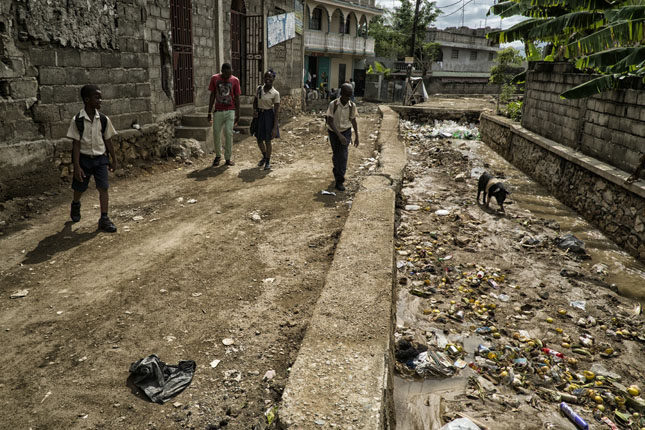
After Spark of Hope, Iraq’s Marshes Are Again Disappearing
›July 13, 2015 // By Wilson Center StaffAs Saddam Hussein drained Iraq’s famed marshes to punish the rebellious tribesmen who lived in them, Amjad Mohamed packed his few possessions, grabbed his fishing rod, and fled south to Basra with his extended family.
-
A New Climate for Peace: Taking Action on Climate and Fragility Risks (Report Launch)
›
As momentum builds towards the negotiation of the Sustainable Development Goals and UN climate change summit later this year, the G7 countries – France, Germany, Italy, Japan, Canada, the UK, and the United States – have made a strong statement about the importance of climate security risks. A New Climate for Peace: Taking Action on Climate and Fragility Risks, an independent report commissioned by G7 foreign ministers and authored by a consortium of international organizations including the Wilson Center, analyzes the security and stability risks posed by climate change and offers concrete policy options for addressing them. [Video Below]
-
Soil Security and Incorporating Forestry Into Food Security Strategies
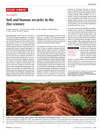
› Earth’s thin upper-crust of soil is kept in balance by a complex carbon and nutrient cycle that is increasingly threatened by human exploitation and climate change, according to a review in Science. The chemicals trapped in topsoil and subsoil are crucial to plant growth, but are being depleted at rates much higher than they are being replenished, writes Ronald Amundson et al. For instance in the central United States, estimated soil erosion rates exceed production rates by 10 times.
 -
The Lancet Commission’s Latest Findings on Climate Change, Health, and Policy Responses
›July 1, 2015 // By Francesca Cameron“Tackling climate change could be the greatest global health opportunity of the 21st century,” asserts the newest report by the Lancet Commission on Health and Climate Change.
-
Pope Francis’ Encyclical Calls for Integrated Development – Just Don’t Say “Reproductive Health”
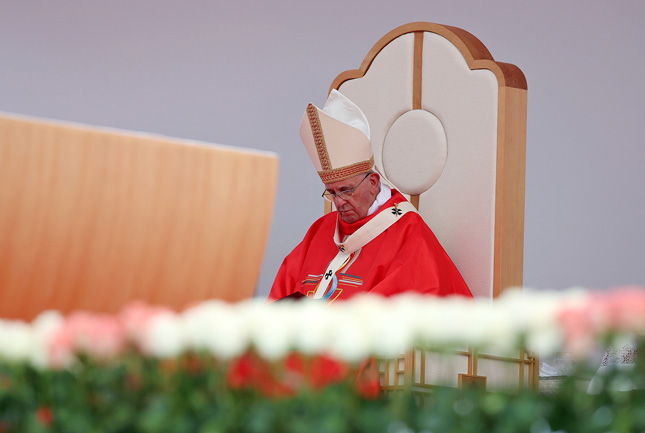
›Pope Francis sparked worldwide discussion and jubilation among many green advocates after releasing Laudato Si, the first Papal encyclical to focus directly on the environment. The pontiff touched on everything from pollution and sustainable development, to anthropogenic climate change and water security in his 180-page missive.
-
‘State of African Resilience’ and a Review of Food Security-Family Planning Programs
›In their first annual report, the ResilientAfrica Network (RAN), a partnership of 15 African universities, Tulane University, Stanford University, and the Center for Strategic and International Studies, outlines efforts to explore and define multiple “pathways of vulnerability” in sub-Saharan Africa. The report acknowledges that these pathways can be very different from place to place, but by working with African communities more closely, they hope to find new ways to break cycles of chronic crisis. One of the interventions piloted by Stanford was “deliberative polling,” which is based on the premise that communities are more likely to respond to development interventions if they understand the logic behind them and are involved in the process. -
How to Create a New Climate for Peace: Preventing Climate Change From Exacerbating Conflict and Fragility
›June 19, 2015 // By Lauren Herzer RisiWhen the leaders of the G7 countries – Canada, France, Germany, Italy, Japan, the United Kingdom, and the United States – met earlier this month, they agreed to make fossil fuels a thing of the past by 2100. At the same time the G7 is also taking steps to make climate change’s connection to conflict a priority in the present.
-
“Climate Change Makes the World More Violent”: How One IPCC Author Would Rewrite His Chapter
›With thousands of scientists representing 195 countries working for more than a quarter of a century, the Intergovernmental Panel on Climate Change (IPCC) is the world’s leading authority on of assessing climate change and its potential socio-economic impacts. However, Marc Levy, an IPCC lead author and deputy director of Columbia University’s Center for International Earth Science Information Network, says he’d have gone further in connecting climate change to conflict in their latest report if it were up to him.
Showing posts from category food security.