Showing posts from category family planning.
-
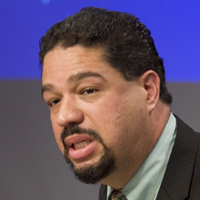
From Cancun: Roger-Mark De Souza on Women and Integrated Climate Adaptation Strategies
› “When you look at the negative impacts of climate change, the impacts on the poor and the vulnerable – particularly women – increase, so investing in programs that put women at the center is critical,” said Roger-Mark De Souza, vice president of research and director of the climate program at Population Action International (PAI), speaking to ECSP from the UN Climate Change Conference in Cancun, Mexico. “There are a number of missed opportunities here in Cancun and in climate change deliberations overall that are not including women and are missing an opportunity to have a bigger bang for the buck, or power for the peso, as we say in Mexico.”
PAI hosted a side session with five panelists from Denmark, Ethiopia, Kenya, Suriname, and Uganda on “Healthy Women, Healthy Planet: Women’s Empowerment, Family Planning, and Resilience.” The session attracted more than 100 attendees and prompted incisive, informative questions, said De Souza.
“There was a call for additional research that is policy relevant that identifies some of the key entry points and added benefits at a country level,” said De Souza. “And there is a very strong call for youth partnerships from a number of youth advocates who are looking at medical and public health interventions and are desirous of including reproductive health programming as part of that.”
“One concrete next step for Cancun is to work with other civil society partners who are here who are tracking how gender is being integrated into the negotiating language, particularly with regard to financing mechanisms,” De Souza said.
Besides financing and the need for more research, De Souza said the key issues that emerged from the panel were: the importance of linking programs of different scales; ensuring women’s empowerment and ownership; and recognizing and replicating effective partnerships.
For more from Roger-Mark De Souza, see ECSP Focus Issue 19, “The Integration Imperative: How to Improve Development Programs by Linking Population, Health, and Environment.”
The “Pop Audio” series is also available as podcasts on iTunes. -
IGWG’s K4Health Gender and Health Toolkit Is a One-Stop Shop for Integration
›November 30, 2010 // By Ramona Godbole
Addressing and analyzing gender norms, roles, and relations is increasingly viewed as critical in the development of equitable, effective, and sustainable health care. However, there has been relatively little integration of gender into health policies, programs, and systems.
The Interagency Gender Working Group (IGWG) – founded in 1997 as a way to bring together NGOs and parts of USAID to share best practices – has partnered with K4Health to create a Gender and Health Toolkit specifically designed to bridge this gap.IGWG’s Gender and Health Toolkit provides access to hundreds of tools, databases, training modules, websites, and publications in one place. Broadly divided into sections including program design, implementation approaches, capacity building, monitoring and evaluation, health systems, best practices examples, and even country-specific case studies, the toolkit provides nearly everything needed to begin integrating gender into new or existing public health programs.
Practitioners can also post questions and comments about the toolkit through an integrated discussion board. The toolkit even has a database to share gender-related photos.
While designed primarily for gender and health specialists and practitioners, the scope of the toolkit extends beyond typical public health issues like maternal health, family planning, HIV/AIDS, and reproductive health. The toolkit links to resources and training modules covering a wide range of cross-cutting topics including gender-based violence; nutrition and food security; integrated population, health and environment; and conflict/post-conflict humanitarian assistance.
The accumulated wealth of knowledge presented in the IGWG Gender and Health Toolkit is an impressively comprehensive resource, and it should be bookmarked by environment, health, and gender specialists and interested policymakers alike.
Image Credit: K4Health. -
Climate-Proofing Development: An Interview With Karen Hardee
›November 29, 2010 // By Hannah MarquseeWhile expectations are deflated for broad international consensus at the UN Climate Change Convention in Cancun, the need to “climate-proof” development efforts has been gaining ground in recent years as a necessary preventative measure to help developing countries adapt to the adverse effects of climate change.
-
PRB’s Jay Gribble at Kenya’s National Leaders Conference on Population and Development
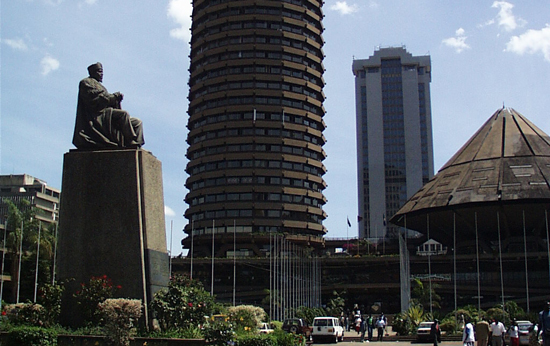
›November 29, 2010 // By Wilson Center StaffJay Gribble, vice president of International Programs at the Population Reference Bureau (PRB), recently attended the Kenya National Leaders Conference on Population and Development, November 15-17, at the Kenyatta International Conference Center in Nairobi. During the conference, he produced a series of posts for PRB’s Behind the Numbers on some of his impressions. Gribble focuses on Kenya’s resurgent interest in integrating population issues into the development agenda, the country’s ongoing HIV/AIDS epidemic, and the importance of family planning.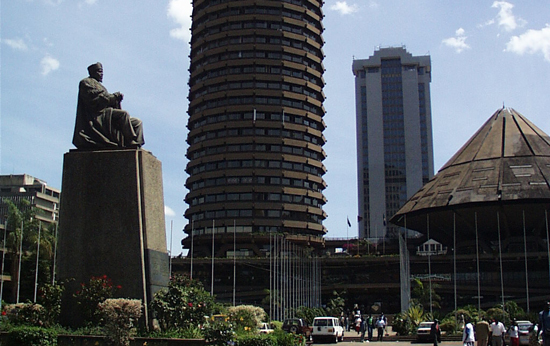
Below are the introductory excerpts from his posts; to read the full posts, please visit Behind the Numbers.
“Anticipating Change in Kenya”
Sitting in the hall where Kenya’s National Leaders Conference will be starting in a few minutes, I can’t help but feel that there is an opportunity to refocus national attention to development…to the goal that I have heard repeatedly of becoming a Middle Income country. And to achieve this goal, they must first recognize that population is an underpinning development issue that cannot be ignored.
In the 1980s and 1990s, Kenya was a leader in reproductive health and maternal health, really setting a pace for the continent. But during the 2000s, Kenya turned its attention to other pressing issues – namely HIV/AIDS – and began to give less attention to population issues. Though HIV continues to be a plague, it is now time to return to the importance of slowing population growth, for until this fundamental issues is addressed, there will be less opportunity for education, jobs, and better health. At the same time, as a predominantly rural country with agriculture representing a major part of the economy, smaller families will be critical to maintaining farms that are large enough to feed families and the country.
Continue on PRB.
“As the Rich Get Richer, the Poor Get Children”
The Kenya National Leaders Conference has begun, representing the first time since 1989 that Kenya’s national population policy has been discussed in a large, open forum. With a new national constitution, Kenya is poised to redress many of the social and economic inequalities that have stood in the way of its development. In fact, the current population policy expires in December, 2010, and one of the purposes of this conference is to gather the input from leaders throughout the country on how a new policy should be framed. I find it impressive that such a large conference is convened to ensure that a new policy reflects the needs of the nation. The conference is also a forum for reaching leaders with important information about the need to address population growth through family planning if Kenya is to achieve its Vision 2030 development plan.
Continue on PRB.
“In Kenya, Prioritizing Population…and Family Planning”
As Kenya’s National Leaders Conference on Population and Development winds down today, it offers leaders an opportunity not only to think and talk about how population growth is an issue that underlies the country’s development, but to act on it too. Whether thinking about business, agriculture, or the environment, it is impossible to be strategic about Kenya’s future without also considering how rapid population growth will affect it.
In talking with Kenyans who grew up in the 1970s and 1980s – back when family planning and population growth were a priority – they remember the messages that were at the tips of people’s tongues – smaller families live better. Before the HIV/AIDS epidemic, family planning and slowing population growth was a priority and a source of national pride because it put Kenya on track for prosperity and development.
Continue on PRB.
Photo Credit: Adapted from “King Kenyatta?” courtesy of flickr user rogiro. -
Watch: Blue Ventures PHE Program in Madagascar
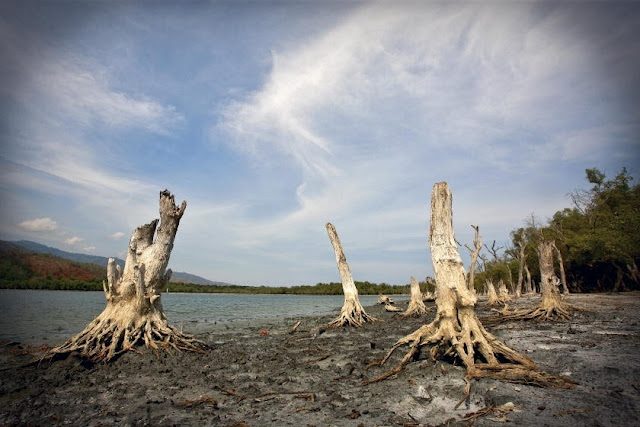
›“All conservation efforts will be in vain if family planning issues aren’t addressed,” says Rebecca Hill, project manager for the Sexual and Reproductive Health Programme at Blue Ventures in a video highlighting their population, health, and environment (PHE) programming in Madagascar.
While primarily a marine conservation group, Blue Ventures also recognizes the need for integrating population into their efforts. They began a family planning program in southwestern Madagascar in 2008 as part of a “holistic approach to conservation.” The project aims to address the high unmet need for family planning, high fertility and maternal and infant mortality, and conserve the coastal environment. “We are directly saving lives,” Hill says.
Rapid population growth is creating an unsustainable strain on natural resources, as Matthew Erdman of Blue Ventures wrote in a previous post on The New Security Beat:The average total fertility rate in Velondriake is 6.7 children per woman, according to our data. On average women are only 15 years old when they first conceive. To compound this problem, a majority of the population is under the age of 15 – at or approaching reproductive age. At the current growth rate, the local population will double in only 10 to 15 years. The local food sources, already heavily depleted, barely feed the current population, let alone twice that amount. Without enabling these coastal communities to stabilize their population growth, efforts to improve the state of marine resources and the community’s food security are considerably hindered.
Hill describes the situation in the village when she joined the Blue Ventures in 2008 as “alarming,” with women “having up to 17 children despite not wanting children.” Many people in the town had never heard of condoms and had no idea how to use them, she said, and “they are desperate to have access to contraception.”
Today, the initial family planning program has been scaled up to the surrounding region and generated significant community involvement by peer educators teaching community members about sexual and reproductive health. It’s also become the first PHE project to receive support from the UNFPA within Madagascar.
There are currently 18 community-based distributors who give out two types of contraception in their villages. The fact that the community has so fully embraced the project shows that it can be replicated elsewhere, says Hill in the video. “Communities themselves have harnessed the ideas and consider that what we’re doing is vitally important.”
“Addressing family planning needs and issues is inextricably linked with conservation issues,” says Hill. “All conservation efforts will be in vain, if family planning issues are not addressed.”
Video Credit: Blue Ventures Family Planning Project from Alexander Goodman on Vimeo. -
What’s Good for Women Is Good for the Planet
›Ammi, my mother-in-law, was 16 years old when her marriage was arranged. Before she was 18, she had borne her first child, who died within the year, and by 30, she had given birth to six more. She had a fourth-grade education, and like other women in the new state of Pakistan, she knew little about contraceptive choices.
More than 50 years later, contraception still remains inaccessible for millions of women in Pakistan, such as Rani, the young woman who cleans Ammi’s Karachi home. Illiterate and married off to a cousin at age 15, Rani already has three children, and, like the majority of married Pakistani women who have never used modern contraception, will most likely have at least one more.Giving women the ability to determine whether and when to become pregnant is fundamental to the realization of their basic human rights. It is also a proven health and development strategy, substantially reducing maternal and infant mortality by allowing women to space their pregnancies. And now, for the first time, two studies offer compelling evidence that it has another benefit: What is good for women is also good for our planet.
These groundbreaking studies have rigorously quantified the effect on the environment of helping women and girls control their reproductive destinies. The studies – “The World Population Prospects and Unmet Need for Family Planning,” by the Futures Group, and, “Global Demographic Trends and Future Carbon Emissions,” by the National Center for Atmospheric Research and the International Institute for Applied Systems Analysis – demonstrate that giving women and girls access to contraception offers a precious co-benefit: a substantial reduction in carbon emissions.
The logic is simple: When women have the power to plan their families, populations grow more slowly, as do greenhouse gas emissions. The cost of providing these needed family planning services worldwide is minimal compared with other development and emissions reductions strategies – roughly $3.7 billion per year.
More than 200 million women in the United States and developing countries are sexually active and do not want to become pregnant, yet are not using modern contraception. The results are staggering: One in four births worldwide is unplanned, leading to 42 million abortions each year (half of them clandestine) and 68,000 women’s deaths.
Moreover, the large number of women who become pregnant when they do not want to is a significant source of population growth. Read in tandem, the studies show that a reduction of 8-15 percent of essential carbon emissions can be obtained simply by providing modern contraception to all women who want it. This reduction would be equivalent to stopping all deforestation or increasing the world’s use of wind power 40-fold. Although this is just one piece of the emissions reduction puzzle, it is a substantial piece.
The world is now facing multi-layered challenges of economic distress, rising inequality, and environmental devastation caused by climate change. International climate negotiations have repeatedly stalled as powerful nations play the blame game and block progress. Meanwhile, a series of severe weather events has buffeted the earth from Moscow to Iowa to Pakistan, each one hitting women and children hardest. This is the reality that rich nations must reckon with – and commit to changing – today.
In my 14 years at the Global Fund for Women, I have observed the wave of change that comes from empowering women – what some call the “girl effect.” Making information, education, and contraception easily available offers us an affordable, no-regrets strategy that can be implemented now.
Meeting the need for family planning services is not a complex challenge. We know how to provide the commodities, services, and education that women and their families want. There are thousands of programs around the world with successful track records in every conceivable religious, cultural, and political setting.
Investing in family planning has already been proven as an essential strategy to ensure the health, safety, and development of societies. Now we know that it is also an effective way to safely steward Mother Earth through one of her most challenging crises.
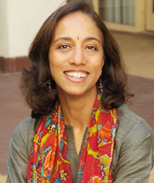
Kavita N. Ramdas is chair of the Expert Working Group of the Aspen Institute’s Global Leaders Council for Reproductive Health and senior adviser and former president and CEO of the Global Fund for Women.
Sources: Futures Group, National Center for Atmospheric Research and the International Institute for Applied Systems, Science, UNFPA, WHO.
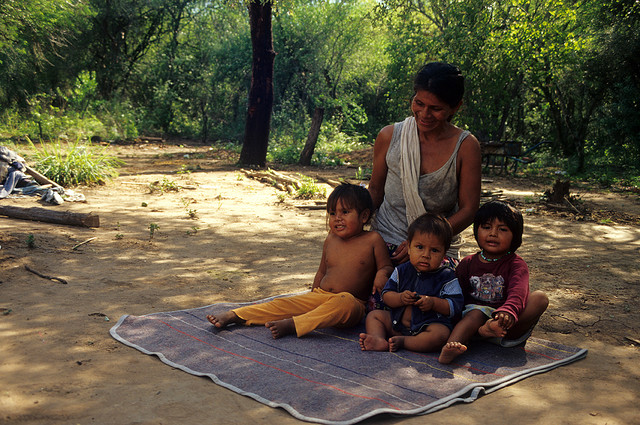
Photo Credit: “Chaco: Madre pilagá,” courtesy of flickr user Ostrosky Photos, and Kavita Ramdas, courtesy of Global Fund for Women. -
John Bongaarts on the Impacts of Demographic Change in the Developing World
›“The UN projects about 9.1 billion people by 2050, and then population growth will likely level off around 9.5 billion later in the century. Can the planet handle 9 billion? The answer is probably yes. Is it a desirable trajectory? The answer is no,” said John Bongaarts, vice president of the Policy Research Division at the Population Council, in this interview with ECSP.
Although family planning was largely brushed aside by international policymakers following the 1994 UN International Conference on Population and Development in Cairo, Bongaarts said he is hopeful because it is now enjoying a higher profile globally – and receiving greater funding.
“I am optimistic about the understanding now, both in developing and developed world, and in the donor community, that [family planning] is an important issue that should be getting more attention,” Bongaarts said. “And therefore I think the chances of ending up with a positive demographic outlook are now larger than they were a few years ago.”
The “Pop Audio” series is also available as podcasts on iTunes. -
PATH Foundation’s ‘Population, Health, and Environment Leadership as a Way of Life’
›PATH Foundation Philippines, Inc. (PFPI) just released a short documentary, Population-Health-Environment (PHE) Leadership as a Way of Life in All Walks of Life. The video features interviews with peer educators and local government officials who have partnered with PFPI on integrated coastal resource management in the Philippines that combines family planning and reproductive health services with environmental services.
According to those interviewed, an integrated approach is the best way to alleviate food insecurity in the area. “We cannot separate population, health, and environment, they should be implemented hand in hand,” said Marlyn Alcanises, a Fisheries and Coastal Resource Management program officer. “Even if we manage our coastal resources well, if there are many children due to high fertility and population growth, many people are hungry.”
The comprehensive program has been successful in addressing the social and environmental problems in the Verde Island Passage of the Philippines, one of Asia’s most densely populated regions, as well as a marine biodiversity hotspot and sea lane for many commercial ships.
The program uses community-based distribution of contraceptives to increase access to family planning, micro-credit schemes to finance sustainable livelihoods and alleviate poverty, and advocacy campaigns to increase government support for integrated health and environment programs.
Municipal Planning and Development Coordinator Cecilia Zulueta praised the integrated approach, saying “it can slow down population growth, decrease the number of malnutrition cases, lessen the number of out-of-school youth, and it can also decrease the crime rate, because if one does not have a stable source of income it may force him to engage in illegal activities.”
In ECSP’s FOCUS Issue 15, “Fishing for Families: Reproductive Health and Integrated Coastal Management in the Philippines,” Joan Castro and Leona D’Agnes demonstrated that PFPI’s Integrated Population and Coastal Resource Management project (IPOPCORM) was more cost-effective and had a greater impact on the wellbeing of both human reproductive health and coastal resources than non-integrated programs. In a study measuring the impacts of integrated versus single-sector reproductive health (RH) or coastal resource management (CRM) programs, they found the integrated approach met or exceeded single-sector outcomes for 26 out of 27 indicators.
Reducing high fertility rates reduces pressure on natural resources, decreases high rates of malnutrition, crime and HIV/AIDS, and preserves local fisheries, “making life sustainable for both humans and nature,” as PFPI puts it in the documentary. The hope is that the community leaders featured in the documentary will inspire others in similar situations to take the lead on integrated issues in their communities.
“Even if we are doing environmental conservation through population management in our province but the others are not, it will still create conflict somehow,” said Alcanises. “I believe that whatever program is being done in one province should also be done in other provinces, in order to avoid conflict and promote balance in program implementation.”
Julio Lopez, president of the Galera Association of Managers and Entertainers said, “this land is ours, and we are responsible in taking care of it.”
PFPI, along with the University of Rhode Island’s Coastal Resource Center and Conservation International, is part of the BALANCED project, which last year launched the PHE Toolkit as a resource for PHE professionals. For more on PFPI’s IPOPCORM program, see ECSP’s interviews with Joan Casto and Leona D’Agnes on our YouTube channel: “Joan Castro – Integrated Population and Coastal Resource Management (IPOPCORM)” and “Leona D’Agnes on Population, Health, and Environment.”
Video Credit: “Population-Health-Environment (PHE) A Video Documentary,” courtesy of YouTube user PATHFoundationPhils.
Sources: Population Reference Bureau.