Showing posts from category family planning.
-
Women and Climate Change
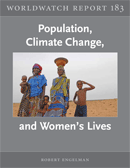
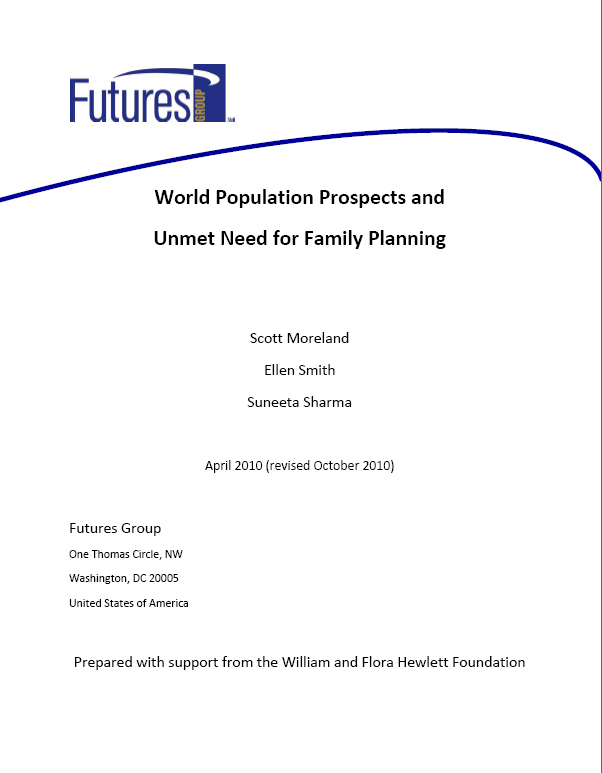
›A new Worldwatch Institute report, “Population, Climate Change, and Women’s Lives,” by Robert Engelman, discusses the relationship between women’s equality and climate change. Slowing population growth will reduce greenhouse gas emissions and help societies adapt to climate change, says Engelman. What’s more, this can only be done through an investment in women’s rights and education. Population change comes primarily through reducing unintended pregnancies by offering men and women access to family planning services, improving education for all (especially girls and women), and promoting full gender equality. “Population change should be viewed as one element of the historic effort to bring women into equal standing with men,” writes Engelman. A recent report by Scott Moreland, Ellen Smith, and Suneeta Sharma of the Futures Group analyzes just what the impact of meeting the unmet need for family planning would be on global population growth. Looking at 99 developing countries and the United States, the report, titled World Population Prospects and Unmet Need for Family Planning, found that by gradually meeting the global demand for family planning, population would be reduced to 6.3 billion people by 2050, below current world population and well below the UN medium fertility variant prediction, which is derived from past trends but does not take into account meeting unmet need for family planning. Meeting this need would only cost $3.7 billion more per year than the UN medium fertility variant scenario and less than the low scenario. $1.4 billion of this would cover the unmet demand in the United States.
 -
Integrated Development in PHE: Updates From Ethiopia and the Philippines
›“All protected areas in Ethiopia are being threatened by population pressure,” said Negash Teklu, executive director of PHE Ethiopia at an event at the Wilson Center co-sponsored by ECSP and the Africa Program. The best way to address this pressure is by implementing integrated population, health, and environment (PHE) programs that combine natural resource management with family planning services, said Teklu. “Without the family planning component, they cannot solve the protected area problems,” he said.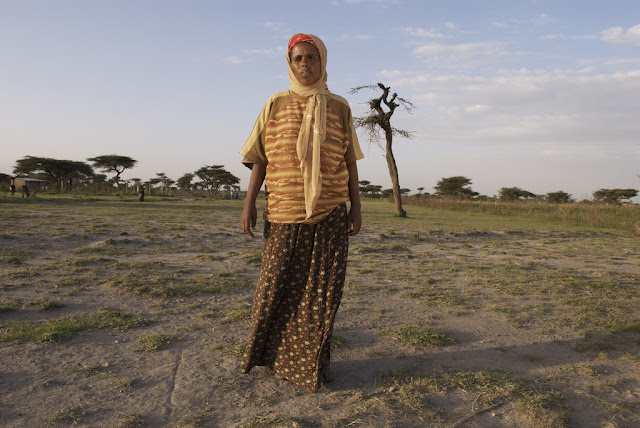
Teklu was joined by Joan Regina Castro, executive vice president at PATH Foundation Philippines, Inc., and Annie Wallace, PHE technical advisor with the USAID Global Health Fellows Program, to compare PHE projects in Ethiopia and the Philippines and identify best practices. [Video Below]
The Population-Climate Connection
To address population growth in areas of high biodiversity, Teklu created PHE Ethiopia, a consortium to coordinate PHE projects in the country and increase awareness of the value added by integrating them.
“The population-climate connection is easily seen in Ethiopia,” said Teklu. The country’s deforestation, loss of biodiversity, poverty, high maternal and child mortality, and vulnerability to climate change are linked to the rapid growth of its population, which is currently 85 million. Building community resilience in this kind of environment is “critical,” he said.
Bridging Gaps: Gender, Youth, and Religion
Wallace, in her assessment of the Packard Foundations’ PHE projects in Ethiopia, found the projects bridged gender gaps. By integrating health and environmental education in PHE youth groups and in outreach by extension workers, the projects increased male involvement in health and family planning (a traditionally female activity) and increased women’s involvement in agriculture and environmental activities (traditionally male). This cross-gender success increased the total number of family planning users, said Wallace.
But for any of this work to succeed, “community ownership and participation are very critical and essential,” said Teklu. Both youth and religious leaders were primary stakeholders in this process. “Youth are the next leaders. By targeting youth you can get them to think about livelihoods and make these connections,” said Wallace.
PHE has proven to “transcend religion,” said Castro. Despite traditional opposition to abortion and family planning, support from Christian and Islamic leaders in Ethiopia and the Philippines was critical in determining a project’s success. “When religious leader buy-in comes in, the community really responds to that,” said Wallace.
In addition, religious leaders understand the population-environment connection. “Our livelihoods are affected when we have too many mouths to feed…family planning and reproductive health makes sense,” an Ethiopian religious leader told Wallace.
Securing Sustainable Support for Scaling Up
IPOPCORM, the PHE initiative in the Philippines, is now “the biggest [PHE] project, modesty aside, in the world,” said Castro, because it has succeeded in working at all levels of government. To scale up its work in the “priority areas” of high biodiversity and rapid population growth, where the “poorest of the poor” live, IPOPCORM first scaled up its advocacy work. To be sustainable, “you have to have a lot of PHE leaders and champions” at all levels, from village to national government, she said.
Ethiopia faces a significant challenge in securing sustainable support and funding from the national government and other sources. “While there is buy-in for the local approach, there isn’t funding,” Wallace said. “A lot of work is donor-driven, whether we like it or not,” she added. “There needs to be a more sustainable strategy” to ensure the survival of these projects, she said, which means garnering national and international support.
But it also means conducting research to provide empirical evidence of PHE’s added value, the speakers agreed. A new paper in the journal Environmental Conservation, coauthored by Castro, uses evidence from IPOPCORM’s projects to conclude that integrating family planning and coastal resource management offers benefits over single-sector approaches. But elsewhere, there is a “big need for monitoring and evaluation” to “strongly gather data to show our success on the ground,” said Teklu.
However, communities on the ground “don’t need the empirical evidence,” said Castro. “The community and the people say their lives are linked and so the solutions should be linked,” she said. “The life that they live speaks of integration.”
Photo Credit: “Safia Fungie Hasenna – Climate witness from Ethiopia” by Zeresenay Berhane Mehar courtesy of flickr user Oxfam International -
Bringing PHE to a Muslim Community in Tanzania
Abdalah Overcomes the Odds
›This PHE Champion profile was produced by the BALANCED Project.
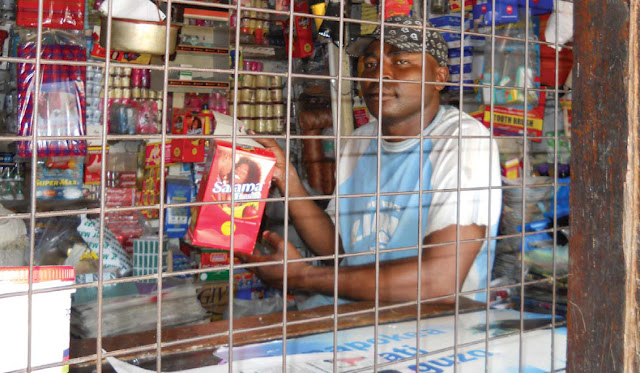
“Now, people can plan their families and know how to use a condom,” says Abdalah Masingano as he proudly tells how his community has come to accept integrated population, health, and environment (PHE) activities.
The 35 year-old Abdalah is a PHE provider. He lives near the Saadani National Park (SANAPA) — one of Tanzania’s newest, and the only terrestrial park with a contiguous marine area in southeastern Tanzania. Saadani is home to the rare Roosevelt Sable antelope and the nesting grounds for several endangered species of marine turtles. One of the largest threats to biodiversity in this area is the clearing of mangroves and coastal forests for firewood and charcoal-making. About 95 percent of households in the area depend on firewood for cooking and most use a three-stone fireplace that utilizes only about 10 percent of its energy potential. These are just some of many pressures that people living around the park place on the biodiversity-rich forest and marine resources of the area.
Abdalah and his 31 year-old wife have two children: a 14-year-old boy and a six-year-old girl. His wife has been on the pill for four years. For two years now, Abdalah has been selling condoms in his village store. He made this decision for simple reasons. He saw that people needed condoms for both family planning and health, and he had come to understand the linkages between the behaviors of people living in the area and the health of the environment.
Abdalah gained this understanding when he was recruited to become a PHE provider by the Tanzania Coastal Management Partnership as part of its work through the USAID-supported BALANCED Project, which is promoting PHE implementation in biodiversity-rich countries. In a two-day training, Abdalah learned about integrated PHE and the links between population (family planning), health, and the environment. He has been educating villagers ever since.
“In the past, it was difficult for people to plan their families because they were embarrassed,” recalls Abdalah. As a PHE provider, Abdalah delivers integrated PHE messages to his fellow villagers. After attending the BALANCED training, Abdalah learned that promoting family planning makes sense for reasons beyond health. Forest and marine resources found both around and inside the Saadani are heavily exploited by local villages – and from a biodiversity conservation perspective, reducing population pressures is just one critical step in protecting this biodiversity.
When people visit his shop, Abdalah takes the opportunity to explain the population and environment connection. Because deforestation is a particular problem in the area where Abdalah lives and works, he promotes the use of fuel-efficient stoves.
Showcasing his own stove, his explains that by using a simple clay stove – which is made locally – a household can save almost 1.5 tons of fuelwood annually and reduce by 50 percent the time women spend collecting fuelwood. At the same time, he reminds villagers that when they plan their families they help keep mothers and children healthy. Healthier families also tend to put fewer pressures on – and thus keep healthier – the very natural resources they depend on for food and income.
Initially, Abdalah’s Muslim neighbors were unhappy with him promoting family planning and condom use. They believed what he was doing encouraged sex and prostitution. “They thought I was lost,” he explains smiling. Fortunately, his wife has been very supportive of him despite the discouraging reactions of his fellow villagers early on in his efforts.
Today, Abdalah’s perseverance has paid off. He now sells more than 200 condoms monthly and takes the time to demonstrate to his customers how to use them properly. When there is the opportunity, he also refers his customers to the local health dispensaries for additional family planning services and commodities. Abdalah believes people respect him now. “I feel good because I am able to help,” he concludes. That “help” impacts both the health and well-being of his fellow villagers and the health and well-being of the environment. Abdalah and his wife plan to have their third child two years from now.
This PHE Champion profile was produced by the BALANCED Project. A PDF version can be downloaded from the PHE Toolkit. PHE Champion profiles highlight people working on the ground to improve health and conservation in areas where biodiversity is critically endangered.
Sources: Darfur Stoves Project, IPS News, TSN Daily News, UN.
Photo Credit: Abdalah showing a box of condoms for sale in his small shop by Juma Dyegula, courtesy of the BALANCED Project. -
New Insights Into the Population Growth Factor in Development
›“We have not found any country that has developed or gotten out of poverty while maintaining high birth rates,” said Martha Campbell, president of Venture Strategies for Health and Development. “Family planning is not a cost to a Ministry of Finance – it’s an investment,” said Malcolm Potts of the University of California Berkeley.
Campbell and Potts were joined by panelists Eliya Msiyaphazi Zulu, director and founder of the African Institute for Development Policy, and Jotham Musinguzi, director of the African Region at Partners in Population and Development, for a Wilson Center discussion of the implications of rapid population growth on human and economic development. [Video Below]
Africa’s Key Population Growth Challenges
“Africa’s population of one billion can reach between 1.8 and 2.3 billion by 2050, depending on how well the continent actually does in reducing fertility,” Zulu said. In 2010, Africa accounted for 15 percent of the total world population, but current estimates suggest this will grow to 23 percent by 2050.
“Rapid growth, young age structures, and urbanization are Africa’s main population challenges,” said Zulu. “Addressing these concerns is increasingly seen to be the key to the continent’s development prospects and realization of the Millennium Development Goals.” With 40 to 50 percent of populations in Africa under the age of 15, there is “high momentum for further population growth,” he said.
“Africa has a very high demand for fertility control, and the demand will undoubtedly increase,” said Zulu. “The main challenge, therefore, is not that of demand, but how to ensure those who are in need actually have access to contraception.” In many African regions, current rates of contraception use are as low as seven percent. In some areas, as many as 97 percent of women cannot afford the full cost of contraception, he said.
“It’s not just about reducing fertility,” said Zulu. Improving education and increasing labor force opportunities will not only help populations develop economically, but will also allow African countries to take full advantage of the demographic dividend, he said.
“The international development community should build on Africa’s success stories and support efforts to achieve universal access to family planning, expand public education on reproductive matters, improve the status of women, and improve the situation in urban settings,” Zulu concluded.
Family Planning and the MDGs
“Women are dying; children are dying. They shouldn’t be,” said Musinguzi. “By investing US$1 million in family planning, you can prevent 800 maternal deaths, 11,000 infant deaths, 14,000 deaths in children under five, and 360,000 unwanted pregnancies.”
“Women are clearly saying they have a need for family planning,” Musinguzi said. Presenting statistics from sub-Saharan Africa, he noted that 31 countries have a total fertility rate of more than five. Fourteen million unintended pregnancies occur each year, but only 25 percent of women use family planning. In Uganda, for example, the population has more than doubled in less than 20 years; women on average have more than six children each; and only 18 percent of married women use modern contraception.
“For a country trying to achieve the MDGs…the question of addressing total fertility rate is very important,” said Musinguzi. Reducing unmet need for family planning services can help African countries reduce the costs of achieving several of the Millennium Development Goals, including offering universal primary education; reducing child mortality; improving maternal health; combating HIV/AIDS, malaria, and other diseases; and ensuring environmental sustainability.
Policy Implications
“This is an urgent message – waiting 10 years to get family planning back on the international agenda will be enormously costly,” Potts said. “Of all the medical interventions that exist, contraception is the single most powerful. It is the only one that can have an impact on maternal and infant mortality, on the autonomy of women, on economic progress, on social stability and the rate at which we destroy the environment,” he said.
“Education and family planning are the driving mechanisms of development – they’re synergistic,” said Potts. “One of our needs is to get economists, family planning, and development experts on the same page.”
Sources: Guttmacher Institute, Population Action International, Population Reference Bureau.
Photo Credit: Untitled, courtesy of flickr user stttijn. -
The Role of Population Dynamics in Climate Adaptation
›December 21, 2010 // By Wilson Center StaffThis post is a synthesis of a panel discussion at the UNFPA Population Dynamics and Climate Change conference in Mexico City with Marcia Castro, of the Harvard School of Public Health; Heather D’Agnes, of USAID; and Lori Hunter, of the University of Colorado at Boulder.
It is well-known that environmental change — including climate change — has important impacts on human health. However, it is less well understood how health systems shape the responses of individuals and households to environmental change. Population dynamics — such as fertility, migration, and mortality and morbidity — influence community health and greatly affect community resilience in the face of environmental changes, including the capacity to adapt to climate change.
Mortality and Morbidity
Morbidity and mortality dramatically shape a household’s ability to adapt its livelihood strategies to a changing climate. For example, in areas of high HIV prevalence, such as sub-Saharan Africa, adult mortality seriously undermines livelihood options. In the face of such loss, the household’s reliance on local natural resources intensifies. If environmental change reduces the amount of available resources, the household has fewer options for energy and sustenance.
Morbidity also affects adaptive capacity, and morbidity itself can be shaped by environmental change. For example, environmental scarcity can increase poverty, which can lead to an increase in risky transactional sex, further fueling the HIV pandemic. Malnutrition resulting from drought and environmental shocks can suppress the immune systems of HIV-positive people, making them more vulnerable to illness and less able to adapt to other external changes.
Fertility and Family Planning
Healthier households are more resilient households, so increasing access to health services, including reproductive health services, is essential for building adaptive capacity. High fertility poses challenges to a family’s livelihood and has negative health effects on women and children. Providing reproductive health services is an effective way to improve the capacity of these vulnerable groups to adapt to climate change. For example, a recent study argues that lowering fertility rates in the Himalayan region could increase community resilience to the predicted fluctuations in water quantity.
However, there is a high level of unmet demand for contraception across the globe. How can community adaptation programs help meet this need? Importantly, research from the Philippines suggests that integrating population, health, and environment programs in a package approach to community development is more effective than single-sector interventions. Including family planning and reproductive health services in community-based climate adaptation programs could not only more effectively meet the community’s needs, but could also improve its adaptive capacity better than health or climate programs alone.
Migration
Another population process, migration, can both impact health and affect the capacity for adaptation. For example, internal migration in the Brazilian Amazon appears associated with the spread of malaria, which negatively impacts the adaptive capacity of households. To mitigate climate change’s health impacts, states should more effectively plan settlements and health systems, including health impact assessments for infrastructure and development projects. (Editor’s Note – northern Nigeria and Niger present another example of similar climate-related migratory patterns that significantly impact health and economic resilience.)
In summary, the scientific evidence is clear that population dynamics — such as mortality, fertility, and migration — and environmental trends are linked. Projects intended to improve a community’s ability to adapt to a changing climate should consider and address these linkages in their design and implementation.
Sources: Foundation for Environmental Conservation, UNFPA, USAID.
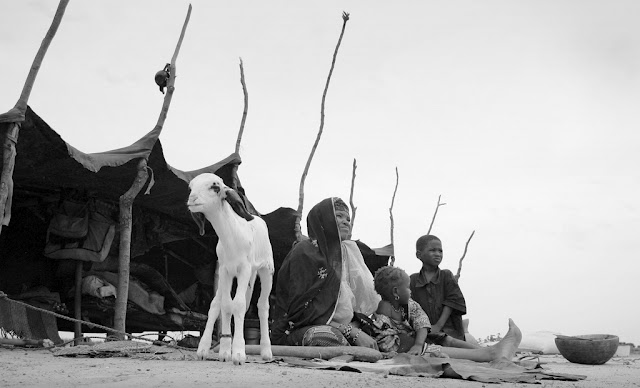
Photo Credit: “Toureg family in Niger,” courtesy of flickr user ILRI. -
Too Few or Too Many? Joel E. Cohen on How Education Can Address Both
›December 17, 2010 // By Wilson Center Staff“So which is it: Is it too many people or is it too few people?” asks Joel E. Cohen of the Rockefeller University in this interview with ECSP. “The truth is, both are real problems, and the fortunate thing is that we have enough information to do much better in addressing both of those problems than we are doing – we may not have silver bullets, but we’re not using the knowledge we have.”
Cohen has studied the population-resources equation, trying to determine how best to support global demographics in a sustainable, equitable way. He points to the cross-cutting power of education to both curb rapid population growth in the developing world and ease the cost of aging populations in the developed.
“On continuing rapid population growth, we know that more education is associated with reductions in fertility,” said Cohen. And when combined with voluntary family planning, it’s also cheap “compared to the costs of having children that are not well cared for – the opportunity costs,” he said.
On aging, “we know that people who are educated well in their youth – both at primary, secondary, and especially tertiary levels – have better health in old age,” said Cohen. “So the costs of an aging population are diminished when people are educated. They take better care of themselves and they have options – they can use their minds as their bodies mature.”
Education is a long-term solution, but shorter-term policy options, like France’s bump of the retirement age to 62 that prompted rioting this fall, will also be necessary. “Sixty-two is only a way station,” Cohen said. “The retirement age has to move up, because people are living longer, they’re more productive, they’re in better health, and they’re going to have to keep working to take care of themselves.” -
Demographic Security Comes to the Hill
›December 16, 2010 // By Hannah Marqusee“We are now in an unprecedented era of demographic divergence,” said Population Action International’s Elizabeth Leahy Madsen at a September briefing held by Congressman John Tierney’s Subcommittee on National Security and Foreign Affairs and Congressman Russ Carnahan’s Subcommittee on International Organizations, Human Rights and Oversight.
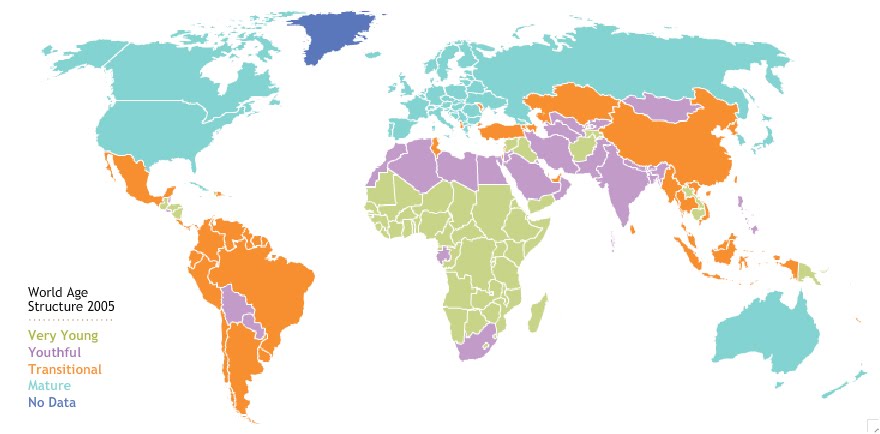
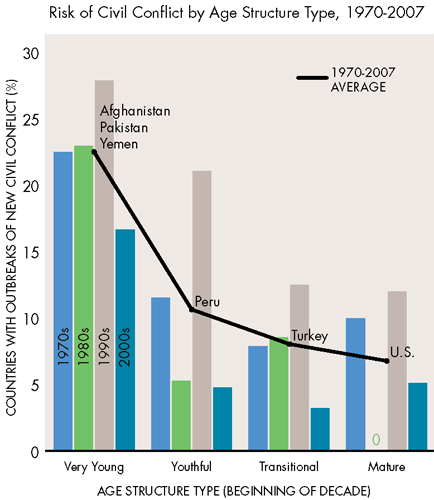
Eighty percent of the world’s conflicts occur in places where 60 percent or more of the population is under 30, and 90 percent of countries with young populations have weak governments, said Chairman Tierney in his opening remarks. He said that while such demographic trends “appear to be issues for the future…it is important that we start this dialogue today, so that we can make steps to address [them].” ECSP Director Geoff Dabelko and the Stimson Center’s Richard Cincotta joined Madsen on the panel titled, “The Effects of Demographic Change on Global Security,” at the Capitol Visitor Center.
Youth Bulges and National SecurityThe countries of greatest security threat to the United States are also those with the youngest age structures and rapidly increasing populations, said Madsen. By next year, the world’s population will have reached seven billion, with 95 percent of that growth occurring in the developing world.
Large youthful populations can be a source of national strength because they provide innovation and manpower, said Dabelko, but without significant investment they may also contribute to state instability. When there are often few opportunities to obtain a job or an education for young people, there are low “opportunity costs” to joining a rebel group, said Madsen.
State instability can be affected by youth bulges, shifting religious or ethnic compositions, or food and water insecurity, but age-structural transitions are the strongest indicator of state performance, said Cincotta. Despite conventional wisdom, there is actually little evidence to link state failure with premature adult mortality due to AIDS or a high male-to-female ratio, he added.
It is not only developing countries with high fertility rates that face demographic difficulties, Cincotta noted. Countries such as Japan and Germany will soon have reached a “post-mature” age structure in which their aging populations and comparatively small workforces will tax state institutions and threaten economic stability.
Population Policies: Using “Soft Tools” to Improve National Security
Recently, leaders in the U.S. government have been paying increased attention to the linkages between demography and security through the “three Ds:” diplomacy, development, and defense. In 2008, the National Intelligence Council’s Global Trends 2025 included demographic assessments to analyze security trends, and this year, the National Security Strategy featured demographic trends along with the environment and other non-traditional areas.
Dabelko said that while this growing recognition signals progress, the “hard tools” of the traditional security community must be bolstered with “soft tools” commonly used by the international aid community, such as female empowerment, education, health services and youth employment.
Madsen argued that empowering the 215 million women with an unmet need for family planning worldwide through increased funding for voluntary family planning programs is a cost-effective way to shape population trends and ultimately reduce security threats.
“Demography is not destiny,” said Madsen. “Family planning has been an unsung signature of U.S. foreign assistance for decades.”
Similarly, Cincotta said that policies should help states transition out of youth bulges, and help countries with aging populations reform social institutions to protect older people.
Dabelko added that while progress has been made in acknowledging the linked nature of population trends and national security, there is significant room for improvement. Pointing to the successes of integrated population, health, and environment (PHE) programs, which provide environmental conservation and family planning services simultaneously, he called for similar programs to address population dynamics and conflict prevention. Long-term solutions call for coordinated resources and integrated strategies, he said.
Read the speakers’ full remarks: Chairman John F. Tierney, Richard Cincotta, Geoff Dabelko, and Elizabeth Leahy Madson (slides).
Sources: Guttmacher Institute, Population Action International, National Intelligence Council.
Image Credits: “World Age Structure 2005” and “Risk of Civil Conflict by Age Structure Type, 1970-2007,” courtesy of Population Action International. -
Expanding Access to Maternal Health Commodities
›“This is not just about getting quantities of drugs out, this is about saving women’s lives with really simple products that work,” said Julia Bunting, team leader of AIDS and reproductive health at the UK Department for International Development and coalition chair of the Reproductive Health Supplies Coalition, at the ninth meeting of the Global Health Initiative’s 2009-2010 Advancing Policy Dialogue on Maternal Health series. Joined by panelists Melodie Holden, president of Venture Strategies Innovations (VSI), and Elizabeth Leahy Madsen, senior research associate at Population Action International (PAI), the panel discussed the challenges and strategies for expanding access to maternal health commodities.
Integrating Maternal Health and Family Planning Supply Chains“It is often said that the family planning and the maternal health communities have very different views of supplies… but actually [both communities] recognize that we need to explore the continuum,” said Bunting, addressing the need to integrate maternal health commodities into existing reproductive health supply chains. “I really think the stars are aligned right now for advancing this agenda,” added Bunting.
“Many of the commodities that we talk about in terms of reproductive and maternal health cost tiny amounts to deliver, but actually save lives and are some of the most cost-effective interventions we have both in public health and in broader development,” said Bunting.
No Product, No Program
“Supplies are a key element in programs to improve maternal health and they are also a tangible and visible hook to increase awareness and commitment,” said Madsen. “Policymakers whose eyes glaze over when they hear the term ‘health systems strengthening’ can grasp… much better when they learn that supply shelves in clinics are bare and that women are making great efforts to reach facilities, only to leave empty- handed,” said Madsen.
Presenting research conducted by PAI, Madsen discussed the availability of four key maternal health medicines and products in Bangladesh and Uganda including:
By focusing on supplies that target the three leading causes of maternal mortality, Madsen and her colleagues identified factors that inhibit access to these commodities and developed recommendations for strengthening maternal health supply chains.- Oxytocin: used to prevent post-partum hemorrhage
- Misoprostol: used to prevent post-partum hemorrhage
- Magnesium Sulfate: used to treat pre-eclampsia
- Vacuum Aspirators: used for treatment of early and incomplete abortion
Madsen identified several strategies to strengthen supply chains for maternal health commodities including forecasting and preparing for growing demand, advocating for government and donor support, encouraging scaling-up of community-based approaches, promoting family planning, and focusing on human resource training.
“In maternal health, if a supply to prevent or treat a life-threatening complication is in stock, there must also be a way for a woman to reach it in time… and in most cases a provider who knows how to administer it,” said Madsen.
“This research is intended to lay the groundwork for future advocacy and policy initiatives by providing an evidence base that is informed by local expertise,” said Madsen. “We hope that this information will inform program implementation, funding decisions, and awareness raising.”
Getting the Product to People: The Case of Misoprostol
“The story of Misoprostol is still being written. The goal is to invest in creating access to interventions that are low-cost and relatively simple to use,” said Holden. By sharing lessons learned, Holden described VSI’s experience registering and procuring Misoprostol and demonstrated how community mobilization is imperative to overcoming major challenges for large-scale implementation.“Making products available is not without challenges,” said Holden. To increase access to Misoprostol in rural communities, maternal health experts must work to “engage communities, educate and mobilize women, train providers at all levels of the health care system, and provide support to distributors to jump start sales,” said Holden. “By looking holistically across entire health systems, bringing in great interventions, addressing the components of supply and demand, and working with local partners, we can have lasting impact.”
While the price of Misoprostol has decreased significantly, Holden stressed the need to identify creative ways along the supply chain that reduce costs to the end user. Additionally, “establishing policies around this new intervention not only establishes its reach, but also makes its use institutionalized, which means it will be part of the system even if governments or individuals change,” said Holden.
“If there is a gap between what could be achieved with Misoprostol and what is being achieved, we need to go back to the model and figure out what pieces aren’t working,” concluded Holden. “The work is complex and takes time, but it’s worth it.”
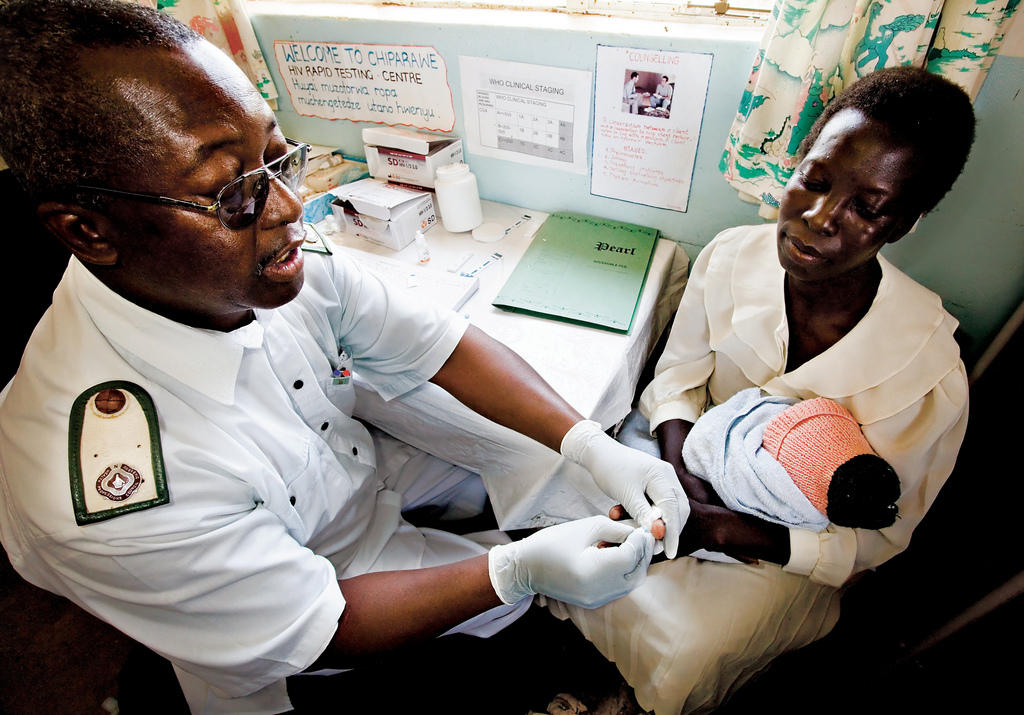
Photo Credit: “Rapid HIV testing,” courtesy of flickr user DFID – UK Department for International Development.