• woodrow wilson center
  • ecsp

New Security Beat

Subscribe:
  • rss
  • mail-to
  • Who We Are
  • Topics
    • Population
    • Environment
    • Security
    • Health
    • Development
  • Columns
    • China Environment Forum
    • Choke Point
    • Dot-Mom
    • Friday Podcasts
    • Navigating the Poles
    • Reading Radar
  • Multimedia
    • Water Stories (Podcast Series)
    • Backdraft (Podcast Series)
    • Tracking the Energy Titans (Interactive)
  • Films
    • Water, Conflict, and Peacebuilding (Animated Short)
    • Paving the Way (Ethiopia)
    • Broken Landscape (India)
    • Scaling the Mountain (Nepal)
    • Healthy People, Healthy Environment (Tanzania)
  • Publications
  • Events
  • Contact Us

NewSecurityBeat

The blog of the Wilson Center's Environmental Change and Security Program
Showing posts from category family planning.
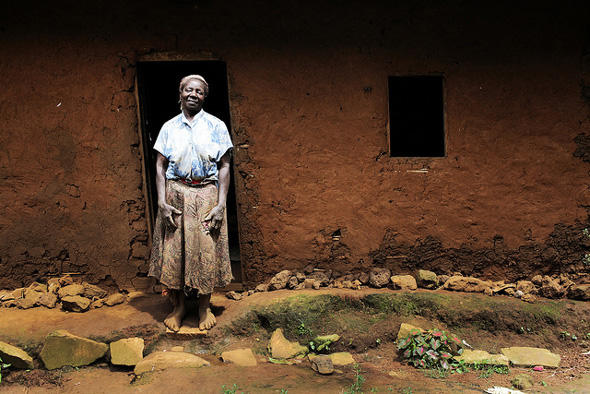
  • Zo Zatovonirina, PHE Champion

    Improving Human Health and Conservation in Madagascar’s Forest Communities

    ›
    Beat on the Ground  //  August 17, 2011  //  By Wilson Center Staff
    This PHE Champion profile was produced by the BALANCED Project.

    Madagascar is one of the world’s most unique ecosystems, with a total of eight plant families, five bird families, and five primate families that live nowhere else on Earth. Madagascar’s tropical forests and marine environments are home to endemic species of flora and fauna, although tragically 15 species are now extinct. At the same time, Madagascar is rich in freshwater resources, yet more than 60 percent of the island’s 19.7 million people do not have access to safe drinking water.

    Since 2003, Zo Zatovonirina has worked for Conservation International (CI) in Madagascar, and he has seen up-close the challenges of reaching remote forest communities, often requiring one- or two-day hikes over treacherous roads. As coordinator for USAID’s Healthy Families, Healthy Forests Program, Zo worked with two Malagasy nongovernmental organizations (NGOs), MATEZA, and the Association for Health Action and Security, to implement integrated population, health, and environment (PHE) approaches in response to community needs in the Ankeniheny Zahamena forest corridor in eastern Madagascar.

    From 2003-2008, CI and partners reached more than 25,000 village residents with PHE messages; increased contraceptive prevalence in target zones from 17 percent in 2005 to 30 percent in 2008; constructed 3,000 latrines; and improved environmental health in all priority sites.

    Today, biodiversity in Madagascar is under increased pressure, in light of political instability since 2009 and continued population pressures. Recognizing CI and partner experience and investments in conservation efforts to improve human well-being, USAID Madagascar and World Learning recently awarded a new 15-month grant to CI Madagascar and two Malagasy NGO partners – Voahary Salama and Ny Tanintsika – to implement an integrated PHE project in the southeastern Ambositra Vondrozo forest corridor. All three organizations have implemented PHE projects in Madagascar, and they have established trusting relationships with the people living in these fragile ecosystems.

    Madagascar has a rich history of implementing successful PHE projects, and this project represents a new PHE pilot phase in the midst of political uncertainty. According to Zo, PHE approaches remain constant – simultaneously addressing several complex and linked problems such as poverty, child survival, and unsustainable dependency on natural resources. In Zo’s experience, CI’s PHE approach touches on all these aspects and delivers a pragmatic, integrated package of interventions designed to increase community capacity to better manage their health and environment. Utilizing PHE approaches, CI, Voahary Salama, and Ny Tanintsika will strive to reach communities for the first time ever with family planning, water, sanitation, and hygiene services while helping them conserve their biological heritage.

    This PHE Champion profile was produced by the BALANCED Project. A PDF version can be downloaded from the PHE Toolkit. PHE Champion profiles highlight people working on the ground to improve health and conservation in areas where biodiversity is critically endangered.

    Photo Credit: The forests of Madagascar, courtesy of Conservation International/Russ Mittermeier, and Zo Zatovonirina, courtesy of Conservation International.
    MORE
  • Laurie Mazur, RH Reality Check

    Why Women’s Rights Are Key to Thriving in the Age of the “Black Swan”

    ›
    August 16, 2011  //  By Wilson Center Staff
    The original version of this article, by Laurie Mazur, appeared on the RH Reality Check blog.

    Welcome to the age of the “black swan.”

    The tornado that nearly leveled the city of Joplin, Missouri in May was a black swan; so was the 9.0 magnitude earthquake and tsunami that rocked Japan in March; and the “hundred-year floods” that now take place every couple of years in the American Midwest.

    A black swan is a low-probability, high-impact event that tears at the very fabric of civilization. And they are becoming more common: Weather-related disasters spiked in 2010, killing nearly 300,000 people and costing $130 billion.

    Black swan events are proliferating for many reasons – notably climate change and the growing scale and interconnectedness of the human enterprise. World population doubled in the last half-century to just under seven billion people, so there are simply more people living in harm’s way, on geologic faults and along vulnerable coastlines. As the human enterprise has grown, we have reshaped natural systems to meet human needs, weakening resilience of ecosystems, and by extension our own. In effect, we have re-engineered the planet and ushered in a new era of radical instability.

    At the same time, the world’s people are increasingly linked by systems of staggering complexity and size: think of electrical grids and financial markets. What were once local disasters now reverberate across the globe.

    So what does this have to do with women’s rights, you may ask? A lot, as it turns out. The great challenge of the 21st century is to build societies that can cope with the flock of black swans that are headed our way. Advancing and securing women’s rights, especially reproductive rights, is central to meeting that challenge.

    Continue reading on RH Reality Check.

    Laurie Mazur is the editor of A Pivotal Moment: Population, Justice & the Environmental Challenge, which received a Global Media Award from the Population Institute in 2010.

    Sources: Munich Re.

    Photo Credut: “Cygnus atratus (Black Swan),” courtesy flickr user Arthur Chapman.
    MORE
  • Robert Engelman, Yale Environment 360

    The World at 7 Billion: Can We Stop Growing Now?

    ›
    August 11, 2011  //  By Wilson Center Staff
    The original version of this article, by Robert Engelman, appeared on Yale Environment 360.

    Demographers aren’t known for their sense of humor, but the ones who work for the United Nations recently announced that the world’s human population will hit seven billion on Halloween this year. Since censuses and other surveys can scarcely justify such a precise calculation, it’s tempting to imagine that the UN Population Division, the data shop that pinpointed the Day of 7 Billion, is hinting that we should all be afraid, be very afraid.

    We have reason to be. The 21st century is not yet a dozen years old, and there are already one billion more people than in October 1999 – with the outlook for future energy and food supplies looking bleaker than it has for decades. It took humanity until the early 19th century to gain its first billion people; then another 1.5 billion followed over the next century and a half. In just the last 60 years the world’s population has gained yet another 4.5 billion. Never before have so many animals of one species anything like our size inhabited the planet.

    And this species interacts with its surroundings far more intensely than any other ever has. Planet Earth has become Planet Humanity, as we co-opt its carbon, water, and nitrogen cycles so completely that no other force can compare. For the first time in life’s 3-billion-plus-year history, one form of life – ours – condemns to extinction significant proportions of the plants and animals that are our only known companions in the universe.

    Did someone just remark that these impacts don’t stem from our population, but from our consumption? Probably, as this assertion emerges often from journals, books, and the blogosphere. It’s as though a geometry text were to propound the axiom that it is not length that determines the area of a rectangle, but width. Would we worry about our individual consumption of energy and natural resources if humanity still had the stable population of roughly 300 million people – less than today’s U.S. number – that the species maintained throughout the first millennium of the current era?

    Continue reading on Yale Environment 360.

    Robert Engelman is executive director of the Worldwatch Institute, an environmental research organization based in Washington, D.C.

    Photo Credit: “Daybreak,” courtesy of flickr user Undertow851. Dawn breaks over California in the United States April 17, 2011 in this photo by NASA astronaut Ron Garan from the International Space Station. The lights of Los Angeles appear in the foreground while San Francisco appears in the back near the horizon.
    MORE
  • PRB’s Population Data Sheet 2011: The Demographic Divide

    ›
    August 9, 2011  //  By Kellie Furr
    “Today, most population growth is concentrated in the world’s poorest countries – and within the poorest regions of those countries,” write the authors of the 2011 Population Data Sheet, an analysis tool published annually by the Population Reference Bureau (PRB). The population projections between poor and rich countries are “stark and very sad,” said Carl Haub Haub, senior demographer at PRB, at the July 28 web-based launch of the Data Sheet: “We call it the demographic divide. It shows the vast difference that has developed between the rich and poor countries of the world.”

    The Population Data Sheet offers insight on global population trends using detailed statistical information along 18 demographic, population, health, and environment indicators for more than 200 countries and regions. The data sheet is based on the latest projections of the UN Population Division. Carl Haub and James Gribble of PRB discussed the long-term implications of the data sheet’s projections during web-based launch that included open questions.

    Conflicting Trends

    “Even though the world population growth rate has slowed from 2.1 percent per year in the late 1960s to 1.2 percent today, the size of the world’s population has continued to increase – from 5 billion in 1987, to 6 billion in 1999, and to 7 billion in 2011,” write the authors in PRB’s July Population Bulletin, “The World at 7 Billion.” To put those population totals into perspective, it took from the inception of human existence until the year 1800 – a total of approximately 50,000 years – to reach the first billion.

    Fortunately, the recent (relative) decline in global growth rate has already curbed what could have been a considerable surge in the world’s population: “If the late 1960s population growth rate of 2.1 percent – the highest in history – had held steady, world population would have grown by 117 million annually, and today’s population would have been 8.6 billion,” said PRB President Wendy Baldwin in a press release. However, the world’s population still grows significantly at 77 million people annually, according to the UN, and we’re slated to reach 8 billion in just another 12 years. How can this dichotomy of large population totals in the face of lowered fertility be explained?

    The Phases of Demographic Transition

    “To understand global, we actually have to think local,” said PRB in their film short, “7 Billion and Counting,” released alongside the data sheet. Individual countries go through demographic transitions at different times, and the disparity in where countries are along in their progression varies greatly.

    A demographic transition essentially hinges on two trends: the decline of birth and death rates over time. These trends do not necessarily change simultaneously however, resulting in most cases, first, a natural increase (when mortality rates decline but birth rates remain high) followed by a natural decrease in population (when birth rates also decline). Though the timing and magnitude of these trends differ from place to place, there are broad similarities across countries which have been conceptualized as phases by demographers, such as Carl Haub and James Gribble.

    Phase one is characterized by high birth rates and fluctuating death rates, found in countries such as Niger, Afghanistan, and Uganda; typically only death rates decline in this phase. Phase two, encompassing mostly lower-middle income countries such as Guatemala, Ghana, and Iraq, is marked by a continued decline in death rates but only slightly lower birth rates. The potential for large population growth exists in these countries, as they still possess a large youth population.

    Countries in phase three have yet lower birth and death rates and overall total fertility rates close to the widely-accepted replacement level of 2.1 children per woman; these countries are home to approximately 38 percent of the world’s population and include India, Malaysia, and South Africa. Phase three countries often still possess a disproportionately large working age population as an echo of their previous growth, which allows them to take advantage of the “demographic dividend.”

    Finally, phase four countries have the lowest birth and death rates, with some even seeing negative growth as total fertility rate falls at or below the natural replacement rate; countries in this phase include most of Europe and other developed countries, such as Japan and the United States (though relatively high levels of immigration keeps overall growth higher).

    The data sheet shows that most developing countries still remain in the earlier phases of demographic transition, especially those in sub-Saharan Africa and the Middle East. Relatively recent public health improvements in these countries have decreased death rates at a rapid rate, and though total fertility rates (TFR) have declined as well, they have not kept the same pace: “This lag between the drop in death rates and the drop in birth rates produced unprecedented levels of population growth,” wrote Haub and Gribble in the Population Bulletin.

    A Tale of Two Worlds

    The data sheet authors observe that poverty is strongly associated with countries which are stalled in their progression through the demographic transition:
    Poverty has emerged as a serious global issue, particularly because the most rapid population growth is occurring in the world’s poorest countries and, within many countries, in the poorest states and provinces…Relatively high population growth rates make it more difficult to lift large numbers of people out of poverty.
    In her primer video on demographic security for ECSP, demographer Elizabeth Leahy Madsen said, “we are in an era of unprecedented demographic divergence,” and characterized the phenomenon of population trends moving simultaneously in different directions as “rapid” and “unprecedented.”

    Haub used Italy and the Democratic Republic of Congo (DRC) as an example to illustrate the divide. Although both countries currently sit at around 60 million people each, Italy is only projected to grow by 2 million through 2050, while the DRC is projected to reach a staggering 149 million people. Italy has a gross national income per capita of about $35,000, whereas DRC has only $180 per capita, according to the World Bank.

    This observation has been corroborated by other demographers: “In 1950, 68 percent of the world’s population resided in developing regions. Today that’s up to 82 percent. But in the year 2050, it’s projected to be 86 percent,” said demographer David Bloom on NPR’s global health blog, Shots.

    Demography ≠ Destiny

    A poor country is not necessarily tethered to its projections, which are based on assumptions, said the authors, “but when, how, and whether [the demographic transition] actually happens cannot be known.”

    Low development indicators do not always dictate that a country will lag in a demographic transition. “Government commitment to a policy to lower [birth rates] has succeeded quite well in countries with a low level of development,” said Haub in a 2008 PRB discussion on the demographic divide. Bangladesh and Iran are two examples of countries that significantly affected their demographic trajectories in the 20th century with targeted programs.

    Proactivity certainly plays a role, as the PRB “7 Billion and Counting” video puts it (see above): “Understanding how and why the world’s population is growing will help nations better plan for the future…and for future generations.”

    Sources: NPR, Population Reference Bureau, UN-DESA, UNICEF, World Bank.

    Video and Image Credit: “7 Billion and Counting,” courtesy of PRB’s Youtube channel, and stages of demographic transition courtesy of PRB’s 2011 Population Data Sheet.
    MORE
  • Sajeda Amin on Population Growth, Urbanization, and Gender Rights in Bangladesh

    ›
    Friday Podcasts  //  August 4, 2011  //  By Russell Sticklor

    “One of the reasons why population grows very rapidly in Bangladesh is women get married very early and have children very early,” the Population Council’s Sajeda Amin told ECSP in a recent interview. “So even though they are only having two children, they are having them at an average age of around 20. As demographers would say, women ‘replace’ themselves very rapidly.”

    Largely through the promotion of contraceptive use, family planning programs implemented over the past 35 years by the Bangladeshi government and a variety of NGOs have helped lower the country’s total fertility rate to 2.7 from 6.5 in the mid-1970s. To build on this progress, the Population Council has joined a consortium of other organizations – including the Bangladesh Legal Aid and Services Trust, Marie Stopes International, and We Can End All Violence Against Women – to launch the Growing Up Safe and Healthy (SAFE) project in Amin’s native Dhaka and other Bangladeshi cities.

    Currently nearing the completion of its first year, the four-year initiative has several aims, among them increasing access to reproductive healthcare services for adolescent girls and young women and bolstering social services to protect those populations from (and offer treatment for) gender-based violence. The project also looks to strengthen laws designed to reduce the prevalence of child marriage – a long-standing Bangladeshi institution that keeps population growth rates high while denying many young women the opportunity to pursue economic and educational advancement.

    A Focus on Gender and Climate

    Amin says the SAFE project boasts several qualities that collectively set the initiative apart from similar-minded programs in Bangladesh dealing with gender and poverty. These include a strong research component incorporating quantitative and qualitative analysis; the holistic nature of the program, which incorporates educational outreach, livelihood development, and legal empowerment; a commitment to working with both male and female populations; and an emphasis on interventions targeting young people, with the hope that such efforts will allow adolescents to make better-informed decisions about future relationships and reproductive health, thus reducing the likelihood of gender-based violence.

    Finally, while many existing gender-based programs focus exclusively on rural communities, Amin points out that the SAFE project also stands apart because of its focus on the country’s rapidly expanding urban areas. To date, the initiative is focusing many of its early interventions in a Dhaka slum that has seen an influx of rural migrants in recent years due to climate-change impacts in the country’s low-lying coastal areas.

    “A lot of the big problems in Bangladesh now are climate-driven in the sense of creating mass movements out of areas that are particularly vulnerable or have been hit by a major storm,” Amin said. “Usually these are people who, once they lose their homes and their livelihoods, will have no choice but to move to urban areas, and that’s a process that is kind of a big outstanding issue in Bangladesh now.”

    By building programming around girls and young women in such communities, the SAFE project is looking to spark change from the bottom up, prioritizing the unmet health and social needs of some of Bangladesh’s most vulnerable populations.

    The “Pop Audio” series is also available as podcasts on iTunes.

    Sources: Global Post, Ministry of Health and Family Welfare (Bangladesh), Shaikh and Becker (1985).
    MORE
  • What’s the Impact of Family Planning in the Developing World? ‘Science’ Magazine’s Population Issue

    ›
    Reading Radar  //  August 4, 2011  //  By Roza Essaw
    “Does Family Planning Bring Down Fertility” in Science’s special July issue on population, author Jocelyn Kaiser engages various experts to explore whether family planning programs actually help to reduce high fertility. Social demographer Amy Tsui of Johns Hopkins University argues that surveys indicating “unmet need” in family planning “don’t tell us anything about causation.” On the other hand, Martha Campbell, a lecturer at the University of California, stressed that in countries such as Niger where the population could soar from 16 million today to 58 million by 2050, “You can’t expand [schools] fast enough.” Thus, focusing on family planning is indispensable and “the benefits [will] far outweigh the costs.”

    In “Population Policy in Transition in the Developing World,” also published in the population issue of Science, authors John Bongaarts and Steven Sinding explain why there has been renewed interest on family planning in developing countries. Since rapid population growth in the poorest countries is hampering development, “economists, once notably skeptical, increasingly acknowledge that fertility decline has beneficial economic effects for nations and families,” they write. Moving forward, Bongaarts and Sinding suggest family planning needs to be at the forefront of population and development discussions. Not only is family planning “cost effective,” they write, but it is responsible for “relieving population pressures, stimulating economic development, improving health, and enhancing human freedom.”

    See the full line-up of articles from Science’s population edition here.
    MORE
  • Population, Health, and Environment Approaches in Tanzania

    ›
    From the Wilson Center  //  August 3, 2011  //  By Ramona Godbole
    “Quality of life, human health, food security, and biodiversity are all connected,” said Elin Torell, research associate for the BALANCED Project and the University of Rhode Island Coastal Resource Center. Torell was joined at the Wilson Center on July 19 by Patrick Kajubili from the Tanzania Coastal Management Partnership, and Alice Macharia, director of the East Africa Program at the Jane Goodall Institute to discuss the importance of integrated population, health, and environment (PHE) initiatives that work to simultaneously improve health and livelihoods, manage natural resources, and conserve ecosystems in Tanzania.

    Building Resilient Coastal Communities

    The Coastal Resources Center’s work in Tanzania’s Saadani National Park provides an example of an integrated PHE approach that sustains the flows of environmental goods and services, maintains biological diversity, and empowers and improves the wellbeing of local residents, said Torell. Since 1996, the CRC has focused on protecting sea turtles, promoting energy-saving stoves, and tracking elephants, while at the same time improving livelihoods through savings and credit associations, eco-tourism, and beekeeping.

    “Adding family planning makes a whole lot of sense,” said Torell. There is a high unmet need for family planning in Tanzania and the population is growing rapidly with an average number of 5.6 children per woman. Family planning not only helps families limit and space births but indirectly works to improve food security and human health, reduce demand for scarce natural resources, and empower women, she said.

    “Integration is key,” concluded Torell: A coordinated and synergistic approach that meets the varied needs of local communities will be more effective and sustainable than if interventions were delivered independently.

    Effective Integration in the Field

    “Conceptual linking is not enough,” said Kajubili. “Integration also needs to happen at the organizational and field levels.”

    On the ground, the Tanzania Coastal Management Partnership integrates family planning education and services into conservation work, said Kajubili. Peer educators deliver information about family planning, health, and coastal resources management; and community-based distributors deliver family planning services and supplies.

    “Now people easily access reproductive health services,” said Kajubili. To date, the program has increased referrals to health centers, promoted contraceptive use, and reduced the distance that women need to travel to receive family planning services.

    “Integration makes sense and cents,” said Kajubili. By combining resources, health and natural resource management organizations can potentially reach a broader population while sharing costs.

    But “reinforcing the linkages between PHE of course takes time and education,” said Kajubili, highlighting a major challenge to implementing integrated approaches. “Advocacy is needed to overcome cultural and institutional barriers.”

    “What About Our Needs?”

    “Socio-economic development; family planning and AIDS education; sustainable forestry and agriculture practices; and water and sanitation all underpin and support sustainable natural resource management,” said Macharia.

    The Lake Tanganyika Catchment Reforestation and Education Project (TACARE) led by the Jane Goodall Institute was initiated in 1994 to arrest the rapid degradation of land through tree planting and forest degradation, said Macharia. “But at some point, the communities raised the question: What about our own needs?” she said.

    Community members prioritized the need for health services, education, clean water, and financial capital. But environmental degradation was not seen as a major issue, suggesting a need for a more integrated approach to TACARE’s conservation efforts.

    “Integrated programs including population, health, and environment activities are cost-efficient and add value to conservation goals,” said Macharia. By responding to the needs of the community, the integrated approach adopted by TACARE has gained more credibility among local people, while a strong focus on building local capacity has helped to ensure sustainability of the program.

    While there are many challenges to implementing and maintaining integrated PHE programs, “partnerships at the local, district, and national level are key to making this a success,” concluded Macharia.

    Sources: Population Reference Bureau.

    Photo Credit: “Environment near Vumari Village,” courtesy of flickr user treesftf.
    MORE
  • Maternal Health Challenges in Kenya: What New Research Evidence Shows

    ›
    Dot-Mom  //  From the Wilson Center  //  August 2, 2011  //  By Roza Essaw
    “Although there have been improvements in the recent past, the status of maternal health care has not met the required international standards,” said Professor at the University of Nairobi Geoffrey Mumia Osaaji during a live video-conference from Nairobi on July 12.

    As part of the 2011 Maternal Health Dialogue Series the Woodrow Wilson Center’s Global Health Initiative is partnering with the African Population and Health Research Center to convene a series of technical meetings on improving maternal health in Kenya. The 20 Kenyan experts attending the workshop in Nairobi also shared their strategies and action points with a live audience in Washington, DC during a video conference discussion. [Video Below]

    Osaaji was joined by panelists Lawrence Ikamari, director of Population Studies and Research Institute (PSRI), and Catherine Kyobutungi, director of Health Systems and Challenges at the African Population and Research Center to discuss new maternal health research in Kenya. Panelists also shared recommendations for moving the maternal health agenda forward that came out of discussions during the two-day, in-country workshop with Kenyan policymakers, community health workers, program managers, media, and donors. Following the panelists’ presentations, Dr. Nahed Mattta, senior maternal and newborn health advisor at U.S. Agency for International Development (USAID) and John Townsend, vice-president of reproductive health program for Population Council provided reflecting remarks from the Woodrow Wilson Center during the live webcast.

    Maternal Health Challenges in Rural Kenya


    “Maternal mortality in rural Kenya is still very high,” said Ikamari. “Rural women in Kenya need to have increased access to maternal health services.” Ikamari discussed a number of factors that contribute to high rates of maternal mortality in rural Kenya, including lack of access to quality care and skilled birth attendants, the high burden of HIV/AIDS, and an unmet need for family planning.

    Though nearly 90 percent of women in rural Kenya seek antenatal care, according to the UNFPA, many wait until the second or third trimester, limiting the benefits. Additionally, a majority of women in rural Kenya give birth outside of health facilities, oftentimes without the care of a skilled birth attendant, said Ikamari. In a recent survey, many rural women indicated that transportation to often distant health facilities prevented them from seeking adequate maternal health care, he added.

    Additionally, “the burden of HIV is really felt in rural Kenya,” said Ikamari. Survey results show that HIV/AIDS prevalence is about seven percent in rural Kenya and because the majority of the Kenyan population lives in rural areas, this adds yet another layer of complications.

    “Family planning saves lives,” said Ikamari, stressing the importance of contraception on maternal health outcomes. Only 35 to 40 percent of currently married Kenyan women use family planning, according to the last demographic and health surveys, and unmet need remains particularly high in rural areas. Promoting institutional delivery systems, improving antenatal and postnatal care, and finding other ways to increase access to family planning can help to improve maternal health outcomes and reduce preventable deaths in rural Kenya, concluded Ikamari.

    Comparison of Urban and Rural Areas


    “The interventions to address maternal health are well known: family planning, increased access to safe abortion services, skilled health workers, health facilities that are accessible, as well as referral systems that work,” said Kyobutungi. “Yet urban averages [of maternal mortality] are becoming either close or worse than rural averages.”

    “As much as we appreciate the rural-urban divide that exists for most health indicators, the urban-urban divide (the fact that there are huge intra-urban differences) needs attention”

    “Teenage pregnancy is a failure of family planning,” said Kyobutungi. Studies indicate that there are three times more teenagers that are pregnant among the urban poor, compared to the urban rich.

    As in rural Kenya, access to quality health facilities and care is also limited in cities. “Health facilities are few and far between and the referral systems are weak,” said Kyobutungi, and “when you remove Nairobi from the numerator, the number of skilled physicians per population is in the decimals.”

    Moving forward, there is a need to promote effective integration and improvement of health worker training and monitoring but also development of performance-based incentives to ensure successful programs are properly funded. “It’s not all gloom and doom in urban areas,” concluded Kyobutungi.

    Innovative Ideas for Better Results

    “By year 2025 there will be 25 percent more people [in Kenya],” said Townsend. “What that means is, when we are planning…we have to think about the scale of solutions that we are proposing in 2025 and 2050.” Therefore, it is essential to acquire new models of data and evidence to better predict future population growth and maternal needs, he suggested.

    In addition to expanding services to meet the needs of a growing population, the panelists in Washington emphasized the need to support integration at all levels. Trends are moving in the right direction: Within the Obama administration’s Global Health Initiative, “there is a strong push and recommendation for integration among the health sectors,” said Matta.

    But integration is not a magic bullet to improve maternal health, warned the panelists. “Integration is a terrific issue, but when the health sectors are weak, putting more burden on a local community health worker does not usually make sense; we have to think about smart integration,” said Townsend.

    Focusing on Kenya’s health sector from all aspects, both at the private and public level, and improving family planning, institutional delivery care, as well as antennal care will help Kenya overcome its maternal health barriers. Additionally, thinking of ways to utilize new models of data and integrating the various sectors will yield substantial benefits, concluded Matta and Townsend.

    Following the technical meeting, a public dialogue was held on July 13 in Nairobi to share the recommendations and knowledge gaps identified with members of Kenya’s Parliament, including Hon. Sofia Abdi, parliamentary health committee member; Hon. Ekwee Ethuro, chair of the parliamentary network for population and development; and Hon. Jackson Kiptanui. They joined a group of more than 50 maternal health experts, program managers, members of the media, and donors – such as the UK Department for International Development (DFID) – to identify real solutions and action points for improving maternal health in Kenya.

    The formal report from the in-country technical meeting will be available in the near future.

    See also the Maternal Health Task Force’s coverage of the event, here and here.

    Sources: Kenya National Bureau of Statistics, UNFPA.

    Photo Credit: Jonathan Odhong, African Population and Health Research Center.
    MORE
Newer Posts   Older Posts
View full site

Join the Conversation

  • RSS
  • subscribe
  • facebook
  • G+
  • twitter
  • iTunes
  • podomatic
  • youtube
Tweets by NewSecurityBeat

Trending Stories

  • unfccclogo1
  • Pop at COP: Population and Family Planning at the UN Climate Negotiations

Featured Media

Backdraft Podcast

play Backdraft
Podcasts

More »

What You're Saying

  • Volunteers,At,The,Lagos,Food,Bank,Initiative,Outreach,To,Ikotun, Pan-African Response to COVID-19: New Forms of Environmental Peacebuilding Emerge
    Rashida Salifu: Great piece 👍🏾 Africa as a continent has suffered this unfortunate pandemic.But it has also...
  • A desert road near Kuqa An Unholy Trinity: Xinjiang’s Unhealthy Relationship With Coal, Water, and the Quest for Development
    Ismail: It is more historically accurate to refer to Xinjiang as East Turkistan.
  • shutterstock_1779654803 Leverage COVID-19 Data Collection Networks for Environmental Peacebuilding
    Carsten Pran: Thanks for reading! It will be interesting to see how society adapts to droves of new information in...

What We’re Reading

  • Rising rates of food instability in Latin America threaten women and Venezuelan migrants
  • Treetop sensors help Indonesia eavesdrop on forests to cut logging
  • 'Seat at the table': Women's land rights seen as key to climate fight
  • A Surprise in Africa: Air Pollution Falls as Economies Rise
  • Himalayan glacier disaster highlights climate change risks
More »
  • woodrow
  • ecsp
  • RSS Feed
  • YouTube
  • Twitter
  • Facebook
  • Home
  • Who We Are
  • Publications
  • Events
  • Wilson Center
  • Contact Us
  • Print Friendly Page

© Copyright 2007-2021. Environmental Change and Security Program.

Woodrow Wilson International Center for Scholars. All rights reserved.

Developed by Vico Rock Media

Environmental Change and Security Program

Woodrow Wilson International Center for Scholars

Ronald Reagan Building and International Trade Center

  • One Woodrow Wilson Plaza
  • 1300 Pennsylvania Ave., NW
  • Washington, DC 20004-3027

T 202-691-4000