-
Environmental Impacts of Household Size, Bringing Family Planning Outside the Health Sector
› What are the environmental implications of changing household sizes? A recent article by Mason Bradbury, M. Nils Peterson, and Jianguo Liu, published in Population and Environment, analyzes data from 213 countries over 400 years and finds the average number of occupants per home tends to decline as population grows. This dynamic, they write, indicates that accommodating housing could prove to be one of “the greatest environmental challenges of the twenty-first century.” As countries develop and urbanize, “according to convergence theory, household size decreases (often from greater than five to less than three).” Other cultural shifts, like increasing divorce rates, urban sprawl driven by rising affluence, decreasing numbers of multigenerational households, and larger houses (in the United States, homes more than doubled in size between 1950 and 2002, according to the article) compound the issue. As population growth continues in parts of the world, these trends pose critical questions for conservation and environmental sustainability, since “households are the end consumers of most natural resources and ecosystem services.”
 -
From Victoria to Chilwa: Integrated Development in Two African Lake Basins
›
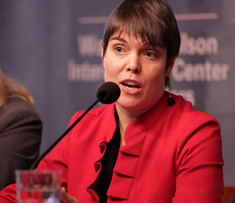
In Lake Victoria and Lake Chilwa basins, interconnected development challenges defy sectoral boundaries, said experts at the Wilson Center on February 10. According to Deepa Pullanikkatil of Leadership for Environment and Development and Doreen Othero of the Lake Victoria Basin Commission, growing populations, shrinking resource bases, and persistent human health concerns demonstrate the need for integrated development approaches that combine population, health, and environmental (PHE) interventions. “We need different sectors working together to achieve the greater goal,” said Pullanikkatil. [Video Below]
-
Kaja Jurczynska, All Access
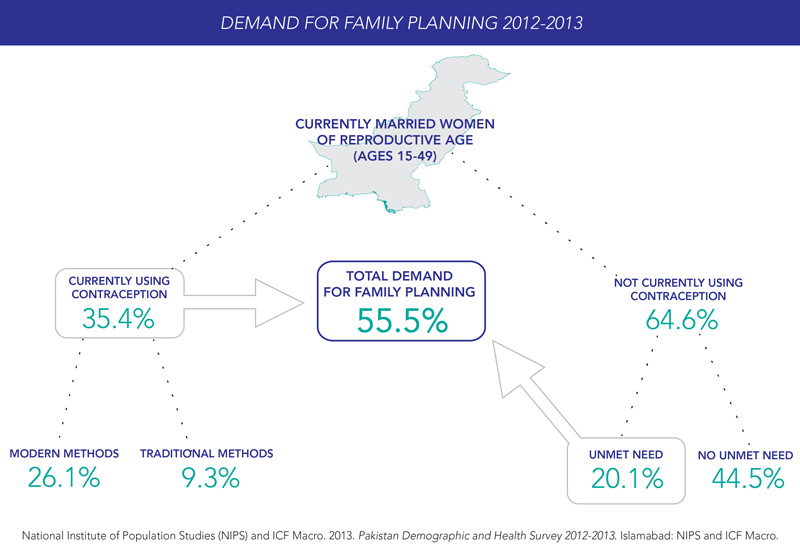
Pakistan Needs to Empower Women to Boost Its Economy
›February 26, 2014 // By Wilson Center StaffThe original version of this article, by Kaja Jurczynska, appeared on Population Action International’s All Access blog.
Pakistan is at a crossroads, and not for the reasons you might think.
-
After Chance Meeting, New Population, Health, and Environment Program Is Born in Madagascar
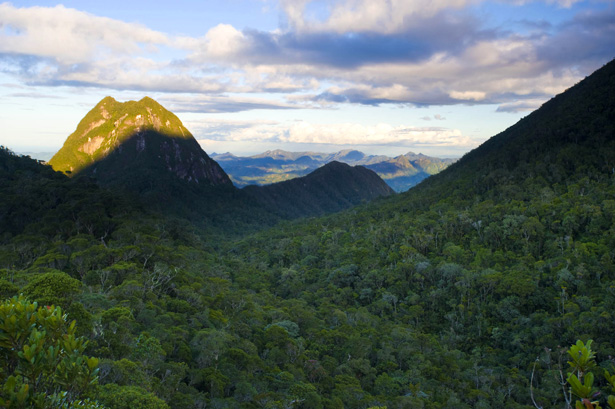
›Against the stunning backdrop of Marojejy National Park, I recently crossed paths with a conservationist from a very different background, working on the opposite side of Madagascar. But, it turns out, the communities we work with face many of the same challenges, and our meeting spawned a new population, health, and environment (PHE) program.
-
Basket Case No More? Bangladesh’s Successes Portend Resilience in Face of Change
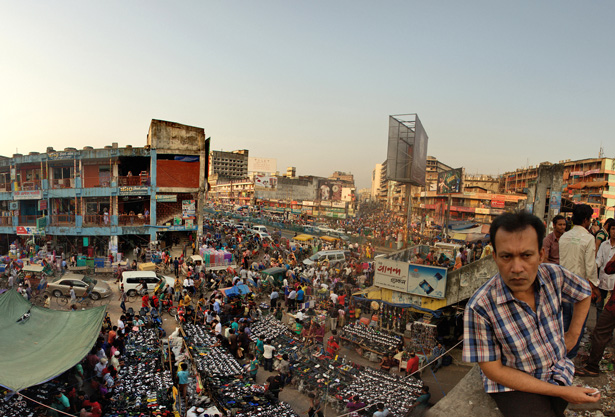
›This past December, Bangladesh turned 42, bringing the country Henry Kissinger once predicted would become a “basket case” into comfortable middle age (though perhaps this analogy breaks down for countries like Switzerland, age 722).
-
Gates Letter: Laissez Faire Approach to Population and Development Unacceptable
›Family planning, which saw a relative decline in financial support from the international development community over the last two decades, is now back in vogue, thanks in large part to the Bill and Melinda Gates Foundation. After spearheading the London Summit on Family Planning in 2012 alongside many governments, the foundation’s recently released 2014 Annual Letter sets out to dispel three “myths” about development, one of which is “saving lives leads to overpopulation.”
-
Tamil Kendall: Fighting Discrimination for the Rights of HIV-Positive Women in Latin America
›
HIV-positive persons in all segments of society face intense marginalization, but the effect is immensely compounded for women and expecting mothers. In Mexico, El Salvador, Honduras, and Nicaragua, where at least 57,000 women are living with HIV, the stigmatization is so great that many are denied basic reproductive rights, says Harvard University’s Tamil Kendall in this week’s podcast, from the Maternal Health Initiative.
-
A. Tianna Scozzaro, Population Action International
Population Dynamics Are Crucial to Sustainable Development – So Why Isn’t Anyone Talking About Them?
›January 29, 2014 // By Wilson Center StaffThe original version of this article, by A. Tianna Scozzaro, appeared on Population Action International’s All Access blog.
For the past 11 months, a group of United Nations member states has been holding meetings seeking input on future goals for sustainable development once the Millennium Development Goals (MDGs) expire in 2015. Led by co-chair ambassadors from Hungary and Kenya, this Open Working Group of 69 countries has delved into topics ranging from governance to health and everything in between.
Showing posts from category family planning.