-
Forging A New Path Toward Universal Sexual and Reproductive Health and Rights
›
“The Guttmacher-Lancet Commission could not come at a better time,” said Patricia Da Silva, Associate Director of the International Planned Parenthood Federation United Nations Liaison Office. “It is indeed the call to action that is required; showing us that comprehensive sexual and reproductive rights must be ensured for all.” She spoke at a recent Wilson Center event on the work of the Guttmacher-Lancet Commission on Sexual and Reproductive Health and Rights (SRHR). The Commission, an international collaboration of 16 SRHR experts from Africa, Asia, Europe, the Middle East, and North and South America, recently published a report, Accelerate Progress—Sexual and Reproductive Health and Rights for All, which makes concrete recommendations for countries to address SRHR gaps and inequalities.
-
Patricia Da Silva: ‘The Time is Now’ to Accelerate Progress for Sexual and Reproductive Health and Rights
› “Almost everyone of reproductive age—about 4.3 billion people—will not have access to at least one essential or reproductive health intervention over the course of their lives,” said Patricia Da Silva, Associate Director, International Planned Parenthood Federation United Nations Liaison Office. She spoke at a recent Wilson Center event showcasing recommendations from the Guttmacher-Lancet Commission report, “Accelerate progress–sexual and reproductive health and rights for all,” on how to advance sexual and reproductive health from a human rights perspective.
 -
Cultivating Meaningful Youth Engagement in Sexual and Reproductive Health Programming
›“We need to mainstream young people into the decision-making process,” said Senator Nikoli Edwards, age 25, of Trinidad and Tobago at a recent Wilson Center event on engaging youth to protect their sexual and reproductive health and rights. “Where it’s not a matter of, ‘let’s bring a young person into the room as an afterthought,’ but it should be written that a young person has to be a part of the discussion or has to be contributing in a significant way.” -
Bangladesh and Pakistan: Demographic Twins Grow Apart
›While the World Population Prospects—the UN Population Division’s demographic estimates and projections—will never land on anyone’s non-fiction best-seller list, the latest version holds some noteworthy true stories. And the most remarkable demographic story of all may be Bangladesh’s.
-
The PHE Approach: Addressing Multiple Issues With Integrated Solutions
›“The PHE [population, health, and environment] approach addresses the relationship between human health and environmental health, to improve primary healthcare services, conserve biodiversity and natural resources, and develop sustainable livelihoods,” said Sarah Harlan, the Learning and Partnerships Director at K4Health, introducing a recent webinar featuring three PHE leaders from Madagascar, East Africa, and the Philippines.
-
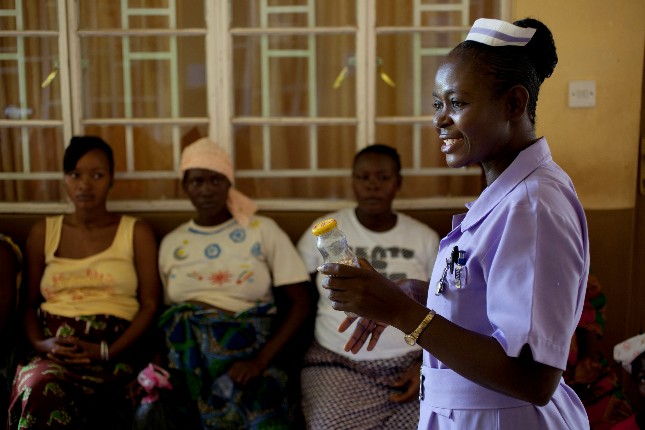
Too Little Too Late: Violence Disrupts Maternal Health Care in Conflict Settings
›“One of the first victims of war is the health care system itself,” said Marco Baldan, the chief war surgeon for the International Committee of the Red Cross. Violence directed at health facilities and workers is common in conflict, despite international laws protecting medical personnel, facilities, and transport vehicles during war. -
Parfait Eloundou-Enyegue: Moving from Laundry Lists to Bottom Lines
›“A lot of the advocacy of family planning has been built around establishing a long list of the many ways in which family planning can be relevant” to other development goals, says Parfait Eloundou-Enyegue of Cornell University in our latest Friday Podcast. While comprehensive accounts of the ways family planning access benefits communities, these “laundry lists” are not “clear, synthetic, or integrative,” he says. -
A More Prosperous World: Investing in Family Planning for Sustainable Economic Growth
›“There is a close relationship between fertility rates and health on one hand, and economic growth on the other,” said Peter McPherson, President of the Association of Public Land-Grant Universities and former USAID Administrator, at the final event in a three-part series on the role of population and family planning in supporting economic growth, health, and education.
Showing posts from category family planning.
 “Almost everyone of reproductive age—about 4.3 billion people—will not have access to at least one essential or reproductive health intervention over the course of their lives,” said Patricia Da Silva, Associate Director, International Planned Parenthood Federation United Nations Liaison Office. She spoke at a
  “We need to mainstream young people into the decision-making process,” said Senator Nikoli Edwards, age 25, of Trinidad and Tobago at a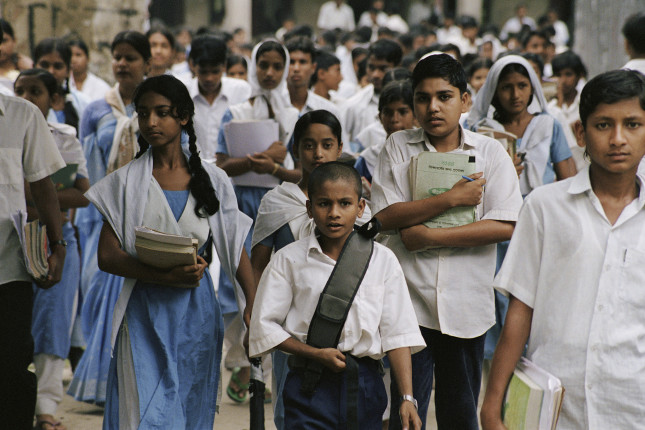
 “One of the first victims of war is the health care system itself,”
  “A lot of the advocacy of family planning has been built around establishing a long list of the many ways in which family planning can be relevant” to other development goals, says Parfait Eloundou-Enyegue of Cornell University in our latest Friday Podcast. While comprehensive accounts of the ways family planning access benefits communities, these “laundry lists” are not “clear, synthetic, or integrative,” he says.