-
ECSP Weekly Watch: April 1 – 5
›
A window into what we are reading at the Wilson Center’s Environmental Change and Security Program
Indonesia’s Deforestation Intensifies Extreme Weather Impacts (Associated Press)
Indonesia’s vast biodiverse forests have long sustained livelihoods, food supplies, medicine, and cultural practices. Yet the past seven decades have put them under threat. Since 1950, over 74 million hectares, or nearly 286,000 square miles, of rainforest has been logged, burned, or degraded. The country’s key industries—palm oil, paper, rubber, and mining for oil and critical minerals—are largely to blame. This is occurring in a specific context: Indonesia is not only one of the largest global CO2 emitters globally, but it is also highly vulnerable to climate change—particularly climate change-induced extreme weather events.
-
ECSP Weekly Watch: March 25 – 29
›
A window into what we are reading at the Wilson Center’s Environmental Change and Security Program
UN Report Highlights Relationship Between Water and Peace (UN Water)
Freshwater consumption is growing at a steady rate, driven largely by agriculture, yet roughly 50% of the world’s population experiences severe water scarcity for at least part of the year. Poor water quality in low-income countries is attributable to low wastewater treatment, whereas in high-income countries, agricultural runoff does the damage. Extreme droughts or heavy rainfall, exacerbated by climate change, also have worsened in frequency and intensity, creating a deepening impact on global water security.
-
Water @ Wilson | MODSNOW: A New Tool for Water Security in Central and South Asia
›Central and South Asia’s water resources are critical for the region’s water, energy, food and environmental security. Major rivers in the region originate from the Hindu-Kush-Himalaya, Pamir, and Tien Shan Mountain Ranges and flow across multiple countries. Unique geographical characteristics make water management a complex and challenging task that is further complicated by a changing climate and increasing demand affecting diminishing water resources.
-
ECSP Weekly Watch | March 11 – 15
›A window into what we are reading at the Wilson Center’s Environmental Change and Security Program
China is Leading the World on Renewable Energy (Yale 360)
In November, Chinese and U.S. climate envoys pledged to triple global renewable energy by 2030, signaling renewed cooperation between the top two greenhouse gas emitters. However, the two countries are not quite on equal footing when it comes to renewable energy.
-
Heat, Oil, and Dust: The State of Iran’s Lakes and Its Climate Future
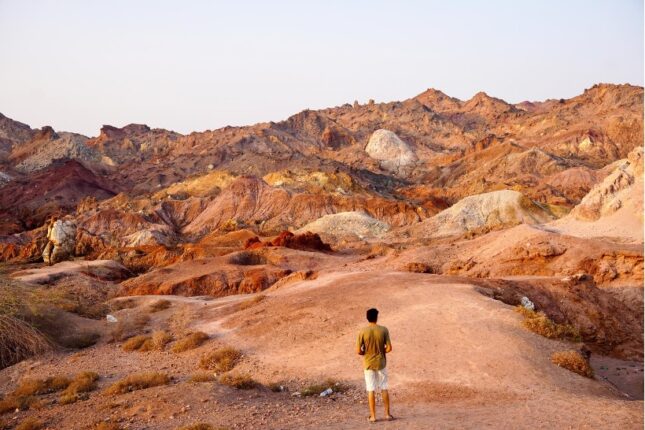
›Iran’s southeastern province of Khuzestan—which borders Iraq—was already a dry and dangerous place. It was the site of the fiercest battles in the Iraq-Iran war which followed the Iranian Revolution in 1979, and to this day, the region still has many unexploded landmines.
Yet this legacy of violence is not the only issue facing its residents. As climate impacts mount in Khuzestan, the future looks bleak for both the region’s ecosystems and the people already living on this borderline.
-
The Arc | Climate, Conflict, and Women’s Resilience: A Recent Women for Women International Report
›
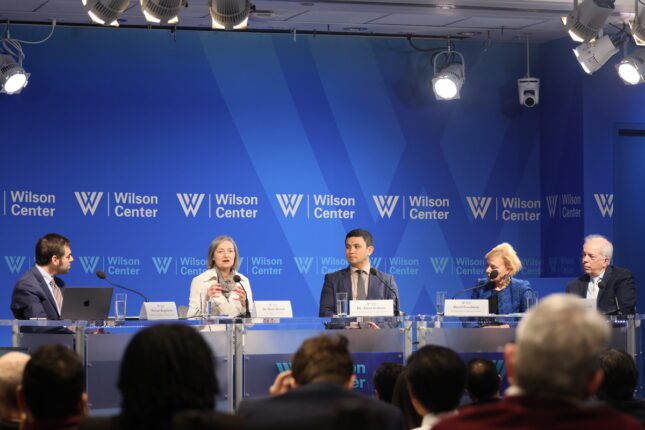
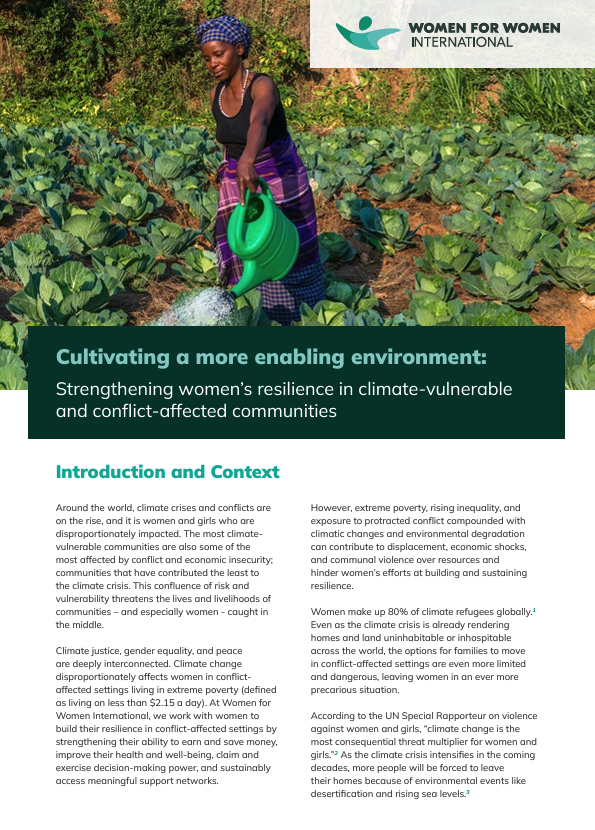
In today’s episode of The Arc, ECSP’s Angus Soderberg and Claire Doyle interview Nisha Singh and Kavin Mirteekhan from Women for Women International. We dive into the organization’s recent report, “Cultivating a more enabling environment: Strengthening women’s resilience in climate-vulnerable and conflict-affected communities,” to hear how women around the world are disproportionately impacted by conflict and climate shocks—and what we can learn from their solutions.
-
ECSP Weekly Watch: March 4 – 8
›A window into what we are reading at the Wilson Center’s Environmental Change and Security Program
Climate Change Disproportionately Impacts Rural Women (U.N. Food and Agriculture Organization)
A recent report by the U.N. Food and Agriculture Organization analyzed data from 24 low- and middle- income countries (LMICs) across five regions and over 100 thousand rural households to measure the impacts of climate change on rural women, youth, and people living in poverty. It found that climate change’s impacts disproportionately impact households headed by women, with income losses due to extreme heat (8% income loss) and flooding (3% income loss), relative to households led by men. The income gap between men and women was also widened as a result.
-
The New Arctic: Amid Record Heat, Ecosystems Morph and Wildlife Struggle
›This article, by Sharon Guynup, originally appeared on Mongabay.
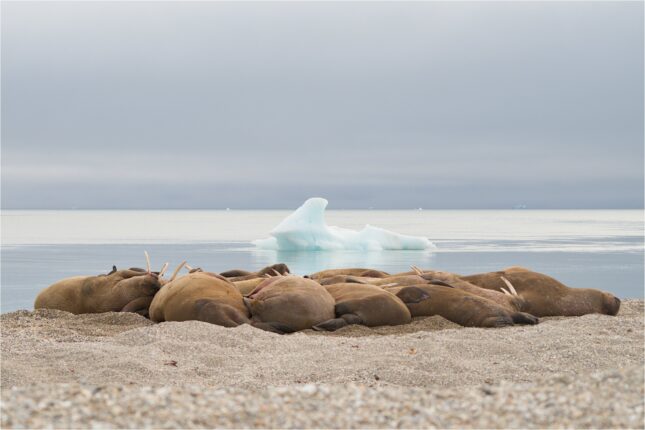
Walruses have traversed the Arctic for millennia, gregarious pinnipeds that rest en masse on drifting pack ice, diving to feed on crabs, clams and other seafloor delicacies. Icy platforms also serve as safe birthing and nursery grounds. But as the far north rapidly warms and sea ice disappears, some herds now huddle on overcrowded shorelines, with deadly consequences for young calves: Because more disturbances occur on shore than at sea, calves are regularly trampled during panicked stampedes by the 1-ton-plus adults.
Showing posts from category extreme weather.