• woodrow wilson center
  • ecsp

New Security Beat

Subscribe:
  • rss
  • mail-to
  • Who We Are
  • Topics
    • Population
    • Environment
    • Security
    • Health
    • Development
  • Columns
    • China Environment Forum
    • Choke Point
    • Dot-Mom
    • Friday Podcasts
    • Navigating the Poles
    • Reading Radar
  • Multimedia
    • Water Stories (Podcast Series)
    • Backdraft (Podcast Series)
    • Tracking the Energy Titans (Interactive)
  • Films
    • Water, Conflict, and Peacebuilding (Animated Short)
    • Paving the Way (Ethiopia)
    • Broken Landscape (India)
    • Scaling the Mountain (Nepal)
    • Healthy People, Healthy Environment (Tanzania)
  • Publications
  • Events
  • Contact Us

NewSecurityBeat

The blog of the Wilson Center's Environmental Change and Security Program
Showing posts from category environmental security.
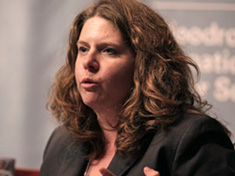
  • Hot and Cold Wars: Climate, Conflict, and Cooperation

    ›
    November 23, 2009  //  By Sajid Anwar
    At an American University event on his new book, Climate Change and Armed Conflict: Hot and Cold Wars, the Center for Teaching Excellence’s James Lee identified some plausible scenarios that the international community will have to face to adequately and peacefully address the security impacts of climate change.

    With the loss of glaciers and normal river flows, international boundaries that have long been determined by these natural barriers will be called into question, Lee said, raising legitimate issues of sovereignty, migration, and land rights. How will countries separated by large glaciers or rivers deal with their more open and easily accessible borders? Will people who depend on these resources migrate into other countries in search of water? How will these changes impact countries that share these resources?

    In his presentation, Lee argued that climate change will lead to violent conflict, using the historical record of climate change and conflict to prove his point. But most of the cases cited occurred before the 20th century, and the changes in climate then were much different than what we are now facing.

    Today, we live in a world that is truly global in both governance and accountability. Issues such as severe environmental degradation or scarcity can be a factor in conflict within a country, but the potential for climate change to cause an international conflict is not as high as some warn.

    There are multiple variables on the causal chain between climate change and conflict that can be addressed now, through national efforts and international cooperation. Countries can start with strong governance initiatives now to ensure that future problems of transboundary water scarcity, migration trends, and border changes do not lead to conflict.

    For example, while climate change may lead to water scarcity, declines in agricultural production, and therefore to food insecurity, countries can avoid this outcome by leasing agricultural land in countries that won’t face high levels of water stress.

    In addition, countries could avoid future disagreements over territory by negotiating a shared understanding of borders independent of geographic markers such as rivers or glaciers. These and other variables can be addressed now in order to mitigate the risk of future conflicts.

    Renegotiating Water, Avoiding Conflict

    Uppsala University Professor Ashok Swain, who spoke via Skype, took a different tack than Lee, stating that the links between climate change and conflict lack proper research. He was concerned by the hard security linkages being made with climate change and called for further exploration.

    But Swain identified one potential trouble spot: While interactions over shared river systems have been shown to be overwhelmingly cooperative rather than violent, he voiced concern that the changes brought by climate change are not encompassed in the scope of current water-sharing agreements, which could increase the likelihood of conflict, according to Swain.

    In the same way that leasing agricultural abroad or negotiating a shared understanding of borders now could help mitigate conflict in the future, so could renegotiating and strengthening current water-sharing agreements to reflect the future effects of climate change.

    Cooperation to ensure sustainable access to shared water sources will still be more likely than conflict, simply because it is more cost-effective. If, as Lee writes in his book, climate change will cause a society’s accumulated wealth to decline, then the cost of mitigating the negative effects of climate change by using force to secure a resource would be too high for any nation to pursue.

    Photo: Cracked earth, from the lack of water and baked from the heat of the sun, forms a pattern in the Nature Reserve of Popenguine, Senegal. Courtesy United Nations.
    MORE
  • The Campus Beat: Using Blogs, Facebook, to Teach Environmental Security at West Point

    ›
    November 17, 2009  //  By Geoffrey D. Dabelko
    The lecture was only a few hours away. In desperation, I turned to Facebook. “I’ve got just 50 minutes with the cadets at West Point today to talk water, conflict, and cooperation. What are the most compelling examples you would use to make both hard security and human security points, both threat and opportunity points? I ask in part because it is proving harder to decide what to leave out than what to put in!”

    Within seconds, experts from the Departments of State and Energy, USAID, and National Geographic responded with examples, including the Tibetan plateau and glacial melt, the lower Jordan River, and more. I used these cases and others to break through to an audience that included both those skeptical of “treehugger” issues and those eager to learn. The map of Chinese current and planned hydro projects produced audible gasps and wide eyes among the class of future officers.

    While at West Point, colleague Meaghan Parker and I met with geography faculty to better understand how and what they are teaching on environmental security and demographic security. The professors on the banks of the Hudson face similar challenges to their non-military brethren; today’s students have shorter attention spans and lack experience conducting in-depth research (or getting beyond Google).

    But some challenges are unique to the service academies: isolation from academic peers; the need to make sure the material is relevant to future military leaders; and most of all, the physical and mental demands on cadets’ time placed by army training. I saw it as a sign of success that I only had three stand up during my lecture, the military’s sanctioned way to keep yourself awake in class. (LTC Lou Rios USAF, one of the faculty members we met with, wrote about teaching environmental security at West Point previously on New Security Beat.)

    Video, blogs, and other new media seem like a way to bridge some of these gaps. We’re especially excited that the cadets in at least three courses will be using the New Security Beat as part of their classes by reading posts, commenting, and proposing a post on a topic of their choosing. We’re looking forward to a cadet joining us next summer for internship with ECSP.

    All of these outreach efforts are part of our strategy to both understand how all types of actors—including future army officers—come to understand environment and security links while providing insights and analysis to that same diverse group.

    Photos by Geoff Dabelko and Meaghan Parker
    MORE
  • Climate-Security Gets “To the Point” Today

    ›
    On the Beat  //  November 5, 2009  //  By Meaghan Parker
    Today’s episode of NPR’s “To the Point” with Warren Olney will focus on “Global Warming and the Geo-Political Map,” seeking to answer the question, “What are the risks to natural resources, immigration, and political stability worldwide?”

    As one of the four panelists, ECSP Director Geoff Dabelko will draw on his recent article in the Bulletin of Atomic Scientists and ECSP’s climate-security resources.

    Climate security has been heating up the media for the last few months, although most news coverage has been rather thin. That’s understandable, given the complexity of the drivers involved, and the crushing constraints on environmental reporters’ time and budgets these days. But climate security is a politically powerful argument, one which advocates from all over the political spectrum have increasingly adopting, and it deserves a more thorough, thoughtful treatment.

    “Come to Attention,” a panel at this year’s SEJ annual conference (audio) moderated by ClimateWire’s Lisa Friedman, delved into some of the finer points of this often oversimplified connection. As part of the panel, Dabelko outlined seven cautions to keep in mind and suggestions for improving coverage of the difficult link.

    While Grist’s Robert McClure jokingly called the session “doom and gloom without the sense of humor,” Dabelko ended on a positive note, pointing out that by coming together to battle climate change, countries may build bridges to peace, rather than war–particularly if the militaries cooperate in the fight.

    In a recent op-ed, Dabelko and the U.S. Army War College’s Kent Butts argue that climate could be one of the most productive avenues for improving military relations with China, suggesting that “U.S. and Chinese militaries should jointly assess the security implications of climate change that concern both sides: rising sea levels, changing precipitation patterns, uncertain migration scenarios, and instability in resource-rich regions.”

    “To the Point” airs live online at 3 PM EST. In the Washington, DC, area listen to it at 10 PM EST tonight on WAMU 88.5.
    MORE
  • VIDEO: Carol Dumaine on Energy and Environmental Security in the 21st Century

    ›
    November 2, 2009  //  By Wilson Center Staff
    “[W]e’re facing unprecedented challenges, literally things that have never happened in the history of human kind, and that should give us some pause… Not only rising temperatures but dramatic changes in precipitation, possibility of millions of people having to be relocated, and challenges to governance on scales that we perhaps haven’t seen before,” says Carol Dumaine, deputy directory of energy and environmental security at the U.S. Department of Energy, in a conversation with ECSP Director Geoff Dabelko.

    Dumaine emphasizes that tackling the 21st century’s broad energy and environmental security challenges requires study by experts from a range of fields, including zoology, virology, and information science. To this end, the Department of Energy hopes to leverage its years of investment and research with “the expertise that exists in the private sector and academia and think tanks.”

    Looking toward the future, Dumaine identifies global cooperation as key. “The paradigm is a very diffuse, globally distributed risk, and the response must be very diffuse, globally distributed intelligence.”
    MORE
  • Bringing the Climate Fight to New Battlefields

    ›
    October 23, 2009  //  By Geoffrey D. Dabelko
    This picture brings the 350 ppm carbon dioxide message to another kind of battlefield. It illustrates the increasing role of the military in bringing non-traditional voices to the political debates over action against climate change. There are plenty of ties, if one scratches the surface and gets into the climate-security field.

    The CNA Military Advisory Board, a group of distinguished retired flag officers, has been the most prominent manifestation, but this picture suggests it isn’t just the senior officers with an opinion on climate. President Barack Obama gave a shout out in his MIT speech to Operation Free, a group of Iraq and Afghanistan veterans currently on a bus tour campaigning for energy independence.

    Equally important, if not as prominent in this political season, are the present or anticipated impacts of climate on the availability of certain resources (sometimes too much, sometimes too little) and how they might affect economic and political stability. And there are a wide range of reasons for the military to adopt the precautionary principle approach to climate change.

    Right now, there is a strong focus on climate-security links in both the research and policy arenas. The challenge is to raise attention, perhaps most productively in a risk framework, without resorting to hyperbole that ultimately produces a backlash.

    Photo courtesy of 350.org and Agent Slim. Thanks to Andy Revkin for flagging the picture.
    MORE
  • Send in the Scientists: Finnish MP Calls for Assessing Toxic Waste Threats in Somalia

    ›
    October 22, 2009  //  By Geoffrey D. Dabelko
    “If there are rumors, we should go check them out!” declared Finnish MP Pekka Haavisto about barrels of toxic waste that supposedly washed ashore in Somalia after the 2004 tsunami. I spoke with Haavisto in Helsinki last month as he took a break from marathon budget meetings.

    “I think it is possible to send an international scientific assessment team in to take samples and find out whether there are environmental contamination and health threats. Residents of these communities, including the pirate villages, want to know if they are being poisoned, just like any other community would.”

    In April this year, Haavisto flew commercial to Mogadishu to meet with Somalia’s president, Sheik Sharif Sheik Ahmed (who narrowly escaped assasination today), and African Union (AU) peacekeepers. In August Haavisto visited Puntland state to speak with President Abdirahman Mohamed Mohamud and other government representatives.

    “Parliamentarian” is only one of Haavisto’s jobs. He also works as Finland’s special envoy for the Horn of Africa and, after playing a similar role within the EU as special representative for Sudan. From 1999-2005, he headed the UN Environment Programme’s Disaster and Conflicts Programme (then called the Post-Conflict Assessment Unit), which specializes in objective scientific environmental assessments in war-torn countries.

    Haavisto is an enthusiastic advocate for environmental missions that may improve the desperate conditions resulting from violent conflicts. “We should be talking with all the factions,” he told me, to investigate the toxic waste charges. Such a thorough and objective assessment could provide a rare and potentially valuable avenue for addressing underlying suspicions and grievances some Somalis hold against those whom they claim dump waste off shore and overfish their waters.

    Using environmental dialogue to build confidence is a top objective of Haavisto’s former colleagues at UNEP—and an idea that is gaining more traction within the wider UN family. For example, UNEP is now working directly with the UN Department of Peacekeeping Operations (DPKO) to provide “green advisors” to their blue helmets, lowering their environmental bootprints and establishing green, self-sufficient bases, including one in Somalia for AU troops.

    Assessing the tsunami’s possible toxic legacy in Somalia may provide an avenue for dialogue by addressing first-order concerns for local populations. The dialogue could ultimately support action on front-burner problems outside Somalia, such as piracy, poverty, internal conflict, and terrorism.

    Photo: IDPs outside Mogadishu, courtesy of Flickr user Abdurrahman Warsameh and ISN Security Watch.
    MORE
  • Steady Drum Beat for Climate and Security Linkages

    ›
    October 14, 2009  //  By Geoffrey D. Dabelko
    This week Sweden, the current holder of the European Union Presidency, will convene a conference for EU member states on environment, climate change, and security. The Ministry of Defence and the Swedish Defence Research Agency are serving as organizers, yet they are constructing the conference in broad and inclusive terms. The objective is to highlight and address the links between climate change and security in the “broadest sense of the term.” This framing is perhaps less surprising when one remembers the Swedes have been leaders in both lightening the military’s environmental bootprint and supporting international development through the Swedish International Development Agency’s investments in water, development, and peace. Right now it is the European Union, the UK, the Germans, the Finns, and the Danes joining the Swedes to drive policy action on climate and security links.

    The climate security topic remains on the edges of the Copenhagen process, according to Adelphi Research’s Alexander Carius, but there is a constant flow of conferences in Europe and the United States nevertheless.

    Committee Two of the UN General Assembly tackles it with a panel October 19th in New York (I’m fortunate enough to be making remarks). And the draft of the Secretary-General’s report on climate and security called for by this summer’s non-binding UNGA resolution is circulating for comment.

    The Danish Minister of Foreign Affairs speaks at Chatham House the next day, presumably covering some of the same threat multiplier themes he highlighted September 19th> in Copenhagen.

    The Holland-based Institute of Environmental Security brings its international group of military officers to engage Washington audiences October 29th after having had their European meetings in Brussels this past week.

    CNA follows in November, including roll-outs of country-specific work on Colombia and China, made possible with support from the UK Foreign Commonwealth Office.

    After that scholars convene at the University of Hamburg, and then on to Trondheim, Norway, next June for a PRIO -organized conference.

    And the beat goes on for climate and security. Critically important will be whether the interest in climate and security links extends beyond Copenhagen, demonstrating it is more than just a slogan from a non-traditional climate audience aimed at nudging the negotiations at COP15. No doubt it will, with other milestones including the February 2010 Quadrennial Defense Review from the US Department of Defense and other processes yet to come.
    MORE
  • VIDEO: Geoff Dabelko on Environment and Security at Society of Environmental Journalists Conference

    ›
    October 9, 2009  //  By Sean Peoples
    The 19th annual Society of Environmental Journalists (SEJ) conference began today in the crisp autumn air of Madison, Wisconsin. ECSP Director Geoff Dabelko discusses Al Gore’s keynote address explicitly connecting climate change to national security issues, as well as his questions and expectations as the country’s premier gathering of environmental journalists gets underway.
    MORE
Newer Posts   Older Posts
View full site

Join the Conversation

  • RSS
  • subscribe
  • facebook
  • G+
  • twitter
  • iTunes
  • podomatic
  • youtube
Tweets by NewSecurityBeat

Trending Stories

  • unfccclogo1
  • Pop at COP: Population and Family Planning at the UN Climate Negotiations

Featured Media

Backdraft Podcast

play Backdraft
Podcasts

More »

What You're Saying

  • Volunteers,At,The,Lagos,Food,Bank,Initiative,Outreach,To,Ikotun, Pan-African Response to COVID-19: New Forms of Environmental Peacebuilding Emerge
    Rashida Salifu: Great piece 👍🏾 Africa as a continent has suffered this unfortunate pandemic.But it has also...
  • A desert road near Kuqa An Unholy Trinity: Xinjiang’s Unhealthy Relationship With Coal, Water, and the Quest for Development
    Ismail: It is more historically accurate to refer to Xinjiang as East Turkistan.
  • shutterstock_1779654803 Leverage COVID-19 Data Collection Networks for Environmental Peacebuilding
    Carsten Pran: Thanks for reading! It will be interesting to see how society adapts to droves of new information in...

What We’re Reading

  • Rising rates of food instability in Latin America threaten women and Venezuelan migrants
  • Treetop sensors help Indonesia eavesdrop on forests to cut logging
  • 'Seat at the table': Women's land rights seen as key to climate fight
  • A Surprise in Africa: Air Pollution Falls as Economies Rise
  • Himalayan glacier disaster highlights climate change risks
More »
  • woodrow
  • ecsp
  • RSS Feed
  • YouTube
  • Twitter
  • Facebook
  • Home
  • Who We Are
  • Publications
  • Events
  • Wilson Center
  • Contact Us
  • Print Friendly Page

© Copyright 2007-2021. Environmental Change and Security Program.

Woodrow Wilson International Center for Scholars. All rights reserved.

Developed by Vico Rock Media

Environmental Change and Security Program

Woodrow Wilson International Center for Scholars

Ronald Reagan Building and International Trade Center

  • One Woodrow Wilson Plaza
  • 1300 Pennsylvania Ave., NW
  • Washington, DC 20004-3027

T 202-691-4000