-
Harvesting Peace: Food Security, Conflict, and Cooperation
›Since 2008 – a year in which rapid increases in the global prices for major grains helped to trigger outbreaks of civil unrest in more than 40 countries – scholars and policymakers have paid increased attention to the potential influence of global food prices on social and political instability. Since that time, spiking prices have periodically sparked public protests and governments have struggled to respond.
-
Flooding in Uttarakhand Shows Why India Needs to Take Environmental Security More Seriously
›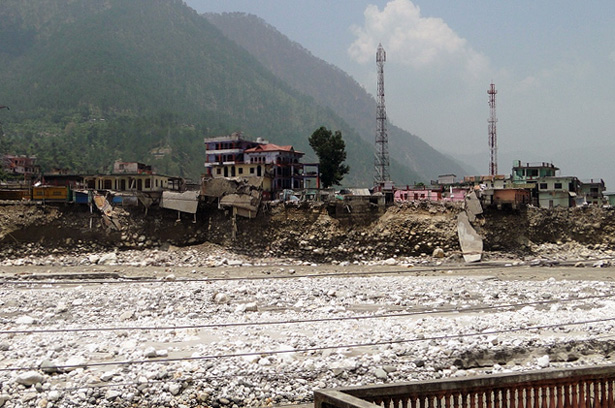
The disastrous flooding in the Himalayan state of Uttarakhand this summer, which claimed more than 6,000 lives, was the outcome of a changing climate and poorly planned development. It was also another case in point of the increasing importance of environmental security in India – especially for the military.
-
Rear Admiral Neil Morisetti on Opportunities for Transatlantic Cooperation on Climate Change, Energy
›
“We’ve got real pressure on key natural resources: food, water, energy, and land,” says Rear Admiral Neil Morisetti, the U.K. Foreign and Commonwealth Office’s special representative on climate change, in this week’s podcast. “But what we haven’t got, if I can use the words of Winston Churchill, we haven’t got ‘action this day.’”
“Morisetti spoke at the Wilson Center on June 6 for the launch of The Climate and Energy Nexus: Challenges and Opportunities for Transatlantic Security, by CNA and the Royal United Services Institute. As climate change threatens stability in some places, energy security has emerged as a key vulnerability to Western militaries’ abilities to respond to conflict and assist in disaster relief operations, says Morisetti.
-
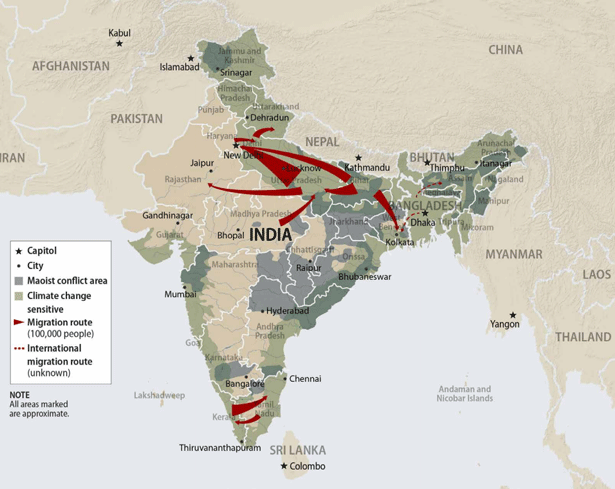
India’s Assam Shows Second-Order, Dangerous Effects of Climate Change in South Asia
›August 13, 2013 // By Ashley ZieglerTo use the military parlance, climate change is often considered a “threat multiplier,” challenging stability and development around the world by exacerbating underlying conditions of vulnerability. South Asia is one region that faces multiple stressors that have the potential to feedback off each other.
Higher temperatures, more extreme weather, rising sea levels, flooding, and increased cyclonic activity in the Bay of Bengal and the Arabian Sea are reshaping the environment, warns the Center for American Progress (CAP) in a report.
-
Babbage, The Economist
Cloudy With a Chance of War?
›August 8, 2013 // By Wilson Center StaffThe original version of this article appeared on The Economist’s Babbage blog.
Earth’s climate is changing, whether you like it or not. As it does, other changes – like rising sea levels or falling crop yields – follow. It is easy to see how this might lead to conflict. Competition for ever scarcer resources such as arable land and its bounty can turn ugly. As the price of food rises the poor, who spend more of their income on it, are hit more than the rich, exacerbating income inequality and leading to disaffection, resentment and, possibly, violence.
-
First “Nexus Dialogue” on Water, Energy, and Food Kicks Off in Nairobi
›Water, energy, and food – this “nexus” of interrelated resource issues continues to garner attention from analysts, policymakers, and the media. Over the next four decades global population is projected to increase to about 9.6 billion and, worldwide, demand for water is projected to increase 55 percent; energy, 80 percent; and food, 60 percent. In a new video about the first of a series of workshops on this nexus, the International Union for Conservation on Nature and the International Water Association explain how they are working to bring together private and public sector water infrastructure experts from across Africa and the world to build partnerships and create some consensus on a “nexus-based approach” to managing scarce resources.
-
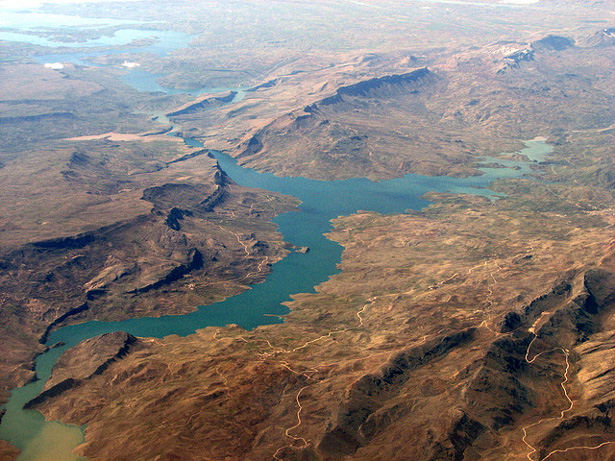
The Great Anatolia Project: Is Water Management a Panacea or Crisis Multiplier for Turkey’s Kurds?
›During the Gezi Park protests last month in Istanbul, Turks and Kurds dismissed historical mistrust and banded together against Prime Minister Erdogan’s growing authoritarianism. Some have suggested the newly unifying cause has strengthened momentum for a long-standing solution to Kurdish autonomy and rights in Turkey. Still it may be water that the fate of Kurdish ambitions is most tied to, rather than officials in Ankara or protestors in Istanbul.
-
Vulnerability View: GAIN Index Rates Climate Change Preparedness
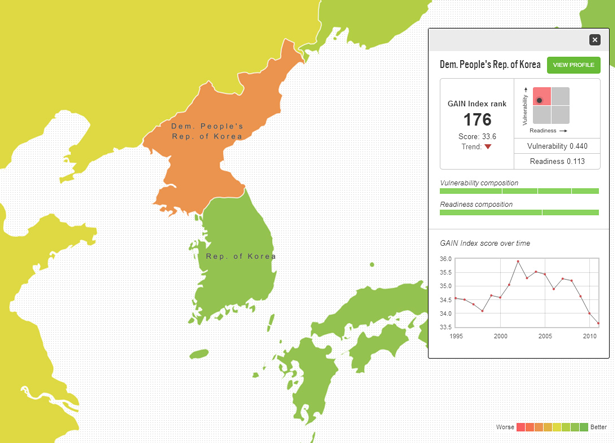
›According to the UN, the planet has warmed faster since the turn of the century than any other period on record. Sea-level rise has also increased pace to 0.12 inches a year – almost double the rate observed during the 20th century. This “unprecedented” rate of climate change is expected to disproportionally impact developing countries, whose socio-economic, political, and physical landscapes make them particularly vulnerable to the effects. The GAIN Index, an interactive mapping tool recently acquired by the University of Notre Dame, can help policymakers prepare for these changes by comparing the climate change vulnerability and readiness of countries around the world.
Showing posts from category environmental security.