-
Exhausting the Planet: Jonathan Foley on Balancing Food Security With Environmental Sustainability
›
-
Can We Forecast Where Water Conflicts Are Likely to Occur?
›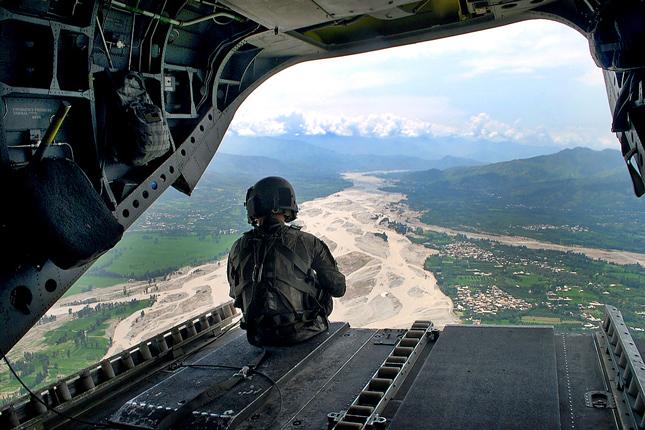
Many of the world’s freshwater systems reach across national boundaries, and growing demands combined with supply constraints may lead to increased potential for international water conflicts. If that’s the case, which international river basins are most at risk of conflict or, conversely, which are most prone to cooperation? What are the factors that increase or decrease conflict risk?
-
UK Global Trends Report Forecasts Security Threats in Face of Growth, Climate and Technological Change
›October 22, 2014 // By Heather RandallBy 2045, global population will be north of 9 billion with increased urbanization and migration, natural resource stress, improved medical technologies, greater use of robotic labor, and a shift towards lifelong (and increasingly online) learning, according to a recent report from the UK Ministry of Defense.
-
Pentagon Releases New Climate Roadmap, Plans for Constrained Training, Challenged Infrastructure, Expanding Missions
›October 13, 2014 // By Schuyler NullA series of executive orders signed by President Obama since his first year in office requires all federal agencies to begin planning for climate change and produce an updated adaptation plan by May of this year. The Pentagon is a little late, but today they released their second-ever climate roadmap.
-
Not All Security Questions Have Military Answers, Says Sharon Burke
›
The U.S. military has historically relied on its capacity for technological innovation to respond to new risks and crises. But, as Sharon Burke explains in this week’s podcast, the Pentagon has had to invent a new role for itself in response to a changing world.
-
Paola Adriázola and Stephan Wolters, ECC Platform
Investing in Collaboration to Manage Natural Resource Conflict
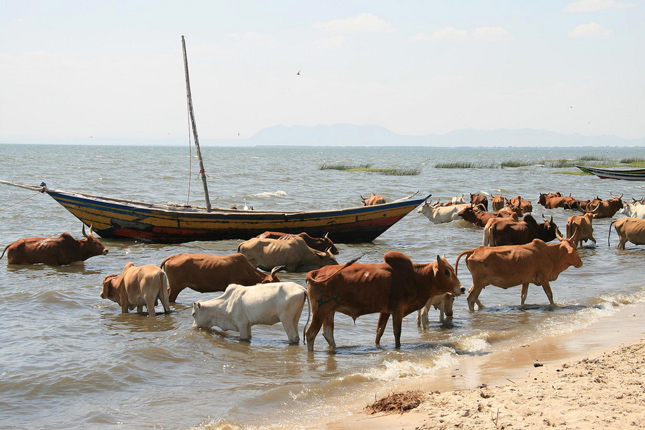
›September 25, 2014 // By Wilson Center StaffConflict over environmental resources endangers rural people’s livelihoods and can increase the risk of broader social conflict. Yet joint action to sustain shared resources can also be a powerful means for community building. The Strengthening Aquatic Resource Governance (STARGO) project demonstrated this in three ecoregions: Lake Victoria, with a focus on Uganda; Lake Kariba, with a focus on Zambia; and Tonle Sap Lake in Cambodia. The results of the project were released at an event in Berlin in early July 2014.
-
Hydro-Diplomacy Can Build Peace Over Shared Waters, But Needs More Support
›From Ukraine and the Middle East to sub-Saharan Africa and East Asia, the world is engulfed in a series of significant international crises. But despite such urgent issues, it would be a grave mistake to forget about the structural foreign policy challenges – such as access to water – that could become the crises of the future.
-
Climate Change a National Security Issue, Say Local and National Leaders From Pacific Northwest
›The effects of climate change “are here now” and pose a “serious challenge” for the United States, said Alice Hill, White House senior advisor for preparedness and resilience, at the Wilson Center on July 29. [Video Below]
Showing posts from category environmental security.