

-
Are We Headed Toward “Recurring Storms” of Global Food Insecurity?
›February 27, 2017 // By Erica Martin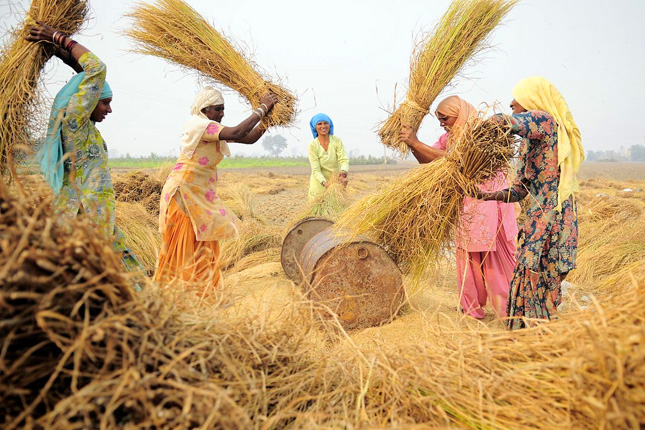
It’s often assumed that in the modern era, food security is an achievable goal. But between 2007 and 2008, a confluence of conditions shook the international food system to its core, fueling unrest and riots in more than 40 nations around the world. What’s more, this “perfect storm” may have been only a harbinger of challenges to come, according to a new report by Emmy Simmons of the Center for Strategic and International Studies (CSIS).
-
Backdraft Episode #3: Kimberly Marion Suiseeya on Voice, Justice, and Representation
› “If we think sustainable development is the goal we want to achieve, we have to be radical in elevating those who have been traditionally excluded,” says Northwestern University’s Kimberly Marion Suiseeya in this week’s “Backdraft” episode. “We have to approach conservation and global environmental governance from the perspective of the invisible and the marginalized people.”
 -
Sherri Goodman: Incorporate Climate Risks into Diplomacy, Development, and Defense
›“We are seeing floods, droughts, extreme weather events, migration of people across borders, as well as sea-level rise, and we are going to see increasing challenges,” says Wilson Center Senior Fellow Sherri Goodman in an interview with the German think tank, adelphi.
-
Backdraft Episode #2: Stacy VanDeveer on the New Energy Economy and the Fate of Petro States
›A “green economy,” an energy sector composed entirely of renewables, is the goal of many. But we haven’t thought out the full implications of that change, says Stacy VanDeveer, professor at the University of Massachusetts Boston, in this week’s “Backdraft” podcast. -
Reaching Accord on Land Grabs, and Household Perceptions of Climate-Conflict Vulnerability
›Large-scale land acquisitions, otherwise known as “land grabbing,” are often believed to lead to resistance from affected local communities. According to an article by Ruth Hall et al. in The Journal of Peasant Studies, however, “political reactions ‘from below’ to global land grabbing have been vastly more varied and complex than is usually assumed.” -
Torn Social Fabric: Water, Violence, and Migration in Central America
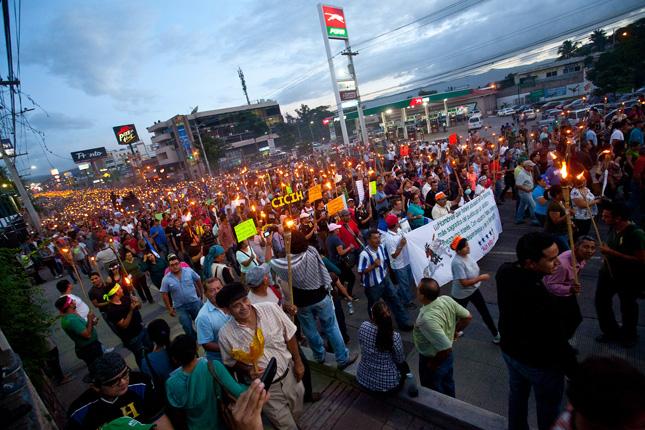
›In the first half of last year, 26,000 unaccompanied children were apprehended by U.S. law enforcement trying to cross the southern border. Most came from Central American states like El Salvador, Guatemala, and Honduras. Such displacement is just the tip of the iceberg in terms of migration in the region. Many more are moving from rural to urban areas and into neighboring countries seeking opportunity and fleeing violence.
-
Global Water and National Security: Why the Time Is Now
›During the 2016 campaign President Trump stated that clean water would be a top priority of his administration, telling ScienceDebate.org “it may be the most important issue we face as a nation for the next generation.” Now is the time to make good on that commitment.
-
Vice-President Eduardo Stein on Water Conflict in Guatemala: Origins and Solutions
›Since 2014, Central America has experienced a dramatic lack of rainfall, destroying grain crops and killing cattle. As of last summer, 2.8 million people were impacted by drought and 900,000 were at risk of malnutrition in Guatemala alone. The effects of environmental change have been especially acute in Guatemala because they are layering on top of existing dysfunction and instability, says Former Vice-President of Guatemala (2004-2008) Eduardo Stein in this week’s podcast.
Showing posts from category environmental security.
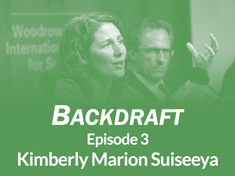 “If we think sustainable development is the goal we want to achieve, we have to be radical in elevating those who have been traditionally excluded,” says Northwestern University’s Kimberly Marion Suiseeya in this week’s “Backdraft” episode. “We have to approach conservation and global environmental governance from the perspective of the invisible and the marginalized people.”
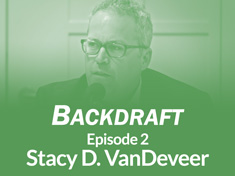 A “green economy,” an energy sector composed entirely of renewables, is the goal of many. But we haven’t thought out the full implications of that change, says Stacy VanDeveer, professor at the University of Massachusetts Boston, in this week’s “Backdraft” podcast.
 Since 2014, Central America has experienced a dramatic lack of rainfall,

