-
Criminal Elements: Illegal Wildlife Trafficking, Organized Crime, and National Security
›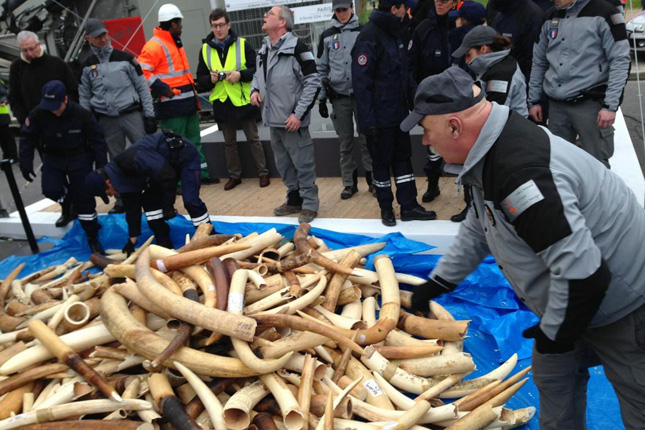
“The same criminals that are trafficking in drugs, guns, and people, traffic in wildlife,” said Christine Dawson, the director of the Office of Conservation and Water at the U.S. Department of State, at a recent event in the Wilson Center’s “Managing Our Planet” series. Experts from Vulcan Productions and Brookings Institution joined Dawson to discuss the links between national security and wildlife trafficking, which is now the fourth largest transnational crime in the world, and to mark recent legislative successes and innovative tools.
-
Nothing Wasted: The Waste-To-Energy Revolution in China
›
Sewage—refuse liquids or waste matter usually carried off by sewers—is at the front lines of a global movement for clean energy. Innovative U.S. cities are digging into their dirtiest depths to create new sources of power that optimize economic benefits, generate clean energy, and control pollution. This wastewater-to-power movement is just beginning to catch on in China. But with some of the largest and most densely populated cities in the world, the country could be poised to lead a sludge-to-energy revolution.
-
One in 10 Interstate Disputes Are Fishy – And the Implications Stink
›Fisheries are a surprisingly common reason for conflict between countries. Between 1993 and 2010, 11 percent of militarized interstate disputes (MIDs) – conflicts short of war between two sovereign states – involved fisheries, fishers, or fishing vessels. While the conflicts often involve fresh fish, the implications for global peace and prosperity stink like fermented herring. As climate change threatens to change fish habitats, new governance strategies may be needed to prevent these “fishy MIDs” from sparking broader conflicts.
-
The “Most Important Issue We Face”: New U.S. Global Strategy for Water Emphasizes Health and Security
›“Water may be the most important issue we face for the next generation,” writes President Donald J. Trump on the first page of the first-ever U.S. Global Water Strategy. Prepared by the U.S. State Department and released in mid-November, the landmark report was required by Congress’ bipartisan Senator Paul Simon Water for the World Act of 2014. During the public comments phase, the New Security Beat published recommendations from its fellows and experts. Now that it is out, we’ve asked them to share their thoughts on the final report.
-
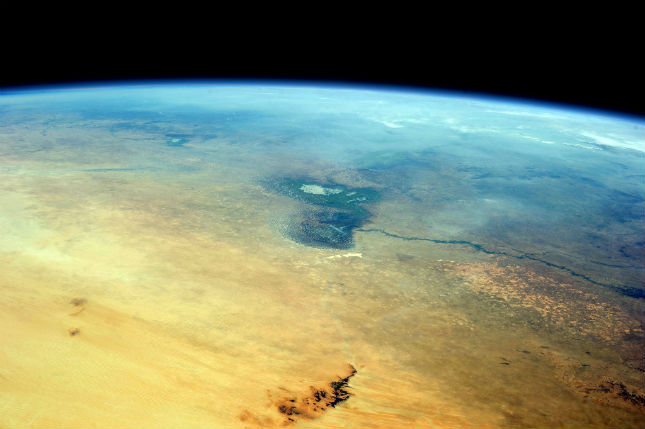
Crisis in Lake Chad: Tackling Climate-Fragility Risks
›While attention in the United States is focused on the disasters in Puerto Rico and the Caribbean, a crisis across the Atlantic is rapidly becoming one of the worst humanitarian disasters since World War II. In the Lake Chad basin of West Africa, about 17 million people are affected by the emergency, struggling with food insecurity, widespread violence, involuntary displacement, and the consequences of environmental degradation. An estimated 800,000 children suffer from acute malnutrition; and although international donors pledged $672 million in February, the famine and humanitarian misery continues unabated. Suicide bombings and attacks by Boko Haram, which have killed at least 381 civilians since April 2017, have forced many people to leave their homes and farmers to leave their lands, interrupting livelihoods and reducing food supplies.
-
One Country, Two Water Systems: The Need for Cross-Boundary Water Management in Hong Kong and Guangdong
›In 2011, a group of Hong Kong water activists and researchers traveled the length of the Dongjiang (East) River, which stretches from northeast Guangdong Province into Hong Kong’s New Territories, to investigate the challenges facing the watershed. The Dongjiang basin, which provides nearly 80 percent of Hong Kong’s water supply, has suffered water shortages due to the region’s increasing urbanization and industrialization. They found unchecked wastewater discharges—from agriculture, poultry farms, chemical plants, tanneries, and even an open-air quartz quarry—were dangerously degrading water quality.
-
Backdraft #9: Joshua Busby on Mapping Hotspots of Climate and Security Vulnerability
›Maps help us to grasp complex ideas, such as patterns of risk and vulnerability, but the stories they tell can have significant implications. “It’s very difficult to validate that what you’re capturing in the maps is representative of real-world phenomenon,” says Joshua Busby in this week’s “Backdraft” episode, describing his efforts to map climate and security hotspots in Africa and Asia. “You have to be modest in what you think the maps can tell policymakers, but also realize there is some seductive power in the way maps simplify complex reality.” -
The Unfolding Humanitarian Crisis Around Lake Chad: UN Report Falls Short of Naming Environmental Dimensions
›September 20, 2017 // By Florian KrampeIt is encouraging to see that the United Nations Security Council is beginning to acknowledge the transboundary dimensions of fragility and conflict, as demonstrated by its newly launched Report of the Secretary-General on the situation in the Lake Chad Basin region. The report, which was presented in the Security Council on 13 September 2017, emphasizes the need for regional responses and the enhanced cooperation of different UN and humanitarian agencies as important steps to addressing the unfolding humanitarian crisis. However, while regional responses to address the regional security challenge are desirable, the report would have been stronger if it had highlighted the underlying environmental contributions of the region’s fragility.
Showing posts from category environmental security.


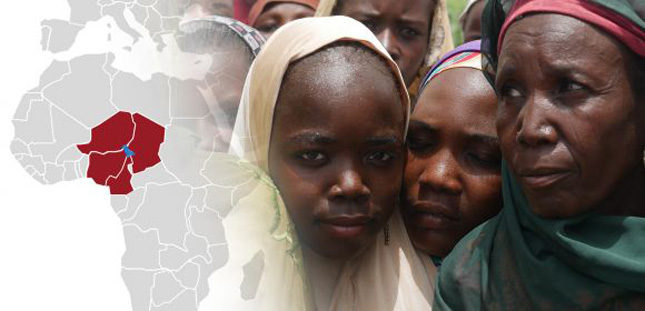

 Maps help us to grasp complex ideas, such as patterns of risk and vulnerability, but the stories they tell can have significant implications. “It’s very difficult to validate that what you’re capturing in the maps is representative of real-world phenomenon,” says Joshua Busby in this week’s “Backdraft” episode, describing his efforts to map climate and security hotspots in Africa and Asia. “You have to be modest in what you think the maps can tell policymakers, but also realize there is some seductive power in the way maps simplify complex reality.”