-
Hydropolitics in the Russian – Ukrainian Conflict
›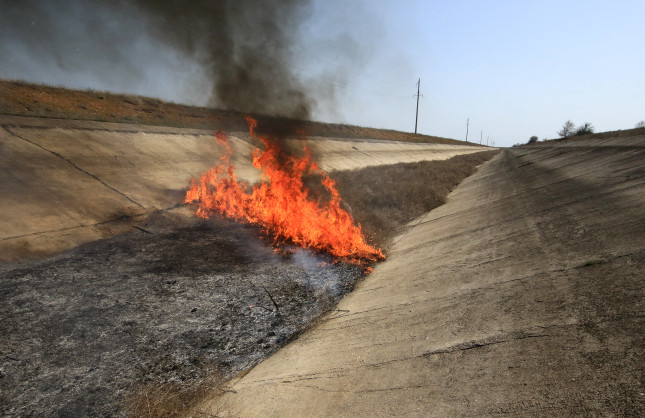
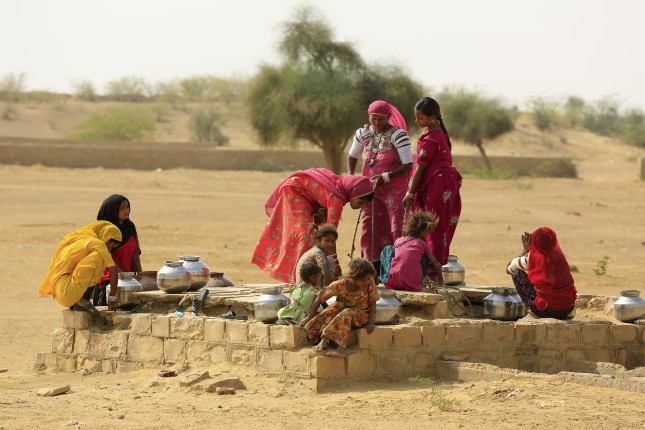
It’s telling that one of the first actions that Russian forces took in their invasion of Ukraine was to blow up a dam on the North Crimean Canal (NCC), allowing water to flow back into Crimea. The current war being waged by Russia in Ukraine has its origins in fractured and contested political history, but there are also key natural resource security questions which often go overlooked. While there are established debates about the extent to which natural resources contribute to conflict, the current conflagration exemplifies a rare use of water as a means of direct leverage in a military standoff. Regardless of the outcome of the conflict, the tensions between Russia and Ukraine over the NCC illustrate the need to consider the role of natural resources—and access to them—in broader diplomatic efforts.
-
Gender, Climate Change, and Security: Missing Links
›
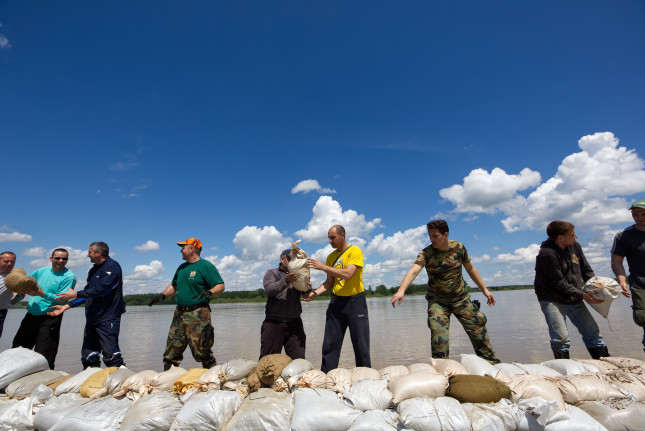
Gender issues, climate change, and security problems are interconnected in complex and powerful ways. Unfortunately, some of these connections have not received enough attention from scholars, policy analysts, and policymakers. This has serious, real-world implications for the promotion of gender equality, the mitigation of climate change, and the advancement of peace and security—three priorities that everyone should care about.
-
No, There Will Not Be a War for Water
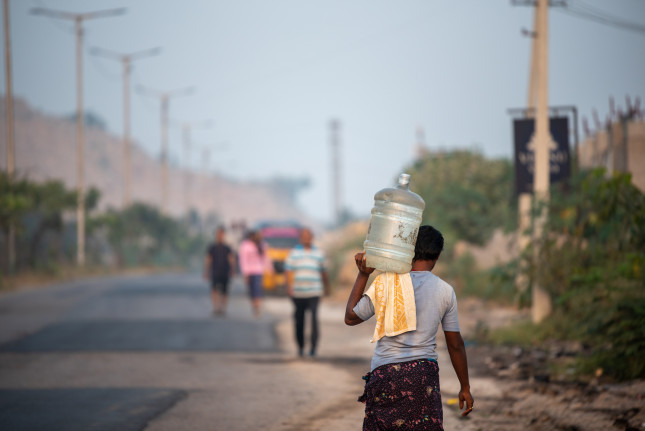
›Some people falsely believe that the Afghanistan takeover by the Taliban during a drought increases the risk of violence over shared waters such as the Helmand and Kabul Rivers. Violent clashes over scarce resources have been predicted as “likely,” or even “certain” for 35 years, and despite such “water wars” never having happened, hypotheses about them keep cropping up around conflict-affected regions such as the Middle East and South Asia. In reality, conflicts are multidimensional with social, political, economic, and ecological drivers producing conflicts through their complex interrelations. Because of these multidimensional conflict drivers, the water war message is wrong-headed and needlessly scaremongering.
-
Merging the Environmental and Security Sectors in Climate Risk Responses
›Environmental security notions have evolved over the past 30 years. Once a sub-field of Security and Peace Studies focusing on how environmental issues correlate with modern security theories and policies, the concept is rapidly merging environmental and security sectors. Former Greek Naval Officer in the Hellenic Navy and current environmental security scholar Dimitrios Kantemnidis’ expertise sits at the center of the two merging fields. His military background informs perspectives on growing environmental security risks and potential responses for civilian and military actors.
-
Russia’s ‘Nyet’ Does Not Mean Climate Security Is off the Security Council Agenda
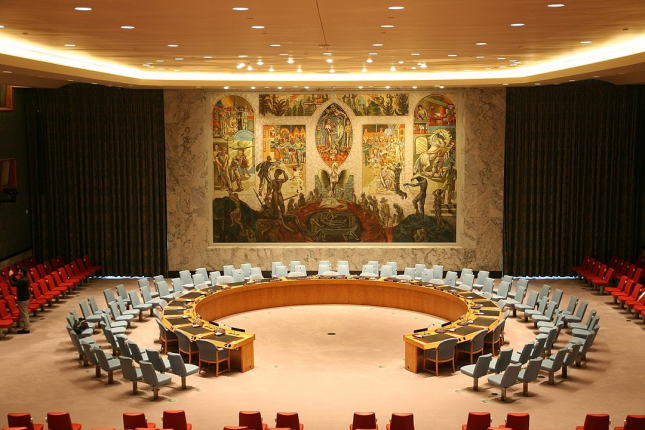
›On Monday, 13 December, Russia used its veto in the United Nations Security Council to block a thematic resolution on climate change and security put forward by Ireland and Niger. While the draft resolution contained specific actions, its main purpose was symbolic: to put the security implications of climate change firmly on the Security Council’s agenda, much as Resolution 1325 did with women, peace and security.
-
The Biden Administration’s Whole of Government Approach to Climate Security
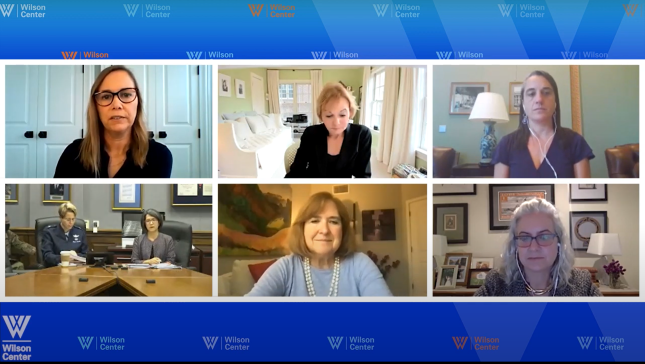
›“Climate change is an increasingly destabilizing force—an accelerating destabilization force—and it’s impacting our operational environment, it’s creating new missions, and our allies and partners are going to be called to respond to these increased demands,” said Brigadier General Rebecca Sonkiss, Deputy Director for Counter Threats and International Cooperation at the Joint Staff J5, at a recent event hosted by the Wilson Center and the Center for Climate and Security. At the event, senior U.S. Government officials reflected on the significance of the Biden administration’s new climate security reports and how climate security is being prioritized and coordinated across defense and development, providing insight into the administration’s whole-of-government approach.
-
To Fight Climate Change and Insecurity in West Africa, Start with Democracy
›Secretary of State Blinken is right to focus on climate change and democracy during his first trip to sub-Saharan Africa. At the top of his and everyone else’s mind should be the question: will democratic backsliding in countries like Benin make it more difficult to deal with the effects of climate change? Even more worrisome: will it worsen conflict hotspots, such as the West African Sahel, where climate change is playing a role? All eyes should be on coastal West Africa as countries such as Benin deal with violent insecurity and climate pressure creeping down from the Sahel. My ongoing research in Benin suggests that the country’s democratic local institutions, despite all their faults, are the country’s best defense against the breakdown in rural governance that has befallen Mali and neighboring Burkina Faso.
-
Imagine a Future Without Single-Use Plastics
›If producing plastic waste were a race, Japan would be rushing for the gold medal. Japan and the United States both rank the highest per capita for plastic packaging waste in the world. Former Prime Minister Shinzo Abe’s administration set a goal to reduce Japan’s plastic waste production by 25 percent by 2030 and recent polls show the majority of the Japanese public wants strong actions to reduce plastic waste. Nevertheless, Japan is not doing enough to stem the tide of plastic entering the ocean. If Japan and the rest of the world fail to act more boldly, global oceanic plastic waste could triple by 2040. Current commitments of governments and corporations would only reduce global plastic leakage seven percent below the business-as-usual scenario. Japan’s current waste management system prioritizes recycling and incineration, encouraging a make-take-waste linear model of plastic consumption. Japan needs a circular economy built on a culture of reduction and reuse instead of single-use plastics.
Showing posts from category environmental security.