• woodrow wilson center
  • ecsp

New Security Beat

Subscribe:
  • rss
  • mail-to
  • Who We Are
  • Topics
    • Population
    • Environment
    • Security
    • Health
    • Development
  • Columns
    • China Environment Forum
    • Choke Point
    • Dot-Mom
    • Friday Podcasts
    • Navigating the Poles
    • Reading Radar
  • Multimedia
    • Water Stories (Podcast Series)
    • Backdraft (Podcast Series)
    • Tracking the Energy Titans (Interactive)
  • Films
    • Water, Conflict, and Peacebuilding (Animated Short)
    • Paving the Way (Ethiopia)
    • Broken Landscape (India)
    • Scaling the Mountain (Nepal)
    • Healthy People, Healthy Environment (Tanzania)
  • Publications
  • Events
  • Contact Us

NewSecurityBeat

The blog of the Wilson Center's Environmental Change and Security Program
Showing posts from category environmental peacemaking.
  • Integration, Communication Across Sectors a Must, Say Speakers at 2012 NCSE Environment and Security Conference (Updated)

    ›
    February 23, 2012  //  By Wilson Center Staff
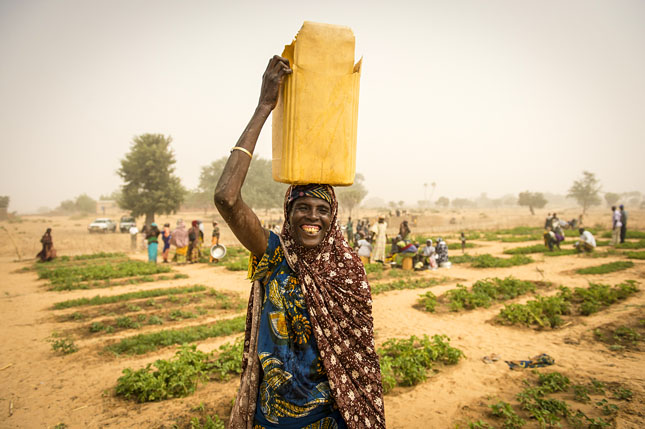
    ECSP staff were among the more than 1,000 attendees discussing non-traditional security issues at the 12th National Conference on Science, Policy, and the Environment last month at the Ronald Reagan Building. Our own Geoff Dabelko spoke on the opening plenary (above) and we collected other excerpts below, though they’re only a small slice of the conference. Find our full coverage by following the NCSE tag, see the full agenda on environmentalsecurity.org, and follow the conversation on Twitter (#NCSEconf).

    Climate, Energy, Food, Water, and Health

    At the conference’s lead-off plenary, Jeff Seabright (Vice President, The Coca-Cola Company), Daniel Gerstein (Deputy Under Secretary for Science and Technology, U.S. Department of Homeland Security), Rosamond Naylor (Director, Stanford’s Center on Food Security and Environment), and our ECSP’s Geoff Dabelko highlighted the challenges and opportunities of addressing the diverse yet interconnected issues of climate, energy, food, water, and health.

    “We need to embrace diversity regardless of the complexity,” said Dabelko, and “abandon our stereotypes and get out of our stovepipes.” Government agencies, academics, and NGOs must be open to using different tools and work together to capture synergies. “If we know everyone in the room, we are not getting out enough,” he said.

    “We have to be concerned with every level – national, state, tribal, regional, down to the individual,” said Gerstein. DHS recognizes that climate change affects all of its efforts, and has established three main areas of focus: Arctic impacts; severe weather; and critical infrastructure and key resources.

    For Coca-Cola, “managing the complex relationship among [food, water, and energy] is going to be the challenge of the 21st century, said Seabright, who noted that the business community is “seeing a steady increase in the internalization of these issues into business,” including as part of companies’ competitive advantages and strategies.

    Similarly, we must offer opportunities and not just threats, said Dabelko, such as exploring climate adaptation’s potential as a tool for peacebuilding rather than simply focusing on climate’s links to conflict. We need to “find ways to define and measure success that embrace the connections among climate, water, and energy, and does not try to pretend they aren’t connected in the real world,” he said.

    Communicating Across Sectors: Difficult But Necessary

    Next, Sherri Goodman (Executive Director, CNA Military Advisory Board), Nancy Sutley (Chair, White House Council on Environmental Quality), Rear Admiral Neil Morisetti (Climate and Energy Security Envoy, UK Ministry of Defence), and Susan Avery (Director, Woods Hole Oceanographic Institute) called on governments, militaries, and institutions to move away from traditional, vertically segmented responsibilities to address today’s environmental and security challenges.

    “We live in an interdependent, connected world,” Morisetti said, but communicating that is a challenge. Militaries are likely to have new, broader missions, including conflict prevention, he said, which makes communications all the more important.

    Science is moving from reductive to integrated outlooks to better address larger, systems-wide challenges, said Avery, but communicating results of this research to the public, and across and between disciplines, is difficult.

    Confronting these communication and education challenges, particularly the difficulties of conveying the probability of various risks, is a key focus of the Council on Environmental Quality, said Sutley. “We confront the challenge of risk communication every day and it’s not limited to climate change,” she said.

    Challenging Conventional Wisdom on Climate and Conflict

    The common argument is that climate change will lead to scarcity – less arable land, water, rain, etc. – and scarcity will lead to conflict, said Kate Marvel (Lawrence Livermore National Lab). But the link between scarcity and conflict is not that clear. It’s “very important to treat models as tools, not as magic balls,” she said. Developing better diagnostics to test models will help researchers and observers sort out which ones are best.

    Kaitlin Shilling (Stanford University) called on the environmental security community to move beyond simple causal pathways towards finding solutions. After all, rolling back climate change is not an option at this point, she said; to find solutions, therefore, we need more detailed analysis of the pathways to violence.

    The most common types of climate-conflict correlations are not likely to directly involve the state, said Cullen Hendrix (College of William and Mary). Traditional inter-state wars (think “water wars”) or even civil wars are much less likely than threats to human security (e.g., post-elections violence in Kenya) and community security (e.g., tribal raiding in South Sudan). For this reason, the biggest breakthroughs in understanding climate and conflict links will likely come from better interactions between social and physical scientists, he said.

    Because the many unique factors leading to conflict vary from place to place, a better way to assess climate-conflict risk might be mapping human vulnerability to climate change rather than predicting conflict risk in a given place, said Justin Mankin (Stanford University). While human reactions are very difficult to predict, vulnerability is easier to quantify.

    Yu Hongyuan (Shanghai Institute for International Studies) compared the concerns of U.S. and Chinese officials on climate change. Polling results, he said, show Chinese officials are most concerned with maintaining access to resources, while American policymakers focus on climate change’s effects on global governance and how it will impact responses to natural disasters, new conflicts, and humanitarian crises. Given the centrality of these two countries to international climate negotiations, Yu said he hoped the “same issues, different values” gulf might be bridged by better understanding each side’s priorities.

    Schuyler Null, Lauren Herzer, and Meaghan Parker contributed to this article.

    Video Credit: Lyle Birkey/NCSE; photo credit: Sean Peoples/Wilson Center.
    MORE
  • The Ramsar Convention: A New Window for Environmental Diplomacy?

    ›
    Guest Contributor  //  February 20, 2012  //  By Pamela Griffin
    In seeking ways to connect conservation with peacemaking, the Institute for Environmental Diplomacy and Security (IEDS) has released a study that examines an expanded role for the international wetlands treaty, the Ramsar Convention.

    The Ramsar Convention: A New Window for Environmental Diplomacy? describes the wetlands convention, its place within the international environmental treaty world, and its potential to enhance environmental security during this dynamic time of increasingly insecure water supplies and climate change. With more than 40 years of work, the treaty has been quietly and effectively conserving wetlands and increasing recognition of the need to build international cooperation around them. The treaty has also helped define wetlands within greater biogeographic regions and led to formal identification of transboundary wetlands.

    In the article, we set out to combine information from the convention’s 234 listed wetlands (13 of which have formal transboundary plans) with the Global Peace Index, which ranks countries using 23 indicators, such as number of conflicts, conflict deaths, military expenditures, and relations with neighboring countries. The result is a prioritized list of countries most in need of tools of conflict resolution.

    Working within the framework of the convention builds capacity between high-conflict-risk nations and has potential to develop otherwise-difficult-to-establish trust because the process is transparent and all stakeholder voices are heard. This can be important even when the existing conflict has nothing to do with international wetlands.

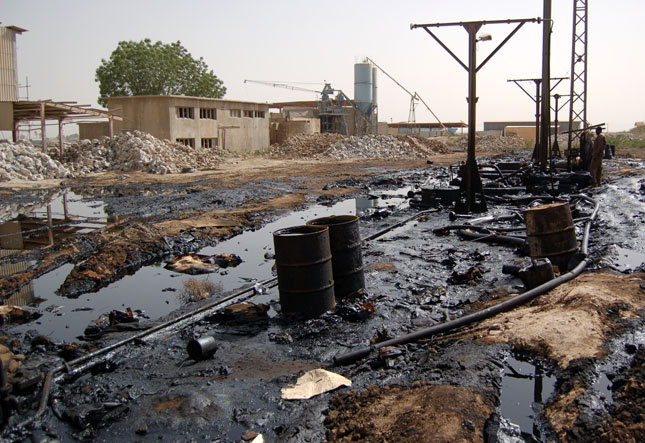
    The convention is active in many countries with ongoing conflicts, such as Afghanistan, the Democratic Republic of the Congo, Iran, Iraq, and Sudan, and efforts there may help inform the ongoing debate as to the efficacy of conservation as a tool for peacemaking.

    As environmental conditions continue to evolve rapidly, the need for institutions that can work in the transboundary environment will increase. The established international infrastructure of the convention has the potential to be a greater force in peacemaking. Further research may help focus on the strengths and weaknesses of the current system and reveal ways for more effective peacemaking efforts.

    Suggestions for ways to enhance the convention’s role in environmental diplomacy include working more closely with researchers and practitioners directly involved in the environmental peacemaking field, increased focus on developing capacity for increased flexibility to react to dynamic conditions, and more active promotion of formal transboundary agreements.

    Pamela Griffin is an independent scholar at IEDS where she focuses on the diplomatic potential of transboundary wetlands.
    MORE
  • Move Beyond “Water Wars” to Fulfill Water’s Peacebuilding Potential, Says NCSE Panel

    ›
    January 26, 2012  //  By Schuyler Null

    One of the best talks of last week’s NCSE Environment and Security Conference was thewater security plenary on Friday. Moderator Aaron Salzberg, who is the special coordinator for water resources at the Department of State, led with a provocative question: how many in attendance think there will be war over water in the future?

    MORE
  • Michael Kugelman, Ahmad Rafay Alam, and Gitanjali Bakshi for Foreign Policy

    Why South Asia Needs a Kabul Water Treaty

    ›
    December 12, 2011  //  By Wilson Center Staff

    The original version of this article, by Michael Kugelman, Ahmad Rafay Alam, and Gitanjali Bakshi, appeared on Foreign Policy’s AfPak Channel.

    Pakistan is once again accusing India of water hegemony. This time, however, the accusation refers not to Indian damming of the Western Rivers in the disputed regions of Jammu and Kashmir, but to Indian support for Afghan development projects along the Kabul River. This accusation indulges in conspiratorial thinking, and distracts from a factual understanding of the water issues between the two countries.

    MORE
  • Watch: Gidon Bromberg Gives an Update on Jordan River Rehabilitation Efforts

    ›
    October 27, 2011  //  By Kate Diamond
    Gidon Bromberg, co-director of Friends of the Earth Middle East (FOEME), says in this short interview with ECSP that his outlook on rehabilitating the Jordan River has changed completely over the last five years. We had been “laughed at” for trying to restore the waterway, he said; now though, “we are very confident that the Jordan River south of the Galilee down to the Dead Sea will be rehabilitated.”

    By building a cross-border peace park and encouraging collaboration between Israelis, Palestinians, and Jordanians on water scarcity and quality issues, FOEME aims to improve environmental and security problems that bind the three groups together.

    The Jordan River has become so polluted that visitors, many of whom are devout Christians making a pilgrimage to one of the religion’s most sacred sites, have been barred from its waters due to health concerns. Furthermore, more than 98 percent of its fresh water is diverted for agricultural work, meaning that the pollutants that end up in the river are highly concentrated.

    But today, Bromberg said, sewerage is being removed on both the Israeli and Jordanian sides and there is a commitment to do the same from the Palestinians. For the first time in 60 years, there are concrete plans to return fresh water to a river that is “so holy to half of humanity.”

    Sources: The Age, Friends of the Earth Middle East, The Guardian, U.S. Environmental Protection Agency
    MORE
  • Watch: Dennis Taenzler on Four Key Steps for REDD+ to Avoid Becoming a Source of Conflict

    ›
    Eye On  //  October 6, 2011  //  By Theresa Polk

    The UN Program on Reducing Emissions from Deforestation and Forest Degradation (REDD) provides financial incentives to developing countries to conserve their forests and invest in low-carbon pathways to sustainable development. However, it may also be a potential new source of conflict, says Dennis Taenzler, a senior project manager at adelphi in Berlin, who works on climate and energy policies as well as peace and conflict issues.

    MORE
  • Remembrance: Wangari Maathai, Nobel Peace Prize Winner, Linked Environment and Conflict

    ›
    September 26, 2011  //  By Schuyler Null
    Sad news today as Wangari Maathai, the first African woman and the first environmentalist to win the Nobel Peace Prize, has passed away in Nairobi. The Green Belt Movement, which Maathai founded in 1977, has planted over 30 million trees and advocates for what Maathai called the three essential components of a stable society: sustainable environmental management, democratic governance, and a culture of peace. [Video Below]

    “Almost every conflict in Africa you can point at has something to do with competition over resources in an environment,” said Maathai during her visit to the Wilson Center in 2009:
    Unless you deal with the cause, you are wasting your time. You can use all the money you want for all the years you want; you will not solve the problem, because you are dealing with a symptom. So we need to go outside that box and deal with development in a holistic way.
    Maathai’s message was molded from her experiences in Kenya and across sub-Saharan Africa in general. She was not shy about condemning African leaders and advocating for women in the political space. In ECSP Report 12, she wrote, “I come from a continent that has known many conflicts for a long time. Many of them are glaringly due to bad governance, unwillingness to share resources more equitably, selfishness, and a failure to promote cultures of peace.”

    Importantly, though, Maathai advocated for addressing these issues in concert, not separately. She said at the Wilson Center:
    I can’t say, ‘Let us deal with governance this time, and don’t worry about the resources.’ Or, ‘Don’t worry about peace today, or conflicts that are going on; let us worry about management of resources.’ I saw that it was very, very important to use the tree-planting as an entry point.
    A Message to the World

    Some raised questions when Maathai won the Nobel Peace Prize in 2004 – the first awarded to someone from the environmental field – but the recognition was more than deserved, wrote Environmental Change and Security Program (ECSP) Director Geoff Dabelko on Grist:
    Maathai is on the front lines of the struggle over natural resources that fuels conflicts across the world. While there is no dramatic footage of tanks rumbling across borders or airplanes flying into buildings, the everyday fight for survival of those who depend directly on natural resources – forests, water, minerals – for their livelihoods is at the heart of the battle for peace and human security.
    …
    Elevating such a strong Southern voice – and one whose elephant’s skin bears the scars of the fight for peace – is a noble choice.
    Maathai explained in Report 12 that she thought her winning of the prize was intended as a message to the world to “rethink peace and security.”

    The Nobel Committee “wanted to challenge the world to discover the close linkage between good governance, sustainable management of resources, and peace,” she wrote. “In managing our resources, we need to realize that they are limited and need to be managed more sustainably, responsibly, and accountably.”

    Sources: Grist, The New York Times.

    Photo Credit: David Hawxhurst/Wilson Center.
    MORE
  • Redrawing the Map of the World’s International River Basins

    ›
    Guest Contributor  //  August 24, 2011  //  By Jim Duncan

    Understanding why conflict over water resources arises between nations begins with a solid understanding of the geography of international river basins. Where are the basins? How big are they? How many people live there? Who are the riparian nations, and what is the significance of each to the basin?

    MORE
Newer Posts   Older Posts
View full site

Join the Conversation

  • RSS
  • subscribe
  • facebook
  • G+
  • twitter
  • iTunes
  • podomatic
  • youtube
Tweets by NewSecurityBeat

Trending Stories

  • unfccclogo1
  • Pop at COP: Population and Family Planning at the UN Climate Negotiations

Featured Media

Backdraft Podcast

play Backdraft
Podcasts

More »

What You're Saying

  • Volunteers,At,The,Lagos,Food,Bank,Initiative,Outreach,To,Ikotun, Pan-African Response to COVID-19: New Forms of Environmental Peacebuilding Emerge
    Rashida Salifu: Great piece 👍🏾 Africa as a continent has suffered this unfortunate pandemic.But it has also...
  • A desert road near Kuqa An Unholy Trinity: Xinjiang’s Unhealthy Relationship With Coal, Water, and the Quest for Development
    Ismail: It is more historically accurate to refer to Xinjiang as East Turkistan.
  • shutterstock_1779654803 Leverage COVID-19 Data Collection Networks for Environmental Peacebuilding
    Carsten Pran: Thanks for reading! It will be interesting to see how society adapts to droves of new information in...

What We’re Reading

  • Rising rates of food instability in Latin America threaten women and Venezuelan migrants
  • Treetop sensors help Indonesia eavesdrop on forests to cut logging
  • 'Seat at the table': Women's land rights seen as key to climate fight
  • A Surprise in Africa: Air Pollution Falls as Economies Rise
  • Himalayan glacier disaster highlights climate change risks
More »
  • woodrow
  • ecsp
  • RSS Feed
  • YouTube
  • Twitter
  • Facebook
  • Home
  • Who We Are
  • Publications
  • Events
  • Wilson Center
  • Contact Us
  • Print Friendly Page

© Copyright 2007-2021. Environmental Change and Security Program.

Woodrow Wilson International Center for Scholars. All rights reserved.

Developed by Vico Rock Media

Environmental Change and Security Program

Woodrow Wilson International Center for Scholars

Ronald Reagan Building and International Trade Center

  • One Woodrow Wilson Plaza
  • 1300 Pennsylvania Ave., NW
  • Washington, DC 20004-3027

T 202-691-4000