-
The Top 5 Posts of January 2020
›
The world’s largest greenhouse gas emitter, China, is projected to fulfill its Paris commitment to reduce the proportion of coal in its energy mix ten years ahead of schedule. However, the country remains the world’s largest producer and consumer of coal, and coal conversion practices are steadily on the rise. In this month’s top post, China Environment Forum’s Richard Liu, Zhou Yang, and Xinzhou Qian track China’s risky gamble on coal conversion.
-
Geoff Dabelko and Sharon Burke on Environmental Peacebuilding in an Era of Great Power Competition
› United States and China are on the road to war, said Senior Advisor of New America’s Resource Security Program, Sharon Burke in this week’s Friday Podcast. “And if you’re an environmental peacebuilder and you’re not thinking about that, you might want to,” she added. She spoke with Geoffrey Dabelko, Professor at Ohio University and Senior Advisor to ECSP, at the first ever International Conference on Environmental Peacebuilding in October 2019 at the University of California, Irvine. It’s a war we can’t afford, said Burke. “But we’re not doing anything to avoid it at the moment, in my opinion, other than deterrence.”
 -
To Reduce Future Conflicts over Water, Reconceptualize “Shared Waters”
›In the years ahead, climate change and the proliferation of new technologies and information availability will require us to reshape our vision of shared waters. Because these megatrends are experienced in concert, the opportunities, challenges, and uncertainties for shared water management will continue to compound over time.While it is impossible to know precisely how shared water will look in the future, we should already be working to expand how we conceptualize shared waters, address inequities embedded within water management, and develop criteria and processes that successfully identify and include non-traditional shared water actors in decision-making. These shifts will strengthen our ability to generate creative and sustainable management strategies and help us avoid water-related conflicts.
-
Beware the Dark Side of Environmental Peacebuilding
›Environmental peacebuilding is a good idea. As a practice, it aims to address simultaneously environmental problems and challenges related to violent conflict. Examples include the promotion of environmental cooperation between rival states, conflict-sensitive adaptation to climate change, and restoring access to land and water in post-conflict societies. As a concept, environmental peacebuilding directs researchers’ and politicians’ attention to cooperative adaptation as a response to environmental stress. It thus helps to correct one-sided narratives about environment-conflict links.
-
Protecting the Protectors: Environmental Defenders and the Future of Environmental Peacebuilding
›Early scholarship on environmental peacemaking recognized the important role that local civil-society can play in promoting regional cooperation while, at the same time, pressuring governments to protect the environment. For example, in the late 1980s/early 1990s, nongovernmental organizations (NGOs), such as the Union for Defense of the Aral Sea and Amu Darya in Uzbekistan and the Dashowuz Ecological Club in Turkmenistan, were at the forefront of the fight to restore the Aral Sea and protect the region’s biodiversity. -
Climate Change, Conflict, and Peacebuilding in Solomon Island Communities
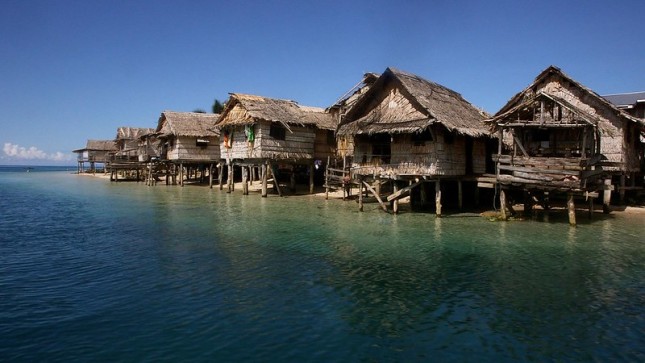
›Meaningful engagement with the social and conflict implications of climate change in Solomon Islands must be firmly grounded within local worldviews—within Solomon Islanders’ physical, economic, political, and social and spiritual worlds. As we note in a recent policy brief for the Toda Peace Institute, when addressing conflict challenges exacerbated or caused by climate change, approaches should be draw upon community understandings of what constitutes peace and justice.
-
Hydro-Nationalism: Future Water Woes Call for Radical New Borders
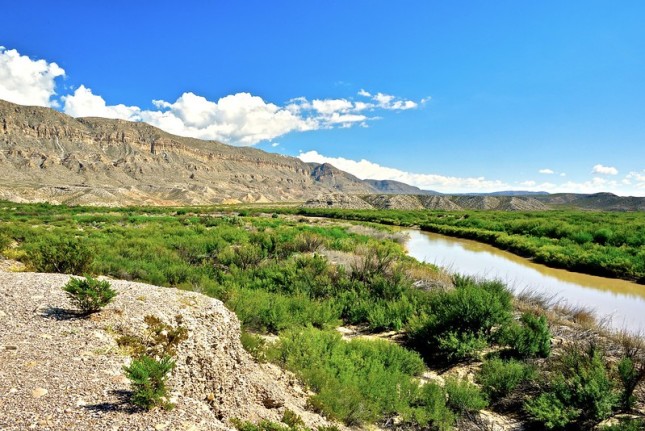
›International political boundaries are arbitrary creations. Today’s borders are better described as imaginary lines on maps, rather than hard barriers between states. Often using mountains, rivers, or other geographical landmarks, modern borders are entrenched in historic tradition rather than logic and fact. As a result, today’s international borders are poorly equipped to handle modern challenges, in particular climate change, which has already begun to threaten the most important state resource, fresh water.
-
Defying Boundaries: Using Climate Risks to Forge Cross-Border Agreements
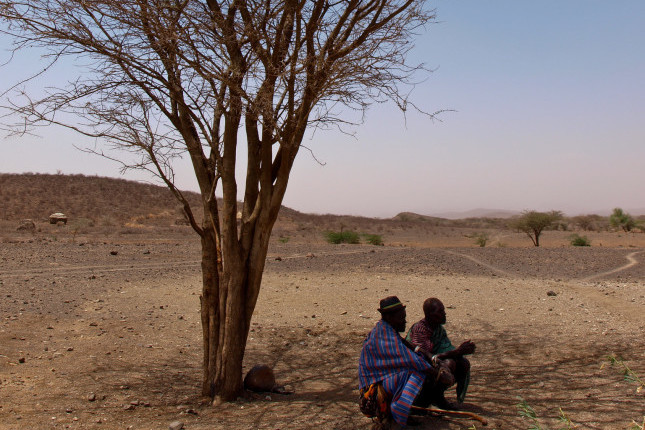
›Climate change is a risk, said Maurice Amollo, a Mercy Corps Chief of Party in Nigeria Mercy Corps. “But it is also an opportunity if people come together.” He spoke at a recent USAID Adaptation Community Meeting, “Tackling the threat multiplier: Addressing the role of climate change in conflict dynamics.” The discussion focused on USAID’s Peace III initiative that Amollo and Mercy Corps implemented in the Karamoja region along the borders of Kenya, Ethiopia, Somalia, and Uganda, where climate and conflict shocks are part of daily life for pastoralist ethnic groups. Addressing climate and conflict issues in these regions will require using the environment to build cooperation and peace, said Eliot Levine, the Director of Mercy Corps’ Environment Technical Support Unit.
Showing posts from category environmental peacemaking.
 United States and China are on the road to war, said Senior Advisor of New America’s
  In the years ahead, climate change and the proliferation of new technologies and information availability will require us to reshape our vision of
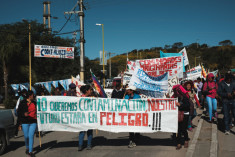 Early scholarship on