

-
Zafar Imran, Le Monde diplomatique
Climate Change in the Indian Farmers’ Protest
›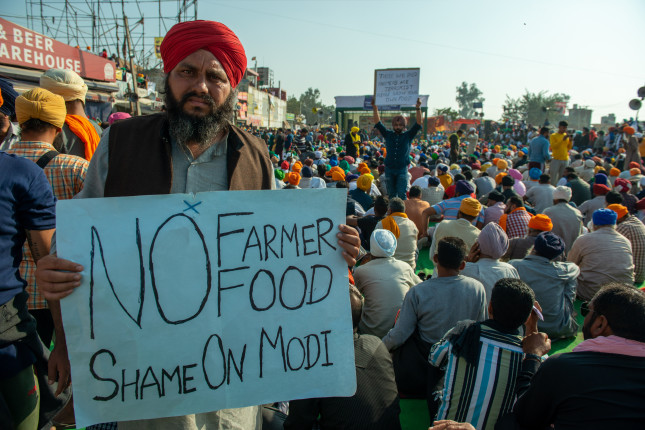
The ongoing farmers’ movement in India has taken the world’s largest democracy by storm. Hundreds of thousands from all over the country have laid siege to New Delhi for more than two months. As both the protestors and the government dig their heels in, the chances of confrontation and violence are increasing by the day.
-
Leverage COVID-19 Data Collection Networks for Environmental Peacebuilding
›
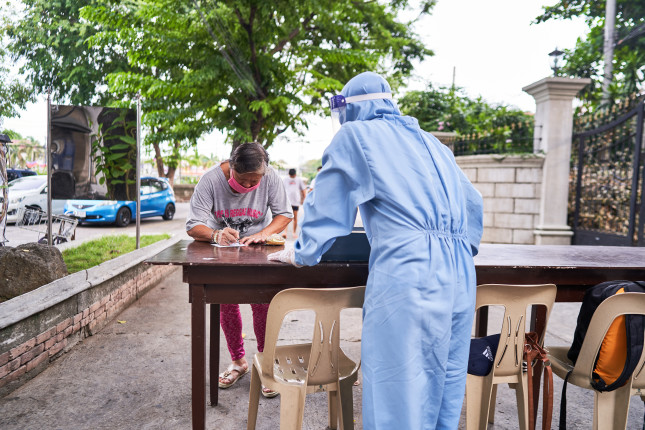
Environmental peacebuilding could benefit from COVID-era data innovation. A well-documented obstacle environmental peacebuilders face is a lack of shared, empirical datasets among parties engaged in, recovering from, or descending into conflict. Current innovations in data collection may soon help seal these gaps.
Countries throughout the world have expanded their data collection capabilities to track the spread of COVID-19. From text message contact tracing to drone surveillance, these innovations inform national responses and shape the global case counting webpages that many of us anxiously refresh every day. The information networks established during the pandemic may endure far into the future, informing new goals, projects, and policies.
-
New U.S. Global Fragility Strategy Recognizes Environmental Issues as Key to Stability
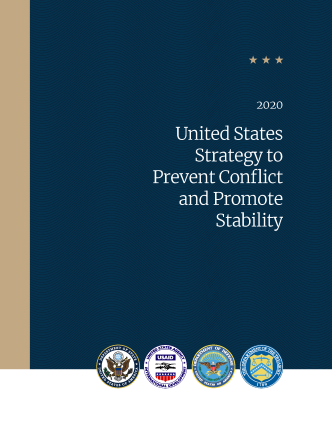
›A new Global Fragility Strategy, released late last year by the U.S. Department of State, signals a growing awareness of the role that environmental issues play in fragility, conflict, and peace. According to the State Department’s Office of Foreign Assistance, in the last five years alone, “the U.S. government has spent $30 billion in 15 of the most fragile countries in the world.” These “large-scale U.S. stabilization efforts after 9/11 have cost billions of dollars but failed to produce intended results,” writes Devex’s Teresa Welsh. As a result, Congress passed into law in 2019 the Global Fragility Act, legislation that directed the Department of State to lead the development of a new 10-year Global Fragility Strategy that sets out a new U.S approach to conflict prevention and stabilization in fragile contexts.
-
Climate Superpowers Could Alter Foreign Policy Landscape
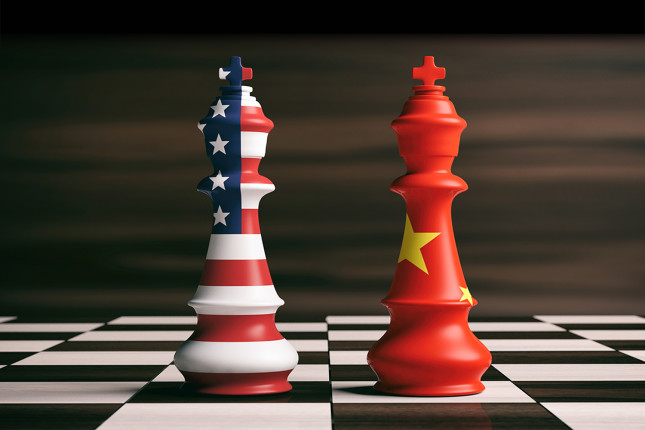
›“Climate change has the potential to be a very important confidence-building measure between the United States and China,” said Sharon Burke, Senior Advisor of the International Security Program and Resource Security Program at New America. “Because no matter what else is happening in our relationship, we can succeed together on climate change.” She spoke at the launch for a project co-led by the Wilson Center’s Environmental Change & Security Program and adelphi, “21st Century Diplomacy: Foreign Policy is Climate Policy.” Hosted as part of the Berlin Climate and Security Conference, the discussion focused on the “climate superpowers” section of the project.
-
21st Century Diplomacy: Foreign Policy is Climate Policy (Report & Project Launch)
›Climate change will upend the 21st century world order. It will redefine how we live and work, and change the systems of production, trade, economics, and finance. Even now, in the midst of a global pandemic, it is clear that climate change will be the defining issue of this century. In fact, COVID-19 has only underscored the inadequacy of our responses to global crises and heightened the urgency of this call to action. 21st century diplomacy will have to raise climate ambition, shape the transformative systems change needed, and promote and facilitate new modes of multilateral collaboration.
-
To Understand How Disasters Relate to Conflict and Peace, Reframe the Starting Point
›Is the world doomed to be ever-more tumultuous? For years, headlines have suggested that climate change causes or acts as a threat multiplier for violent conflicts. For example, climate change-influenced drought has been labeled a cause of the Syrian conflict and the war in Darfur. Natural hazard-related disasters (“disasters”) like earthquakes that are not related to climate change have also been connected to an increased risk of violent social conflict and political instability. The narratives are often that disasters displace people who then put pressure on already-strained resources and infrastructure in receiving areas, and that disaster-stricken people fight over limited resources in their struggle for survival.
-
Reports Highlight the Need for Further Consideration of Gender, Climate, and Security Linkages
›In a recent Stockholm International Peace Research Institute (SIPRI) paper, Elizabeth Seymour Smith, a Research Assistant with SIPRI’s Climate Change and Risk Programme, explores the intersection of climate change, gender, and security in Women, Peace and Security (WPS) national action plans (NAPs) of 80 countries. Using qualitative content analysis, the article finds that states frame and respond to climate change and gender-based security in differing ways. -
The Greatest Story Never Told
› “If the pope is interested, everyone is interested,” said Alexandre Roulin, accepting the 2019 Environmental Peacebuilding Research Award in Irvine, California. The University of Lausanne professor’s project—on how conserving barn owls in the Middle East brings together people in Israel, Jordan, and Palestine across political divides—is certainly unique and intriguing. (Also, cute owls!)The spiritual leader of the world’s 1 billion Catholics reached out to Roulin because the “Barn Owls Know No Boundaries” project promises a possible way to build peace in one of the world’s most intractable religious conflicts. A tremendous story, right?
But despite having all the hallmarks of a great tale, a quick Google search finds only a handful of stories about it. This lack of media attention is unfortunately an ongoing challenge for what I have long viewed as “the greatest story never told.”
Showing posts from category environmental peacemaking.
 In a
In a  “If the pope is interested, everyone is interested,” said Alexandre Roulin, accepting the 2019 Environmental Peacebuilding Research Award in Irvine, California. The University of Lausanne professor’s project—on how


