• woodrow wilson center
  • ecsp

New Security Beat

Subscribe:
  • rss
  • mail-to
  • Who We Are
  • Topics
    • Population
    • Environment
    • Security
    • Health
    • Development
  • Columns
    • China Environment Forum
    • Choke Point
    • Dot-Mom
    • Friday Podcasts
    • Navigating the Poles
    • Reading Radar
  • Multimedia
    • Water Stories (Podcast Series)
    • Backdraft (Podcast Series)
    • Tracking the Energy Titans (Interactive)
  • Films
    • Water, Conflict, and Peacebuilding (Animated Short)
    • Paving the Way (Ethiopia)
    • Broken Landscape (India)
    • Scaling the Mountain (Nepal)
    • Healthy People, Healthy Environment (Tanzania)
  • Publications
  • Events
  • Contact Us

NewSecurityBeat

The blog of the Wilson Center's Environmental Change and Security Program
Showing posts from category education.
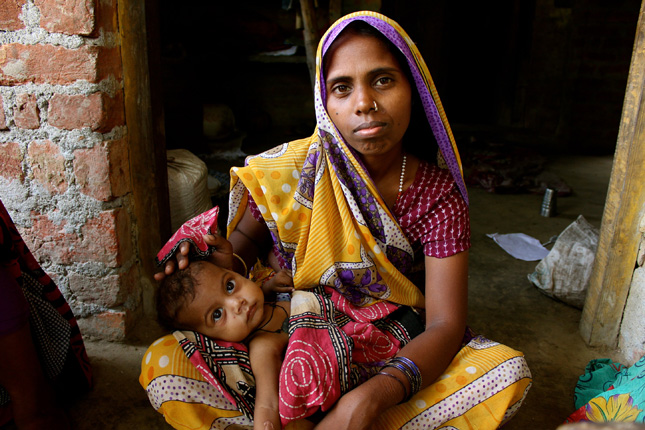
  • India’s Young and Restless

    ›
    March 14, 2016  //  By Michael Kugelman
    Delhi street art

    When we think about countries on the Indian subcontinent with destabilizing demographics, Pakistan comes to mind immediately. First, it’s a country with a very young population. Almost two thirds of its nearly 200 million people are under 25, and the median age is about 22. Second, this youth cohort is highly susceptible to radicalization. Nearly every terrorist attack in Pakistan since 9/11 has been perpetrated by someone under 30. In recent years, the Wilson Center has focused on Pakistan’s youth demographic challenges in detail. India, however, needs to be included in this conversation as well.

    MORE
  • Parfait Eloundou-Enyegue on Re-Conceptualizing Education to Help Developing Countries Create Jobs

    ›
    Friday Podcasts  //  March 11, 2016  //  By Sean Peoples

    parfait-small“There is more to education than the picture that you typically see in most reports,” says Parfait Eloundou-Enyegue, professor of development sociology at Cornell University, in this week’s podcast. “And this picture comes from looking at education not as an outcome but as an institution.”

    MORE
  • Ellen Starbird on the Allure of the Demographic Dividend and How to Achieve It

    ›
    Friday Podcasts  //  February 26, 2016  //  By Sean Peoples

    Starbird-small“It has always surprised me actually how powerful this ‘demographic dividend’ framework seems to be,” says Ellen Starbird, director of USAID’s Office of Population and Reproductive Health, in this week’s podcast. But “for a lot of countries it’s a long way off.”

    MORE
  • Nyaradzayi Gumbonzvanda on Elevating Young Female Leaders By Giving Them Space

    ›
    Friday Podcasts  //  January 22, 2016  //  By Sean Peoples

    Gumbonzvanda-small“The demographic data is telling us that the future is very young and the future is very female,” says Nyaradzayi Gumbonzvanda, a lawyer and general secretary of the World Young Women’s Christian Association (World YWCA), in this week’s podcast. “And therefore, we actually have an imperative to respond.”

    MORE
  • Venezuela’s Turn? Age Structure and Liberal Democracy in South America

    ›
    January 21, 2016  //  By Richard Cincotta
    Venezuela-Chavez-rally

    Venezuela seems suspended at a critical juncture. Following national elections in December, the opposition Democratic Unity Roundtable was set to occupy two thirds of the 167-seat National Assembly, an upset that would reduce the late Hugo Chávez’s United Socialist Party to a distant second place for the first time and given opposition legislators the power to enact sweeping political changes.

    MORE
  • Empower, Educate, and Employ Youth to Realize the Demographic Dividend

    ›
    From the Wilson Center  //  January 8, 2016  //  By Kathleen Mogelgaard
    Rwandan youth

    In the course of development, most countries undergo a demographic transition. Health conditions improve and mortality rates decline, causing rapid population growth and a relatively high proportion of young people. Over time, if fertility declines, as it has in most places, growth slows and there is a period when the proportion of very young “dependents” shrinks in comparison to the working age population. This moment represents an opportunity for a “demographic dividend” – an economic boom as a comparatively large cohort of the total population moves through their most economically productive years. [Video Below]

    MORE
  • Shelter From the Storm: State of World Population 2015 Report Launch

    ›
    From the Wilson Center  //  December 21, 2015  //  By Mary Mederios Kent
    Myanmar refugee

    The sexual and reproductive health and rights of women and girls must be protected, even – especially – during “the toughest of times, in the hardest of places,” said Kate Gilmore, deputy executive director of the United Nations Population Fund (UNFPA), at the Wilson Center on December 3. [Video Below]

    MORE
  • What Explains the United States’ Dismal Maternal Mortality Rates?

    ›
    Dot-Mom  //  From the Wilson Center  //  December 17, 2015  //  By Anna Bella Korbatov
    Monica Simpson

    On the world stage, the United States is an outlier for many reasons, some good, some bad. Few are more alarming, however, than maternal health. Despite spending two and half times more per person on health than the OECD average, the maternal mortality rate in the U.S. – the number of women who die during or as a result of childbirth and pregnancy – increased from 12 to 14 deaths per 100,000 live births from 1990 to 2015, putting the United States at 46th in the world. [Video Below]

    MORE
Newer Posts   Older Posts
View full site

Join the Conversation

  • RSS
  • subscribe
  • facebook
  • G+
  • twitter
  • iTunes
  • podomatic
  • youtube
Tweets by NewSecurityBeat

Trending Stories

  • unfccclogo1
  • Pop at COP: Population and Family Planning at the UN Climate Negotiations

Featured Media

Backdraft Podcast

play Backdraft
Podcasts

More »

What You're Saying

  • Volunteers,At,The,Lagos,Food,Bank,Initiative,Outreach,To,Ikotun, Pan-African Response to COVID-19: New Forms of Environmental Peacebuilding Emerge
    Rashida Salifu: Great piece 👍🏾 Africa as a continent has suffered this unfortunate pandemic.But it has also...
  • A desert road near Kuqa An Unholy Trinity: Xinjiang’s Unhealthy Relationship With Coal, Water, and the Quest for Development
    Ismail: It is more historically accurate to refer to Xinjiang as East Turkistan.
  • shutterstock_1779654803 Leverage COVID-19 Data Collection Networks for Environmental Peacebuilding
    Carsten Pran: Thanks for reading! It will be interesting to see how society adapts to droves of new information in...

What We’re Reading

  • Rising rates of food instability in Latin America threaten women and Venezuelan migrants
  • Treetop sensors help Indonesia eavesdrop on forests to cut logging
  • 'Seat at the table': Women's land rights seen as key to climate fight
  • A Surprise in Africa: Air Pollution Falls as Economies Rise
  • Himalayan glacier disaster highlights climate change risks
More »
  • woodrow
  • ecsp
  • RSS Feed
  • YouTube
  • Twitter
  • Facebook
  • Home
  • Who We Are
  • Publications
  • Events
  • Wilson Center
  • Contact Us
  • Print Friendly Page

© Copyright 2007-2021. Environmental Change and Security Program.

Woodrow Wilson International Center for Scholars. All rights reserved.

Developed by Vico Rock Media

Environmental Change and Security Program

Woodrow Wilson International Center for Scholars

Ronald Reagan Building and International Trade Center

  • One Woodrow Wilson Plaza
  • 1300 Pennsylvania Ave., NW
  • Washington, DC 20004-3027

T 202-691-4000