-
Taking On Domestic Violence in Post-Conflict Liberia
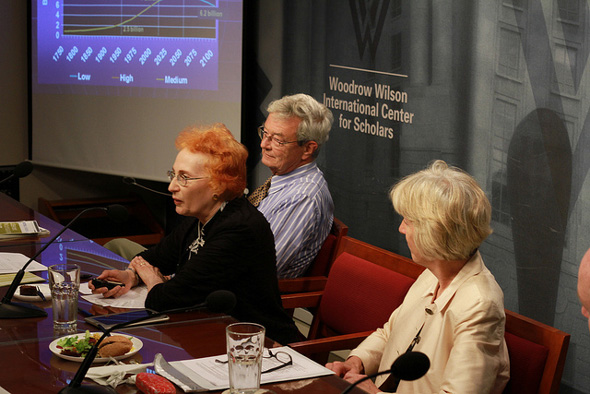
›Liberia is a case study in post-conflict violence against women, said panelists at the Wilson Center on July 24. “Confined merely to performing household chores and childrearing duties, from early childhood, women and girls have been socialized into subservience and powerlessness and acceptance of domestic abuse as a norm,” Annette Kiawu, deputy minister for research and technical services at the Liberian Ministry of Gender and Development, told the audience. [Video Below]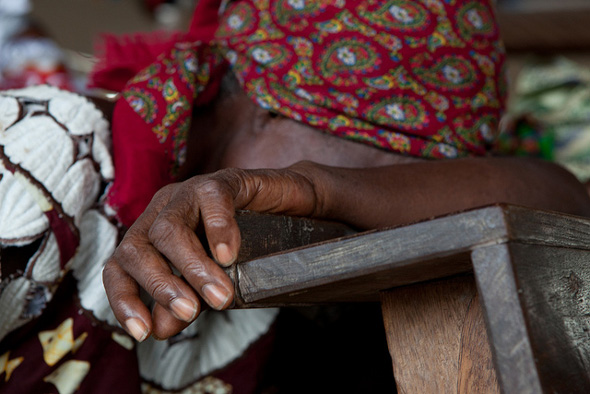
Kiawu was joined by Pamela Shifman of the Novo Foundation and Esther Karnley and Elisabeth Roesch of the International Rescue Committee (IRC). They discussed the prevalence of domestic violence in Liberia after the 14-year civil war, which ended in 2003.
Violence Stemming from Changing Norms
Kiawu pointed to women’s changing roles in Liberia as a source of household tension. She noted that women are increasingly “demanding a greater role in household decision making,” which some men see as “encroachment on their sphere of influence.”
“According to the LDHS [Liberia Demographic and Health Survey], the persistence of domestic violence is directly linked to the increased status of women on the one hand and men’s [perception] of loss of power and authority on the other,” she said. Some men’s urge to assert dominance is exacerbated by higher levels of alcohol abuse and a tendency towards violence learned during the civil war.
There has been legislation against gender-based violence – including the Rape Amendment Act, also known as the “revised rape law,” the Revised Gender-Based Violence Action Plan, and the African Union Protocol – as well as action plans and community-based groups meant to decrease the rate of domestic violence, like the Gender-Based Violence Network, an initiative designed to increase community ownership of domestic violence issues and improve response at the grassroots level. But despite these advances, Kiawu stressed that there still is a long way to go, saying that increased funding and coordination between domestic and international agencies and the Liberian government is necessary to have a real impact on the lives of the “countless women” whose lives are threatened by domestic violence.
Making Reality Match Rhetoric
Pamela Shifman agreed that domestic violence prevention programs need more funding. “So often in conflict-affected settings we hear that we need to address other issues first…that domestic violence is a back-burner issue,” she said. Domestic violence is often perceived to be “not that serious” when compared to other issues in conflict-prone and post-conflict countries.
But Shifman argued that divorcing domestic violence from other types of violence is problematic. “Violence in the home normalizes violence in the street, normalizes violence in the community, and normalizes violence by the state,” she said.
NoVo is one of the few private organizations which prioritizes domestic violence and gender equity, Shifman said, but she asserted that all humanitarian organizations should devote time and money to these issues, saying that “if we ignore domestic violence, all of the other investments we make to improve the quality of life for communities will suffer.”
Empowering women can have significant results for the whole community. Shifman remarked that “investing in women is smart economics,” citing studies which suggest directing funds towards women “pays off at huge levels” for women’s families and communities. But when women experience violence, “their potential is thwarted,” she said. “They suffer, their families suffer, their community suffers, the entire nation suffers.”
Programs targeting domestic violence need greater awareness, more long-term commitment, and more funding, she said. “We don’t expect that violence is going to end overnight – no deep-seated social problem will be solved that quickly,” she said. “In order to make a dent in improving the lives of girls and women and ending violence against girls and women, we need more direct funding” from private and public sources.
“To put it bluntly, I think the reality needs to match the rhetoric,” Shifman concluded.
Perspectives from the Field: Social Isolation
Esther Karnley described the results of interviews conducted with Liberian women, both survivors of domestic violence and fellow community members. She found that a key reason women stay in abusive relationships is financial dependence. “Most of them said, ‘it’s because we depend on the men for everything… we don’t have any money, we are not empowered financially, we depend on the men for everything. Because of that, we remain in that relationship and we get killed.’”
She added that social isolation means that many women lack the resources to leave a relationship. “We are isolated socially, we don’t have access to services, we are all by ourselves,” they told her. Without support from friends, relatives, or organizations, it can be difficult to find the means to relocate.
Part of the problem in Liberia is the prevalence of informal education, especially Sande bush schools – schools run by a traditional women’s society designed to prepare girls for marriage, teaching them traditional housekeeping methods and culminating in female circumcision. Girls leave home to attend these traditional schools for several months, which severely curtails their access to formal education. Kiawu reported that “over 60 percent of girls attending Sande school drop out of regular school.” This means that “successive generations of young children, especially young girls, are expected to forgo formal education in favor of attending the Sande school.”
In addition to formal education, Karnley said financial empowerment and legislation holding perpetrators of domestic violence accountable for their actions would enable more women to leave abusive relationships.
Reaching Both Women and Men
Each of the panelists recognized that working against domestic violence requires comprehensive societal reforms. Karnley stressed that the impetus to begin working with men came from Liberian women. “Initially when we started working on GBV issues, we talked to women, and then the women came and said, ‘OK, you talk to us every day, and when we go home, we go and meet fire. Can you also talk to our men?’” In response, the IRC developed a 16-week program designed to change men’s behavior and views about violence and relationships. Karnley also mentioned a desire to reach out to the religious community to change the constant focus on the man as the head of a relationship to one based on love.
The Liberian government is also working with churches and mosques to change norms that encourage the subjugation of women, including work with a network of religious leaders known as Christian/Muslim United against SGBV (sexual and gender based violence). Kiawu said this organization emphasizes partnership within a marriage and teaching equality to children in the home. The panelists also mentioned additional efforts to increase the responsiveness and sensitivity of the police and judicial system to domestic violence issues, as well as the need for resources like safe houses to provide relief to survivors.
“The family, far from being off limits, has to be a priority for us in the humanitarian community as we help to rebuild nations where peace not only exists between nations, and among nations, and among communities, but among families,” Shifman contended. Kiawu agreed, adding that without interventions, violence and isolation prevent women “from taking advantage of opportunities that peace presents.”
Event Resources: Photo Credit: A woman prays during a Sunday morning service in Monrovia, courtesy of Bruce Strong/Newhouse School. -
Three UN Millennium Development Targets Reached and a Review of the Human Drivers of Climate Change
›“It is plausible that key transitions in human evolutionary history have been driven in large part by climate change,” write Eugene A. Rosa and Thomas Dietz in “Human Drivers of National Greenhouse-Gas Emissions,” a literature review published by Nature Climate Change. “Changes in climate will doubtless be a key force in the future evolution of social systems, including all aspects of social, economic, and political life, while impinging on the health and well-being of the individuals who populate them.” Rosa and Dietz cite numerous studies to argue that nearly every facet of society will be affected by climate change. “The critical point,” they write, “is that population, affluence, technology, and all other drivers act not alone or additively but in a multiplicative fashion.” For example, rapid population growth can lead to an increase in urbanization, which generates “substantial demand for goods and services that can induce emissions in distant places.” They conclude that huge changes must be made in technology and consumption in order to combat the effects of climate change that are being caused by a growing population and an increasingly affluent world. The United Nations’ 2012 Millennium Development Goals Report, released last month in New York City, announces that three of the eight major human development goals have been reached ahead of their 2015 targets. The Millennium Development Goals, set at a conference in 2000, were established to “uphold the principles of human dignity, equality, and equity at a global level.” The 2012 report indicates that the number of people living in extreme poverty has been halved since 1990; the proportion of people in the world without sustainable access to safe drinking water has also been halved; and more than 200 million slum dwellers have “gained access to either improved water sources, improved sanitation facilities, or durable or less crowded housing.” At the report launch, UN Secretary-General Ban Ki-moon noted that “these results represent a tremendous reduction in human suffering and are a clear validation of the approach embodied in the MDGs, but they are not a reason to relax.” Goals that have yet to be achieved include universal primary education; gender equality; reduced child mortality and improved maternal health; reducing rates of diseases such as HIV and malaria; and creating a global partnership for development.
Keenan Dillard is a cadet at the United States Military Academy at West Point and an intern with the Woodrow Wilson Center’s Environmental Change and Security Program. -
A Roundup of the ‘Global Trends 2030’ Series on Population Aging
›The National Intelligence Council is trying something new for this year’s Global Trends report: keeping a blog. So far, there have been postings from analysts and contributors on everything from migration and urbanization to international banking and precision strike capabilities, but over the past week, one of the most extensive series yet went up on demography. Though youth bulge theories have often dominated population-related security discussions, 11 posts highlight the newest and least understood of all demographic conditions: advanced population aging.
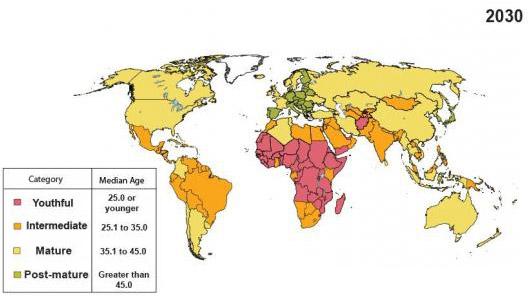
In parts of the world, mainly Europe and several countries in East Asia, populations are set to become “extremely mature” because of sustained declines in average fertility to very low levels and steady increases in lifespan. Demographers measure maturity by a population’s median age – the age of the person for whom precisely half of the population is younger and half older. Japan and Germany currently have the most mature populations; both are reported to have a median age slightly over 45 years. By 2030, UN Population Division and U.S. Census Bureau projections suggest that there may be between 19 and 29 countries that pass this benchmark. In Japan, the median age is projected to be 51.
If 5 out of 10 people in a country over 50 years old sounds unprecedented, that’s because it is. In this series, titled “Population Aging to 2030,” a group of political demographers, economic demographers, political scientists, and historians discuss the implications of this never-before-experienced set of age structures.
In his introductory essay, “Population Aging: A Demographic and Geographic Overview” (cross-posted here on New Security Beat), Richard Cincotta outlines the upcoming demographic trend, identifying the particulars of these novel age structures and indicating the regions that are expected to mature into economically and politically advantageous and disadvantageous demographic profiles.
In “Population Aging – More Security or Less?,” Jack Goldstone examines the effects on the U.S. military of a maturing developed world. With the United States and their traditional allies having proportionally fewer young people, will this impact limit their ability to put “boots on the ground?” Can new partnerships be developed in order to make up for this shortfall in man power?
In “China: the Problem of Premature Aging,” Richard Jackson focuses on China’s unique set of aging issues. Due to strict immigration laws and the one-child policy, China is experiencing the most rapid aging of the major powers. The favorable age structure which has enabled huge economic growth will soon shift to being a major burden on a relatively smaller working-age population, having potential political and societal consequences beyond that.
“The Sun Has Yet to Set on China” provides a different interpretation of the challenges China faces. Jennifer Dabbs Sciubba argues that although there will be changes in age structure, the problems may be overstated and the United States may still face a challenge to its status as sole global superpower.
In “Population Aging and the Welfare State in Europe,” Ronald Lee and Andrew Mason emphasize the stresses aging will exert on the extensive social welfare programs of many European states. The combination of longer life expectancy and declining fertility rates has led to a large and increasing funding gap in the welfare system, leaving questions as to the future viability of these programs.
In “Population Aging and the Future of NATO,” Mark Haas foresees that the welfare funding gap could have far-reaching international security consequences. With European governments diverting more and more resources away from military spending to fund welfare programs, the current U.S. irritation with NATO is likely to continue, as European allies “free ride” on the back of U.S. military supremacy in order to cut their defense budgets.
In “The Beginning of History: Advanced Aging and the Liberalness of Democracies,” Richard Cincotta examines the future of the liberal democratic political systems across aging countries. With increasing pressure on resources and a large disparity likely between the native born and migrant populations, it may become challenging for these states to remain liberal and democratic.
For Toshi Yoshihara, author of “The Strategic Implications of Japan’s Demographic Decline,” the aging process will pose a question of priorities for the leaders of Japan. The decreasing number of personnel available to the military, the effects of which were highlighted by the recent tsunami, will force a strategic decision between a defense force that is prepared primarily to address immediate and local security threats or one that is trained primarily for broader humanitarian interests.
“A Demographic Sketch of a Reunified Korea” provides interesting insights into the hypothetical demography of a single, unified Korea. Putting aside the two very distinct social paths that evolved during the past 60 year, Elizabeth Hervey Stephen uses demographic projections to envisage the challenges and opportunities that could arise from reunification.
David Coleman points to immigration as a possibly-mitigating force to aging in the developed world. In “The Impact of Immigration on the Populations of the Developed World and Their Ethnic Composition,” Coleman concludes that the developed world is likely to become “super diverse” by 2030. But this trend can be volatile. International migration is subject to many political and economic factors, bringing into question whether the developed world can rely on migration to supplement their native growth rates.
In “The Ethnic Future of Western Europe to 2030,” which wraps up the series, Eric Kaufmann examines the ethnic make-up of Western Europe in the coming decades. While the size of ethnic minority populations may be smaller than in the United States, the speed of growth in these minorities is likely to be much more rapid in Western Europe. This unprecedented increase in migrant populations could exacerbate ethnic social tensions, particularly in urban areas.
The broad nature of these essays suggests that advanced population aging will emerge within the context of many types of policy debates in the coming decades. While these 11 brief essays only scratch the surface of their respective areas of research, they provide a broad introduction to the politics of advanced population aging.
Jonathan Potton is a student at the University of Aberdeen and currently interning at the Stimson Center for demographer Richard Cincotta.
Sources: UN Population Division, U.S. Census Bureau.
Image Credit: Courtesy of Richard Cincotta. Data from U.S. Census Bureau’s international database. -
Population Aging: A Demographic and Geographic Overview
›The original version of this article, by Richard Cincotta, appeared on the National Intelligence Council’s Global Trends 2030 Blog. It is the first post in a series on population aging, featuring Jack Goldstone, Richard Jackson, Jennifer Dabbs Sciubba, Ronald Lee, Andrew Mason, Toshi Yoshihara, Elizabeth H Stephen, David Coleman, and Eric Kaufmann.
This series, Population Aging to 2030, begins with an introductory essay aimed at familiarizing readers with some of the demographic and geographic particulars of this phenomenon, and with several key demographic terms. The term most in need of definition is, of course, “population aging.” -
Urbanization and the Global Climate Dilemma
›Urbanization and climate change may be the two most important trends to shape global development in the decades ahead. On the one hand, urban cities have the potential to serve as engines of change, driving economic growth in some of the world’s least developed countries and pulling more people out of poverty than at any other time in history. On the other hand, climate change could undercut all of this by exacerbating resource scarcity and putting vulnerable communities at risk from sea level rise and more frequent and intense storms.
-
Nine Strategies to Stop Short of Nine Billion
›Although most analysts assume that the world’s population will rise from today’s seven billion to nine billion by 2050, it is quite possible that humanity will never reach this population size.
My chapter in this year’s State of the World 2012: Moving Toward Sustainable Prosperity, “Nine Population Strategies to Stop Short of 9 Billion,” outlines a series of strategies that would prompt significant declines in birth rates. Based purely on the intention of women around the world to have small families or no children at all, these initiatives, policies, and changes in attitude could end population growth before mid-century at fewer than nine billion people.
Examples from around the world demonstrate effective policies that not only reduce birth rates, but also respect the reproductive aspirations of parents and support an educated and economically active society that promotes the health of women and girls. Most of these reproduction policies are relatively inexpensive to implement, yet in many places they are opposed on the basis of cultural resistance and political infeasibility.
In creating this list, I sought to eschew the language and approaches of “population control” or the idea that anyone should pressure women and their partner on reproduction. Instead, I hoped to highlight strategies that could put human population on an environmentally sustainable path:- Provide universal access to safe and effective contraceptive options for both sexes. With two in five pregnancies reported as mistimed or never wanted, lack of access to good family planning services is among the biggest gaps in assuring that each baby will be wanted and welcomed in advance by its parents.
- Guarantee education through secondary school for all, especially girls. In every culture surveyed to date, women who have completed at least some secondary school have fewer children on average, and have children later in life, than do women who have less education.
- Eradicate gender bias from law, economic opportunity, health, and culture. Women who can own, inherit, and manage property; divorce; obtain credit; and participate in civic and political affairs on equal terms with men are more likely to postpone childbearing and to have fewer children compared to women who are deprived of these rights.
- Offer age-appropriate sexuality education for all students. Data from the United States indicates that exposure to comprehensive programs that detail puberty, intercourse, options of abstinence and birth control, and respecting the sexual rights and decisions of individuals can help prevent unwanted pregnancies and hence reduce birth rates.
- End all policies that reward parents financially based on the number of children they have. Governments can preserve and even increase tax and other financial benefits aimed at helping parents by linking these not to the number of children they have, but to parenthood status itself.
- Integrate lessons on population, environment, and development into school curricula at multiple levels. Refraining from advocacy or propaganda, schools should educate students to make well-informed choices about the impacts of their behavior, including childbearing, on the environment.
- Put prices on environmental costs and impacts. In quantifying the cost of an additional family member by calculating taxes and increased food costs, couples may decide that the cost of having an additional child is too high. Such decisions, freely made by women and couples, can decrease birth rates without any involvement by non-parents in reproduction.
- Adjust to an aging population instead of boosting childbearing through government incentives and programs. Population aging must be met with the needed societal adjustments, such as increased labor participation, rather than by offering incentives to women to have more children.
- Convince leaders to commit to stabilizing population through the exercise of human rights and human development. By educating themselves on rights-based population policies, policymakers can ethically and effectively address population-related challenges by empowering women to make their own reproductive choices.
Kathleen Mogelgaard assisted with research for this piece.
Robert Engelman is the president of the Worldwatch Institute and contributing author to State of the World 2012: Moving Toward Sustainable Prosperity.
Sources: Bloom et al. (2011), Guttmacher Institute, Kohler et al. (2008), Population Reference Bureau, UN, UNFPA, The Wall Street Journal, Yadava and Yadava (1999).
Image Credit: Worldwatch Institute, State of the World 2012: Moving Toward Sustainable Prosperity. -
Ingrid Schulze, Mongabay
Local Experts Needed to Protect Congo Basin Rainforests Amid Conflict, Development Challenges
›July 13, 2012 // By Wilson Center StaffThe original version of this article, by Ingrid Schulze, appeared on Mongabay.
This summer, the Democratic Republic of Congo (DRC) is expected to approve a new higher education strategy which the country has developed with the World Bank and other international donors. The shape of this educational reform initiative will be critical to Congo’s future in many ways. It could finally offer Congo’s long-suffering people a route into the 21st century. It will also help determine the future of the DRC’s forests.
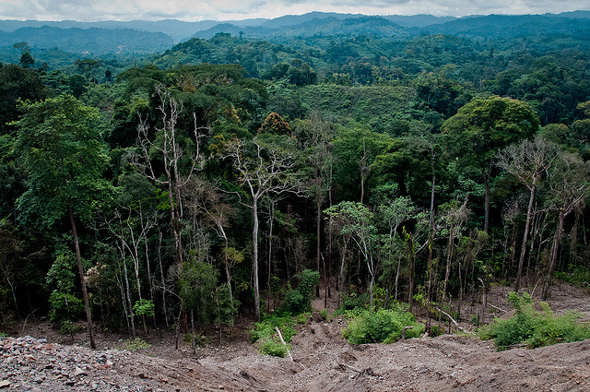
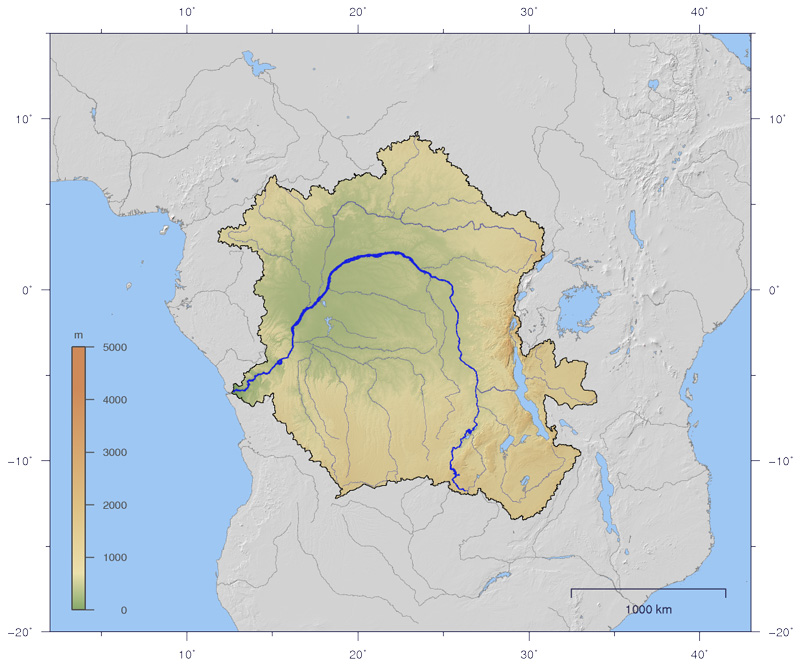
Nearly half of the Congo Basin’s remaining rainforest is in the DRC – yet the critical role of Congolese experts in forestry, agricultural science, wildlife management and other rural sciences in protecting this forest is not widely recognized.As one Congolese graduate student observed, the DRC has a “void” in agricultural and forestry research. Due to years of war and decades of economic crisis and mismanagement, most of Congo’s colleges and universities are severely underfunded and in disrepair. The country is short of experts who can investigate the ecology and economic potential of Congo’s forests and their biota, and provide an objective basis for setting priorities for protection and use of forest resources. While universities in Kinshasa and Kisangani do have some internationally funded programs to increase the number of biologists and other specialists, the number of graduates is nowhere near what is needed. Foreign scientists and consultants are not a substitute for Congolese experts.
Moreover, competent rural science graduates who can advise local farmers, communities and administrators on forestry, sustainable agriculture, wildlife management, and rural development issues are also desperately needed. The DRC’s national agricultural extension service, which should be integral to this process, has been broken for decades. A 1990 USAID report described it as underfunded, without the means to provide farmers with proven crop varieties and advice on agricultural practices, and tasked more with imposing particular crops on farmers and collecting taxes than helping them. There is little evidence that this has changed significantly since the end of the Congo war in 2003.
Continue reading on Mongabay.
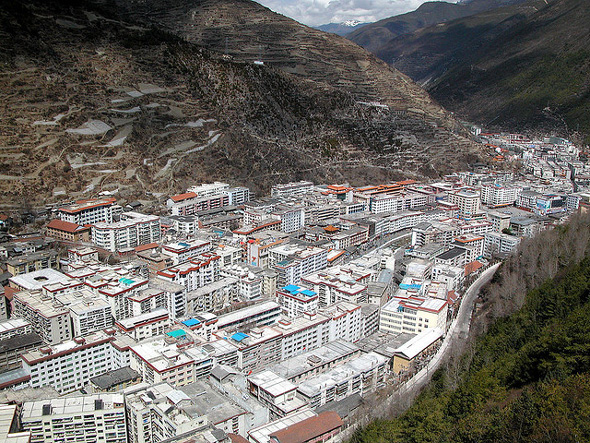
Image Credit: Depths of Forest, courtesy of flickr user Bobulix. Congo Basin map, courtesy of Wikimedia Commons user Imagico. -
Population Projections: Breaking Down the Assumptions
›“The seventh billion [person] was added in 12 years, and that could be the story for the eighth billion – and that gets people who think that growth has stopped,” said Carl Haub, senior demographer at the Population Reference Bureau. Haub was joined by Hania Zlotnik, former director of the UN Population Division, and Rachel Nugent of the University of Washington’s Department of Global Health on June 5 to speak about the assumptions behind the UN population projections. While each of the panelists noted the utility of projections, they also cautioned against seeing them as inevitable. [Video Below]
Meeting the Projections
As a former top official in the UN’s Population Division, Zlotnik spoke about how much is riding on the projections. “The experts tell me that to feed nine billion people, living better than the standards of living that we have today, one needs to increase agricultural production or all the production of food by about 70 percent and that is a challenge, but it might be feasible. But if the numbers go higher…I think it’s impossible,” she said.
The medium variant projection by the UN that gets the world to that nine billion figure is not a given – it builds in expected action on and improvement of many demographic indicators. Zlotnik pointed to the global unmet need for family planning, for example, which “is especially high in the high fertility countries,” and suggested that the current rate of increase in contraceptive use is insufficient.
She calculated the number of years it would take many of these countries to meet their unmet need at their current rate of uptake and found “the number of years for a lot of these poorer countries that have high fertility would be very long – 40 years, some of them, 80 years, 100 years – because the increased contraceptive prevalence has been so small.” At that rate, population growth in these countries will far surpass the UN medium variant.
The perception that population growth is no longer an issue contributes to the problem, Zlotnik said. People see that only 18 percent of the world population lives in countries with high population growth and assume “there’s no longer a population problem.” But she emphasized the power of exponential growth, arguing that even a small proportion growing at a rapid rate can have a large impact.
Questioning Assumptions
Haub pointed out several instances where assumptions in the methodology behind the projections create uncertainty.
For example, there is a lack of data in many low-income countries. “A date, let’s say 2000, 2005 – it’s the past, but it may be a projection. It may be based on a census in 1990,” he said. If it’s wrong, that error may not be corrected until another census, but it will still be relied on for country-level projections.
He also noted that certain assumptions about desired family size sometimes do not bear out on the ground. One of the key methods to slowing population growth is to provide women and couples with the means to choose how many children they wish to bear. But in many fast-growing countries, women wish to have large numbers of children. In Niger, for example, women say their ideal family size is over nine children. Such women are less likely to use contraception, no matter how accessible it is, as they value larger families.
“It has been – I guess conventional is a good word – to assume that birth rates are going to come down the way they did in the rich countries,” Haub noted. But there has been a “stall” for many developing countries, which he suggests is caused by fast initial uptake from urban women followed by much slower uptake by rural women. These dynamics, however, are relatively new and therefore are not always well incorporated into current projections.
The Economic Impact of Population Changes
While Haub and Zlotnik looked at the assumptions made before the projections are made and the importance and means to reach these projections, Nugent focused on the economic implications of lower fertility and the demographic transition.
She suggested that increased control over fertility can positively impact a country’s economy. Women are given the opportunity to “invest their time in acquiring skills and investing time in the labor market and that affects their earnings…[and] their ability to control resources and make decisions within the household” as they spend less time caring for children, she said.
The labor market changes as well, as fewer children are born into a given generation. This can reduce “demand on economic resources [and] demand on environmental resources,” and the increased investment in human capital allowed by smaller family sizes can lead to a healthier population.
Nugent concluded by pointing out key areas of intervention most likely to decrease both fertility and mortality and allow countries to reap the positive economic benefits of fertility decline. She suggested a focus on “complementary investments in education and health,” especially with regard to “poor and marginalized populations,” which can in fact impact the country as a whole. Finally, she recommended focusing on proven “evidence-based programs [and] service-delivery programs.”
Educating Policymakers
Each of the panelists cautioned against relying on population projections without taking action to make them come true.
“Maybe the best thing to do if you’re giving a presentation is to show the UN’s constant fertility variant first and scare people half to death and then say, ‘but if 117,000 things go right, [the medium variant projection] is what will happen,” said Haub, addressing the common tendency to view the UN projections as destiny.
Similarly, Nugent warned against viewing the demographic transition as inevitable. “There’s a certain sense…that [the demographic dividend] is kind of an automatic thing that happens, and that really has to be addressed,” she said, adding that “it’d be quite interesting to show some scenarios of what would need to be done…in order to get some benefits from that dividend.” (See also Elizabeth Leahy Madsen’s recent article on achieving the dividend.)
Zlotnik reiterated that the UN does not in fact know what the future will bring. “It’s not that we know what the world is going to do, but we hope that [the projections] will get the message out – if this doesn’t happen, you’re in trouble.”
Event ResourcesPhoto Credit: Sean Peoples/Wilson Center.
Showing posts from category education.