-
Gender Gaining Ground at Climate Change Negotiations
›
Last month, more than 10,000 negotiators from 189 countries attended the latest UN climate change conference, known as the 19th Conference of the Parties, or COP-19, this year held in Warsaw. To many, COP-19 fell frustratingly short of its already low expectations: there were no significant new agreements and 132 developing countries along with many major non-government groups staged a walkout in protest. However, it was notable for several signs of continued progress in bringing women’s voices to the negotiating table.
-
Jay Gribble: For Demographic Dividend, Invest in Health, Education, and Governance
›
Developing countries with youthful populations may have the opportunity to take advantage of a phenomenon called the “demographic dividend,” when a decline from high to low fertility rates leads to slower population growth and a large working age population. But “age structure alone isn’t going to make it happen,” says Jay Gribble of Abt Associates in this week’s podcast.
-
Bringing Natural Resources to the Table: ELI, UNEP Launch New Environmental Peacebuilding Platform
›To date, despite their demonstrated importance in both conflict recovery and the risk of conflict recurrence, natural resources have been largely ignored or downplayed in post-conflict settings around the world.
-
“We Are Not Sitting Idle, We Are Fighting”: Interview With Saleemul Huq on Bangladesh’s Climate & Food Challenges
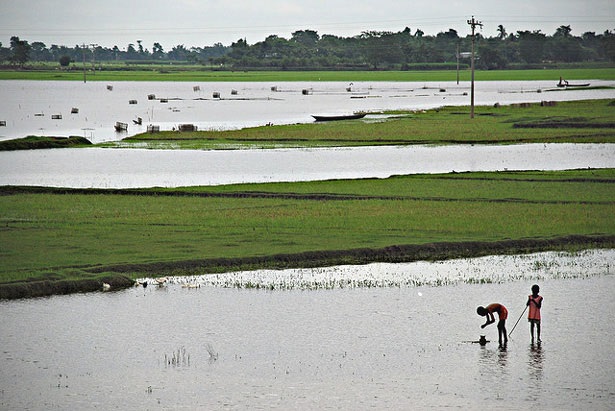
›When it comes to climate change vulnerability, it sometimes seems as if all eyes are on Bangladesh. As part of my research for a recent article exploring the rise of aquaculture in the country, I interviewed Saleemul Huq, senior fellow at the International Institute for Environment and Development in London, former executive director of the Bangladesh Center for Advanced Studies, and lead author of two chapters on adaptation and sustainable development in the IPCC’s third and fourth assessment reports. A number of his quotes made it into the final story but I wanted to provide the full transcript here as well, as his thoughts on the country’s climate-related risks, food security, and population dynamics are worth a read.
-
How Effective Are International Efforts to Empower Women? Alaka Basu on Challenging the Patriarchy
›
“Everyone uses the word ‘empowerment.’ It’s now such an overused word,” says UN Foundation Senior Fellow Alaka Basu in this week’s podcast. “You are empowered if you have a choice of 10 different shampoos in the grocery store; you are empowered if you have 100 kinds of cereals to buy; you are empowered by virtually anyone wanting to sell you something.”
-
Delivering Success: Scaling Up Solutions for Maternal Health (Report Launch)
›Since 2009, the “Advancing Dialogue on Maternal Health” series, co-produced by the Wilson Center, Harvard’s Maternal Health Task Force, and the United Nations Population Fund, has been one of the few public policy forums dedicated to maternal health. [Video Below]
-
From Malthus to Ehrlich and Beyond: William Pan on the Roots of PHE
›
More than four decades ago, Paul Ehrlich and John Holdren said complacency concerning the impact of human population growth is “unjustified and counterproductive.” More than 200 years ago, Thomas Malthus made the case that “the way we have to reduce the birth rate is family planning and delaying marriage, [thus] expanding the number of years between births,” says Duke University’s William Pan in this week’s podcast.
-
Coastal Resource Management, Family Planning Integration Build Resilience in Madagascar and The Gambia
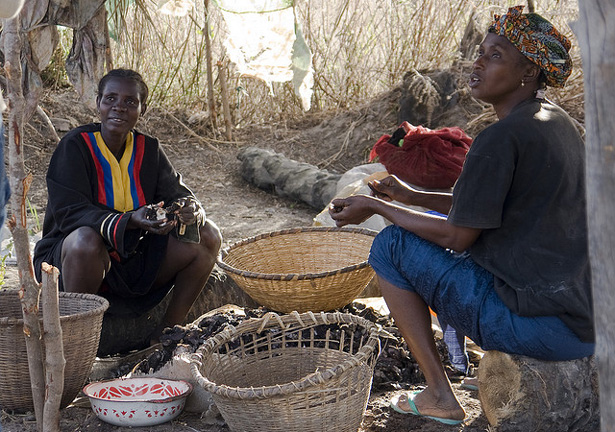
›Growing awareness of the connected challenges of natural resource management, economic growth, and human health has encouraged more integrated models of international development. The experience of two organizations – TRY Oyster Women’s Association, based in The Gambia, and Blue Ventures, based in Madagascar – demonstrates the success of a community-based approach to building resilience, enabling communities to bounce back from adversity and establish a long-term basis for development. [Video Below]
Showing posts from category education.