-
Choke Point China: Escalating Confrontation Between Water Scarcity and Energy Demand Has Global Implications
›The original version of this article, by J. Carl Ganter, appeared on The Huffington Post. Visit Circle of Blue for the latest articles in the Choke Point: China series.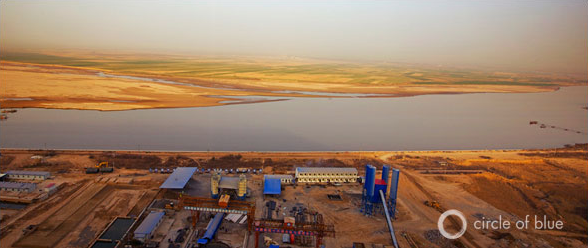
Water scarcity, rapid economic growth, and soaring energy demand are forming a tightening noose that could choke off China’s modernization.
Writes my colleague Keith Schneider in the first installment of the new report, Choke Point: China, from Circle of Blue:Underlying China’s new standing in the world, like a tectonic fault line, is an increasingly fierce competition between energy and water that threatens to upend China’s progress. Simply put, say Chinese authorities and government reports, China’s demand for energy, particularly for coal, is outpacing its freshwater supply.
The 12-part Choke Point: China series presents powerful evidence of the fierce contest between growth, water, and fuel that is virtually certain to grow more dire over the next decade. The project is produced in partnership with the Woodrow Wilson International Center for Scholars’ China Environment Forum.
Tight supplies of fresh water are nothing new in a nation where 80 percent of the rainfall and snowmelt occurs in the south, while just 20 percent of the moisture occurs in the mostly desert regions of the north and west. What’s new is that China’s surging economic growth is prompting the expanding industrial sector, which consumes 70 percent of the nation’s energy, to call on the government to tap new energy supplies, particularly the enormous reserves of coal in the dry north.
The problem, scholars and government officials told us, is that there is not enough water to mine, process, and consume those reserves and still develop the modern cities and manufacturing centers that China envisions for the region. “Water shortage is the most important challenge to China right now, the biggest problem for future growth,” said Wang Yahua, deputy director of the Center for China Study at Tsinghua University in Beijing. “It’s a puzzle that the country has to solve.”
The consequences of diminishing water reserves and rising energy demand have been a special focus of our attention for more than a year. In 2010, in our “Choke Point: U.S.” series, Circle of Blue found that rising energy demand and diminishing freshwater reserves are two trends moving in opposing directions across America. Moreover, the speed and force of the confrontation is occurring in the places where growth is highest and water resources are under the most stress – California, the Southwest, the Rocky Mountain West, and the Southeast.
Stripped to its essence, China’s globally significant choke point is caused by three converging trends:- Production and consumption of coal – the largest industrial consumer of water – has tripled since 2000. Government analysts project that China’s energy companies will need to increase coal production by 30 percent by 2020.
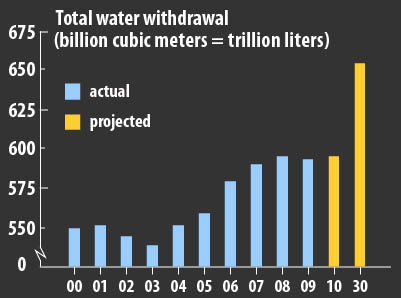
- Fresh water needed for mining, processing, and consuming coal accounts for the largest share of China’s industrial water use, a fifth of all the water consumed nationally. Though national conservation policies have helped to limit increases, water consumption nevertheless has climbed to record highs.
- China’s total water resource, according to the National Bureau of Statistics, has dropped 13 percent since the start of the century. In other words China’s water supply is 350 billion cubic meters (93 trillion gallons) less than it was at the start of the century. That’s as much water lost to China each year as flows through the mouth of the Mississippi River in nine months. Chinese climatologists and hydrologists attribute much of the drop to climate change, which is disrupting patterns of rain and snowfall.
We found a powerful narrative in China in two parts, and never before told: First is how effectively the national and provincial governments enacted and enforced a range of water conservation and efficiency measures that enabled China to progress as far as it has.
Second is that despite the extensive efforts to conserve water, and to develop water-sipping alternatives like wind and solar energy, China still faces an enormous projected shortfall of water this decade to its energy-rich northern and western provinces. How government and industry leaders respond to this critical and unyielding choke point forms the central story line of the next era of China’s unfolding development.
J. Carl Ganter is director and co-founder of Circle of Blue, a leading source of news, science, and data about water issues globally. Choke Point: China is produced in partnership with the Wilson Center’s China Environment Forum.
Image Credit: Two tunnels beneath the Yellow River to be completed by mid-decade that will transport more than 35 million cubic meters (9 billion gallons) of water a day from southern China to thirsty cities in the north. Courtesy of Aaron Jaffe and Circle of Blue. -
The Middle East’s Demographic Destiny
›February 25, 2011 // By Jennifer Dabbs SciubbaThe original version of this article, by Jennifer Dabbs Sciubba, appeared on her blog. Sciubba will be speaking at the Wilson Center on March 14 about her newest book The Future Faces of War: Population and National Security.
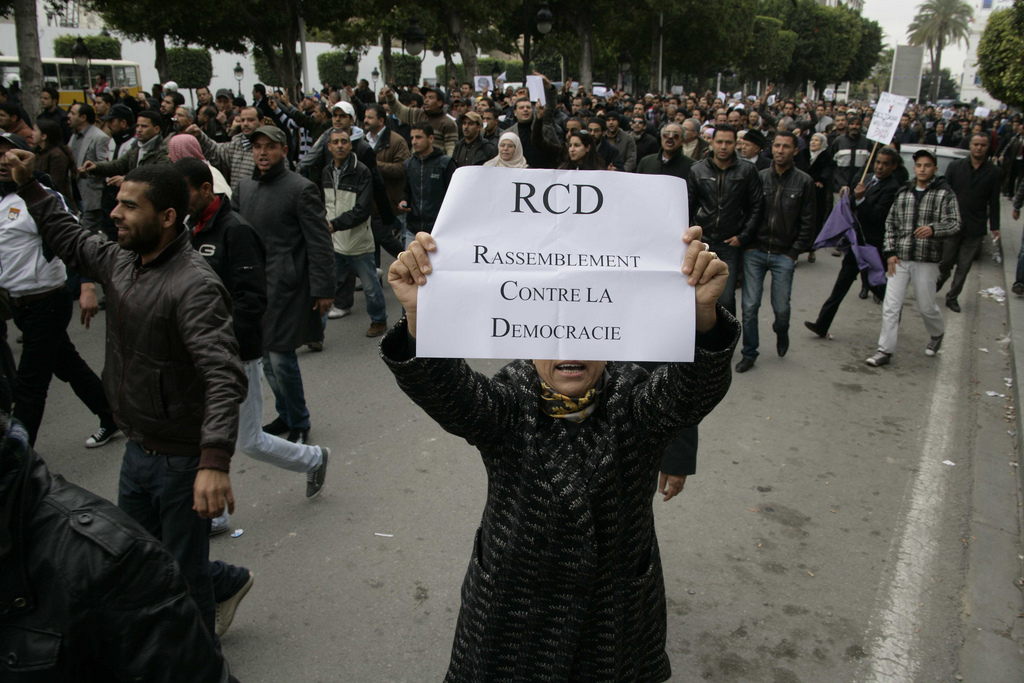
The so-called “arc of revolution” sweeping across the Middle East and North Africa has some demographers feeling smug. In Egypt, Tunisia, Algeria, Jordan, and Lebanon the population ages 15-29 – a key group for demographers – is very large, about 41-50 percent of all adults ages 15-59. No matter where you’re born, this life period is significant because during this time young adults expect to finish their education, get a job, get married, maybe start a family, and have some say in the way they are governed. As many have noted, the problem in each of these countries is that the desires of young adults are being dashed as they are shut out of economic, political, and even social opportunities. The result is all over the headlines.
Aside from structural failures like corruption and inattention of politicians to creating jobs, why are young people so disadvantaged? The answer lies in demography. Opportunities for young adults are limited in these countries because of what demographers refer to as “cohort crowding,” a situation that results when an age group, in Tunisia’s case those aged 25-29, is significantly larger than the preceding age group. Generally, jobs cannot be created fast enough to keep pace with this demographic bump, so those in the large cohorts are “crowded” out of the labor market. This situation turns into protest and violence when youth from large cohorts fall short of the living standards of preceding generations, which are smaller. In a 2009 Pew Global Attitudes survey, 50 percent of respondents ages 18-29 in Egypt said they thought children born today would be worse off than their parents. In Jordan and Lebanon, 38 and 40 percent, respectively, of respondents had a similarly depressed attitude.
Continue reading on The Future Faces of War: Population and National Security blog.
Sources: Pew Research Center, U.S. Census Bureau.
Photo Credit: “DS-RY028 World Bank,” courtesy of flickr user World Bank Photo Collection (Dana Smillie). -
Eliya Zulu on Population Growth, Family Planning, and Urbanization in Africa
›“The whole push for population control or to stabilize populations in Africa in the ’70s and the ’80s mostly came out of the West,” said Eliya Zulu of the African Institute for Development Policy (AFIDEP) in this interview with ECSP. Then new research brought to light the fact that many women in Africa actually wanted to control their fertility themselves, but they didn’t have access to family planning.
“It kind of put the African leaders who really didn’t want to talk anything about fertility control and so on in a fix,” Zulu said. “Because all of sudden now it was the African women themselves who are saying we need these services – it was not an imposition from the West.”
Based in Nairobi, Kenya, Zulu said that part of what he does at AFIDEP is “try to get African countries to think about the future.” Current economic growth in parts of Africa simply can’t match population growth, but improving access to family planning and child/maternal health infrastructure can greatly reduce fertility rates – and quickly.
“The question for Africa is: Are we going to be ready? And we need to prepare,” said Zulu. “For that to happen it’s not just about saying ‘let’s have fewer children.’ I think we also need to do this from a social developmental perspective where we also look at ways in which we can improve the quality of the population, empower women, invest in education, and so on.”
Four Factors of Success
There are several factors that are critical for successful family planning and child/maternal health efforts, said Zulu: strong political leadership, sustained commitment over time, financial investment (research has shown that over 90 percent of women in sub-Saharan Africa cannot afford contraceptives), and strong accountability mechanisms for monitoring performance of programs and use of resources.
“There are a number of countries that have shown that, even with the limited resources that Africa has, that with all the problems that Africa has, if you really emphasize those four factors that I mentioned, you can actually achieve very, very positive results,” Zulu said.
Rapid Urbanization and the Growth of Urban Poverty
Rapid urbanization is one of Africa’s biggest challenges, said Zulu. “Africa is the least urbanized region of the world now, but it’s growing at the highest rate.” If you look at historical examples from the West and Asia, “urbanization is supposed to be a good thing; urbanization has been a driver of economic development,” he said, but “the major characteristic of urbanization in Africa has been the rapid growth of urban poverty.”
“If the economies are not going to develop the capacity to absorb this population and create enough jobs for them, there’s going to be chaos, because you can’t have all these young people without having jobs for them,” said Zulu. “The challenge for many African governments is how to have sustainable urbanization and how to transform our cities into agents of development.”
The “Pop Audio” series is also available as podcasts on iTunes. -
Food Price Shocks and Instability Highlight Weaknesses in Governance and Markets
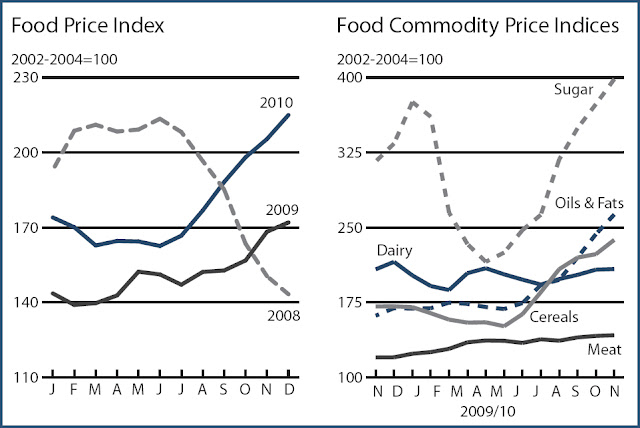
›Unrest across the Middle East has been front-page news for weeks, with commentators searching for explanations to account for the shifting political winds. Many, such as Thomas Friedman and Kevin Hall, have drawn connections between food prices and instability. But, as they point out, high food prices do not deterministically lead to unrest. Instead, rising prices highlight the degree to which governments and governance processes provide and ensure sustainable livelihoods for their people. What these and other commentators point to is that recognizing the role of government in providing food and security is vital: high food prices, they argue, don’t directly cause unrest, but high food prices in poorly managed countries creates a dangerous environment in which unrest may be more likely.
-
Edward Carr, University of South Carolina
Why the Poorest Aren’t Necessarily the Most Vulnerable to Food Price Shocks
›February 8, 2011 // By Wilson Center StaffThere have been an interesting series of blog posts going around about the issue of price speculation in food markets, and the impact of that speculation on food security and people’s welfare. Going back through some of these exchanges, it seems to me that a number of folks are arguing past one another.
-
‘Blood in the Mobile’ Documents the Conflict Minerals of Eastern Congo
›With Blood in the Mobile, Danish director Frank Poulsen dives into the eastern Democratic Republic of Congo (DRC) to document a vicious cycle of conflict that has claimed millions of lives, produced rampant humanitarian abuses, and is driven in part (though not entirely, it should be noted) by the area’s rich mineral resources – all under the noses of the world’s largest peacekeeping operation.
The minerals extracted in the eastern DRC – tin, tantalum, tungsten, and gold, mainly from North and South Kivu provinces – are used in cell phones around the world. The trailer shows Poulsen gaining access to an enormous tin mine in the area – the biggest illegal mine in the Congo, he says – capturing powerful footage of the squalid and dangerous conditions that thousands of often-teenage workers labor under for days at a time.
“Four years ago this place was nothing but jungle,” narrates Poulsen. “Today, 15,000-20,000 people are working here [and] different armed groups are fighting to gain control over the mine.”
Though Poulsen is pictured making dramatic phone calls to Nokia (the largest cell phone manufacturer in the world), the issue of conflict minerals from the DRC and places like it is in fact more than just a blip on the radar screens of most leading technology companies. The NGO the Enough Project in particular has been championing the cause and bringing it to tech companies’ doorsteps for quite some time. Their efforts have helped produce an action plan for certifying conflict-free supply chains (complete with company rankings) and also helped lead to passage of the United States’ first law addressing conflict minerals this fall.
However, Poulsen’s message of the developed world taking responsibility for sourcing is commendable. Efforts like this that have led to the adoption of corporate responsibility initiatives like the Cardin-Lugar amendment, a similar measure in the works for the European Union, the Extractive Industries Transparency Initiative, and the Kimberley Process for diamonds.
Blood in the Mobile premiered this fall at the International Documentary Film Festival and the producers are “in dialogue with different U.S. distributors,” according to their Facebook page, where those interested are advised to stay tuned.
Sources: BloodintheMobile.org, Enough Project, EurActiv.
Video Credit: Blood in the Mobile Official Trailer. -
The Age of Revolution? Demography Experts Comment on Tunisia’s Shot at Democracy
›January 28, 2011 // By Schuyler NullAs unrest continues across several Middle Eastern countries, analysts are scrambling to explain the “arc of revolution.” Richard Cincotta’s recent post on the “Jasmine Revolution” predicts a relatively high chance of Tunisia attaining liberal democracy, based on demographic factors and long-term trends, and it’s drawn some well-thought out and provocative feedback from fellow demographers Elizabeth Leahy Madsen, Jack Goldstone, and Jennifer Sciubba.
Elizabeth Leahy Madsen is a senior research associate at Population Action International and author of The Shape of Things to Come: Why Age Structure Matters to a Safer, More Equitable World:I have two questions. First, have you shifted to a new definition of age structures (intermediate, etc.) based on median population age? In the past, you and other demographic security researchers have measured age structure as the relative proportion of different age groups within the population, either the total population, total adult population, or working-age population. Why did you select median population age for this analysis? A quick review of the figures available on the UN Population Division’s website shows that the relative size of the 15-24 age group within Tunisia’s total population has been vacillating within the range of 19-21 percent since 1975. In 2005, that “youth bulge” was 21 percent, the highest since 1980, but there has been a rapid decline to 19 percent by 2010.
Jack A. Goldstone is the director of the Global Policy Center at George Mason University and author of a number of books on social movements, revolutions, and international politics:
As you say, no matter how age structure is measured, Tunisia is much further through the demographic transition than other countries in the Arab world. I would like to see this highlighted more in media coverage of the revolution, particularly in accounts of similar attempts to provoke uprisings that have taken place in Algeria, Egypt, and Yemen in recent weeks. From a demographic perspective, those attempts are less likely to achieve success (except possibly in Algeria, based on your map).
My second question is for further elaboration on the steps that lead from a dissipating youth bulge to a greater likelihood of attaining democracy (leaving aside the also-difficult question of sustainability). If I understand your description of the mechanisms at work, in an authoritarian regime with a youth bulge, the government is able to keep its hold on power because the presence of a youth bulge either creates volatility or the threat of volatility in the eyes of the commercial elites whose support is critical to the regime. Does this support exist even in situations where volatility is rare, in which case the large youthful population is manipulated or whitewashed by the regime as a threat to stability? Then, as the age structure matures and becomes less youthful, the regime can no longer invoke youth (directly or indirectly) as a danger, and therefore support for the regime from the elites erodes?
You don’t specifically mention economic conditions in Tunisia, apart from Ben Ali’s resource hoarding, but issues such as unemployment rates have been frequently highlighted in media accounts of the revolution. In addition to the unpredictable triggers such as the self-immolation in Tunisia’s case, do deeper-seated structural problems such as high unemployment and/or rampant corruption have to be extant to provoke revolution in an authoritarian context? Or is the dissolution of a youthful age structure combined with an unpredictable trigger sufficient?Richard’s insights into Tunisia’s prospects for democracy are terrific and I agree with him. However, in regard to the causes of the rebellion, I have to disagree with him in one respect – Tunisia in 2010 is very much a youth bulge country, at least as far as political theory would see it. As Henrik Urdal has shown, youth bulge should not be measured as the size of the youth cohort (15-24) against the entire population, but as the fraction of youth in the adult population (those aged 15 and older). The 0-14 group is politically not relevant, and should not be counted in assessing the impact of youth cohorts on the total population’s political mobilization potential.
Jennifer Sciubba is a Mellon Environmental Fellow at Rhodes College and the author of The Future Faces of War: Population and National Security:
For Tunisia, median age may in fact be misleading (as I didn’t realize until I looked at the age pyramids that Richard has posted). Because birth rates fell very rapidly after 1995, median age in 2010 is intermediate, but if you look only at the population aged 15 and up, you still see very large cohorts of youth compared to total adults.
Because Tunisia’s birth rate only started falling sharply after 1995, the large cohorts born in 1986-1995 – now age 15-24 – still make up a very large portion (33 percent) of all adults. While the next cohorts are much smaller, meaning this youth bulge will soon fade, it is still very much present, as Richard’s graphs show.
There is no automatic link between a certain age structure and political rebellion, but the combination of a large youth bulge and economic frustration among youth is a potent force for political instability. That combination is certainly one feature of Tunisia in 2010, although the extreme corruption of the Ben Ali regime and his family was a galling and critical factor in the widespread rejection of his regime.
That points to another bit of misleading data. Many (including me) assumed that because Tunisia’s recent economic growth was strong, at five percent per year, economic grievances could not be so widespread. But that is wrong, because we did not appreciate how much of that growth has been grabbed by Ben Ali’s family (which according to one account had ownership interests in half the businesses in the country) and cronies. Substantial growth from which many have been excluded – especially youth – is in fact a reason for widespread grievances, and that was another key factor behind the mass protests.Like Jack and Liz note, using median age helps us understand Tunisia’s progress along the demographic transition, but it doesn’t really help us understand the protests in Tunisia or in other countries across the “arc of revolution.” Median age obscures the individual experiences of young adults who are putting their lives at risk to speak out in protest or setting themselves on fire in desperation. As Jack points out, from a theoretical point of view, Tunisia is very much experiencing cohort crowding – whether we call it “youth bulge” or “early worker bulge” the outcome is the same. To say that Tunisia is not a youth bulge country misses the point.
Cincotta has promised a reply to the comments is forthcoming, which we can forgive him, frankly, given the length and complexity of these great responses.
Part of the reason we political demographers buy into the link between youth bulge and conflict is the idea of cohort crowding. As Richard Easterlin points out, a cohort’s economic and social prospects tend to have an inverse relationship to the cohort’s size relative to those around it, other things being constant. In Tunisia’s case, those between ages 25-35 are part of a larger cohort than those preceding ones so they are crowded out of the labor market and will tend to have lower relative income compared to preceding generations, which are smaller.
As I note in my book, one study of Tunisians looking for work reported that young adults felt crowded out of benefits in the family, school, and labor markets. In particular, according to a study by M. Bedoui and G. Ridha:“…family and marital problems were common. They became poorer, lost confidence, and became fatalistic and submissive. Over the long run the majority saw unemployment as a source of disequilibrium, humiliation, and even oppression.” (in Hilary Silver, “Social Exclusion: Comparative Analysis of Europe and Middle East Youth,” Middle East Youth Initiative Working Paper p. 30.)
That quotation seems eerily prescient in Tunisia’s case. Mohamed Bouazizi certainly seemed to succumb to fatalism, and the protests started as economic but quickly moved to political. Political, social, and economic marginalization are connected. While there is some diversity in age structure across the Middle East, the populations of those aged 15-24 in Egypt, Lebanon, Tunisia, Jordan, Algeria and Iran, which experienced youth protests in 2009, are all between 27 and 34 percent of all adults ages 15-59, with Lebanon and Tunisia at the lower end of the spectrum and Egypt and Jordan at the higher. As we can see from the population pyramid of each of these states, there is a clear population bulge at these ages.
We also have to think about the cohort effect. The cohort effect describes shared historical experiences of particular age groups. Across the “arc of revolution,” young adults are plugged into Facebook, Twitter, and other internet forums to share experiences of marginalization and revolution. This likely informs their choice of whether or not to speak out.
Sources: Huffington Post, Middle East Youth Initiative, The New York Times, Telegraph.
Photo Credit: “055,” courtesy of flickr user Nasser Nouri. -
Linden Ellis, ChinaDialogue
China’s Biggest Environmental Stories of 2010/11
›January 21, 2011 // By Wilson Center StaffThe original version of this post first appeared on ChinaDialogue’s The Daily Planet blog, December 23, 2010.
Last month I spent a few days in Washington, DC meeting mostly with people working on U.S.-China environmental relations. Among others, I met with Jennifer Turner, director of the China Environment Forum at the Wilson Center (and my former boss), and we had an exciting conversation about the biggest China environmental stories covered in the United States in 2010, and what we hope to see in 2011. I was inspired to write this post based on our conversation. This is of course neither definitive nor exhaustive, but merely my perspective on how things look from Washington.China Is Winning the Clean Energy Race. Energy was the big story in 2010. Studies show that the United States will need to renovate or retire virtually all of its power plants by 2050, and China must build a modern energy sector to serve a growing population. Both countries emphasized their intentions to build a clean energy economy in 2010 and almost immediately competition was dubbed a “race.” Soon after it was declared a two-party race, it became evident that China was winning.
China’s clean energy investment is two times greater than that of the United States, according to a Pew Charitable Trust report published last year. The news has centered upon China’s ability to make sweeping changes to domestic energy markets, in stark contrast to the United States’ inability to pass climate legislation. Most notably in 2010, China passed a regulation requiring that a percentage of all electric company profits be used for energy efficiency every year.
Energy “Co-op-etion.” Perhaps as a response to fears of “losing” the energy race, public opinion in the United States focused on new and existing energy cooperation and on market fairness. The U.S.-China Clean Energy Research Center, signed in 2009, was officially launched in 2010 and is likely to formalize a great deal of on-going cooperation on energy between the United States and China. In December, Jonathan Silver, Executive Director of the U.S. Department of Energy’s Loan Guarantee Program, spoke at a conference in San Francisco and described the developing energy relationship between China and the United States as “co-op-etition” – the two countries have complementary markets and a lot to learn from each other but will compete in U.S., Chinese, and international markets to sell clean technologies.
Concerns about the fairness of the market – initially because of changes in China’s government procurement laws discriminating against foreign clean technology companies – peaked with the U.S. Steel Workers’ petition in October. Americans are concerned that their technologies will suffer in the international market because of Chinese clean technology subsidies.
China “Ruined” Copenhagen. Perception that China ruined Copenhagen dominated the U.S. news early in the year but was softened by a more positive outlook following Cancun. Anxiety in Washington, DC regarding the accuracy of China’s CO2 data colored many debates on American participation in international climate negotiations all year.
Oil and Rare Earths. The oil spill in Dalian in July made big news in the United States as it came in the wake of the BP oil spill in the Gulf of Mexico. Many comparisons were made, despite the enormous difference in scale between the two incidents. Rare earth elements (the spine of the clean technology industry) were another major concern that arose in 2010 in Washington. Many of America’s rare earth mines were shuttered decades ago when Chinese mines were able to produce more affordably. This year, China began restricting rare earth exports, at least partially for environmental reasons, forcing the United States to consider reopening many of its mines and how to deal domestically with the environmental effects of those mines.
In 2011 I hope that interest in China’s environment will continue in the United States, but I expect that we will see less on renewables, as stimulus money runs thin, and rising concern for more traditional pollutants and basic environmental governance in China (especially regarding water and air pollutants).
The 12th Five-Year Plan. Set to be released early 2011, the 12 Five-Year Plan will initially dominate energy stories as it outlines how China will meet its ambitious energy intensity targets. I expect nuclear energy will replace wind and solar as the big stories in 2011. Nuclear liability should be addressed in China in 2011, as it was in India in 2010. Because of the close energy business ties between China and the United States, liability laws in China are likely to be more sympathetic to the needs of American companies than India’s recent law, which exposes nuclear components suppliers to unlimited liability.
Soil Pollution Prevention and Remediation. China’s soil pollution survey was completed in 2009 and the draft Provisional Rules on Environmental Management of the Soil of Contaminated Sites was released by the Ministry of Environmental Protection for comment in December 2009. The problem is huge and significant in China’s development and construction boom, and little data has been publicly released from the survey. I expect that in 2011, we will start to see active management and enforcement, at least in major cities.
Water Quality and Quantity. Water has and will likely continue to be, the greatest environmental concern in China and abroad, given its transboundary nature. Turner suggests we will see more on control of and attention to nitrogen pollution in China’s waterways in 2011.
To chime in with your comments on what you feel were the biggest stories of 2010 and what you predict will dominate 2011, be sure to let us know below or on ChinaDialogue.
Linden Ellis is the U.S. project director of ChinaDialogue and a former project assistant for the Wilson Center’s China Environment Forum.
Sources: Asia Society, ChinaDialogue, The New York Times, Pew Charitable Trust.
Photo Credit: “Factory in Inner Mongolia,” courtesy of flickr user Bert van Dijk.
Showing posts from category economics.