-
Ready for Change: Notre Dame Launches the Global Adaptation Index
›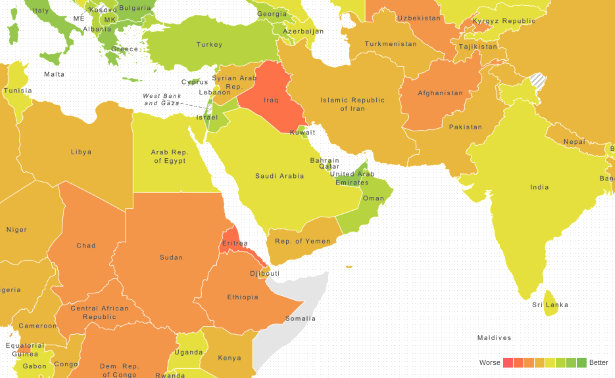
In 2008 and 2010, the price of many basic food stuffs soared, sparking a series of riots and food crises around the world. People in the poorest countries – those living with the smallest margins – were most affected, while the economies of developed nations were able to absorb the price changes. According to Notre Dame’s Global Adaptation Index, how climate change will impact different countries depends not only on their vulnerability to physical changes, but also their ability to absorb these impacts. [Video Below]
-
Kirya: How a Village in Tanzania Shows the Challenge of Just Climate Adaptation
›
In many parts of the world, climate change exacerbates existing inequalities – between men and women, rich and poor, landed and landless. Climate change responses, therefore, should carefully address these forms of vulnerability.
We hear this often, but in practice, it can be difficult to do.
-
Opportunity Amidst Conflict: Margie Buchanan-Smith on Long-Distance Trade and Peace-Building in Darfur
›
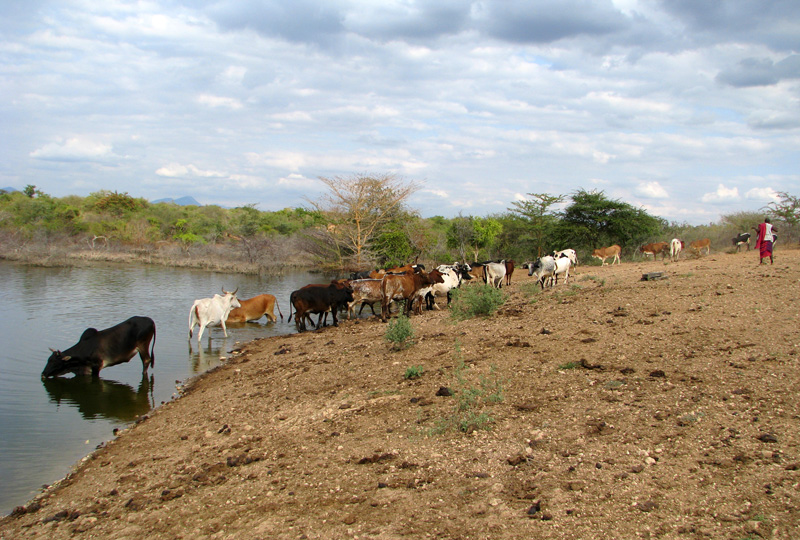
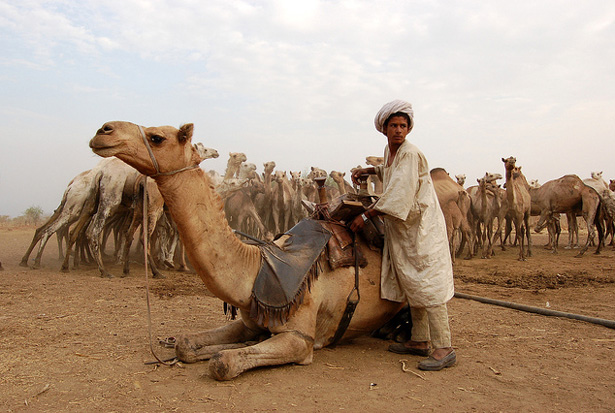
Trade is “the lifeblood of Darfur’s economy,” says Margie Buchanan-Smith in this week’s podcast.
Buchanan-Smith, a visiting fellow at Tuft University’s Feinstein International Center and the lead author of a recent study on livestock trade in Sudan, presented at the Wilson Center in November about the Feinstein Center’s collaboration with the UN Environment Program studying pastoralism in Sudan during the last decade of conflict.
-
Can China Solve Its Water-Energy Choke Point? Wilson Center Launches ‘China Environment Series 12’
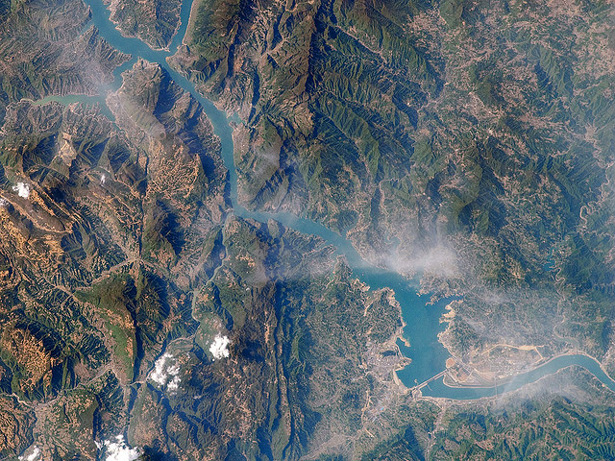
›Factories in China’s Pearl River Delta tick-tock around the clock, rapidly churning out gadgets from iPhones and Barbie dolls to forks and light bulbs, shipped off to village shops in Uganda and super Walmarts in America’s sprawling suburbs. But far from the global consumer’s view, manufacturing and rapid development are placing unrelenting pressure on China’s environment.
-
Natural Gas and Albacore: What Tuna Says About the Future of Mozambique
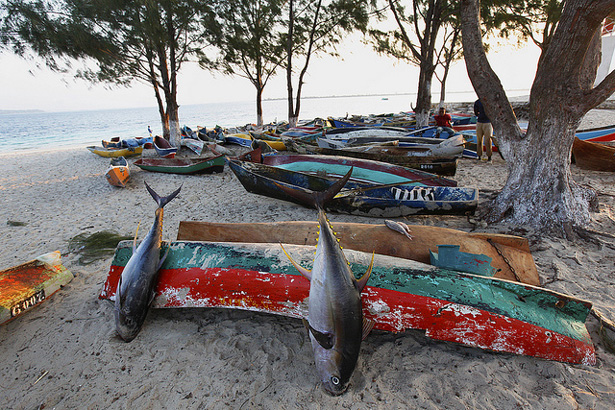
›January 13, 2014 // By Laura HensonA 20-year peace accord between Mozambique’s two major political parties was brought to an abrupt end last fall. A series of violent skirmishes between FRELIMO and RENAMO resulted in at least 10 deaths, dozens injured, and fears that the country might relapse into the kind of political violence seen during its civil war, which left more than a million dead. RENAMO claims its frustrations stem from a fraudulent electoral system and social inequality, but some observers have suggested their motivations may be less benevolent: making sure they get their piece of the country’s newfound natural gas wealth.
-
New Sudan Study Has Researchers Re-Thinking Risks and Resilience of Pastoralism
›Sudan’s pastoralists gained infamy during the conflict in Darfur last decade, when outsiders described the violence as a result of competition between climate-stressed, semi-nomadic herders and sedentary farmers. But Sudan’s pastoralists may not be as fragile as previously thought and could even hold the key to survival for similar groups in Africa, said a panel of experts at the Wilson Center on November 13. [Video Below]
-
Challenging Patriarchy: The Changing Definition of Women’s Empowerment
›As more organizations in the international development community commit themselves to supporting women’s empowerment, it has grown increasingly difficult to evaluate what that really entails. [Video Below]
-
Food Security and Sociopolitical Stability (Book Launch)
›Following a surge in global food prices in 2008 and again in 2011, policymakers and scholars have paid increased attention to the intersection of food security and political volatility. [Video Below]
Showing posts from category economics.