• woodrow wilson center
  • ecsp

New Security Beat

Subscribe:
  • rss
  • mail-to
  • Who We Are
  • Topics
    • Population
    • Environment
    • Security
    • Health
    • Development
  • Columns
    • China Environment Forum
    • Choke Point
    • Dot-Mom
    • Friday Podcasts
    • Navigating the Poles
    • Reading Radar
  • Multimedia
    • Water Stories (Podcast Series)
    • Backdraft (Podcast Series)
    • Tracking the Energy Titans (Interactive)
  • Films
    • Water, Conflict, and Peacebuilding (Animated Short)
    • Paving the Way (Ethiopia)
    • Broken Landscape (India)
    • Scaling the Mountain (Nepal)
    • Healthy People, Healthy Environment (Tanzania)
  • Publications
  • Events
  • Contact Us

NewSecurityBeat

The blog of the Wilson Center's Environmental Change and Security Program
Showing posts from category economics.
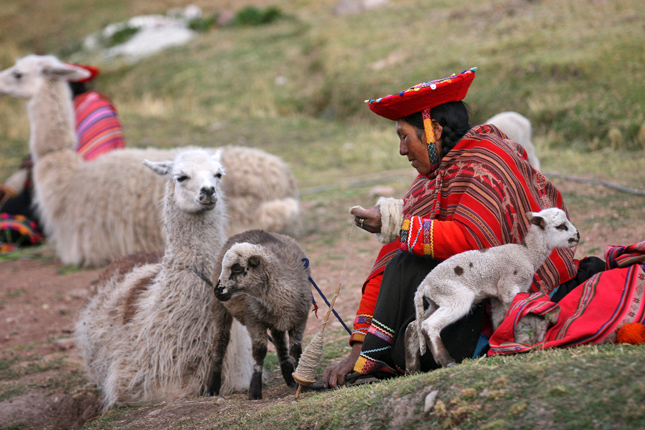
  • Climate Change Will Cause More Migration, But That Shouldn’t Scare Anyone

    ›
    Guest Contributor  //  March 25, 2014  //  By Robert McLeman
    migration

    Last year a Kiribati man, Ioane Teitiota, claimed asylum in New Zealand, stating that his home island, which is on average just two meters above sea level, was becoming uninhabitable thanks to rising seas. So-called “king tides” routinely wash over entire portions of the archipelago.

    MORE
  • A New Model of Development? The Role of Public-Private Partnerships in International Aid

    ›
    Dot-Mom  //  From the Wilson Center  //  March 19, 2014  //  By Paris Achenbach
    NatCon

    USAID funding is “far outstripped” by private investment and business relationships in “nearly every country” in which it works – and that’s a good thing, according to USAID Administrator Rajiv Shah. [Video Below]

    MORE
  • Big Changes Need Big Stories: The Year Ahead in Environment and Energy Reporting

    ›
    From the Wilson Center  //  On the Beat  //  March 17, 2014  //  By Donald Borenstein
    Rhine_coal_mine3

    While climate change has enjoyed a recent spike in news coverage, journalists face a constant challenge to bring sustained attention to other environmental stories, including resource scarcity, the changing oceans, and demographic change. [Video Below]

    MORE
  • Environmental Impacts of Household Size, Bringing Family Planning Outside the Health Sector

    ›
    Reading Radar  //  March 13, 2014  //  By Paris Achenbach

    BradburyWhat are the environmental implications of changing household sizes? A recent article by Mason Bradbury, M. Nils Peterson, and Jianguo Liu, published in Population and Environment, analyzes data from 213 countries over 400 years and finds the average number of occupants per home tends to decline as population grows. This dynamic, they write, indicates that accommodating housing could prove to be one of “the greatest environmental challenges of the twenty-first century.” As countries develop and urbanize, “according to convergence theory, household size decreases (often from greater than five to less than three).” Other cultural shifts, like increasing divorce rates, urban sprawl driven by rising affluence, decreasing numbers of multigenerational households, and larger houses (in the United States, homes more than doubled in size between 1950 and 2002, according to the article) compound the issue. As population growth continues in parts of the world, these trends pose critical questions for conservation and environmental sustainability, since “households are the end consumers of most natural resources and ecosystem services.”

    MORE
  • Unveiling the Dark Places: Urbanization, Economic Change, and Gender-Based Violence

    ›
    From the Wilson Center  //  March 12, 2014  //  By Moses Jackson
    kibera

    “If there was a perfect slum, Kibera would be it.” The notoriously overcrowded and underserved settlement in the Kenyan capital of Nairobi captivates the public imagination, engendering visions of urban violence, poverty, and hopelessness, said Caroline Wanjiku Kihato of the University of the Witwatersrand at the Wilson Center on February 18. The area was ravaged by ethnic violence that erupted across the country following Kenya’s disputed 2007 elections, pitting neighbor against neighbor in tribal clashes that killed more than 1,000 people, displaced many thousands more, and provoked an alarming surge in sexual violence.

    MORE
  • Infographic: The Environmental Effects of China’s Growing Pork Industry

    ›
    China Environment Forum  //  March 11, 2014  //  By Siqi Han
    Pork_industry_in_China

    The pork industry in China accounts for 65 percent of domestic meat consumption, but also produces 1.29 billion metric tons of waste every year. China’s growing appetite for meat has put tremendous pressure on the livestock sector, which now produces three times more waste than industrial sources, and created a series of environmental and food safety issues.

    MORE
  • USAID Administrator Rajiv Shah on Public-Private Partnerships and the Future of Aid

    ›
    Friday Podcasts  //  March 7, 2014  //  By Paris Achenbach

    rajiv_shahWhat’s the best way for America’s chief development agency to help other countries reach prosperity and democracy? Increasingly, it’s creating partnerships not just with other governments, but with the private sector too, says USAID Administrator Rajiv Shah in this week’s podcast.

    MORE
  • Have Ideas About Reducing Urban Poverty in the Developing World? In Graduate School? Apply Within

    ›
    Urban Sustainability Laboratory  //  March 6, 2014  //  By Allison Garland
    urban_poverty

    The Wilson Center’s Urban Sustainability Laboratory, in partnership with USAID, International Housing Coalition, World Bank, and Cities Alliance, is pleased to announce the 5th Annual Urban Poverty Paper Competition for graduate students. The competition calls on students currently enrolled in a Master’s or PhD program to submit paper abstracts on topics relating to urban poverty in the developing world.

    MORE
Newer Posts   Older Posts
View full site

Join the Conversation

  • RSS
  • subscribe
  • facebook
  • G+
  • twitter
  • iTunes
  • podomatic
  • youtube
Tweets by NewSecurityBeat

Trending Stories

  • unfccclogo1
  • Pop at COP: Population and Family Planning at the UN Climate Negotiations

Featured Media

Backdraft Podcast

play Backdraft
Podcasts

More »

What You're Saying

  • Volunteers,At,The,Lagos,Food,Bank,Initiative,Outreach,To,Ikotun, Pan-African Response to COVID-19: New Forms of Environmental Peacebuilding Emerge
    Rashida Salifu: Great piece 👍🏾 Africa as a continent has suffered this unfortunate pandemic.But it has also...
  • A desert road near Kuqa An Unholy Trinity: Xinjiang’s Unhealthy Relationship With Coal, Water, and the Quest for Development
    Ismail: It is more historically accurate to refer to Xinjiang as East Turkistan.
  • shutterstock_1779654803 Leverage COVID-19 Data Collection Networks for Environmental Peacebuilding
    Carsten Pran: Thanks for reading! It will be interesting to see how society adapts to droves of new information in...

What We’re Reading

  • Rising rates of food instability in Latin America threaten women and Venezuelan migrants
  • Treetop sensors help Indonesia eavesdrop on forests to cut logging
  • 'Seat at the table': Women's land rights seen as key to climate fight
  • A Surprise in Africa: Air Pollution Falls as Economies Rise
  • Himalayan glacier disaster highlights climate change risks
More »
  • woodrow
  • ecsp
  • RSS Feed
  • YouTube
  • Twitter
  • Facebook
  • Home
  • Who We Are
  • Publications
  • Events
  • Wilson Center
  • Contact Us
  • Print Friendly Page

© Copyright 2007-2021. Environmental Change and Security Program.

Woodrow Wilson International Center for Scholars. All rights reserved.

Developed by Vico Rock Media

Environmental Change and Security Program

Woodrow Wilson International Center for Scholars

Ronald Reagan Building and International Trade Center

  • One Woodrow Wilson Plaza
  • 1300 Pennsylvania Ave., NW
  • Washington, DC 20004-3027

T 202-691-4000