-
In Tanzania, Empowering Communities to Address Population, Health, and Environment Issues Together
›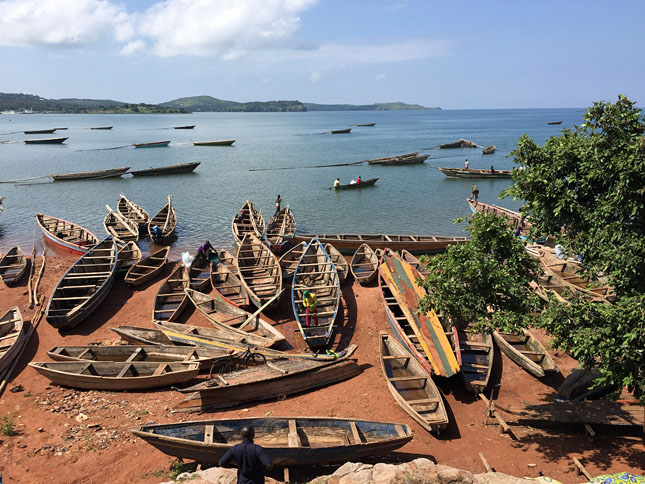
Africa has its share of challenges, but it also leads the way in creative development responses. Take the Lake Tanganyika area in Tanzania. Daily life is hard. There are few roads. Cellphone service is patchy. You must travel by boat for seven hours to reach the nearest hospital. And if you have an obstetric emergency, there is no doctor in the village to help you.
-
Susan Martin: Migration a Climate Adaptation Strategy, But Displacement More Dangerous
› When it comes to environmental change, “policies and laws can have a very productive contribution toward positive adaptation, or they can subvert that and constrain options,” says Jon Unruh, associate professor of human geography and international development at McGill University, in this week’s podcast.
 -
Call for Papers: Reducing Urban Poverty 2016 Graduate Student Paper Competition
›To encourage a new generation of urban policymakers and promote early career research, the Wilson Center, U.S. Agency for International Development, IHC – Global Coalition for Inclusive Housing and Sustainable Cities, World Bank, and Cities Alliance are sponsoring the 7th Annual Urban Poverty Paper Competition. The competition is open to graduate students working on topics related to urban poverty in the developing world.
-
Creating a Water Ready World
›March 22, 2016 // By Sherri GoodmanSitting at my desk looking at bills to be paid, the first one on the stack is for the water company, emblazoned with the phrase, “Water is Life.” Yes, we all know that. But really, as my teenagers would say, “Duh, Mom. So what?”
Well, here’s the “so what” on this World Water Day 2016.
-
Jon Unruh on Darfur and the Importance of Flexible Institutions for Managing Migration Conflict
›When it comes to environmental change, “policies and laws can have a very productive contribution toward positive adaptation, or they can subvert that and constrain options,” says Jon Unruh, associate professor of human geography and international development at McGill University, in this week’s podcast. -
India’s Young and Restless
›March 14, 2016 // By Michael KugelmanWhen we think about countries on the Indian subcontinent with destabilizing demographics, Pakistan comes to mind immediately. First, it’s a country with a very young population. Almost two thirds of its nearly 200 million people are under 25, and the median age is about 22. Second, this youth cohort is highly susceptible to radicalization. Nearly every terrorist attack in Pakistan since 9/11 has been perpetrated by someone under 30. In recent years, the Wilson Center has focused on Pakistan’s youth demographic challenges in detail. India, however, needs to be included in this conversation as well.
-
Parfait Eloundou-Enyegue on Re-Conceptualizing Education to Help Developing Countries Create Jobs
›“There is more to education than the picture that you typically see in most reports,” says Parfait Eloundou-Enyegue, professor of development sociology at Cornell University, in this week’s podcast. “And this picture comes from looking at education not as an outcome but as an institution.” -
Peace in Colombia Doesn’t Necessarily Mean the Revival of Oil
›It appears increasingly certain that the Colombian government will sign a peace agreement with the guerrillas of the Revolutionary Armed Forces of Colombia (FARC) in 2016. The oil and gas industry is widely expected to be among the sectors to most benefit from the end of 50 years of armed conflict. But a new report commissioned by the Latin American Program has identified several challenges to that optimistic view.
Showing posts from category economics.
 When it comes to environmental change, “policies and laws can have a very productive contribution toward positive adaptation, or they can subvert that and constrain options,” says Jon Unruh, associate professor of human geography and international development at McGill University, in this week’s podcast.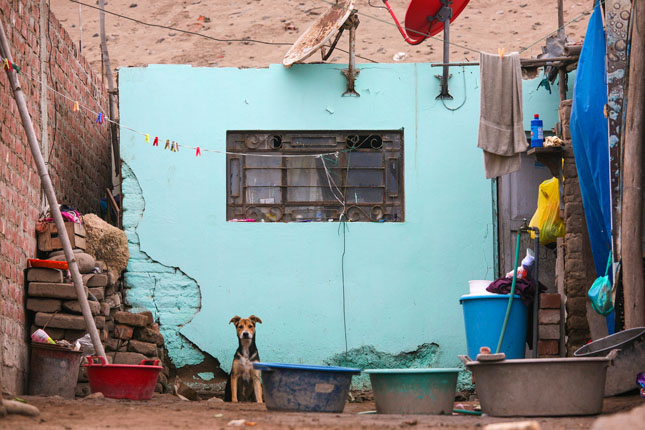
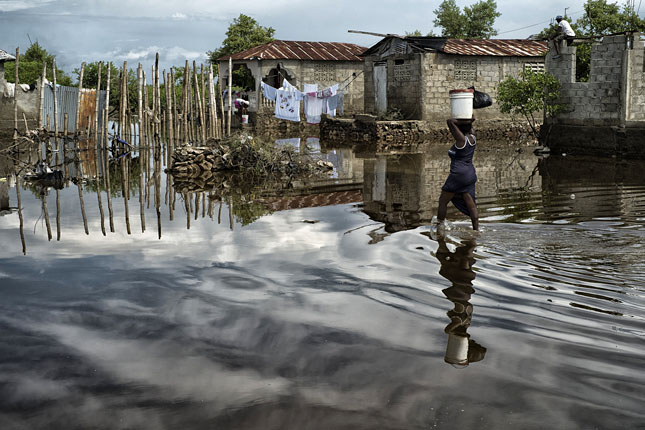
 When it comes to environmental change, “policies and laws can have a very productive contribution toward positive adaptation, or they can subvert that and constrain options,” says Jon Unruh, associate professor of human geography and international development at McGill University, in this week’s podcast.
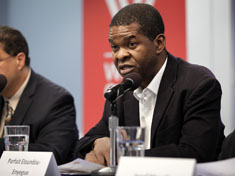 “There is more to education than the picture that you typically see in most reports,” says Parfait Eloundou-Enyegue, professor of development sociology at Cornell University, in this week’s podcast. “And this picture comes from looking at education not as an outcome but as an institution.”