• woodrow wilson center
  • ecsp

New Security Beat

Subscribe:
  • rss
  • mail-to
  • Who We Are
  • Topics
    • Population
    • Environment
    • Security
    • Health
    • Development
  • Columns
    • China Environment Forum
    • Choke Point
    • Dot-Mom
    • Friday Podcasts
    • Navigating the Poles
    • Reading Radar
  • Multimedia
    • Water Stories (Podcast Series)
    • Backdraft (Podcast Series)
    • Tracking the Energy Titans (Interactive)
  • Films
    • Water, Conflict, and Peacebuilding (Animated Short)
    • Paving the Way (Ethiopia)
    • Broken Landscape (India)
    • Scaling the Mountain (Nepal)
    • Healthy People, Healthy Environment (Tanzania)
  • Publications
  • Events
  • Contact Us

NewSecurityBeat

The blog of the Wilson Center's Environmental Change and Security Program
Showing posts from category economics.
  • Jagdish Upadhyay: Don’t Wait for the Demographic Dividend, Seize It

    ›
    Friday Podcasts  //  February 5, 2016  //  By Sean Peoples

    jagdish-small“The demographic dividend is about inclusive growth, not just economic growth,” says Jagdish Upadhyay, chief of commodity security at the United Nations Population Fund (UNFPA), in this week’s podcast. “If it’s not inclusive, achieving the demographic dividend will be difficult.”

    MORE
  • India’s Thirst for Palm Oil, New South-South Trade Patterns Cast Doubt on Sustainability Initiatives

    ›
    Guest Contributor  //  February 3, 2016  //  By Philip Schleifer
    palm-oil-clearance

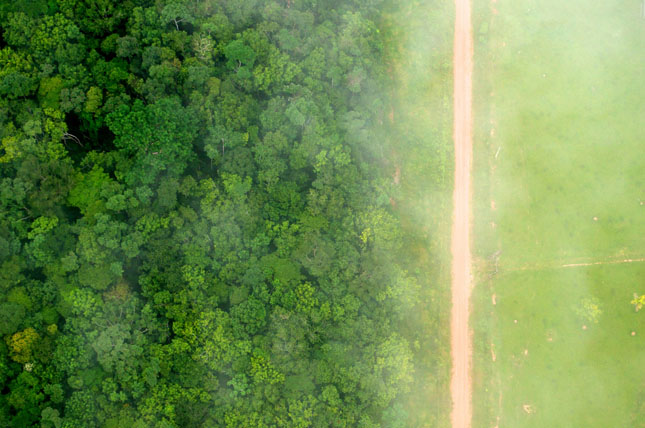
    Patterns of trade and consumption in the global food system are shifting. In the past, most trade in agricultural commodities occurred between developed and developing countries. But, in recent years, the volume of South-to-South trade has increased significantly. Today, some of the most problematic crops in terms of their effect on the environment, such as soy and palm oil, are predominantly traded amongst developing and fast-rising countries.

    MORE
  • Breaking Out of the Dome: Can Energy Efficiency Help Chinese Cities Conquer Air Pollution?

    ›
    China Environment Forum  //  February 2, 2016  //  By Qinnan Zhou
    Huzhou-Power-Plants

    In December 2015, Beijing issued its first-ever “red alert” for smog, its highest air pollution warning, which closed schools and restricted the number of cars on the road. Less than two weeks later, it issued its second.

    MORE
  • Zika Virus Prompts El Salvador and Others to Discourage Pregnancy – What Are the Potential Consequences?

    ›
    Guest Contributor  //  January 29, 2016  //  By Jennifer Dabbs Sciubba
    Zika-eradication

    The government of El Salvador took a truly extraordinary step in an attempt to control the rapidly spreading Zika virus last week by asking its citizens to avoid getting pregnant from now until 2018. Yes, you read that right.

    MORE
  • Can Myanmar Avoid Conflict Pitfalls in its Hydro Blitz?

    ›
    Guest Contributor  //  January 27, 2016  //  By Alec Forss
    Myanmar-artifical-lake2

    Myanmar is undergoing multiple transitions, from military rule to democracy, decades of civil war to peace, and from a command economy to a market-based one. No less of an important challenge amidst this backdrop of change and hope is addressing the country’s energy poverty.

    MORE
  • Lessons From Uganda on Strengthening Women’s Voices in Environmental Governance

    ›
    Guest Contributor  //  January 19, 2016  //  By Blake Ratner, Clementine Burnley & Paola Adriázola
    Kachanga meeting

    Ask Agnes Namukasa about sustainably managing fisheries in Kachanga, the lakeshore landing site she calls home in Uganda’s Masaka District, and you will soon learn about toilets. From her perspective, community members won’t address conflict between government enforcers and fishers, competition among neighboring villages, or pollution threatening aquatic ecosystems until they can first organize to address their most pressing daily needs. And in Kachanga, where chronic childhood diarrhea and a host of other illnesses stem from poor sanitation, those essentials include public latrines.

    MORE
  • An Empty Table? Food-Climate-Conflict Connections in Paris

    ›
    January 15, 2016  //  By Roger-Mark De Souza & Meaghan Parker
    Mali

    “Wilson Perspectives: The Paris Climate Agreement” is a series of short essays exploring the key issues that emerged during the 21st Conference of Parties that originally appeared on WilsonCenter.org.

    Security, terrorism, conflict, and peace: you won’t find any of these words in the landmark agreement released on December 12 at the 2015 Paris Climate Conference (COP-21). It’s never been front-and-center on the agenda at previous Conference of Parties, from Copenhagen to Cancun. But in Paris, a city reeling from terrorist attacks, the specter of climate-related conflict haunted delegates and the potential of a climate-resilient peace inspired grassroots protests.

    MORE
  • Fire and Oil: The Collateral Environmental Damage of Airstrikes on ISIS Oil Facilities

    ›
    Guest Contributor  //  January 13, 2016  //  By Wim Zwijnenburg & Annica Waleij

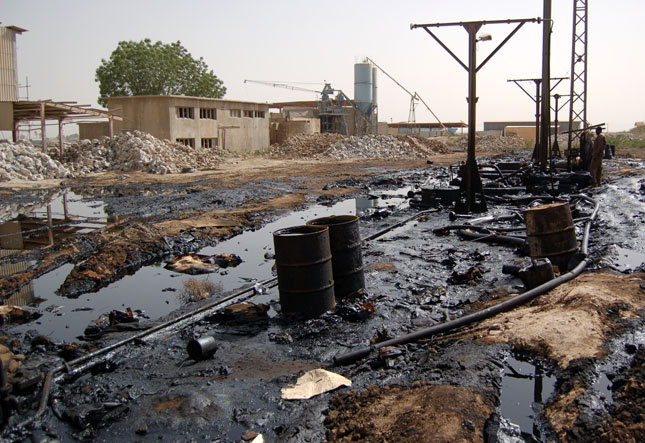
    As the United States, Russia, and others step up attacks on the self-proclaimed Islamic State in Iraq and Syria (ISIS), there is concern over their direct and long-term environmental and public health impacts. Many air strikes have targeted lucrative oil installations under the control of ISIS, and these could have severe detrimental effects for Syria’s future, both environmentally and socio-economically. Questions around the effectiveness of these strikes, both from a military and political perspective, seem to be missing in the wider debate.

    MORE
Newer Posts   Older Posts
View full site

Join the Conversation

  • RSS
  • subscribe
  • facebook
  • G+
  • twitter
  • iTunes
  • podomatic
  • youtube
Tweets by NewSecurityBeat

Trending Stories

  • unfccclogo1
  • Pop at COP: Population and Family Planning at the UN Climate Negotiations

Featured Media

Backdraft Podcast

play Backdraft
Podcasts

More »

What You're Saying

  • Volunteers,At,The,Lagos,Food,Bank,Initiative,Outreach,To,Ikotun, Pan-African Response to COVID-19: New Forms of Environmental Peacebuilding Emerge
    Rashida Salifu: Great piece 👍🏾 Africa as a continent has suffered this unfortunate pandemic.But it has also...
  • A desert road near Kuqa An Unholy Trinity: Xinjiang’s Unhealthy Relationship With Coal, Water, and the Quest for Development
    Ismail: It is more historically accurate to refer to Xinjiang as East Turkistan.
  • shutterstock_1779654803 Leverage COVID-19 Data Collection Networks for Environmental Peacebuilding
    Carsten Pran: Thanks for reading! It will be interesting to see how society adapts to droves of new information in...

What We’re Reading

  • Rising rates of food instability in Latin America threaten women and Venezuelan migrants
  • Treetop sensors help Indonesia eavesdrop on forests to cut logging
  • 'Seat at the table': Women's land rights seen as key to climate fight
  • A Surprise in Africa: Air Pollution Falls as Economies Rise
  • Himalayan glacier disaster highlights climate change risks
More »
  • woodrow
  • ecsp
  • RSS Feed
  • YouTube
  • Twitter
  • Facebook
  • Home
  • Who We Are
  • Publications
  • Events
  • Wilson Center
  • Contact Us
  • Print Friendly Page

© Copyright 2007-2021. Environmental Change and Security Program.

Woodrow Wilson International Center for Scholars. All rights reserved.

Developed by Vico Rock Media

Environmental Change and Security Program

Woodrow Wilson International Center for Scholars

Ronald Reagan Building and International Trade Center

  • One Woodrow Wilson Plaza
  • 1300 Pennsylvania Ave., NW
  • Washington, DC 20004-3027

T 202-691-4000