• woodrow wilson center
  • ecsp

New Security Beat

Subscribe:
  • rss
  • mail-to
  • Who We Are
  • Topics
    • Population
    • Environment
    • Security
    • Health
    • Development
  • Columns
    • China Environment Forum
    • Choke Point
    • Dot-Mom
    • Friday Podcasts
    • Navigating the Poles
    • Reading Radar
  • Multimedia
    • Water Stories (Podcast Series)
    • Backdraft (Podcast Series)
    • Tracking the Energy Titans (Interactive)
  • Films
    • Water, Conflict, and Peacebuilding (Animated Short)
    • Paving the Way (Ethiopia)
    • Broken Landscape (India)
    • Scaling the Mountain (Nepal)
    • Healthy People, Healthy Environment (Tanzania)
  • Publications
  • Events
  • Contact Us

NewSecurityBeat

The blog of the Wilson Center's Environmental Change and Security Program
Showing posts from category disaster relief.
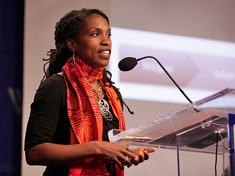
  • How Do We Bounce Back Better? 2015 a Critical Year for Global Resilience, Climate Efforts

    ›
    From the Wilson Center  //  June 3, 2014  //  By Donald Borenstein
    Haiyan_destruction

    According to NASA and a team of scientists from the University of California, significant portions of the West Antarctic ice sheet have begun an unstoppable slide towards oblivion, slowly melting in warmer-than-usual ocean currents that have been eating away at their bases. [Video Below]

    MORE
  • Among Climate Threats, Military Leaders See Population Growth, Natural Resources as Key Factors

    ›
    May 22, 2014  //  By Kathleen Mogelgaard
    CNA_MAB_population

    In 2007, an influential analysis by 11 retired generals and admirals characterized climate change as a “threat multiplier” that could aggravate the conditions for conflict. Last week, in a follow-up report launched at the Wilson Center, members of the CNA Corporation’s Military Advisory Board framed climate change as a more direct and immediate risk, calling it a “catalyst for conflict.”

    MORE
  • The Red Cross’s Peter Maurer on New Challenges for Humanitarian Aid

    ›
    From the Wilson Center  //  May 20, 2014  //  By Paris Achenbach

    11892623585_558285318f_o

    Last year, the International Committee of the Red Cross (ICRC) celebrated 150 years of their mission to “protect the lives and dignity of victims of war and internal violence.” Though this mission hasn’t changed in the past century-and-a-half, the nature of conflict and crisis response has. [Video Below]

    MORE
  • Russell Sticklor, CGIAR

    Can Underground Water Storage Mitigate Cross-Basin Tensions?

    ›
    May 16, 2014  //  By Wilson Center Staff
    groundwater_storage

    The original version of this article, by Russell Sticklor, appeared on CGIAR’s Agriculture and Ecosystems Blog.

    As the earth’s surface grows hotter and precipitation becomes more variable due to the impacts of climate change, the world is in need of solutions to more effectively store water supplies. One potential solution is deceptively simple: store water in aquifers below the ground.

    MORE
  • New Report From Military Leaders Calls Climate Change “Catalyst for Conflict”

    ›
    From the Wilson Center  //  May 15, 2014  //  By Schuyler Null

    Military leaders should be very concerned about climate change – that’s the message of a new report released this week by the CNA Corporation’s Military Advisory Board.

    MORE
  • Disaster Risk Reduction Important to Preserve Development Gains, El Niño May Becoming More Frequent, Powerful

    ›
    Reading Radar  //  April 24, 2014  //  By Donald Borenstein

    ODI

    As climate change threatens more extreme weather, it is becoming more important to incorporate disaster risk reduction into poverty-reduction efforts, writes the Overseas Development Institute in a new report. The authors of The Geography of Poverty, Disasters, and Climate Extremes in 2030 argue that the hard-won gains of development are threatened by vulnerability among the poorest to climate change disasters, especially droughts. “Up to 325 million extremely poor people will be living in the 49 most hazard-prone countries in 2030, the majority in South Asia and sub-Saharan Africa,” write Andrew Shepherd et al. Using an index measuring the risk of a nation’s exposure to natural disasters as compared with a nation’s vulnerability to extreme poverty (income less than $1 daily), the report singles out 11 nations at high risk in both categories.

    MORE
  • Not There Yet: Burma’s Fragile Ecosystems Show Challenges for Continued Progress

    ›
    Guest Contributor  //  April 21, 2014  //  By Tim Kovach
    Burma_Nargis

    Political and economic changes in Burma have been as rapid as they are surprising. In just three years, the country has gone from an isolated military dictatorship to a largely open country that is at least semi-democratic and has formally adopted a market economy. Both the European Union and the United States have eased economic sanctions, and dozens of foreign firms have moved in. Foreign direct investment increased by 160 percent in 2013 alone.

    MORE
  • Double Dividends: Population Dynamics and Climate Adaptation

    ›
    From the Wilson Center  //  April 10, 2014  //  By Paris Achenbach
    port-au-prince

    If current projections hold, Africa’s population will more than double in 40 years, putting more people at risk of food, water, health, and economic insecurity as the climate changes, as well as negating progress made in reducing carbon emissions per person. But what if it didn’t? [Video Below]

    MORE
Newer Posts   Older Posts
View full site

Join the Conversation

  • RSS
  • subscribe
  • facebook
  • G+
  • twitter
  • iTunes
  • podomatic
  • youtube
Tweets by NewSecurityBeat

Trending Stories

  • unfccclogo1
  • Pop at COP: Population and Family Planning at the UN Climate Negotiations

Featured Media

Backdraft Podcast

play Backdraft
Podcasts

More »

What You're Saying

  • Volunteers,At,The,Lagos,Food,Bank,Initiative,Outreach,To,Ikotun, Pan-African Response to COVID-19: New Forms of Environmental Peacebuilding Emerge
    Rashida Salifu: Great piece 👍🏾 Africa as a continent has suffered this unfortunate pandemic.But it has also...
  • A desert road near Kuqa An Unholy Trinity: Xinjiang’s Unhealthy Relationship With Coal, Water, and the Quest for Development
    Ismail: It is more historically accurate to refer to Xinjiang as East Turkistan.
  • shutterstock_1779654803 Leverage COVID-19 Data Collection Networks for Environmental Peacebuilding
    Carsten Pran: Thanks for reading! It will be interesting to see how society adapts to droves of new information in...

What We’re Reading

  • Rising rates of food instability in Latin America threaten women and Venezuelan migrants
  • Treetop sensors help Indonesia eavesdrop on forests to cut logging
  • 'Seat at the table': Women's land rights seen as key to climate fight
  • A Surprise in Africa: Air Pollution Falls as Economies Rise
  • Himalayan glacier disaster highlights climate change risks
More »
  • woodrow
  • ecsp
  • RSS Feed
  • YouTube
  • Twitter
  • Facebook
  • Home
  • Who We Are
  • Publications
  • Events
  • Wilson Center
  • Contact Us
  • Print Friendly Page

© Copyright 2007-2021. Environmental Change and Security Program.

Woodrow Wilson International Center for Scholars. All rights reserved.

Developed by Vico Rock Media

Environmental Change and Security Program

Woodrow Wilson International Center for Scholars

Ronald Reagan Building and International Trade Center

  • One Woodrow Wilson Plaza
  • 1300 Pennsylvania Ave., NW
  • Washington, DC 20004-3027

T 202-691-4000