-
For Next Edition of Influential Global Trends Report, National Intelligence Council Looks to Expand Its Audience
›
Between sessions on the value of creating a physical expression of digital brands (Evernote socks) and Bitcoin, this year’s South by South West (SXSW) in Austin, Texas, featured newcomers from a different background: the U.S. National Intelligence Council.
-
3 Facets to Relief and Recovery After Nepal’s Earthquake
›Nepal’s devastating earthquake last Saturday was both tragic and expected. On September 18, 2011, as colleagues and I were driving through Kathmandu, our car started to shake, buildings began to sway, store fronts cracked, hundreds of people jumped out of windows and streamed into already crowded streets. It was the so-called Sikkim earthquake. There were only a few fatalities and injuries – it was a very minor event compared to last weekend’s disaster. But it validated the rationale for our visit: to help launch a disaster relief dialogue involving U.S. government experts, Nepalese security forces, and their country’s emergency responders.
-
Small-Island States Continue Long Crusade for Recognition of Climate Damages
›
“Even though small-island nation states generally are responsible for less than one percent of global greenhouse gas emissions, small islands are already expending scare resources on strategies to adapt to growing climate threats and to also repair themselves after they have hit,” says Maxine Burkett, associate professor of law at the University of Hawaii at Manoa, in this week’s podcast.
-
Wilson Center and USAID Launch “Resilience for Peace Project”
›As “resilience” builds as a theme for the development community, a few key concepts are rising to the top of the conversation. [Video Below]
-
Islands: Climate Victims or Champions of Resilience?
›In contrast to the common narrative of small-island states being among the most vulnerable to climate change, their growing experience in climate-compatible development, disaster prevention, and coordinating information and aid in new ways may be a valuable asset, said panelists at the Wilson Center on March 25.
-
New G7 Report Highlights Climate Change and Fragility as a Foreign Policy Priority
›At the close of a meeting of G7 foreign ministers in Lübeck today, ministers announced a stronger collective commitment to tackling climate-related risks in states experiencing situations of fragility.
-
Catalyzing Cooperation: Disaster Diplomacy and its Potential to Short-Circuit the Climate-Conflict Link
›There is a growing chorus of voices claiming climate change will foster more conflict and violence. Books have been released on the impending age of climate wars, while media outlets dutifully report on research that purports to show how global warming will increase violence of every form, from the number of times pitchers bean batters in baseball to the rate of sexual assault.
-
As Glacial Floods Threaten Mountain Communities, a Global Exchange Is Fostering Adaptation
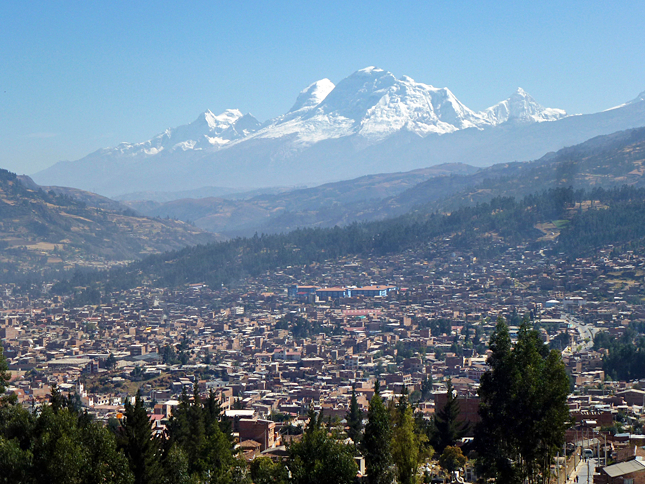
›In 1941, glacial Lake Palcacocha in the Peruvian Andes burst its moraine dam of earth and stones, sending a torrent of water through the city of Huaraz and killing an estimated 5,000 people. Between 1941 and 1950, two more glacial lake outburst floods, or GLOFs, which can occur after enough water fills in behind a glacier’s end moraine, killed another 5,000 people in the Cordillera Blanca. In response, the government set up one of the most effective glaciological units in the world with the goal of preventing future outburst floods. Using drain pipes, reinforced terminal moraine dams, sophisticated tunnels, and valve systems, they drained or contained 34 lakes in the region. As a result, thousands of lives were saved.
Showing posts from category disaster relief.